Ascending Order Definition, Symbol, Examples, and Steps
 Amit Lingwal19 Jan, 2026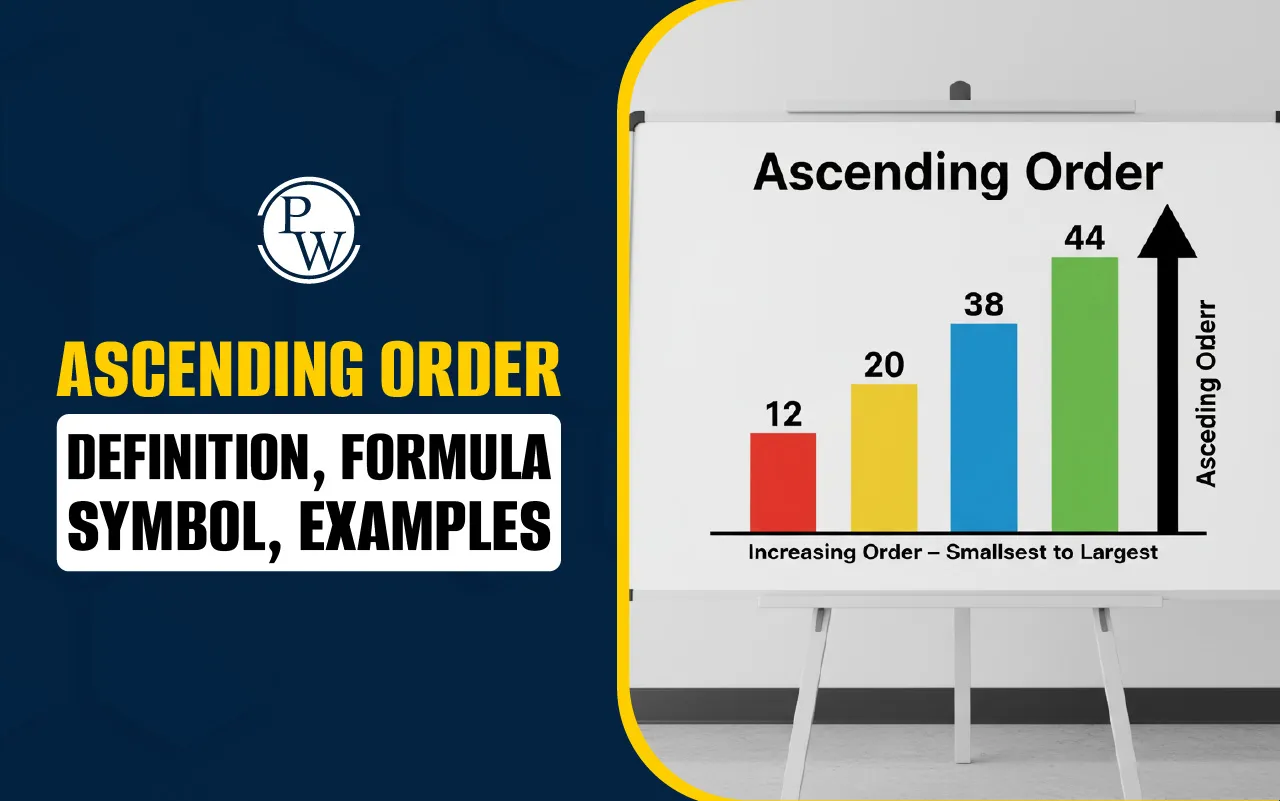
Ascending Order
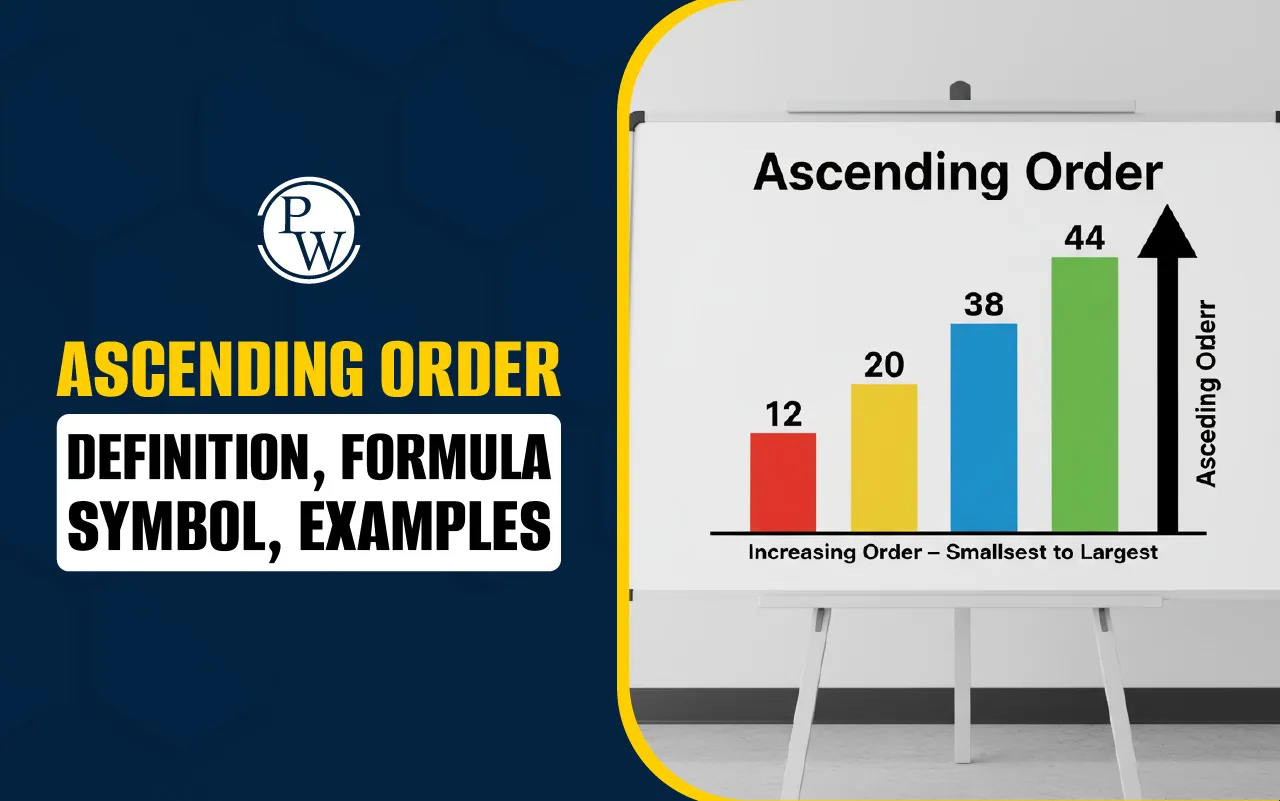
Ascending order is the method of arranging numbers from smallest to largest. Learn the ascending order definition, symbol, formula, and simple ascending order examples. Candidates can easily arrange in ascending order and understand ascending and descending order in maths. Students often ask what is ascending order, and the answer is simple.
Ascending order refers to arranging numbers or items from the smallest to the largest. In mathematics, the smallest value is placed first, and the largest comes last. Simply put, ascending order definition is organizing numbers so that each number is equal to or greater than the one before it. The ascending order symbol is <, meaning less than. To arrange numbers, first, find the smallest, then find the next smallest number, and repeat the process until all of the numbers are arranged. For example, to arrange the numbers 5, 2, 8, 1 in ascending order would mean starting from the smallest number and arranging them into 1, 2, 5, 8. Ascending order means arranging numbers or items from the smallest to the largest value. It is a common way to organize data for clarity and easy understanding. For example, when numbers are arranged as 1, 2, 3, 4, and so on, they are in ascending order. This method is useful in math, sorting lists, and even in daily life like arranging books or toys by size.
What Is Ascending Order?
Ascending order is one way to arrange any number of numbers, letters, or objects, from the smallest to the largest. It is also called increasing order. This method facilitates the organization of data, comparison of values, and the solution of problems with ease. We see ascending order in daily life, like arranging toys, books, fruits, or lining up children from shortest to tallest. Learning it makes counting and sorting fun and simple.
Example 1: Whole numbers in ascending order: 0 < 1 < 2 < 3 < 4 < 5 < 6 …
Example 2: Organizing pencils from the shortest to the longest one.
Read more: Counting Numbers
Ascending Order Meaning in Maths
The ascending order meaning is placing things in an increasing sequence. It means moving "upward" from smaller to bigger. This term is commonly used in math and everyday life to organize and sort data like numbers, letters, or sizes for better understanding and usage.
Ascending Order Definition in Maths
Ascending order definition is simple, i.e., arranging numbers from the smallest to the largest. Students often learn ascending and descending order together. Ascending order arranges values from smallest to largest, while descending order arranges them from largest to smallest.
-
If you have numbers 5, 2, 8, 1, arranging them in ascending order gives 1, 2, 5, 8.
-
In simple terms, the sequence starts with the smallest number and ends with the largest.
Read more: Brackets in Maths
Ascending Order Symbol and Sign
Ascending order symbol is <, which means less than. It shows that one number is smaller than the next. For example, in 2 < 5 < 8 < 10, 2 is less than 5, 5 is less than 8, and 8 is less than 10. This symbol is used in maths ascending order to compare numbers and arrange them from the smallest to the largest.
Examples:
-
2 < 5 < 8 < 10 → 2 is less than 5, 5 is less than 8, 8 is less than 10
-
1 < 3 < 7 < 9 → 1 is less than 3, 3 is less than 7, 7 is less than 9
-
10 < 15 < 20 → 10 is less than 15, 15 is less than 20
How to Arrange in Ascending Order?
As we learn before, arranging numbers in ascending order means putting them from the smallest to the largest. This helps children compare numbers easily and organize them correctly. You can arrange anything in ascending order, like numbers, toys, or books. Below are the steps to arrange in ascending order:
-
Look at all the numbers carefully.
-
Find the smallest number and write it first.
-
Find the next smallest number and write it after.
-
Continue until all numbers are in order.
Example: Arrange 12, 5, 9, 1, 7 in ascending order.
-
Smallest number = 1
-
Next = 5
-
Then = 7
-
Then = 9
-
Largest = 12
Answer: 1, 5, 7, 9, 12
Read more: Straight Angle
Ascending Order Examples
Before we learn, in ascending order, items are arranged from the smallest to the largest. Learning this helps to compare, sort, and organize things easily. It can be used with numbers, objects, measurements, or any set of items that can be ordered. Below are ascending order examples:
-
Numbers: 3, 8, 2, 6 → Ascending order: 2, 3, 6, 8
-
Numbers: 15, 7, 20, 10 → Ascending order: 7, 10, 15, 20
-
Numbers: 50, 30, 70, 10 → Ascending order: 10, 30, 50, 70
-
Numbers: 1, 4, 1, 2 → Ascending order: 1, 1, 2, 4
-
Heights of kids: 110 cm, 105 cm, 120 cm → Ascending order: 105 cm, 110 cm, 120 cm
-
Apples by size: small, medium, large → Ascending order: small, medium, large
-
Coins by value: 1₹, 5₹, 2₹ → Ascending order: 1₹, 2₹, 5₹
How to Write the Ascending Order
To write numbers in ascending order, start by finding the smallest number in the group and write it first. Next, pick the number that is just a bit bigger and write it next. Keep doing this until all numbers are organized from the smallest to the biggest. For example, for the numbers 9, 2, 7, you write 2, 7, 9 in ascending order.
Arrange in Ascending Order
Arranging in ascending order means ordering numbers or items starting from the least value and moving towards the greatest value. You compare all the numbers or items and place the smallest one first, followed by the next smallest, and so on. For instance, arrange 15, 3, 9 in ascending order becomes 3, 9, 15.
Why Learn Ascending Order?
Learning ascending order helps children understand how to arrange numbers or objects from the smallest to the largest. It makes counting, comparing, and organizing items easier. Using ascending order in daily life, like lining up toys, books, or coins, also helps build a strong foundation in maths and problem-solving skills.
-
Organizing numbers in lists or tables
-
Comparing numbers easily
-
Solving maths problems faster
-
Understanding ascending and descending order
Also read: What is a Polyhedron
How CuriousJr Makes Learning Math Fun and Effective for Your Child
Does your child understand math in class but struggle to recall it while doing homework? This often happens when kids simply copy solutions in class without practicing on their own. Over time, this gap can impact their exam performance and even reduce their interest in math.
CuriousJr’s Mental Maths Classes make after-school learning both enjoyable and effective. Designed for students in Classes 3 to 9, these online tuition sessions teach concepts at your child’s own pace and according to their learning style. Check points below to see how CuriousJr supports your child’s learning:
-
Lessons explained step by step, from basics to advanced
-
Two-teacher support: one teaches, one clears doubts
-
Homework help and practice worksheets for revision
-
Flexible online classes from home
-
Progress updates for parents
Ascending Order FAQ
What is ascending order in maths?
What is the symbol of ascending order?
Can I arrange repeated numbers in ascending order?
What is the difference between ascending and descending order?
Is there a formula for ascending order?