What is Alliteration - Definition and Meaning
 Shivam Singh13 Oct, 2025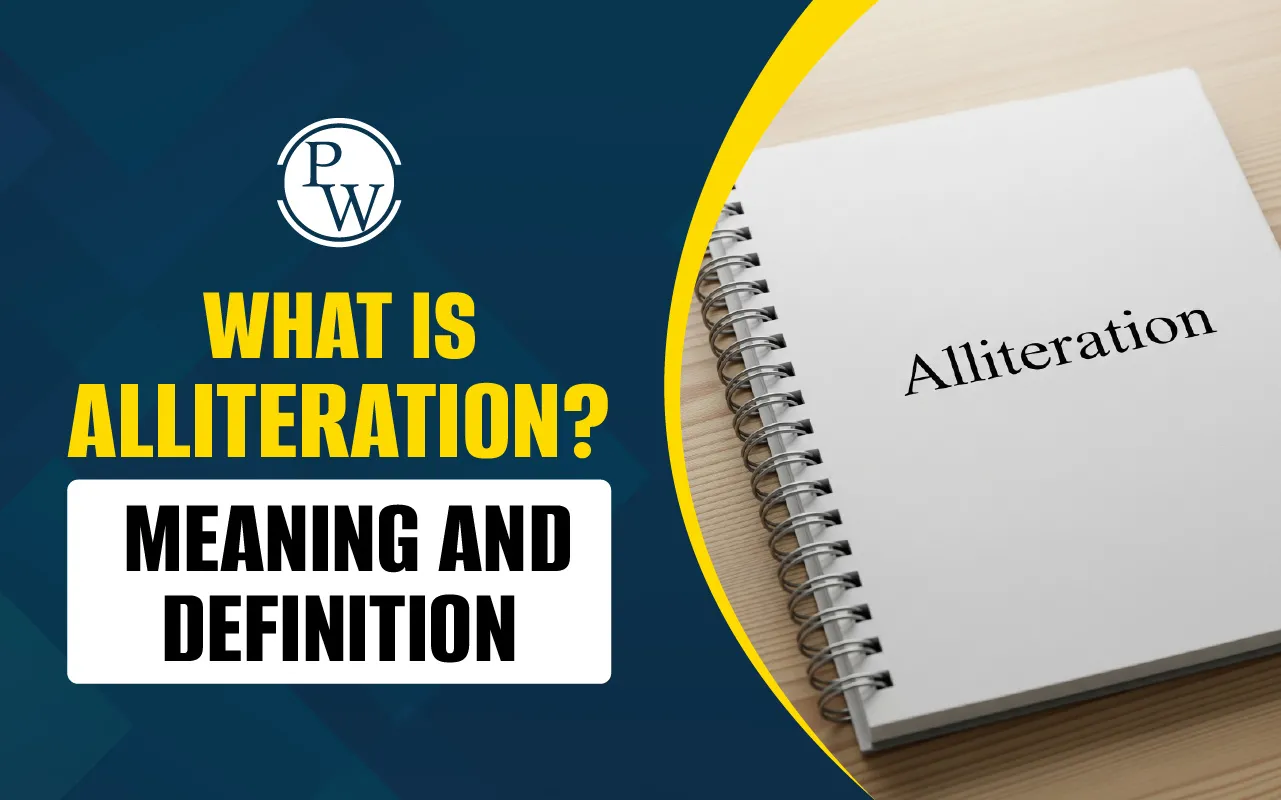
Alliteration has been used in the English language in literary and poetic works, speeches, and even brand names and advertisements. When you encounter words like "big business" or "whispering winds," you may notice how the repetition of consonants makes these alliteration words, communicating the ideas uniquely.
Alliteration enhances the communication quality, making it more expressive and memorable. We will explain here the basics of alliteration in a sentence with definition, purpose, and various examples to expose your child to an amazing literary tool in the English language. Many students often ask, "what is the alliteration" when studying literary devices. The alliteration definition explains that it is the repetition of the same consonant sounds at the beginning of words in a sentence or phrase.
Read More: Homonyms
Alliteration Meaning
Alliteration is a style of writing in the English language where consecutive words or nearby words in a sentence start with the same letter, usually a consonant. It is a special way of emphasizing words by creating a rhythm with similar phonetic sounds. It makes a sentence more appealing to hear and remember. Alliteration in english mostly finds its application in literature, phrases, and motivational speeches.
Understanding the meaning of alliteration helps writers create rhythm and emphasis in their writing. Teachers often provide alliteration meaning and examples to make the concept easier to grasp, such as "Peter Piper picked a peck of pickled peppers."
Alliteration Definition
Alliteration in english can be defined as a figure of speech in English writing where words starting with the same consonant sound are repeated in a sentence or phrase
The alliteration figure of speech uses repetition of similar-sounding letters to create a special effect in readers’ minds. It enhances the literary value of the content by expressing thoughts through a particular pattern of sentence construction.
By exploring what is the alliteration in different texts, students can better appreciate its impact, and referring to alliteration meaning and examples allows them to recognize it in poetry, prose, and everyday language.
The Purpose of Alliteration
Using alliteration words in sentences makes the communication look and sound different, that grabs the attention of readers and audience. Let’s look at some of the advantages of using alliteration in a sentence:
-
Alliteration adds a rhythm or pattern to the sentences which enhances the overall reading or listening experience.
-
Words with repeating sounds draw the attention of readers or listeners, and make an impact in the reader’s mind.
-
The repetition of sounds often helps create a mood or emotion and helps writers to express their thoughts more vividly.
-
Alliteration makes the phrases, brand names, or advertisement taglines more captivating and easier to remember.
Read More: Possessive Adjectives
Examples of Alliteration
There are many alliteration examples that we can find in literature, popular culture, advertisements, speeches, and even in everyday conversations. Your child can learn this unique style of expressing ideas and thoughts to make the text more engaging and memorable. Let’s go through some alliteration examples:
In Literature:
Many renowned authors and poets use alliteration as a literary tool to enhance their quality of writing and emphasize their ideas. Here are a few examples:
“The day to cheer and night’s dank dew to dry,” – William Shakespeare, Romeo and Juliet
“While I nodded, nearly napping, suddenly there came a tapping.” – Edgar Allan Poe, The Raven
In Tongue Twisters:
Alliteration sentences are common in tongue twisters, as given below:
-
She sells seashells on the seashore.
-
Peter Piper picked a peck of pickled peppers.
-
Betty bought a bit of butter, but the butter was bitter.
In Speeches
The speakers often use alliteration to make their speeches more engaging and impactful. The following examples can demonstrate that:
“They are part of the finest fighting force that the world has ever known. They have served tour after tour of duty in distant, different, and difficult places...”
—President Barack Obama
“To those people in the huts and villages of half the globe struggling to break the bonds of mass misery, we pledge our best efforts to help them…”
– President John. F. Kennedy
Alliteration in Everyday Communication
We often come across sentences or phrases in daily life that contain alliterations, although we might not notice them carefully. Here are a few examples of these alliteration sentences:
-
Don’t drink and drive.
-
We used the fund to help the homeless.
-
The company promises to secure your financial future.
Read More: How to Write 1500 in Words?
Famous Character Names
Character names in stories, cartoons, TV shows, movies, and entertainment fields often use alliteration to create memorable names that your child can retain easily. Here are some of the attractive character names:
-
Mickey Mouse (cartoon character)
-
Donald Duck (cartoon character)
-
Bugs Bunny (cartoon character
-
Wonder Woman (comic book character)
-
Peter Parker (story character—Spiderman)
-
Jessica Jones (TV series character)
-
The Wicked Witch of the West (fictional character)
Brand Names
Many brand names and products use alliteration words to make them unique and help customers to remember the names easily. Some of these brand names include:
-
Brooke Bond
-
Dunkin Doughnuts
-
Coca Cola
-
Kit Kat
-
PayPal
-
TikTok
-
Krispy Kreme
-
Intel Inside
-
Big Basket
Alliteration in Phrases
A range of phrases contain alliteration words that are frequently used in writing and speaking to communicate ideas clearly and precisely. Let’s look at some of these phrases:
Facts and figures – details about something
Example: Can you give me the facts and figures of the survey?
Mix and match - to combine different things to fit your needs
Example: I have a lot of clothes that I can mix and match.
Part and parcel – Integral part of something
Example: Smartphones have become part and parcel of our daily life.
Spic and Span – clean and organized
Example: She always keeps her room spick and span.
Tried and tested – proved to be reliable
Example: The technician applied the tried and tested method.
Read More: List of Tricky Words in english
Alliteration in Idioms
Idioms often use alliteration sentences or words to emphasize the message being conveyed. Let’s see how idioms use alliteration to help your child use them appropriately:
The grass is always greener on the other side.
It means that people think that other people's situations are always better than their own.
Blue Blood
It refers to someone belonging to a family with high social status, wealth, and power.
Rat Race
It indicates a situation where people are constantly competing with each other and struggling for success, even sacrificing personal well-being.
Busy as a Bee
This idiom is used to describe someone who is very active, constantly engaged in various tasks.
Alliteration vs. Consonance vs. Assonance
There are two other figures of speech close to alliteration. They are consonance and assonance.
Consonance is the repetition of similar consonant sounds across several words. The repeated consonants can occur at any place within the words, not just the initial letters of the words.
Assonance is the style of writing that follows the same principle as consonance but uses the vowel sounds instead of consonants.
Also Read: Degree of Comparison
How To Help Kids Learn Alliteration?
Knowing about alliterations can be fun and educational for young learners. Parents can help learning alliteration in engaging ways, as mentioned below:
-
Encourage your children to read stories and identify words in sentences that start with the same letter.
-
Introduce them to alliteration words through daily activities, studies, advertisement campaigns, and character names.
-
Give your child an alphabet and ask them to form words and use them in sentences.
Alliteration is one of the most important literary tools in English. It uses repeated words with syllables that sound similar. The purpose is to create rhythm, emphasize meaning, and make the language more enjoyable to read. A knowledge of alliteration words will help your child structure sentences more creatively and engagingly.
Boost Your Child’s Grammar Skills with CuriousJr Online Classes
Does your child often get confused with tenses, make mistakes in sentences, or struggle to use words correctly? Many children find grammar tricky, but with the right support it can become simple and enjoyable.
At CuriousJr, we help children learn grammar step by step. Through interactive activities and regular practice, they begin to write error-free sentences, speak with confidence, and use grammar correctly in their studies.
Our English online classes follow a curriculum that aligns with CBSE, ICSE, and other State Boards, so your child learns exactly what’s needed for success in school and beyond. Book a demo class today to know more about English Online Classes.
Alliteration FAQ
Can different consonants form alliteration words?
Give an example of alliteration words used in advertisements.
Name a popular childrens novel with alliteration words as its title.
Give some examples of alliteration words we use commonly in daily communications.