Human Digestive System: Parts, Diagram and How It Works
 Shivam Singh16 Sept, 2025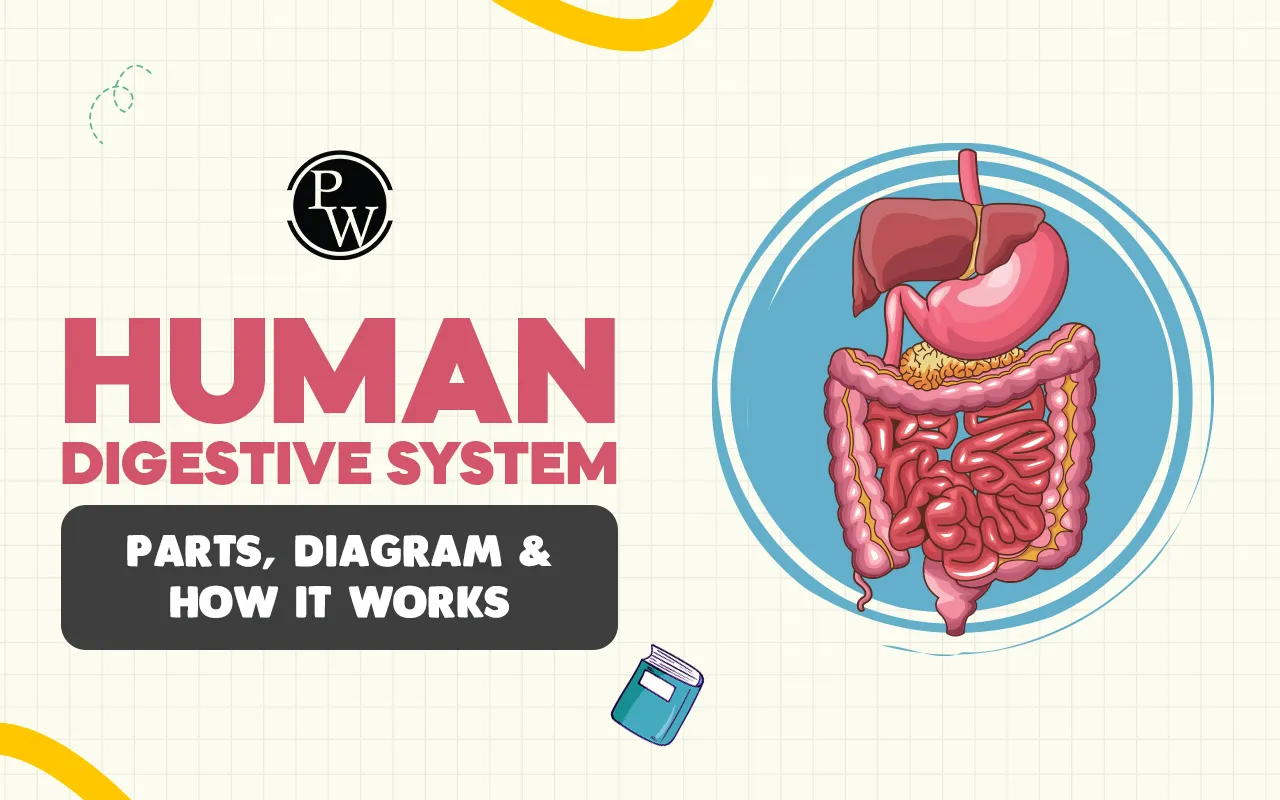
The human digestive system helps your body use the food you eat. It breaks food down into nutrients. This, in turn, gives you energy, helps you grow, and keeps you healthy. This system includes many organs that work together in a step-by-step process.
Some parts break the food into smaller pieces, others release juices to digest it, and some absorb useful nutrients into your blood. Anything your body does not need is passed out as waste. Here, you will learn the human digestion process in detail.
Read More: 5 Sense Organs
What is the Human Digestive System?
The human digestive system is made up of hollow and solid organs. These work together to break down food and absorb nutrients.
The hollow organs make up a long pathway called the gastrointestinal tract. This pathway begins at the mouth and ends at the anus. The food passes in digestion process through the organs in the following order:
-
Mouth
-
Esophagus
-
Human stomach
-
Small intestine
-
Large intestine
-
Rectum
-
Anus
Alongside these, the digestive system includes three important solid organs. These organs do not carry food but play a key role in helping the body digest it by producing juices and chemicals:
-
Liver
-
Pancreas
-
Gallbladder
Together, these organs allow the body to absorb nutrients and remove waste properly.
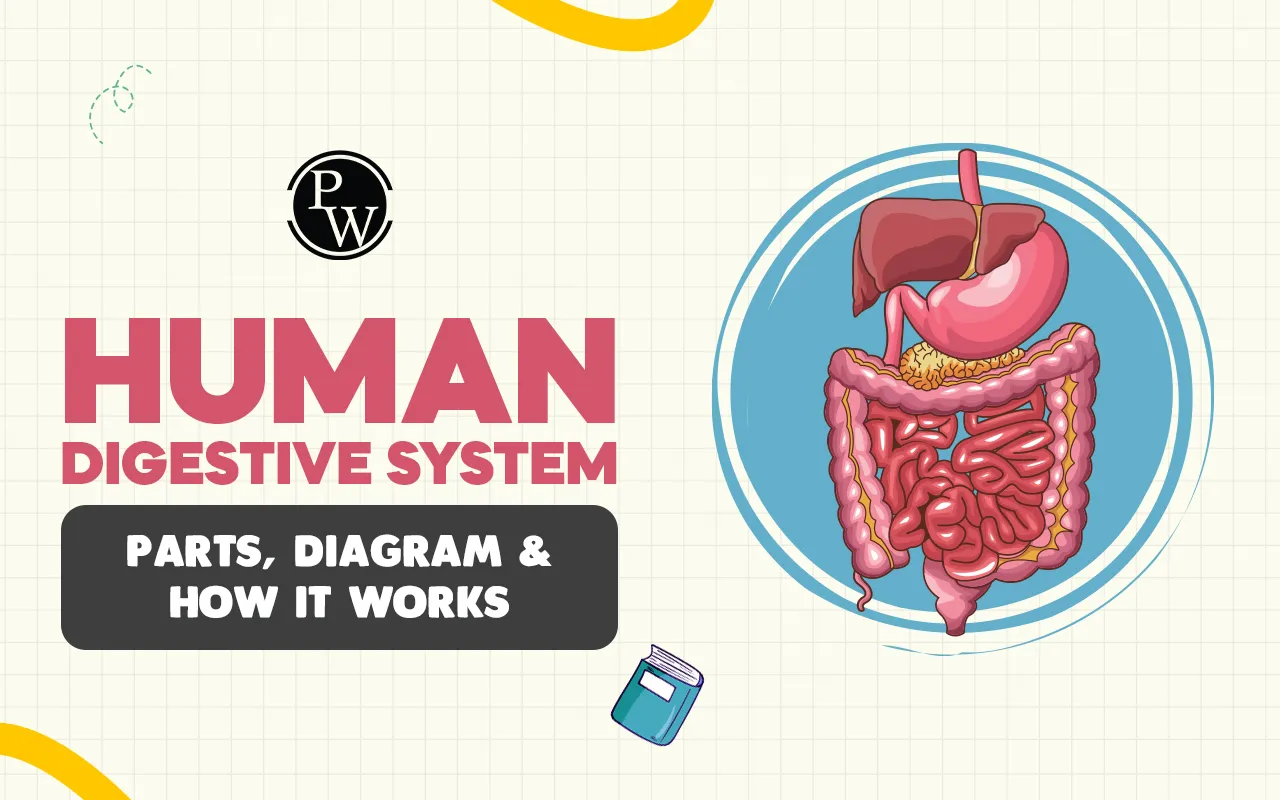
The Human Digestive System Diagram
A digestive system diagram helps students see how all these organs fit together. It usually shows:
-
The mouth and salivary glands
-
Esophagus
-
Human stomach
-
Small intestine and large intestine
-
Liver, pancreas, and gallbladder
-
Rectum and anus
By studying a digestive system diagram, you can better understand the structure and order of the organs. It also helps you prepare for tests or school presentations by showing which organs do what.

Read More: Health and Hygiene
Why Do We Need the Digestive System?
The digestive system is important because your body needs nutrients from food and drinks to stay healthy. These nutrients give you energy, help you grow, and repair parts of your body like muscles, skin, and bones.
But before your body can use any of these nutrients, food must be broken down into tiny parts. That is the job of the human digestive system.
Different nutrients break down into different parts:
-
Carbohydrates turn into simple sugars
-
Proteins turn into amino acids
-
Fats turn into fatty acids and glycerol
Once digestion is complete, your body takes in the small nutrients and sends them through the bloodstream to different parts that need them. Without the digestive system, your body would not get the fuel it needs to survive, grow, and stay strong.
Read More: What Is Global Warming?
How the Digestive System Works?
The human digestive system changes food into useful nutrients that support your body’s energy, development, and repair. Digestion is the process of turning large pieces of food into tiny nutrients that your body can absorb and use. Every time you eat, your body starts this process without you even thinking about it.
Digestion happens through two main actions:
Physical movement – This includes chewing, squeezing, and mixing food as it moves through the digestive system.
Digestive juices and enzymes – These help break food into simpler forms that the body can absorb easily
Let’s understand the digestive system process step by step.
Mouth
Digestion begins in the mouth. When you eat, your teeth break the food into smaller pieces. At the same time, your salivary glands make a liquid called saliva. Saliva moistens the food and makes it easier to swallow. It also contains enzymes that begin breaking down starches like bread, rice, and potatoes.
This first step is important because the more you chew, the easier it is for your body to digest the food later.
Esophagus
Once the food is chewed and soft, you swallow it. It passes into a long tube called the esophagus. The walls of the esophagus have muscles that gently squeeze and push the food toward your human stomach. This squeezing action is called peristalsis. You do not control it, it happens automatically.
Human Stomach
The human stomach is a strong, pouch-like organ. It has thick muscles and special cells that produce digestive juices. These include stomach acid and enzymes that help break down proteins in the food you eat.
Once the food reaches the stomach, it is mixed and stirred until it turns into a thick liquid called chyme. The stomach stores this liquid for a while, then sends it into the small intestine a little at a time. The human stomach also helps protect you from germs by using acid to kill bacteria that may come in with your food.
Some important stomach organs help with digestion, even though food does not pass through them. These organs are:
-
Liver: Makes bile, a yellow-green liquid that helps break down fats in food.
-
Gallbladder: Stores bile made by the liver and sends it to the small intestine when needed.
-
Pancreas: Makes a special juice that contains enzymes to break down fats, proteins, and carbohydrates.
These juices enter the small intestine and help finish the job the human stomach started.
Small Intestine
The small intestine is a long, coiled tube. It is where most of the digestion and absorption of nutrients happens. Digestive juices from the pancreas, liver, and the small intestine itself mix with the food. These juices break the food into its smallest parts.
Tiny finger-like shapes called villi line the inside of the small intestine. These villi absorb nutrients such as:
-
Sugars from carbohydrates
-
Amino acids from proteins
-
Fatty acids from fats
-
Vitamins and minerals
Once absorbed, the nutrients enter the blood and are carried to every part of the body. This is how your body gets energy and builds what it needs to grow and stay healthy.
Large Intestine
Any part of the food that cannot be digested or absorbed moves into the large intestine. Here, water is absorbed into the body, and what is left begins to form waste.
Helpful bacteria in the large intestine break down some of the leftover material and also make certain vitamins, like vitamin K. After this, the waste is turned into stool and stored in the rectum. When it is time to go to the toilet, the body removes the waste through the anus.
Read More: Tips to Keep Kids Engaged in Online Learning Without Losing Focus
What Happens to the Nutrients During the Digestion Process?
After nutrients are absorbed in the small intestine, they are carried by the blood to different parts of the body. The liver plays an important role here. It stores extra nutrients and sends them to where they are needed.
Your body uses:
-
Sugars to give you energy
-
Amino acids to build and repair cells
-
Fats to protect your organs and store energy
-
Vitamins and minerals to help all body systems work well
This is why digestion is so important. Without the digestive system, your body would not get the materials it needs to live and grow.
How to Keep the Digestive System Healthy?
Taking care of your digestive system helps your body work better and keeps you feeling well. Here are some easy habits that students can follow to support a healthy human digestive system:
-
Drink plenty of water: Water helps move food through your system and keeps everything working smoothly. It also prevents constipation.
-
Eat meals at regular times: Having breakfast, lunch, and dinner around the same time each day helps your body stay in rhythm and improves digestion.
-
Chew your food slowly and properly: Chewing well makes food easier for the human stomach to digest and gives your body more time to release helpful digestive juices.
-
Choose healthy foods: Eating fruits, vegetables, and whole grains gives your body fibre, which helps clean your intestines and keeps you regular.
-
Limit junk food and soft drinks: Fried foods, sweets, and fizzy drinks can upset your stomach and make your digestive system work harder than it needs to.
-
Stay active every day: Even a short walk or playing outside helps your muscles move food through your system and keeps your stomach organs working well.
Following these habits makes it easier for your body to break down food, absorb nutrients, and remove waste. A healthy digestive system helps you feel more energetic, focused, and strong every day.
Also read: Effective Study Techniques for Online Students
Make Science Learning Simple For Your Child with CuriousJr Online Tuition
Looking for science classes that actually help your child understand concepts and enjoy learning?
Many children face difficulty in science when their basic ideas are not clear. Without a clear foundation, it becomes harder to stay interested or keep up in class. CuriousJr offers live, interactive Science online classes where teachers explain topics in a simple and engaging way.
Each class is guided by two dedicated mentors who take your child through each concept step by step. Lessons use visuals, everyday examples, and easy activities that make learning easier and more enjoyable. The focus is on helping your child understand the subject and feel more confident.
Book today online classes for kids and explore how our classes can make science your child’s favourite subject.