
Physical vs Chemical Changes: 5 Differences & Examples
 Nikita Aggarwal22 Oct, 2026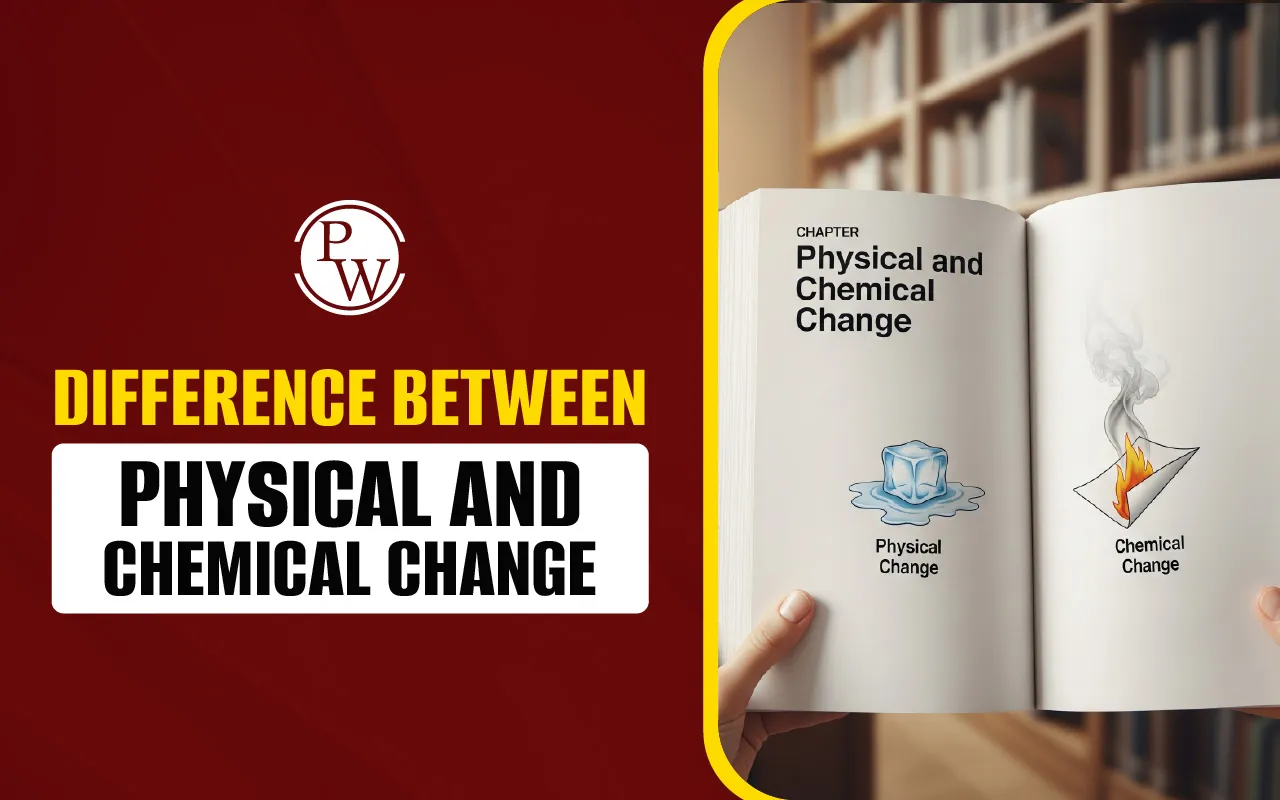
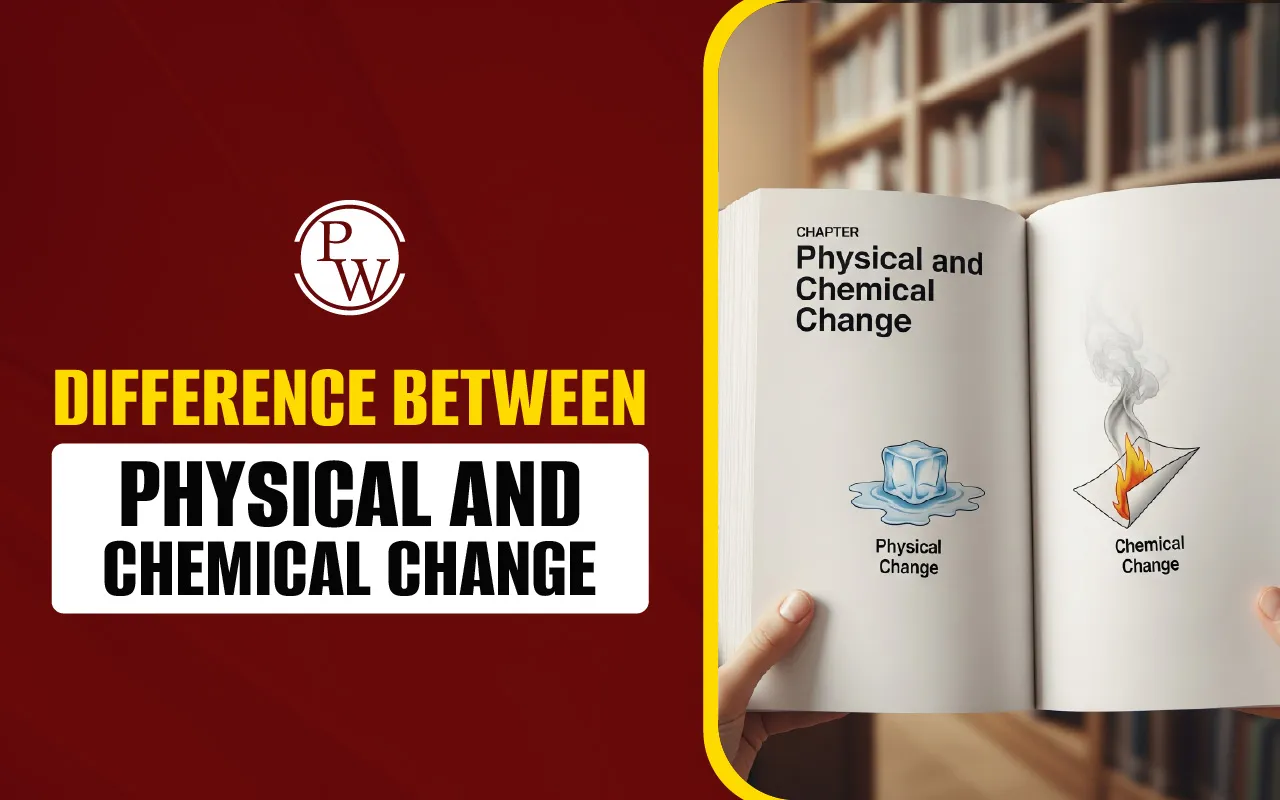
A physical change affects the shape, size or state of a substance without forming a new substance. A chemical change produces one or more new substances with different chemical properties. For example, melting ice is a physical change because it remains water, while rusting iron is a chemical change because iron reacts with oxygen and moisture to form rust. Understanding these differences helps students identify changes in everyday life and answer science questions accurately.
What Is the Difference Between Physical and Chemical Changes?
The main difference between physical and chemical changes is whether a new substance is formed. In a physical change, the substance's chemical composition remains the same. In a chemical change, its composition changes and new substances are produced.
|
Basis of Difference |
Physical Change |
Chemical Change |
|
Formation of a new substance |
No new substance is formed |
One or more new substances are formed |
|
Chemical composition |
Remains unchanged |
Changes |
|
Properties |
The substance retains its chemical identity |
The products have different chemical properties |
|
Reversibility |
Often reversible, but not always |
Often difficult to reverse, but not always |
|
Examples |
Melting ice, cutting paper, dissolving sugar in water |
Rusting iron, burning paper, cooking food |
At CuriousJr, students can learn the difference between physical and chemical changes, understand their key characteristics, and explore everyday examples such as melting ice and rusting iron.
5 Differences Between Physical and Chemical Changes
The following five points explain the difference between physical change and chemical change:
-
Formation of a new substance: A physical change does not produce a new substance, whereas a chemical change produces one or more new substances.
-
Chemical composition: The chemical composition remains the same during a physical change but changes during a chemical change.
-
Type of change: A physical change may affect a substance's shape, size or state. A chemical change involves a chemical reaction.
-
Reversibility: Many physical changes can be reversed, such as freezing and melting water. Many chemical changes are difficult to reverse, such as rusting iron.
-
Examples: Melting wax and cutting paper are physical changes. Burning wax and rusting iron are chemical changes.
What Is a Physical Change?
A physical change is a change in which the shape, size or state of a substance changes without changing its chemical composition. No new substance is formed.
Examples of Physical Changes
-
Melting ice: Solid ice changes into liquid water, but its chemical composition remains H₂O.
-
Boiling water: Liquid water changes into water vapour without forming a new substance.
-
Cutting paper: The paper's size and shape change, but its composition remains the same.
-
Dissolving sugar in water: Sugar spreads throughout the water but remains sugar and can be recovered by evaporating the water.
-
Freezing water: Liquid water changes into solid ice.
What Is a Chemical Change?
A chemical change is a change in which one or more new substances are formed through a chemical reaction. The products have a different chemical composition from the original substance.
Examples of Chemical Changes
-
Rusting iron: Iron reacts with oxygen and moisture to form rust.
-
Burning paper: Paper reacts with oxygen and produces substances such as ash and gases.
-
Cooking food: Chemical reactions change the composition, taste, texture or smell of food.
-
Souring milk: Chemical reactions produce substances that change the milk's properties.
-
Digestion of food: Food is broken down through chemical reactions into simpler substances.
CuriousJr online tuition helps students understand science concepts like the difference between physical and chemical changes through simple explanations, real-life examples, and interactive learning.
How to Differentiate Between Physical and Chemical Changes
Use these questions to identify whether a change is physical or chemical:
-
Is a new substance formed? If no, the change is usually physical. If yes, it is chemical.
-
Has the chemical composition changed? If it remains the same, the change is physical. If it changes, the change is chemical.
-
Are there signs of a chemical reaction? Colour change, gas formation, a temperature change or the formation of a solid may indicate a chemical reaction. However, these signs alone do not always prove that a chemical change has occurred.
Remember that reversibility alone is not a reliable way to classify a change. Some physical changes are difficult to reverse, and some chemical reactions can be reversed.
Physical and Chemical Changes in Everyday Life
Many everyday activities involve physical or chemical changes.
|
Everyday Example |
Type of Change |
Reason |
|
Melting an ice cube |
Physical |
Ice becomes water; no new substance forms |
|
Boiling water |
Physical |
Water changes into water vapour |
|
Rusting an iron gate |
Chemical |
Rust forms through a reaction involving iron, oxygen and moisture |
|
Burning a piece of paper |
Chemical |
New substances, including ash and gases, form |
|
Dissolving sugar in water |
Physical |
Sugar remains chemically unchanged |
|
Cooking an egg |
Chemical |
Chemical changes alter the egg's proteins |
|
Cutting vegetables |
Physical |
Only the size and shape change |
|
Burning a candle |
Both |
Wax melts physically, while wax vapour burns chemically |
Also Read, CBSE Class 8 Science Exploring Forces notes for 2026–27 with key concepts, force types, definitions, examples, and revision points. Understand contact and non-contact forces to strengthen your concepts and prepare for school exams.
Is Burning a Candle a Physical or Chemical Change?
Burning a candle involves both physical and chemical changes. The wax near the flame melts, which is a physical change. Wax vapour then reacts with oxygen and burns, producing new substances, which is a chemical change.
Is Boiling Water a Physical or Chemical Change?
Boiling water is a physical change because liquid water changes into water vapour without forming a new substance. Both liquid water and water vapour are H₂O.
Is Rusting Iron a Physical or Chemical Change?
Rusting iron is a chemical change because iron reacts with oxygen in the presence of moisture to form rust. The rust has different chemical properties from iron.
Is Dissolving Sugar in Water a Physical or Chemical Change?
Dissolving sugar in water is generally considered a physical change because sugar molecules remain chemically unchanged. Sugar can be recovered by evaporating the water.
Also Read, NCERT Solutions for Class 6 Social Science Chapter 1, Locating Places on the Earth, with clear question answers on maps, directions, scale, latitudes, longitudes, coordinates, and time zones. Strengthen your geography concepts and prepare for exams.
Physical and Chemical Changes: Class-Wise Answers
Difference Between Physical and Chemical Changes for Class 7
A physical change alters the shape, size or state of a substance without forming a new substance. A chemical change forms one or more new substances. Melting ice is a physical change, while rusting iron is a chemical change.
Difference Between Physical and Chemical Changes for Class 8
Physical changes do not change the chemical composition of a substance, while chemical changes produce substances with different chemical compositions. Examples include boiling water as a physical change and burning paper as a chemical change.
Difference Between Physical and Chemical Changes for Classes 9 and 10
A physical change involves a change in physical properties, such as shape, size or state, without changing chemical composition. A chemical change involves a chemical reaction that produces new substances. Melting ice and dissolving sugar in water are physical changes, while rusting iron and burning paper are chemical changes.