Periodic Table: Elements. Groups, and Facts
 Shivam Singh2 Sept, 2025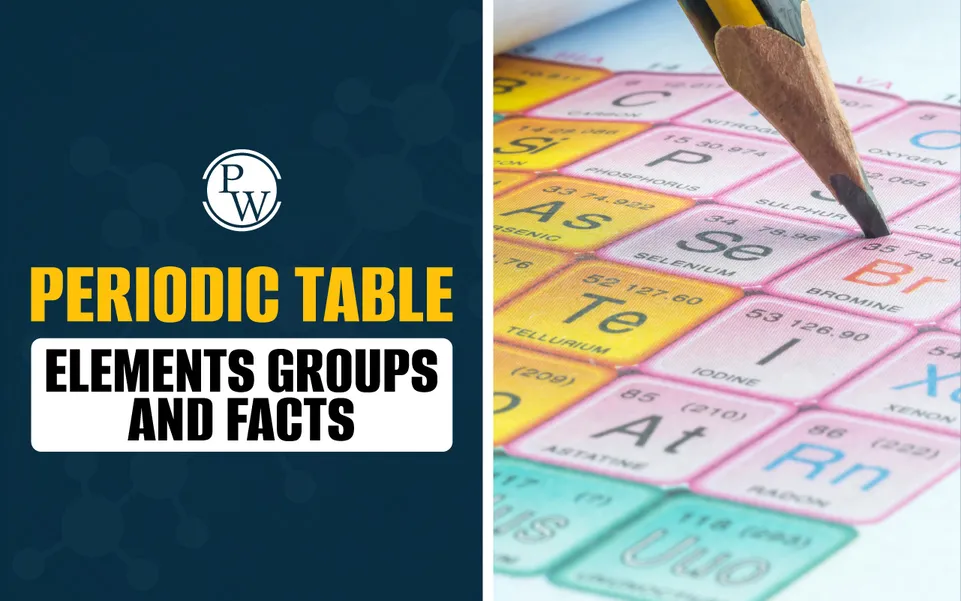
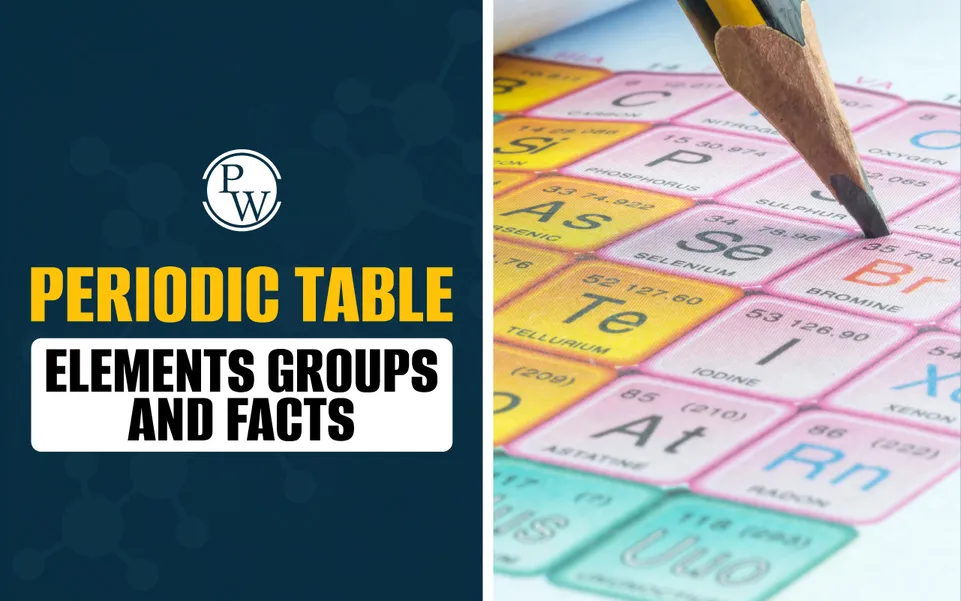
The periodic table of elements represents an organized list of all elements. It’s a significant reference for study about elements and their interrelationships in terms of structure and reactivity.
The periodic table arranges the elements in a specific pattern based on their atomic number, electron configuration, and chemical properties. This blog explores the periodic table, how it's structured, and how it helps us understand the behaviour of elements in chemistry.
Read More: 5 Sense Organs
What Is the Periodic Table of Elements?
The periodic table of elements is a chart that displays all known chemical elements arranged systematically. Each element is represented by its symbol (like H for hydrogen, O for oxygen), and the table provides essential information for each element, such as:
-
Atomic number
-
Atomic mass
-
Element symbol
-
Element name
-
Chemical group
This table helps identify elements and gives a thorough idea of their chemical characteristics and interrelationships.
The History Behind the Periodic Table
A Russian chemist, Dmitri Mendeleev, first published an initial version of the periodic table in 1869. Mendeleev arranged elements by increasing atomic mass and grouped them according to similar chemical properties.
Later, it was found that arranging elements according to atomic numbers is a better way of organizing elements. The modern chemistry periodic table is now arranged in order of increasing atomic number.
Structure of the Atomic Table of Elements
The periodic table includes the symbols of all elements organized in a specific pattern. The different parts of a periodic table are discussed below:
Rows (Periods)
The periodic table has 7 rows called periods. Elements in a particular row contain elements which have the same number of electron shells. The atomic number increases along a period as you move from left to right. The nature of elements also changes along the row.
Columns (Groups)
The periodic table has 18 columns known as groups. Elements in the same group have similar physical and chemical properties because they have the same number of electrons in their outermost shell.
For example:
-
Group 1: Contains very reactive alkali metals
-
Group 17: Contains highly reactive non-metallic halogens
-
Group 18: Contains Noble gases, which are inert and non-reactive
Blocks
The periodic table is divided into four blocks based on the type of elements and their chemical behaviours. These are as follows:
-
s-block: Groups 1 & 2
-
p-block: Groups 13 to 18
-
d-block: Groups 3 to 12
-
f-block: bottom two rows

Read More: Types of Magnets
Periodic Table with Atomic Mass
One of the key features of the periodic table with atomic mass is that it tells you how heavy each atom is on average. For example:
-
Hydrogen (H) has an atomic mass of 1.008 u
-
Carbon (C) has an atomic mass of 12.011 u
-
Oxygen (O) has an atomic mass of 15.999 u
This information about atomic mass helps us understand the chemical reactions, where the mass of reactants must equal the mass of products.
Read More: Facts About the Earth
Categories of Elements in the Periodic Table
The significance of the chemistry periodic table is that it is a structured classification and arrangement of elements based on their properties. The table contains different types of elements as follows:
Metals
-
They are placed on the left and centre of the table.
-
Metals are good conductors of heat and electricity.
-
They are malleable, ductile, and shiny.
-
Metals tend to lose electrons during reactions.
Nonmetals
-
They are placed on the right side of the table.
-
Nonmetals are poor conductors of heat and electricity.
-
They are generally brittle in solid form.
-
Nonmetals tend to gain electrons in reactions.
Metalloids
-
Found along the zigzag line at the right-hand side of the table.
-
They show the characteristics of both metals and nonmetals.
-
Metalloids are used in semiconductors (e.g., silicon, arsenic).
Transition Elements
-
These are the d-block elements.
-
They show properties intermediate between s-block and p-block elements.
-
These elements can produce multiple oxidation compounds.
Halogens
-
Highly reactive non-metallic elements
-
They form salts by reacting with metals
-
These are strong oxidizing agents
Lanthanides and Actinides
-
They are f-block elements.
-
These are called rare earth metals
-
These elements include radioactive elements (uranium, plutonium).
Read More: What is Mass?
How to Use the Periodic Table in Chemistry?
The periodic table of elements is an essential part of chemistry studies. A knowledge of the periodic table helps you understand the following:
-
Predicting Chemical Reactions: Knowing the group helps you predict the reactive behaviour.
-
Valency and Bonding: Electron configuration of elements indicates their bonding behaviour.
-
Acid-Base Behaviour: The position of elements helps determine whether their oxide is acidic or basic.
Interesting Facts About the Periodic Table
-
The last element in the periodic table is oganesson (Og) with atomic number 118.
-
Hydrogen is the first element in the periodic table, with an atomic number and an atomic mass of one.
-
The latest version of the periodic table uses colour code to indicate different types of elements for easy understanding.
The periodic table of elements forms the foundation of modern chemistry. It provides insightful information about the reactivity of elements, the atomic configuration, and the nature of compounds formed through reactions. Students learning to balance equations, understanding chemical bonds, or gaining knowledge about new compounds, everything starts with the periodic table.
Also read: How to Write Fast
Build your Child’s Passion for Science with CuriousJr Online Tuition
Is your child finding science topics boring and difficult to understand? Don’t worry; CuriousJr is here to help. Our online tuition classes for Classes 3 to 8 students is designed to turn confusion into clarity and boredom into curiosity.
Why Choose CuriousJr?
-
Interactive daily live classes keep students engaged and involved by relating science concepts to practical life.
-
Experienced tutors work closely with each child, clarifying tough topics and offering step-by-step guidance.
-
From regular school assignments to science projects, our tutors provide continuous academic support during and beyond class hours.
-
Regular performance updates and feedback reports keep parents updated and help them track the child’s learning journey.
-
Our mentors adapt teaching styles to suit each student’s skills and learning pace.
At CuriousJr, we aim to make learning a joyful experience. Book a demo class today and see how our classes can turn your child into a confident learner ready to excel in the classroom and beyond.