
How Daily Number Talks at Dinner Build Mental Maths Skills in Class 2 Kids
 Nikita Aggarwal29 Jun, 2026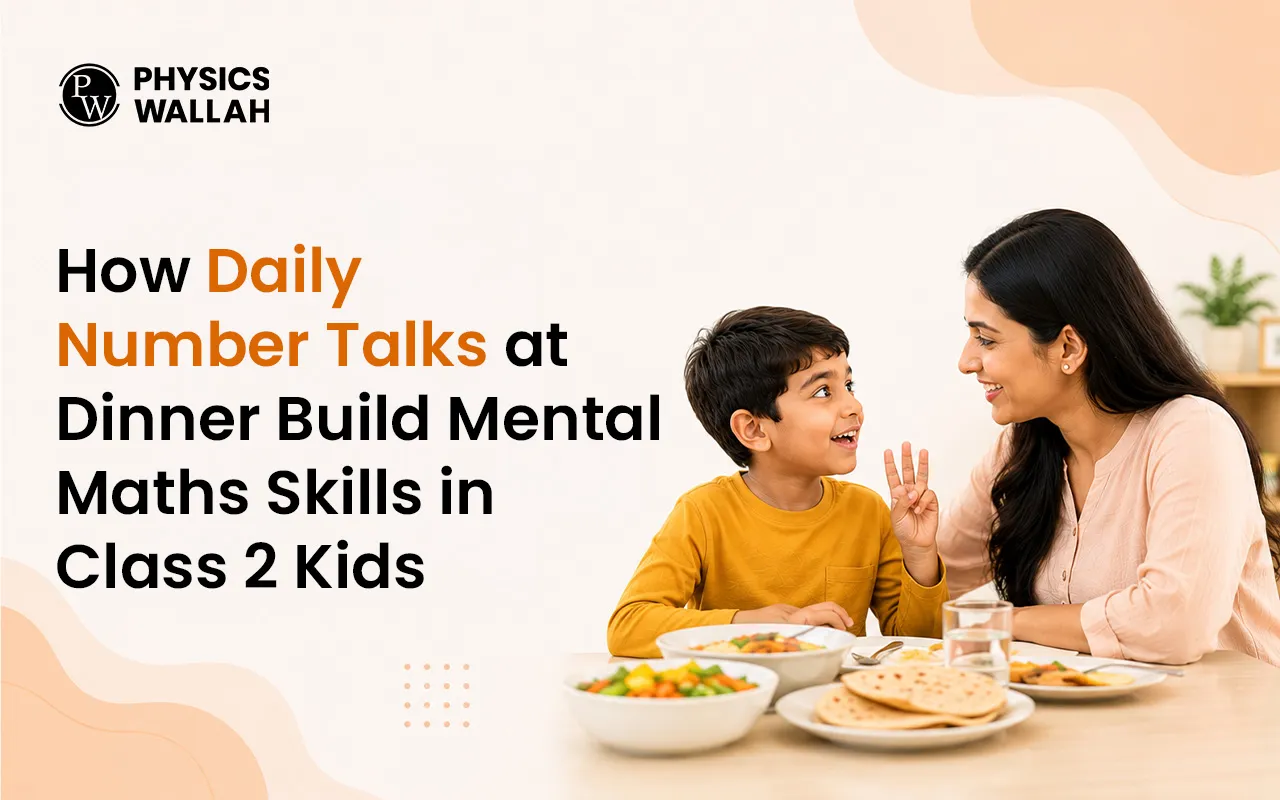
What Are Daily Number Talks?
A daily number talk is a 5- to 15-minute mental-calculation discussion in which kids solve problems mentally and share their thinking. It is not simply about saying the answer as fast as you can, like it would be in a traditional quiz or flashcard drill. The objective is not to get the answer but rather to examine how one arrived at that answer.
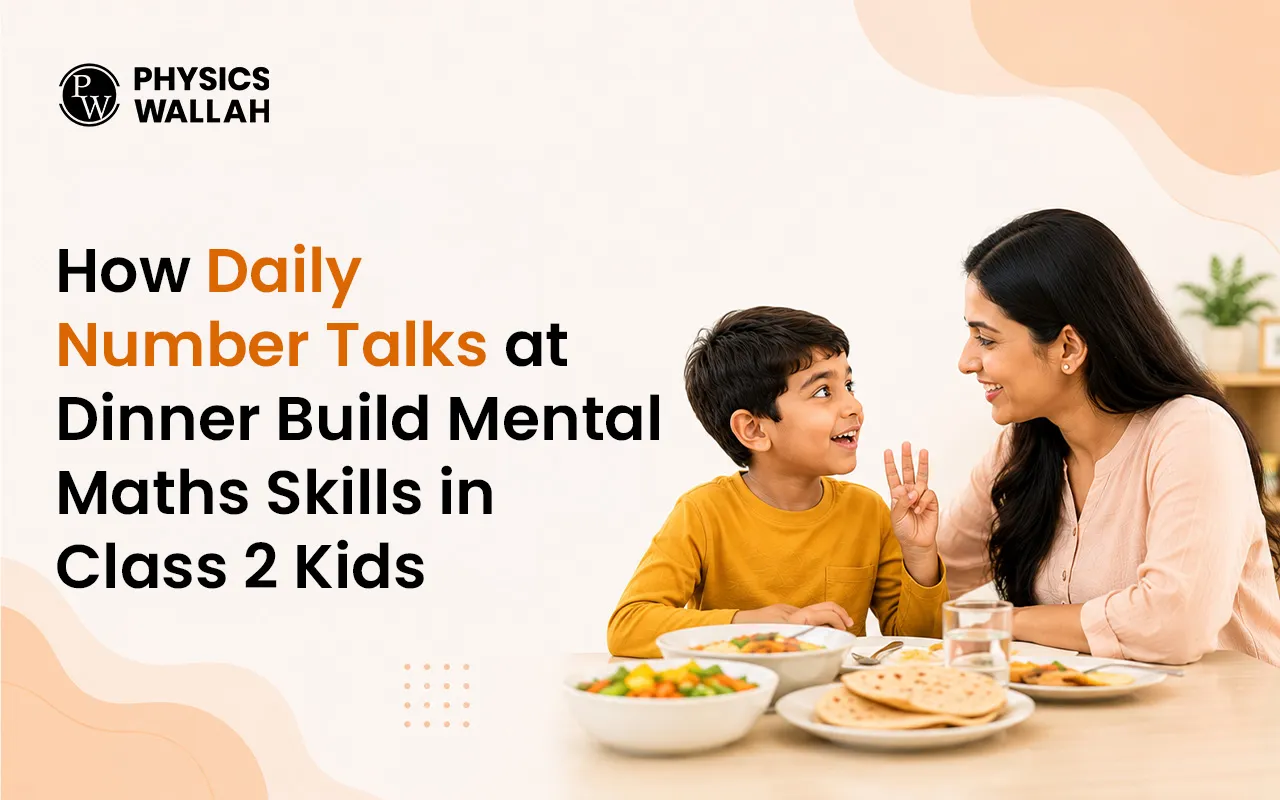
A parent gives a seven-year-old child an age-appropriate mental maths question to use during a number talk. The child solves the problem mentally with no pencils or paper and definitely not by a digital device. They make their strategy by actually saying it out loud as they figure out a solution.
It's a completely new way of approaching mistakes. When a kid puts down the wrong answer, you do not scratch it out or tell them what the right response is. Rather, write down or say the answer neutrally and ask the child to verbalise every step of their process. The process helps them notice their miscalculations without stress, turning mistakes into positive learning opportunities instead of embarrassment.
Read More - Two Digit Addition Tricks for Class 2
Daily Number Talks for Class 2 Mental Maths Improve Number Sense
Far more is needed than rote memorisation of basic facts to develop your fluid calculation skills in the early childhood years. That requires a deep, flexible understanding of how numbers relate to one another, often called ‘number sense’ by educators. When teachers engage children in structured conversations about mathematical ideas, it enables kids to view numbers as flexible pieces that they can break down and recompose.
Conventional worksheets often train kids to follow a linear progression of approaches. Conversational maths, on the other hand, promotes different approaches. For students in Class 2, a spreadsheet format for all related addition does not perform well on something like 36 + 48 mentally, where they first think of their digits aligning strictly by column, and students may accidentally make carrying errors.
Through kind family conversations a child learns to change this problem (making it way easier) using wise, different numerical tricks.
-
Number Splitting: Breaking numbers into tens and ones (e.g., adding 30 and 40 to get 70, then adding 6 and 8 to get 14, and finally combining 70 and 14 to reach 84).
-
Compensation: borrow a little bit from one number to change another into a nice friendly 10 (e.g., take away 2 from 36 and add it to 48 in order for it to be an accessible base of ten (50)).
-
Using Base 10 Components: Identifying making numbers into 10 or 20 makes addition easier for adding larger numbers.
There are many children in Class 2 who never make it beyond the physical counting methods, as they do not have the confidence to work with numbers more abstractly. This is where casual numerical conversations can fill the gap. When they voice their ideas, children discover that numbers are blending and unblending sets.
This habit works in the background to train your brain more than two- or three-digit addition and subtraction with what's called traditional school arithmetic, freeing you of digit dependency long before Class 2 students are dependent on it as schoolwork progresses.
Easy Dinner Table Activities Using Daily Number Talks for Class 2 Mental Maths
The dinner table, in particular, is an excellent place to practise Class 2 maths at dinnertime because the environment is led by being face-to-face. All these maths activities for kids at home can be done right without any physical things, using a thing that is already on the table or some kind of normal scenario.
1. The Friendly Ten Shift
Use a problem in which one of the numbers is very near to that rounded number (as shown before) Then ask your child how they can change the numbers to get an answer quickly.
-
Example: "If I have, on one side of the plate, 27 peas and on the other side there are 5 peas – how can we know how many we have there altogether?"
-
The Conversation: Encourage them to notice that taking 3 from the 5 and adding it to 27 gives you a 'nice, round' number — so now all we need is another couple of tens left over, and then simply add on this amount without even thinking!
2. The Story Tracker
Design a real-time, story-like problem related to the dinner context for practising attention and multi-step mental tracking.
-
Example: On a platter containing 20 chips, Dad is taking 5 chips, but Mum puts another 2 from the oven. Then they would ask how many chips are on the platter now?"
-
The Conversation: This involves the child carrying an intermediate value (15) mentally while undertaking a subsequent operation (+ 2), directly mirroring one of the common types of multi-step word problems that students encounter in their school assessments.
3. The Change Maker
You could then use the dinner items as stores for a local shop, teaching core concepts of money / value and subtraction.
-
Example: "This bowl of soup is 30 p, and a piece of bread is 20 p. If I use a 100 pence note to pay, how much change will it give me?"
-
The Conversation: The child first has to calculate the added costs (30 + 20 = 50) and then complement that in order for it to come up to an amount of money equal to one hundred currency units, e.g., cents.
4. The Sequence Spinner
Spice up the conversation by making speedy pattern recognitions and sequence completions using reverse counting or skip intervals.
-
Example: "Fill in the blank for me: 35, 34, 33, 32, 31, __?"
-
The Conversation: When they say '30', change the pattern and test their skip-counting knowledge by calling out numbers that fit either the '2s' or '5s' (e.g., 'five', 'ten', 'fifteen'…) patterns. Have them describe the hidden rule that generates the sequence.
Read More - Spot the Odd One Out Mental Maths Tricks for Class 2
Benefits of Daily Number Talks for Class 2 Mental Maths
Committing to a daily maths routine for kids results in substantial long-term academic and psychological benefits.
-
Eliminates Exam Hesitation: Solving math problems in their head gets rid of that terrible sudden crash when kids take timed school tests. They face exam papers confidently and easily because of their everyday practice in manipulating numbers.
-
Reduces Homework Friction: Automating basic calculations means completing school assignments is very quick to accomplish. The kids no longer avoid doing the homework because that basic processing does not feel tiring or difficult.
-
Builds Academic Risk-Taking: Since number talks praise the reasoning process as opposed to just an answer, kids stop being afraid of making mistakes. It encourages quiet or timid students to practise speaking their mind openly.
-
Sharpened Cognitive Accuracy: Mental exercises strengthen working memory. This natural cross-checking vastly reduces careless errors in basic addition and subtraction.
How Does CuriousJr Help with Class 2 Mental Math?
Dinner table conversations are a wonderful starting point at home, and when paired with an organised educational framework, they can help propel a child academically faster.
And this is where the support system for young learners of CuriousJr comes into play. A Few Unique Features Make CuriousJr Fun Maths For Class 2 Students' Everyday Practice
-
Structured Vedic Maths Tricks: Helpful calculation shortcuts (like complements to 10 and 20, addition from left to right or splitting numbers) are systematically taught. These methods complement the discussions had at dinner perfectly.
-
Cognitive Skill Development: The curriculum delves deeper than simple arithmetic to help develop these essential cognitive skills such as logical reasoning, spatial awareness, visual discrimination and sequencing patterns.
-
Interactive, Gamified Sessions: Complete the session without losing engagement. This plan of action teaches them to stop counting on their fingers and helps improve speed, accuracy and confidence in calculations through repetitive practice.




How Daily Number Talks at Dinner Build Mental Maths Skills in Class 2 Kids FAQs
What exactly is a daily number talk, and how does it help with Class 2 mental maths?
How can I easily introduce mental maths at home Class 2 students will enjoy it.
Why should parents focus on Class 2 maths practice at dinner instead of worksheets?
Can daily conversational activities serve as everyday maths for kids of all learning levels?


Get Free Counselling Today
and Clear up all your Doubts
 Live & recorded classes available at easeDashboard for progress trackingLakhs of practice questions

