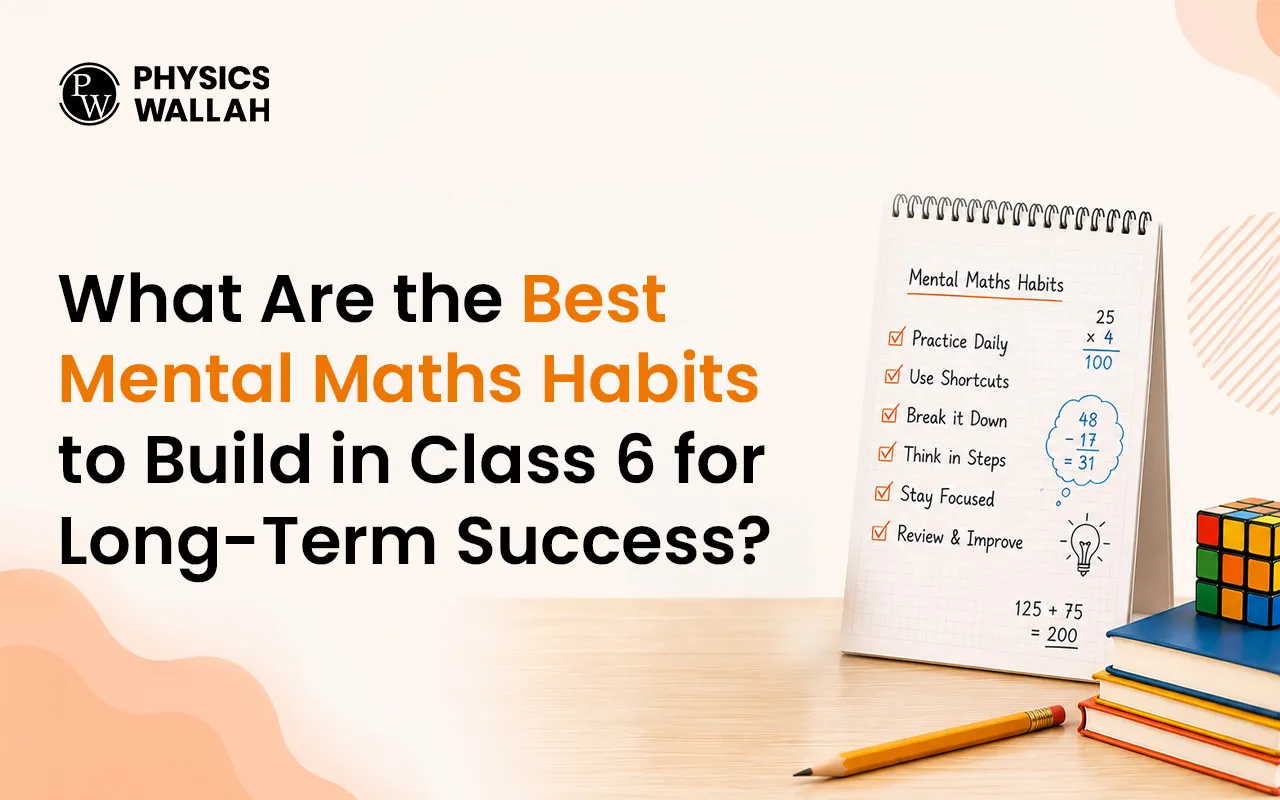
What Are the Best Mental Maths Habits to Build in Class 6 for Long-Term Success?
 Nikita Aggarwal24 Jun, 2026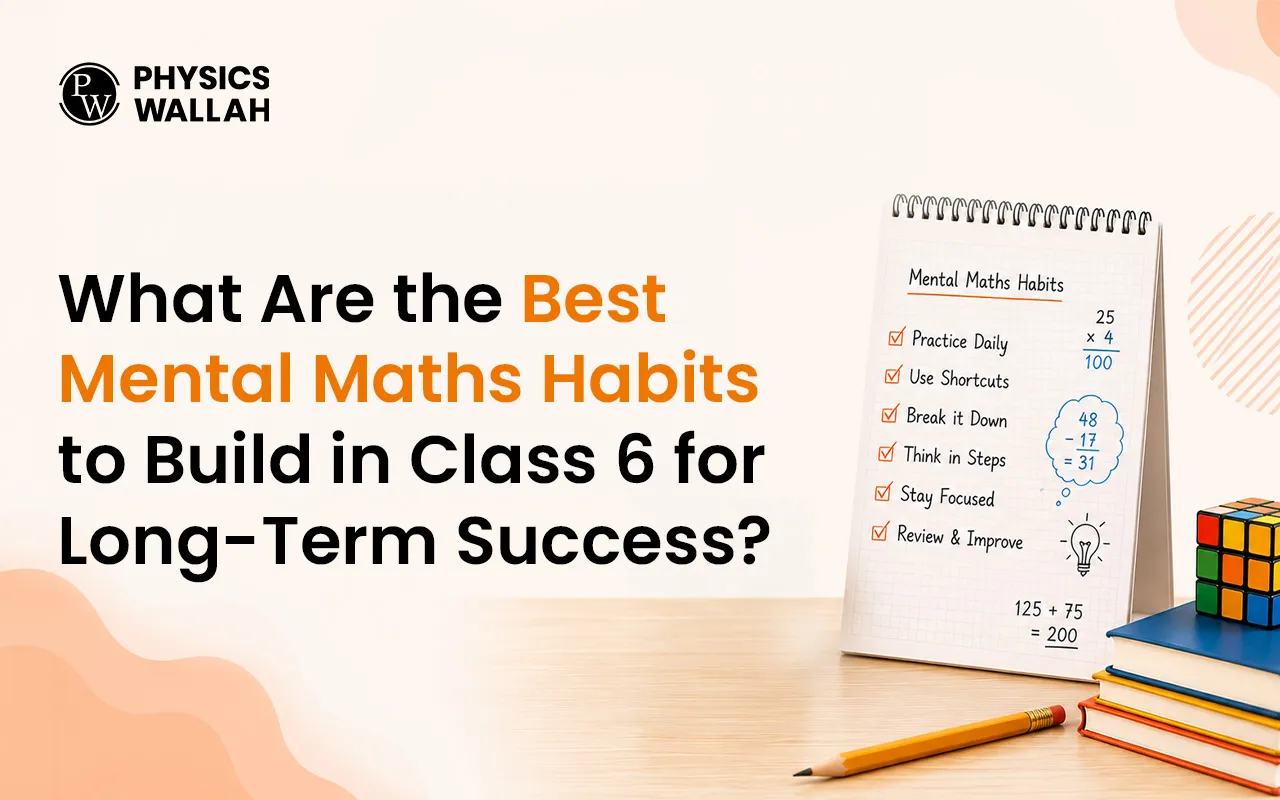
Importance of Mental Maths Habits Class 6 Long-Term Success
Transitioning to secondary school mathematics requires a shift from slow, mechanical calculations to rapid, logical problem-solving. Developing everyday mental maths habits changes the way a student interacts with numbers, ensuring they do not get left behind as school syllabi expand.
Overcoming the Secondary School Maths Jump
In lower primary classes, maths is highly visual and concrete. In Class 6, the curriculum introduces abstract concepts such as variables, ratios, and fractional parts. Without automatic mental calculation skills, students spend too much mental energy on basic multiplication or subtraction, leaving very little cognitive room to comprehend the actual problem-solving logic.
Boosting Speed and Accuracy in Exams
School exams typically have a lot of time strain on the students. Establishing a mental arithmetic practice allows students to check their written answers in their heads in seconds. This double layer of thinking prevents stupid calculation mistakes, increases test scores, and creates a sensation of fearlessness while working on long papers.
Best Mental Maths Habits Class 6 Long-Term Success
To secure long-term maths skills Class 6, students must move past simple rote memorisation and instead embrace flexible number manipulation strategies. The following habits form the foundation of a highly effective daily maths regimen.
1. Learning the Base Method (Compliments to 10, 100, and 1000)
The absolute cornerstone of quick mental calculations is finding number pairs that add up to a clean base, such as 10, 100, or 1000.
-
Knowing instantly that 64 needs 36 to make 100 simplifies multi-digit addition.
-
This habit forms the basis for complex subtraction, allowing students to "count up" mentally from a smaller number to a larger one.
2. Utilizing Doubling and Halving for Large Numbers
When faced with multiplying large digits, breaking them down by doubling one side and halving the other makes the problem manageable in your head.
-
To solve 14 multiplied by 16, a student can halve 14 to get 7, and double 16 to get 32.
-
The problem becomes 7 multiplied by 32, which can easily be processed mentally as 210 plus 14, giving a final answer of 224.
3. Applying Number Splitting for Multi-Digit Operations
Number splitting involves breaking a number down into its place value components before performing an operation. It shifts the calculation process from a rigid right-to-left format to a more natural left-to-right flow.
|
Original Problem |
Split Strategy |
Mental Calculation Steps |
Final Answer |
|
83 + 46 |
Split by tens and units |
(80 + 40) and (3 + 6) |
120 + 9 = 129 |
|
65 × 4 |
Split into tens and units |
(60 × 4) and (5 × 4) |
240 + 20 = 260 |
|
148 - 79 |
Treat 79 as (70 + 9) or (80 - 1) |
148 - 80 + 1 |
68 + 1 = 69 |
4. Learning Targeted Multiplication and Division Tricks
Class 6 students frequently interact with specific numbers like 5, 9, 11, and 25 across fractions and percentage problems. Memorising specific shortcuts for these numbers changes how fast papers are completed.
-
Multiplication by 5: Multiply the target number by 10 instead, then cut the result in half. For instance, 48 multiplied by 5 becomes 480 divided by 2, which equals 240.
-
Squaring numbers ending in 5: To square 65, multiply the first digit (6) by the next consecutive number (7) to get 42, then attach 25 to the end, resulting in 4,225.
Read More - Coding-Decoding Mental Maths Tricks for Class 6
Daily Mental Maths Habits Class 6 Long-Term Success
Consistency is far more valuable than prolonged, exhausting study sessions. A focused ten-minute window every day can completely transform a child's mathematical capacity over the course of an academic year.
The Ten-Minute Daily Brain Warm-Up
Before diving into homework or structured textbook chapters, students should engage in rapid-fire number games. This acts as a cognitive warm-up, activating problem-solving centers in the brain.
-
Spend 3 minutes practicing complement pairs to 100 or 1000.
-
Spend 4 minutes applying Vedic maths tricks to double-digit multiplications.
-
Spend 3 minutes running through inverse operations, such as checking division problems through fast mental multiplication.
Blending Practice with Daily Tasks
Maths should not exist only inside a school textbook. Parents and educators can encourage children to apply their calculation habits to real-world scenarios, making the learning process highly practical.
-
Shopping calculations: Ask your child to calculate the total price of two items or work out the change due from a note using base methods.
-
Time tracking: Have them compute the exact minutes left until an event or trip, using time and calendar calculation methods.
-
Recipe tracking: Ask them to halve or double ingredient measurements mentally to practice fractions and core division skills.
Read More - Finding Remainders Using Vedic Method for Class 6
Parent Tips to Support Mental Maths Habits Class 6 Long-Term Success
Helping a child during the move to Class 6 requires support, patience, and good study habits at home.
Focus on the Method, Not Just the Answer
Ask your child how they solved the problem, not just what answer they got. When children explain their thinking, they strengthen their understanding and identify areas where they may need more practice.
Treat Mistakes as Learning Opportunities
Mistakes are a normal part of learning maths. Instead of focusing only on wrong answers, help your child find where the mistake happened. This helps them improve their calculation skills and build confidence.
Reduce Calculator Dependence
Try to limit the use of calculators for everyday homework. Solving calculations mentally helps students strengthen their number skills and develop better mental maths habits.
Celebrate Speed Improvements
Track your child's progress in a fun and positive way. Time simple mental maths activities and celebrate when they solve questions faster than before. Seeing their speed improve helps build motivation and confidence.
These simple Class 6 maths success tips can help students develop strong calculation habits, improve accuracy, and build confidence for future maths learning.
How CuriousJr Helps with Mental Maths Habits Class 6 Long-Term Success
Building strong mental maths habits can be challenging without regular guidance and practice. CuriousJr online class 6 mental maths class helps students develop these skills through a structured and engaging learning experience.
The platform focuses on common learning challenges faced by Class 6 students and helps them build confidence through step-by-step learning and regular practice.
Complete Class 6 Syllabus Support
CuriousJr follows the Class 6 curriculum and connects mental maths techniques with important topics such as integers, decimals, percentages, data handling, and basic algebra.
Interactive Live Classes
Students learn through live classes led by experienced teachers. These sessions include mental maths techniques, Vedic maths methods, and quick calculation strategies while giving students the chance to ask questions and clear doubts instantly.
Fun and Engaging Practice Activities
The platform uses games, puzzles, number patterns, sequences, and reasoning activities to make learning enjoyable. These activities help improve both calculation speed and logical thinking skills.
Regular Practice and Progress Tracking
CuriousJr offers regular practice exercises which allow children to improve crucial abilities such as number splitting, left to right addition and answer checking strategies. Practise them regularly and they become second nature.




What Are the Best Mental Maths Habits to Build in Class 6 for Long-Term Success? FAQs
Why are mental maths habits Class 6 important for long-term success?
How do online mental maths Class 6 programs improve school performance?
Can students who struggle with maths develop strong long-term maths skills Class 6?

Get Free Counselling Today
and Clear up all your Doubts
 Live & recorded classes available at easeDashboard for progress trackingLakhs of practice questions