
Smart Classification Mental Maths Tricks for Class 2
 Nikita Aggarwal29 May, 2026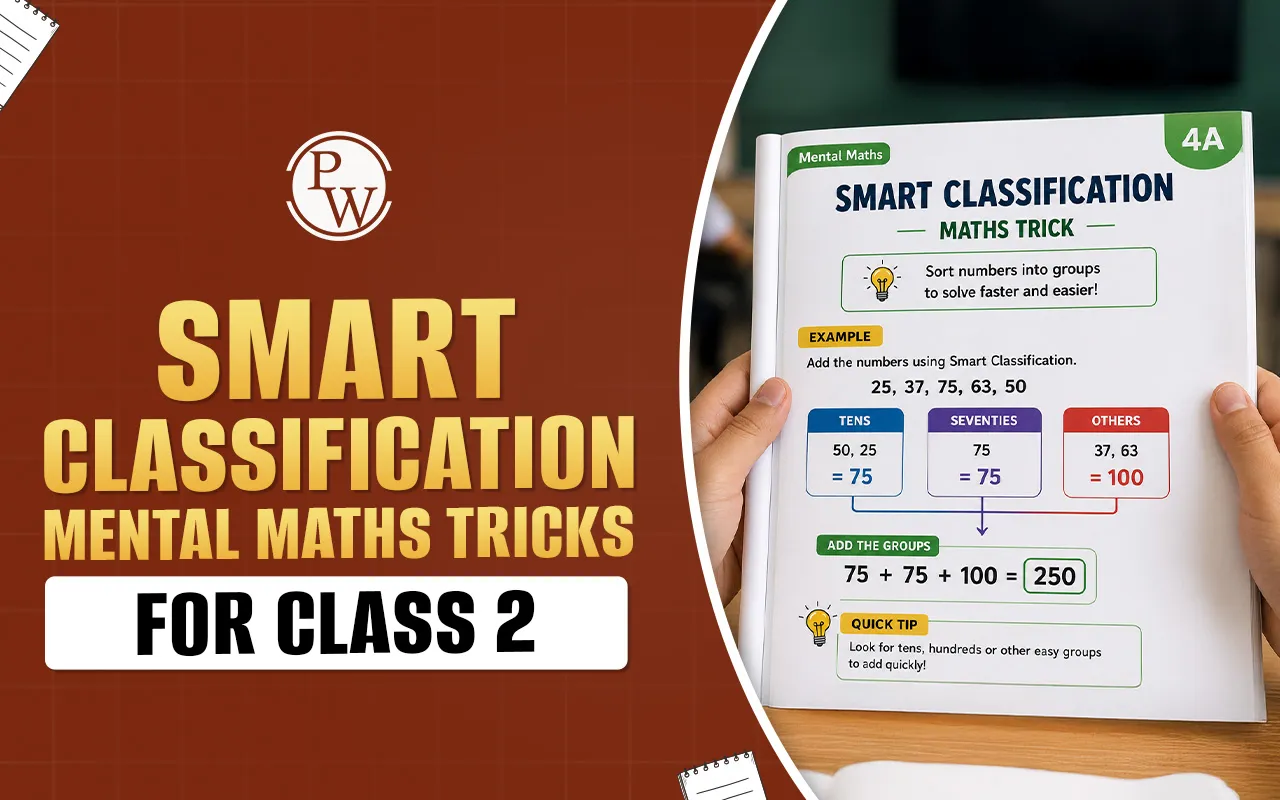
Importance of Smart Classification Mental Maths Tricks
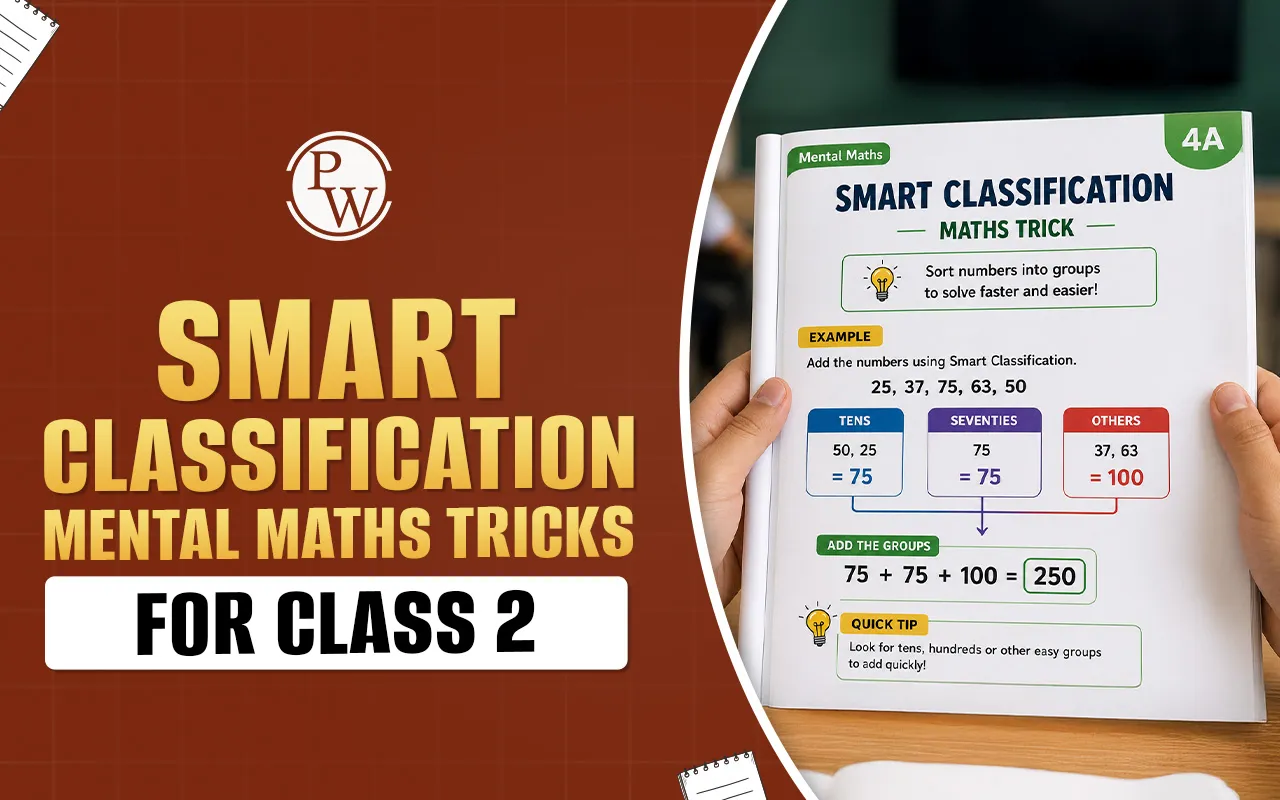
Teaching smart classification mental maths tricks changes the way children think about numbers. Instead of solving every number slowly, children begin noticing patterns and groups.
-
Stops Finger Counting: Children slowly stop using fingers because they learn to picture number groups in their minds.
-
Improves Speed: When numbers are sorted into easy groups, sums become much faster to solve.
-
Better Number Understanding: Children understand how numbers connect with each other. This improves number sense and thinking skills.
-
Less Homework Stress: Quick solving makes homework easier and less tiring for children.
-
Better Accuracy: Grouping numbers carefully helps children make fewer small mistakes during maths work.Stronger Learning for Future Classes: These skills help children later in multiplication, division, geometry, and bigger maths topics.
How to Start with Smart Classification Mental Maths Tricks?
To teach class 2 smart classification, children should first learn with real objects before moving to number problems. Young learners understand maths better when they can touch, move, and sort things physically.
Parents and teachers can use blocks, buttons, pencils, beads, or toys for practice. Children can sort these objects by:
-
Colour
-
Shape
-
Size
-
Number
-
Type
This simple activity trains the brain to notice patterns and categories. Later, children use the same thinking process while solving maths sums.
For example, a child may sort red blocks into one group and blue blocks into another. In maths, they later sort even numbers and odd numbers in the same way.
Smart Classification Mental Maths Tricks with Number Groups
After learning with objects, children can begin grouping real numbers.
Parents or teachers can write random numbers from 1 to 50 and ask children to sort them into groups like:
-
Numbers below 20
-
Numbers between 20 and 40
-
Numbers above 40
This teaches children how numbers are placed and connected. They slowly understand small numbers, bigger numbers, and number order.
This method also helps children guess answers faster because they develop a stronger understanding of number size.
Read More - Spot the Odd One Out Mental Maths Tricks for Class 2
Smart Classification Mental Maths Tricks Using Groups of 10
One of the easiest kids' mental maths tricks is learning how to make groups of 10.
Children learn to find number pairs that quickly become 10. This makes addition much easier.
Example
3 + 7 + 4 + 6 + 2
Easy Grouping
(3 + 7) and (4 + 6)
Mental Answer
10 + 10 + 2 = 22
Instead of solving numbers one by one, children first look for friendly number pairs. This saves time and improves speed.
After regular practice, children begin spotting these number pairs very quickly.
Smart Classification Mental Maths Tricks with Tens and Ones
Children in Class 2 also learn how to break numbers into tens and ones. This is one of the best class 2 mental maths methods.
Example
45 + 32
Step 1
Separate the tens.
40 + 30 = 70
Step 2
Separate the ones.
5 + 2 = 7
Step 3
Add both answers.
70 + 7 = 77
This method helps children solve bigger sums without getting confused.
Children slowly understand place value better because they clearly see the difference between tens and ones.
Read More - Two Digit Addition Tricks for Class 2
Smart Classification Mental Maths Tricks Using Doubles
Learning doubles is another useful trick for faster maths.
Children first memorise simple doubles like:
-
2 + 2 = 4
-
3 + 3 = 6
-
5 + 5 = 10
-
6 + 6 = 12
After learning doubles, near doubles become very easy.
Example
6 + 7
Children can think:
6 + 6 + 1 = 13
This simple trick helps children solve sums faster because they use answers they already remember.
Fun Smart Classification Mental Maths Tricks for Kids
Children learn best through games and activities. These sorting and classification activities grade 2 children enjoy make maths fun and exciting.
|
Activity Name |
Learning Goal |
How to Play |
|
The Odd One Out |
Finding numbers that do not match |
Show a list of numbers and ask which one is different |
|
Tens Frame Sorting |
Learning groups of 10 |
Use counters to build full groups of 10 |
|
Venn Diagram Game |
Sorting numbers using two rules |
Place numbers into matching circles |
These activities help children practise grouping without feeling bored.
Games also improve focus and memory because children stay active during learning.
Smart Classification Mental Maths Tricks with Odd and Even Numbers
Learning odd and even numbers is an important part of smart classification and mental maths tricks.
Children can sort numbers into two groups:
Even Numbers
2, 4, 6, 8, 10
Odd Numbers
1, 3, 5, 7, 9
This activity helps children notice number patterns very quickly.
Teachers can also turn this into a classroom game by asking children to jump into “odd” or “even” corners after hearing a number.
Fun movement activities help children remember concepts better.
Smart Classification Mental Maths Tricks in Daily Activities
Maths learning does not always need books or worksheets. Parents can practise mental maths for class 2 during daily routines.
-
During Shopping: Ask children to count fruits or estimate small totals.
-
During Cooking: Ask children to group spoons, plates, or vegetables.
-
During Travel: Children can count cars, signs, or objects by groups.
-
During Play Time: Sorting toys by size or colour also builds classification skills.
Small daily maths practice improves confidence naturally.
How to Learn Smart Classification Mental Maths Tricks at Home?
Parents can easily create simple maths games at home.
Colour Sorting
Ask children to separate coloured objects into groups.
Number Card Game
Write numbers on paper cards and ask children to sort them into:
-
Even and odd
-
Big and small
-
Tens and ones
Fast Pair Game
Ask children to quickly find two numbers that make 10.
These short activities improve number thinking without creating pressure.
Children who learn classification tricks often improve concentration, too.
Grouping activities trains children to:
-
Notice details
-
Follow patterns
-
Compare numbers
-
Organise information
These thinking skills help not only in maths but also in reading, puzzles, and daily learning.
Children also become more patient when solving problems because they learn to think step by step.
Smart Classification Mental Maths Tricks with Visual Learning
Many young learners understand maths faster when they can see pictures and visual models.
Teachers can use:
-
Tens frames
-
Number lines
-
Colour blocks
-
Dot cards
-
Counters
Visual learning helps children understand number groups clearly.
For example, children can quickly see that 8 needs 2 more to become 10 when using counters.
This method makes mental maths feel easy instead of difficult.
How to Learn Smart Classification Mental Maths Tricks with CuriousJr?
CuriousJr online mental maths class chelps children learn smart classification and mental maths tricks through simple and fun online learning methods.
-
Easy Visual Lessons: Children learn with pictures, patterns, and number games.
-
Step-by-Step Practice: Lessons slowly move from easy grouping to harder maths skills.
-
Interactive Games: Fun puzzles and sorting games help children stay interested.
-
Friendly Learning Support: Teachers guide children patiently during live practice sessions.
-
Strong Maths Foundation: Children build better speed, confidence, and number understanding for future school learning.