
Math Quotes for Students: Inspirational & Short Quotes
 Amit Lingwal22 Oct, 2026


Inspirational Maths Quotes for Students
Inspirational maths quotes for students can highlight the importance of understanding, curiosity, and persistence. They are useful for classroom displays, school projects, and study notebooks, especially when students need encouragement to keep working through challenging questions. Choose quotes that connect with the student's age and experience, and explain what the words mean instead of displaying them without context.
-
“Without mathematics, there’s nothing you can do. Everything around you is mathematics. Everything around you is numbers.” — commonly attributed to Shakuntala Devi; verify the original source before publication.
-
“Mathematics is not about numbers, equations, computations, or algorithms: it is about understanding.” — commonly attributed to William Paul Thurston; verify the wording and source.
-
“Pure mathematics is, in its way, the poetry of logical ideas.” — commonly attributed to Albert Einstein; verify the attribution.
-
“The essence of mathematics is not to make simple things complicated, but to make complicated things simple.” — commonly attributed to S. Gudder; verify the original source.
-
“I’ve always enjoyed mathematics. It is the most precise and concise way of expressing an idea.” — verify the speaker and original wording before attributing.
These mathematics quotes encourage students to look beyond memorising formulas. Mathematics also involves identifying patterns, explaining why a method works, and applying what has been learned to new problems. Teachers can ask students to select one quote and describe how it relates to their own experience of learning maths.
CuriousJr encourages students to enjoy mathematics through inspiring math quotes that build confidence, promote logical thinking, and make learning maths more enjoyable.
Math Quotes for Students
Math quotes for students can be used to introduce a school speech, decorate a mathematics notebook, or encourage classmates before an exam. The most useful messages focus on effort and problem-solving rather than suggesting that every question should be easy. Students can also discuss the meaning of a quotation in class to practise explaining ideas in their own words.
-
“It’s not that I’m so smart; it’s just that I stay with problems longer.” — commonly attributed to Albert Einstein; verify the original source.
-
“Just because we can’t find a solution, it doesn’t mean there isn’t one.” — commonly attributed to Andrew Wiles; verify the attribution.
-
“Mathematics is the most beautiful and most powerful creation of the human spirit.” — commonly attributed to Stefan Banach; verify the wording.
-
“Mathematics knows no races or geographic boundaries; for mathematics, the cultural world is one country.” — commonly attributed to David Hilbert; verify the original source.
CuriousJr Mental Maths Classes help students develop calculation skills, strengthen problem-solving abilities, and build a positive attitude towards maths through engaging practice and activities.
How Students Can Use Math Quotes
A mathematics quote becomes more meaningful when students connect it with a real activity or learning goal. Instead of choosing a line only because it sounds impressive, consider where it will appear and who will read it. Students can use a quote to begin a presentation, add a message to a project, or remind themselves to practise patiently when a maths topic feels difficult.
-
Start a school speech or presentation with a relevant quote.
-
Add a short line to a maths notebook or classroom board.
-
Use a mathematics-themed message in a school project.
-
Choose an encouraging thought before practising difficult questions.
-
Explain a quote's meaning in an essay or classroom discussion.
For more practice, students can explore basic maths symbols with names, meanings and examples and try math tricks that make learning easier.
Short Math Quotes for Students
Short math quotes are useful when space is limited, such as on a classroom board, poster, notebook cover, or school project. A concise quotation is easier to remember, but its meaning should still be clear to the intended audience. Students can choose a line about reasoning, patterns, or persistence, then explain how it relates to learning mathematics.
-
“Mathematics is the music of reason.” — commonly attributed to James Joseph Sylvester; verify the source.
-
“Nature is written in mathematical language.” — commonly attributed to Galileo Galilei; verify the original wording.
-
“Wherever there is number, there is beauty.” — commonly attributed to Proclus; verify the attribution.
-
“There should be no such thing as boring mathematics.” — commonly attributed to Edsger W. Dijkstra; verify the source.
-
“Mathematics allows for no hypocrisy and no vagueness.” — attribution and wording should be checked before publication.
Short Math Quotes for a School Board
For a classroom board or school poster, original motivational lines can be a practical alternative to attributed quotations. These short math quotes are written as original messages, so they do not need to be assigned to a mathematician or scientist. Teachers can display one each week and ask students to explain how it applies to their learning.
-
Think logically. Solve patiently.
-
Every problem has a strategy.
-
Practice turns confusion into confidence.
-
Numbers tell stories. Learn to read them.
-
Make mistakes. Learn the method. Try again.
-
Keep practising, one problem at a time.
Students can also explore patterns in maths to see how numbers and shapes follow rules that can be identified and explained.
Inspirational Positive Math Quotes
Positive math quotes can remind students that difficulty is a normal part of learning. A challenging question may require several attempts, a different strategy, or help from a teacher. These messages work best when they encourage effort without suggesting that confidence alone guarantees success. Understanding grows through practice, feedback, and a willingness to review mistakes.
-
“Mathematics has beauty and romance. It’s not a boring place to be, the mathematical world. It’s an extraordinary place; it’s worth spending time there.” — commonly attributed to Marcus du Sautoy; verify the original source.
-
“Mathematics is the art of giving the same name to different things.” — commonly attributed to Henri Poincaré; verify the wording.
-
“Mathematics reveals its secrets only to those who approach it with pure love, for its own beauty.” — commonly attributed to Archimedes; verify the original source.
A positive attitude can help students stay engaged, but it is not a substitute for learning the concepts. When a method does not work, students can return to the question, check each step, and try another approach. That process helps them develop mathematical reasoning and become more comfortable with unfamiliar problems.
Math Quotes for Kids
Math quotes for kids should use simple words and encourage curiosity without making mathematics sound intimidating. Parents and teachers can use these messages during homework, maths activities, or classroom discussions. Younger children may respond especially well to short, original lines that remind them to ask questions, notice patterns, and work through a problem one step at a time.
-
“You do not have to solve every problem at once. Start with the first step.” — original motivational message.
-
“Every mistake can teach you something new.” — original motivational message.
-
“Ask questions, look for patterns, and keep trying.” — original motivational message.
-
“One small step can bring you closer to the answer.” — original motivational message.
When using a quotation attributed to a famous person, adults should check its source and explain any difficult words. A simple message that children understand can be more useful than a complicated quotation. CuriousJr also offers learning resources and maths activities that families can explore alongside regular practice.
Also Read, Rounding numbers with simple definitions, rules, step-by-step methods, and examples. Understand how to round numbers to the nearest ten, hundred, thousand, or decimal place and solve maths problems accurately.
Maths Thoughts in English for Students
A maths thought in English can be used as a thought of the day, morning assembly message, classroom prompt, or reminder in a student's notebook. The best thought is short enough to remember and clear enough to explain. Students can read the line aloud, discuss its meaning, and connect it with an example from a maths lesson or everyday life.
-
Mathematics teaches us to look for patterns and think logically.
-
A difficult maths problem is a chance to try a new method.
-
Practice helps turn mistakes into learning opportunities.
-
Understanding the method matters as much as finding the answer.
-
Mathematics teaches patience, precision, and curiosity.
-
Read the problem carefully before choosing a method.
-
If one approach does not work, try another.
-
Maths is not only about answers; it is also about learning how to think.
These maths thoughts in English can help students connect mathematical learning with everyday habits such as careful reading, checking work, and explaining a solution. Teachers can ask students to choose a thought and give an example of how they applied it while solving a question.
Motivational Quotes for Maths Students
Motivational quotes for maths students can offer encouragement during revision and exam preparation. A short message may help students remember to focus on the next step instead of worrying about the entire syllabus. However, effective preparation still depends on understanding concepts, solving practice questions, reviewing errors, and asking for help when a topic remains unclear.
-
“It’s not that I’m so smart; it’s just that I stay with problems longer.” — commonly attributed to Albert Einstein; verify the source before publication.
-
Read the question carefully before solving it. — original motivational message.
-
One difficult question does not define your maths ability. — original motivational message.
-
Practise the concepts you find difficult. — original motivational message.
-
Check your working, not only the final answer. — original motivational message.
-
Consistent practice is more useful than leaving everything until the last minute. — original motivational message.
Students preparing for a maths exam can turn these motivational lines into practical goals. For example, they can set aside time for difficult topics, show each calculation clearly, and keep a record of mistakes to review later. These habits make revision more focused than simply reading motivational quotes.
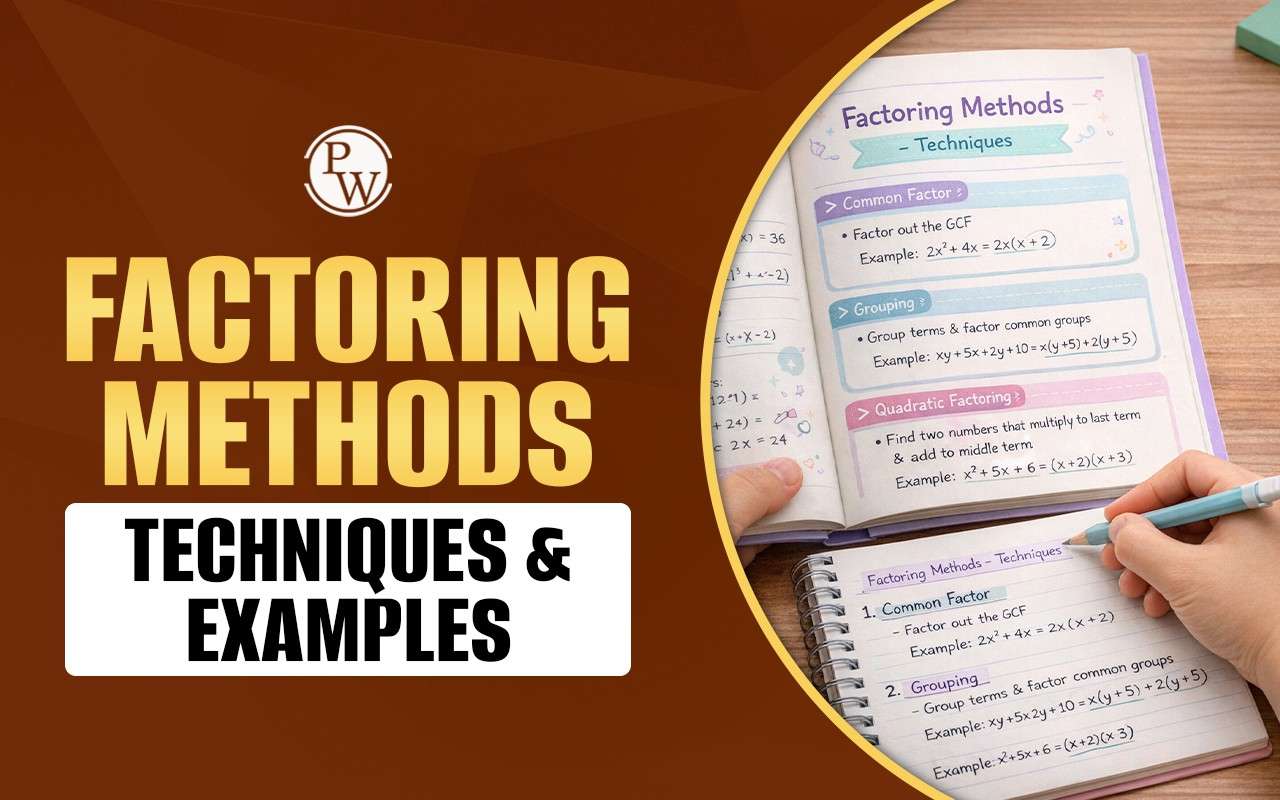
Also Read, Factoring methods with clear explanations of different types, step-by-step methods, and solved examples. Understand how to factorise numbers and algebraic expressions, identify common factors, and solve maths problems accurately.
Mathematics Quotes by Indian Mathematicians
Mathematics quotes associated with Indian mathematicians can be useful for school projects, presentations, and Mathematics Day activities. Students should distinguish between a person's verified words and a quotation that is merely circulated online. Before printing a quote beside a mathematician's name, check a reliable biography, published work, interview, or other traceable source for the original wording.
Srinivasa Ramanujan
Srinivasa Ramanujan was an Indian mathematician whose work made important contributions to number theory, infinite series, and related areas. His life and achievements are often featured in school projects and National Mathematics Day activities. If using a quotation associated with Ramanujan, confirm its source and wording before publication, particularly when it is presented as a direct statement.
The quotation “An equation for me has no meaning, unless it expresses a thought of God” is often associated with Ramanujan. Verify the attribution and original context against a reliable source before using it in a school resource.
Shakuntala Devi
Shakuntala Devi was an Indian mental calculator and author known for performing complex arithmetic calculations mentally. Her name is relevant to content about mathematics, number skills, and mental calculation. If a quote is attributed to her, confirm the exact wording and source rather than relying solely on quote collections or social media posts.
Mathematics Quotes by Famous Mathematicians
Mathematics has inspired mathematicians, scientists, philosophers, and writers to reflect on logic, patterns, and discovery. Names often featured in mathematics quotation collections include Albert Einstein, David Hilbert, Shakuntala Devi, Srinivasa Ramanujan, Galileo Galilei, Henri Poincaré, Stefan Banach, James Joseph Sylvester, Edsger W. Dijkstra, and Marcus du Sautoy.
A name's inclusion in a quotation collection does not confirm that every quote assigned to that person is authentic. For school projects and published educational content, check the original source whenever possible and clearly label original motivational messages so they are not mistaken for historical quotations.
Mathematics Day Quotes
National Mathematics Day in India is observed on 22 December, the birth anniversary of Srinivasa Ramanujan. Students and teachers can use mathematics-themed quotations for school assemblies, speeches, classroom boards, posters, and project work. A suitable quote should connect with the occasion by encouraging curiosity, mathematical reasoning, discovery, or appreciation of the subject.
-
“Mathematics is the most beautiful and most powerful creation of the human spirit.” — commonly attributed to Stefan Banach; verify the source.
-
“It is impossible to be a mathematician without being a poet in soul.” — commonly attributed to Sofia Kovalevskaya; verify the wording.
-
“Go down deep enough into anything and you will find mathematics.” — commonly attributed to Dean Schlicter; verify the attribution.
Short Mathematics Day Messages
Original messages can be useful when students need a simple line for a poster or school assembly. These messages are not presented as quotations from famous mathematicians, so students can use them without assigning them to another person. Choose one that suits the event and, if required, add a sentence explaining how mathematics helps people recognise patterns and solve problems.
-
Celebrate mathematics by asking questions and finding patterns.
-
Mathematics helps turn curiosity into understanding.
-
Every number has a story, and every pattern has a reason.
-
Let Mathematics Day inspire you to explore, calculate, and discover.
-
Think, calculate, question, and discover.
Also Read, what Pi (π) means in maths, its symbol, value, formulas, and examples. Learn how Pi is used to calculate a circle’s circumference and area, with simple explanations to strengthen your geometry concepts.
Funny and Fun Math Quotes for Students
Funny math quotes can add humour to a classroom display or school activity. Some famous quotations about mathematics use irony or wordplay, so students may need help understanding the joke. When selecting a line for younger children, consider whether its meaning is clear and whether it will make mathematics feel welcoming rather than suggesting that the subject is impossible to understand.
-
“Arithmetic is where numbers fly like pigeons in and out of your head.” — commonly attributed to Carl Sandburg; verify the original source.
-
“Mathematics consists of proving the most obvious thing in the least obvious way.” — commonly attributed to George Pólya; verify the wording.
-
“In mathematics, you don’t understand things. You just get used to them.” — commonly attributed to John von Neumann; verify the attribution.
For a younger class, teachers can also use original, light-hearted lines or a maths puzzle. The aim is to make students curious and willing to participate, while keeping the humour respectful and suitable for the classroom.
How Teachers and Parents Can Use Math Quotes
Math quotes can support learning when they are connected with discussion or practice. Instead of displaying a quotation without explanation, invite students to share what it means and how it relates to solving a problem. Parents can use a short motivational thought during homework, while teachers can include one in classroom routines, school events, and mathematics projects.
1. Classroom Posters
Choose a short, readable message for a classroom poster and change it regularly. Ask students to explain the message in their own words or share an example of how it relates to a maths lesson.
2. Thought of the Day
Use a maths thought in English during morning assembly or at the beginning of a lesson. Keep it brief, explain unfamiliar words, and connect the message with a practical example.
3. Mathematics Day Activities
Invite students to select a mathematics quote, research its author, and explain its meaning on a poster or in a presentation. This activity can also teach students to check sources before attributing words to a famous mathematician.
4. Study Notebooks
Students can write an original motivational line on the first page of a maths notebook. A reminder such as “Show each step clearly” can encourage a practical habit alongside a positive attitude.
5. School Speeches
A suitable mathematics quote can introduce or conclude a speech about learning, problem-solving, or the contribution of mathematicians. Students should explain how the quotation connects with the speech topic instead of adding it only for decoration.
How to Choose a Good Math Quote
The best mathematics quote depends on the audience and purpose. A short line may suit a poster, while a school speech may benefit from a quotation that can be explained in more detail. For younger children, choose clear language; for a maths project, select a relevant quotation and check the author's identity and original source before submitting the work.
|
Purpose |
Suitable type of quote |
|
Maths classroom |
Short, positive quote |
|
School assembly |
Inspirational maths thought |
|
Mathematics Day |
Mathematics-themed or verified mathematician quote |
|
Exam preparation |
Motivational message about practice |
|
Younger children |
Simple, encouraging math quote |
|
Poster |
Short mathematics quote |
|
Speech |
Quote connected to the topic |
|
Maths project |
Relevant quote with a checkable source |
A good quote should be understandable, relevant, and suitable for the intended audience. If the words are not verified, present them as an unverified attribution or replace them with an original motivational message. This helps students learn to distinguish historical quotations from lines written for classroom use.