Shall vs Should: Meaning, Rules, Differences, and Examples
 Shivam Singh20 Jan, 2026
Shall vs Should
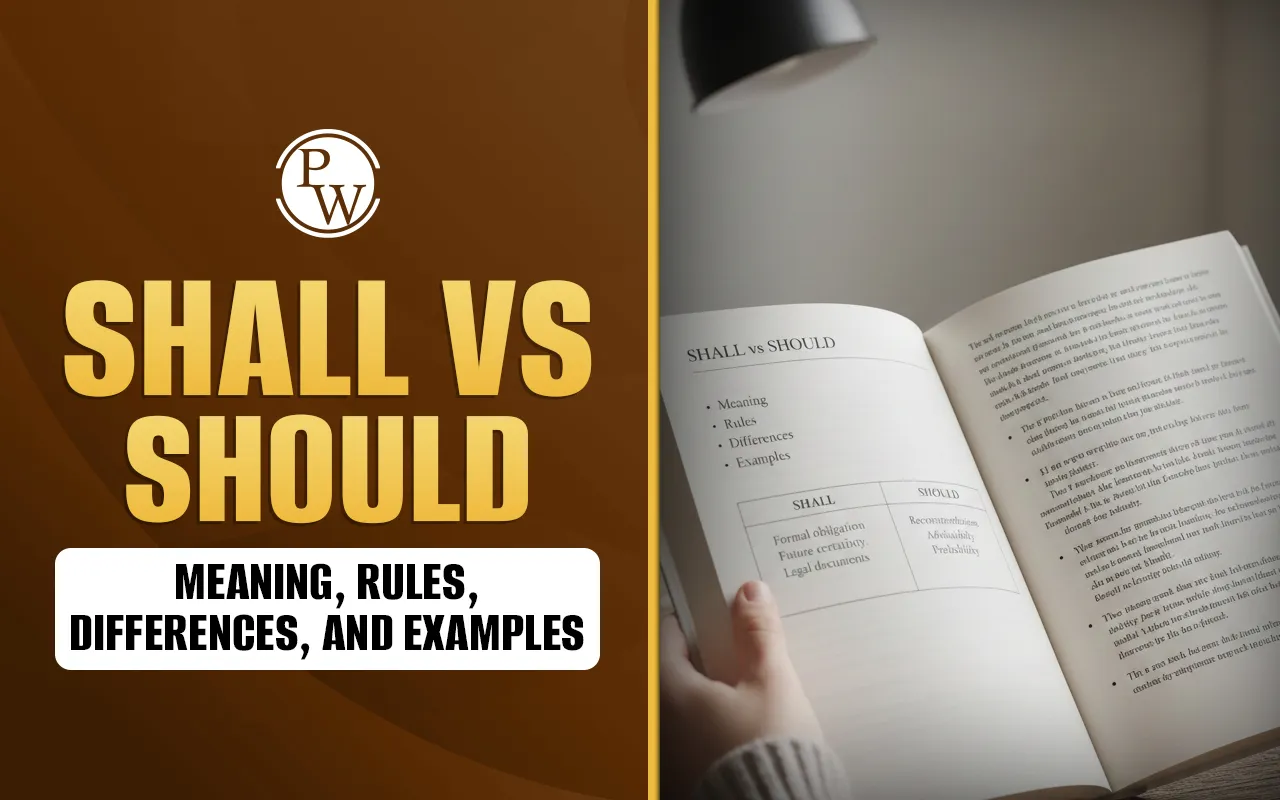
The difference between shall and should is mainly about intention and obligation. Shall is used to express a strong intention, a promise, a suggestion, or a formal instruction. It sounds more official and is common in formal or legal English. On the other hand, should is used to give advice, make recommendations, express moral duty, or show probability. It is softer and more common in everyday communication.
Here is the basic shall and should difference:
-
Shall shows strong intention, promise, suggestion, or formal instruction.
-
Should shows advice, recommendation, moral duty, or probability.
You can remember it like this:
-
Shall = something you plan, promise, or must do (more formal).
-
Should = something that is good to do or expected to happen.
Shall vs Should Examples:
-
I shall finish the work today. (Strong intention)
-
You should finish the work today. (Advice)
So when deciding shall or should, think about the level of obligation and tone.
Read More: No vs. Not
Shall and Should in Grammar Rules
Both words are modal verbs and follow these rules:
-
They take the base form of the main verb.
Example: shall go, should go -
They do not change with plural or singular subjects.
-
They express the speaker’s mood or attitude.
Shall is used more in British English, especially in formal speech or writing.
Should is used in both American and British English for polite advice and suggestions.
Rules for Using Shall
Here are the main rules for using shall:
1. To show strong intention or decision
Example:
-
I shall complete the project by evening.
2. To make formal promises or commitments
Example:
-
You shall receive your certificate soon.
3. To give suggestions (very formal)
Example:
-
Shall we go for a walk?
4. To ask for instructions politely
Example:
-
What shall I do next?
5. In legal, official, or contractual language
Example:
-
The tenant shall pay the rent on time.
Shall is not commonly used in casual daily conversations, especially in American English.
Read More: Difference Between Ago and Before
Rules for Using Should
Here are the main rules for using should:
1. To give advice or suggestions
Example:
-
You should drink more water.
2. To express duty or responsibility
Example:
-
We should help the needy.
3. To express expectation
Example:
-
The train should arrive soon.
4. To express probability
Example:
-
He should be home by now.
5. To politely ask for someone’s opinion
Example:
-
Should I call her now?
When choosing shall i or should i, remember:
-
Shall I…? = asking for instruction
-
Should I…? = asking for advice
Read More: Difference Between Adverb and Adjective
Shall and Should in Legal and Formal English
In legal or official documents, shall is used to express a requirement, rule, or obligation. It means something must be done.
Example:
-
The employee shall submit all documents before the deadline.
In everyday English, people prefer should for recommendations because it sounds softer and less forceful.
Example:
-
You should follow the safety guidelines.
Legal English = shall (mandatory)
General English = should (recommended)
Shall vs Should Examples in Sentences
Below are clear shall sentences examples and should examples:
Examples of Shall
-
I shall go to the meeting tomorrow.
-
Shall we start the class?
-
You shall receive your marks today.
-
No one shall enter the restricted area.
-
What shall I wear to the event?
Examples of Should
-
You should complete your homework first.
-
We should respect our elders.
-
He should reach by 7 PM.
-
Should I bring my laptop?
-
They should leave early to avoid traffic.
These shall and should examples show how the context changes the meaning.
Read More: English Grammar for Class 3
Common Mistakes with Shall and Should
Here are mistakes learners often make:
1. Using “shall” in casual conversations
Incorrect: I shall go to the market. (Too formal)
Correct: I will go to the market.
2. Using “should” for formal instructions
Incorrect: Students should submit fees by 5th.
Correct: Students shall submit fees by 5th.
3. Mixing up “shall I” and “should I”
-
Shall I = request for instruction
-
Should I = asking for advice
4. Using “shall” with third-person subjects in informal English
Better to use will in most cases.
Shall and Should Exercises
Try these exercises to strengthen your understanding:
Exercise 1: Fill in the blanks
-
___ I open the window? (shall/should)
-
You ___ eat more fruits. (shall/should)
-
Students ___ wear the school uniform. (shall/should)
-
We ___ leave early to avoid traffic. (shall/should)
-
___ we start the presentation? (shall/should)
Exercise 2: Correct the sentences
-
I shall go to the doctor.
-
You shall drink water every day.
-
Should you report to the office immediately?
(Answers:
Exercise 1 – shall, should, shall, should, shall
Exercise 2 – I should go…, You should drink…, You shall report…)
Also read: Online vs. Traditional Learning
Boost Your Child’s English Skills with CuriousJr
Is your child still struggling to read, write, or speak English even after school lessons? Many students face difficulties with grammar and vocabulary, which can affect their confidence in class.
CuriousJr offers online English classes designed to make learning simple and enjoyable. Our supportive teachers give individual attention, use engaging activities, and provide regular practice so your child can improve step by step.
We also send weekly updates and feedback so you can easily track your child’s growth. Your child won’t just learn English rules — they will learn to use the language confidently in real life.
Book a demo class today and see how CuriousJr can support your child’s progress.