Describing Words Worksheet for Class 1 Students
 Nikita Aggarwal16 Mar, 2026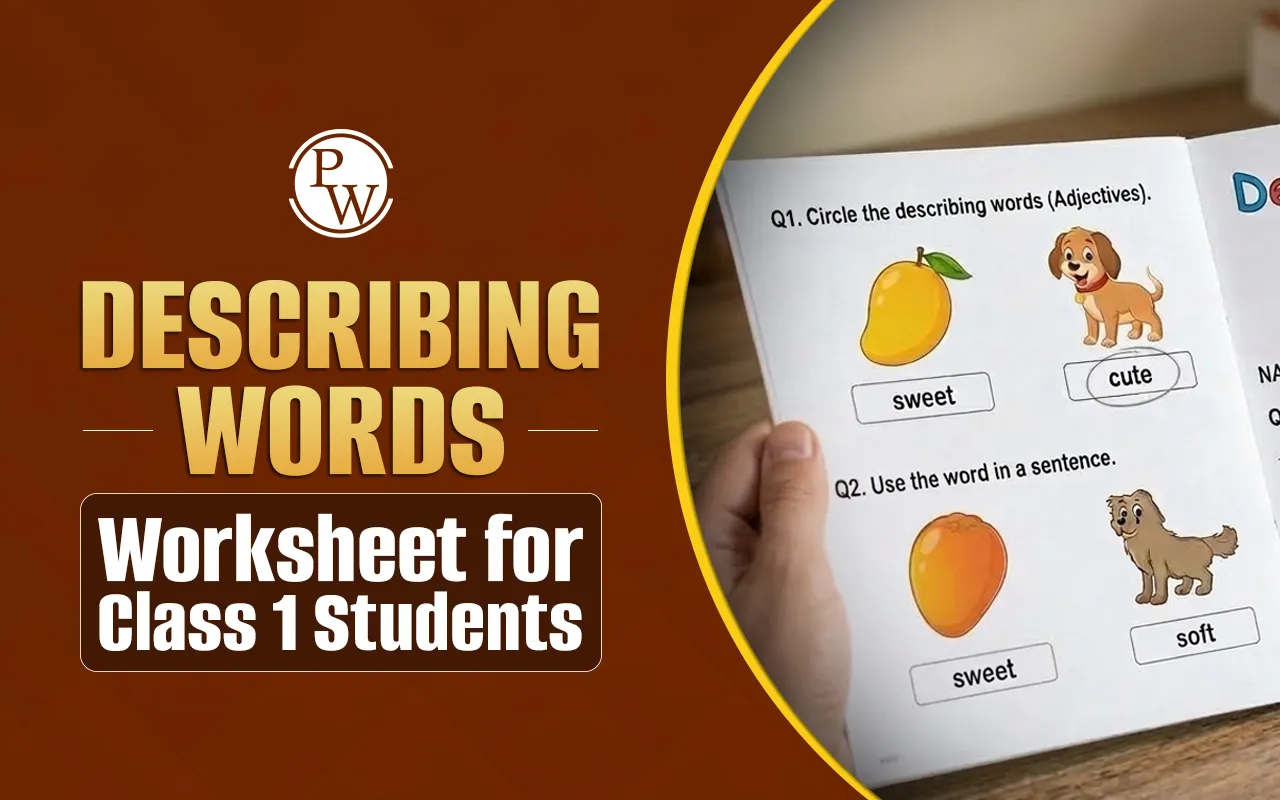
What is Describing Words for Class 1 Kids?
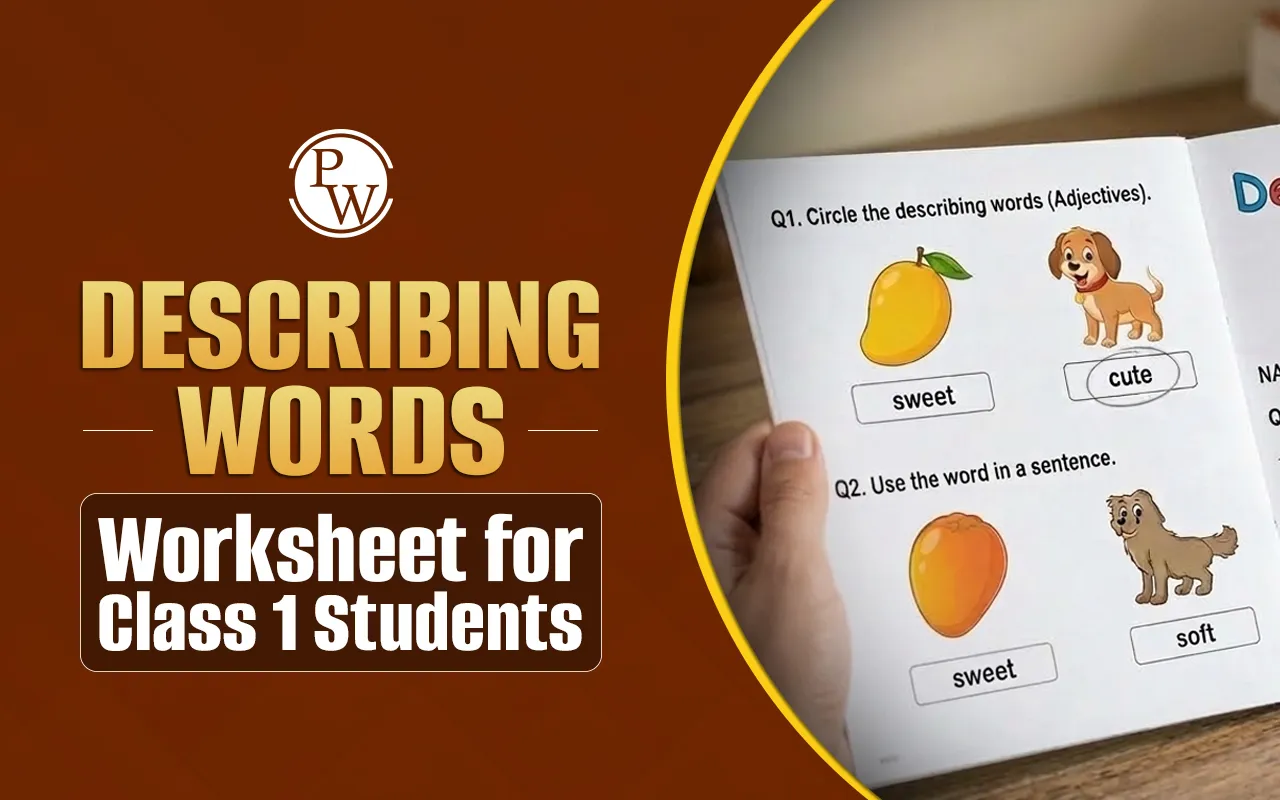
When sitting down with your child, you might wonder what is describing words for class 1 in the simplest terms. You can tell your child that these are "helper words" that tell us more about a person, animal, place, or thing. They answer questions like "What color?" or "How big?"
Explaining what is describing words for class 1 becomes much easier when you use their toys as examples. If your child holds a "soft teddy," the word "soft" is the describing word. Showing them that words have "textures" or "colors" makes the concept feel real rather than like a school chore.
Instead of memorizing a definition, they will look for words that add "flavor" to a sentence. This foundational understanding is what helps them excel in their English Cambridge assessments.
Why Describing Words are Essential for Students ?
Before diving into a describing words worksheet for class 1, it is helpful to understand why adjectives are so important. These words are the building blocks of creative thinking. They allow children to move past "I see a cat" to "I see a fluffy, white cat," which shows a higher level of observation.
Using adjectives helps children communicate their needs and emotions more effectively. When a child can use a describing words worksheet for class 1 to learn the difference between "scared" and "excited," they gain emotional intelligence. This clarity in expression reduces frustration and builds confidence in social settings.
Furthermore, adjectives improve reading comprehension. As children work through a describing words worksheet for class 1, they learn to visualize what they read. If a book mentions a "dark, spooky forest," the child’s brain uses those describing words to paint a mental picture, making reading a more immersive experience.
Describing Words Chart for Class 1
To support your child while they work, keep a describing words chart for class 1 nearby. This acts as a reference guide or a "cheat sheet" they can look at when they get stuck. A good chart categorizes words so kids can find exactly what they need to describe an object.
A helpful describing words chart for class 1 usually includes categories like:
-
How it looks: Shiny, dull, pretty, ugly, colorful.
-
How it feels: Rough, smooth, prickly, fuzzy, hard.
-
How it tastes: Sweet, sour, salty, bitter, spicy.
-
The size: Giant, huge, little, teeny, wide.
Having this describing words chart for class 1 on the study table reduces frustration. If they can't think of a word to describe a lemon, they can glance at the chart and find "yellow" or "sour." This builds independence as they learn to solve problems on their own.
Describing Words Worksheet for Class 1 with Answers
Practice 1: Match the Opposite Adjectives
In this part of the describing words for class 1 worksheet, we focus on "opposites." Understanding word pairs helps children build a structured vocabulary. Have your child draw a line to connect the words that are opposites:
-
Hot matches with Cold
-
Big matches with Small
-
Tall matches with Short
-
Happy matches with Sad
-
Fast matches with Slow
Teaching opposites through a worksheet of describing words for class 1 is highly effective. It gives children two words for the price of one! It helps them realize that for every "dark" night, there is a "bright" day.
Practice 2: Fill-in-the-Blanks "Detective" Task
This is a classic exercise in any describing words worksheet for class 1 with answers. Read these sentences to your child and let them pick the word that fits. This improves their context clues and sentence-building skills.
-
The ____ sun is in the sky. (Yellow / Blue)
-
I have a ____ pillow on my bed. (Hard / Soft)
-
The ____ candy is my favorite. (Sweet / Sour)
-
The mouse is very ____. (Tiny / Huge)
-
A giraffe has a ____ neck. (Long / Short)
Using this worksheet of describing words for class 1 builds confidence. If your child gets stuck, point to the describing words chart for class 1 on the wall to help them find the right "helper word."
Read More - Top 10 Longest Words in English with Meanings & Examples
Practice 3: Sensory Word Scavenger Hunt
This section turns a standard describing words worksheet for class 1 into a fun physical activity. Instead of just writing, have your child find an object in your home that matches these categories. This is a great way to explain what is describing words for class 1 in real life.
-
Touch: Find something Bumpy. (Example: A LEGO brick)
-
Sight: Find something Green. (Example: A leaf)
-
Sound: Find something Loud. (Example: A bell)
-
Taste: Find something Salty. (Example: A pretzel)
-
Size: Find something Thin. (Example: A pencil)
By linking the describing words worksheet for class 1 to physical objects, you are making the lesson "sticky." Your child will remember the word "bumpy" much better after actually feeling a bumpy toy!
20 High-Frequency Describing Words for Your Child
To help your child visualize these words, here are the top 20 describing words categorized with simple examples you can use during your home study sessions:
1. Colors and Appearance
-
Red: The red apple is on the table.
-
Blue: Look at the beautiful blue sky.
-
Green: The grass is very green after the rain.
-
Bright: The bright sun helps the plants grow.
2. Sizes and Measurements
-
Big: An elephant is a very big animal.
-
Small: A tiny mouse is very small.
-
Tall: The tall ladder reaches the roof.
-
Short: My brother is short, but I am tall.
3. Shapes and Forms
-
Round: The football is round and easy to kick.
-
Square: I have a square box for my toys.
-
Flat: The table has a flat top for writing.
-
Long: Use the long rope to play tug-of-war.
4. Qualities and Feelings
-
Happy: The happy child is playing in the park.
-
Sad: Do not be sad if you lose the game.
-
Brave: The brave soldier protects the country.
-
Kind: It is good to be a kind friend to everyone.
5. Textures and Tastes
-
Soft: My new pillow is very soft and fluffy.
-
Hard: The hard rock is heavy to lift.
-
Sweet: I love eating sweet mangoes in summer.
-
Sour: A lemon has a very sour taste.
Read More - List of Dictation Words in English
Tips to Describing Words Worksheet for Class 1
When your child is solving a describing words worksheet for class 1, try to relate the questions to their life. If the worksheet mentions a "blue car," point to a blue car outside. This "real-world" connection makes the worksheet much more meaningful and easier to solve.
Don't worry if they get naming words and describing words mixed up at first. It takes time! Keep referring back to the describing words chart for class 1 to show them the difference. With gentle guidance and plenty of praise, they will soon be identifying adjectives like a pro.
Finally, make sure the environment is quiet and comfortable. A describing words worksheet for class 1 requires concentration. Once they finish, you could even let them "become" a describing word—like acting "silly" or "fast"—to celebrate a successful study session!
Boost Your Child’s English Confidence with CuriousJr
Does your child feel shy while speaking English or struggle to form correct sentences? This can affect their participation in class and gradually lower their confidence. CuriousJr’s English Online Classes help children learn English in a simple, interactive, and supportive learning environment.
Our program focuses on building strong grammar foundations, improving pronunciation, expanding vocabulary, and developing important writing skills. Through engaging live sessions, children get regular opportunities to practice speaking with guidance from experienced mentors.
Fun activities like storytelling, games, and creative writing make learning enjoyable and effective. These interactive methods help young learners strengthen their communication skills and speak English more confidently.