Benefits of Solving Jumbled Words in English
 Shivam Singh20 Jan, 2026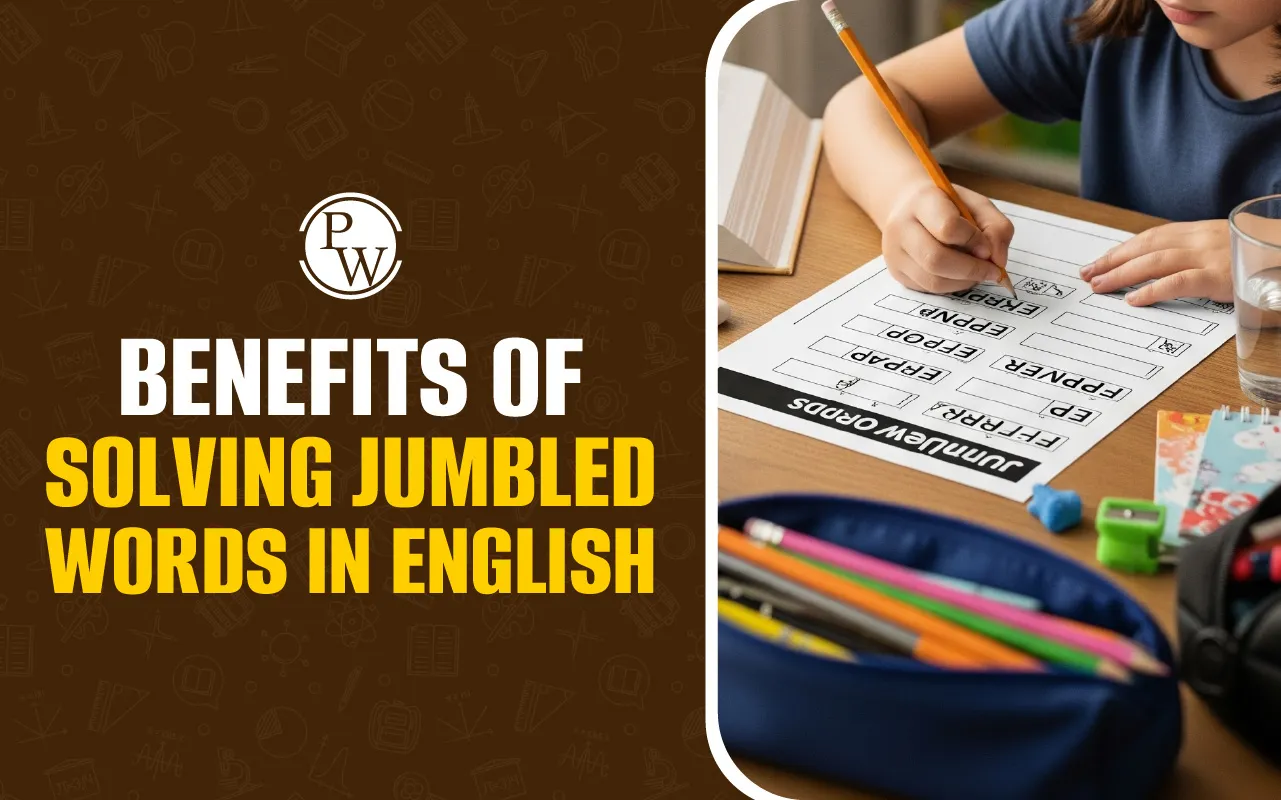
What are Jumbled Words?
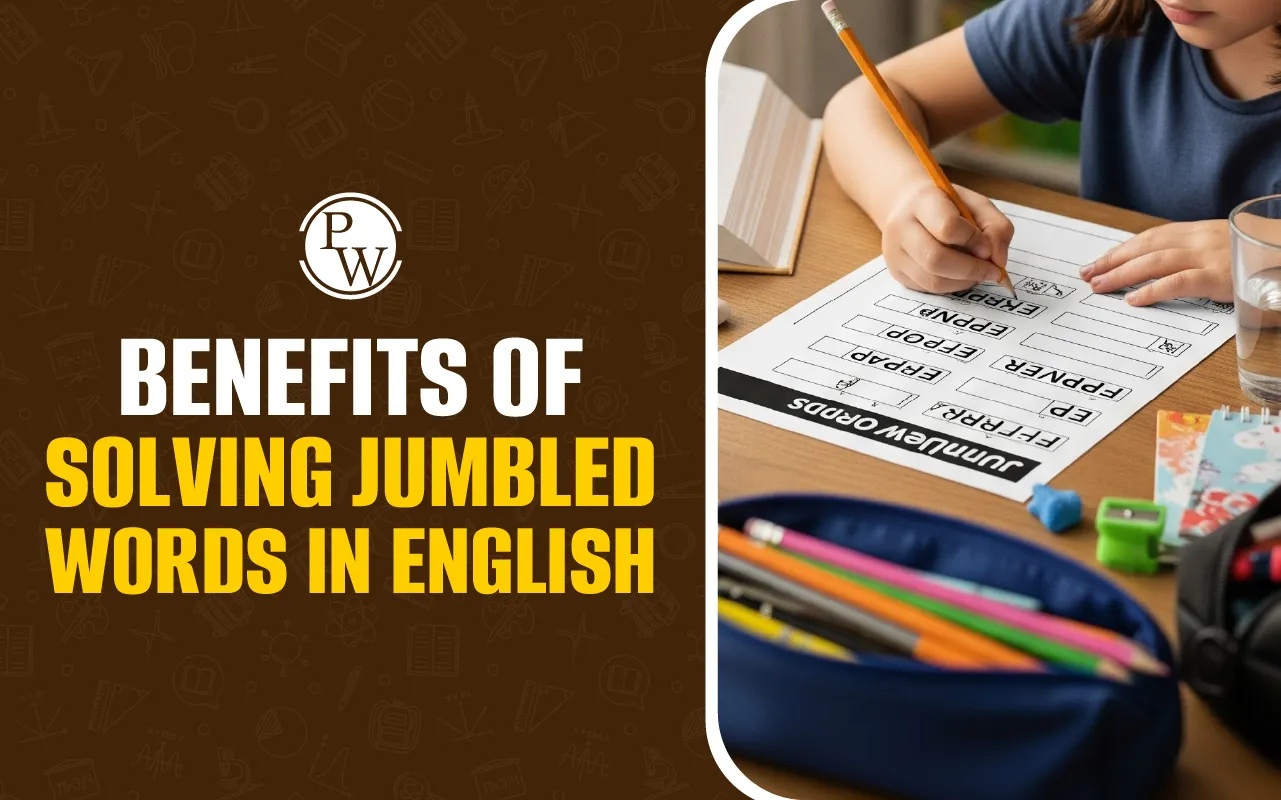
Jumbled words refer to mixed-up letters or sentences that students rearrange to make meaningful words or sentences. Solving jumbled words in English helps improve vocabulary and spelling, grammar rules, and sentence formation. It also promotes logical thinking, builds confidence, and makes learning fun. For students, practicing jumble word English activities consistently is a fun way to build language skills and provides a solid foundation for English learning. Here are some examples of Jumbled words:
For example:
-
Word Jumble: PPAEL → APPLE
-
Jumbled Sentence: park playing children are the in → The children are playing in the park.
Read More: Compound Words
Benefits of Solving Jumbled Words in English
Practicing solving jumbled words regularly gives students many benefits. It helps improve vocabulary while helping with spelling and grammar, and sentence forming skills. Jumbled words also help develop logical thinking, problem-solving ability, and reading fluency. This creates confidence in learners and turns learning into play. Jumbled words also provide further enrichment to the overall foundation of English language skills. Below are the benefits of solving Jumbled Words in English:
-
Increases Vocabulary: Rearranging jumbled words, along with providing an answer allows students to learn new words, which enhances their vocabulary and increases the word bank.
-
Strengthens Grammar: Working with jumble word sentences trains students to use correct grammar and sentence order.
-
Develops Spelling: When a student carefully rearranges letters, they are contributing towards increased spelling skills and avoiding common mistakes.
-
Improve Critical Thinking: Solving jumbled words is like solving a puzzle. It encourages students to think logically and quickly.
-
Makes Learning Fun: Jumbled words in English create excitement, turning learning into a game rather than a boring task.
-
Increases Reading Ability: By rearranging the words in a jumbled sentence, student's learn how the words fit into sentences, which is beneficial in reading fluency.
-
Improves Writing Skills: Practicing jumbled words makes a student proficient in developing sentences with meaning and free of mistakes.
-
Increased Confidence: When students are developing writing skills, they become successful at participating in jumbled words activities, which makes them more confident in English.
How to Practice Jumbled Words?
Practicing jumbled words in English is a fun way for students to develop language skills. It encourages them to think critically while learning correct spellings and grammar. If educators use jumbled word English tasks regularly, it not only develops problem-solving skills, it increases engagement and interactivity while supporting students' learning. Below are some points how to practice Jumbled words:
-
Solve daily word jumbles from newspapers or workbooks
-
Practice jumble words in English with answers for self-checking
-
Rearrange jumbled English sentences using their school textbooks
-
Play jumble word English online games or in class.
Read More: Top 10 Longest Words in English
Examples of Jumbled Words for Students
Practicing jumbled words helps students rearrange letters and sentences into meaningful forms. These fun exercises improve spelling, grammar, vocabulary, and logical thinking while making learning enjoyable. Below are the examples of Jumbled words for students:
Word Jumbles
-
RAT → ART
-
PCA → CAP
-
LDO → OLD
-
GDO → DOG
-
ENP → PEN
Jumbled Sentences
-
to school going am I → I am going to school.
-
book reading is She a → She is reading a book.
-
football play we can → We can play football.
-
is sky blue The → The sky is blue.
-
eating mangoes are They → They are eating mangoes.
Read More: Two Letter Words in English
Why Should Students Solve Jumbled Words Regularly?
Solving jumbled words in English is more than just a fun activity. It helps students improve spelling, vocabulary, grammar, and logical thinking while preparing them for spelling tests, essay writing, and comprehension. Regular practice also builds confidence, enhances problem-solving skills, and makes learning engaging. Jumbled word exercises encourage smart learning, strengthen language foundations, and develop better reading and writing abilities, making them a valuable tool for overall growth in English.
Jumbled Words Practice Questions
Practicing questions on jumbled words makes learning English exciting and interactive. These exercises help students improve spelling, grammar, and sentence formation while also testing their logical thinking. Try the following jumbled word and jumbled sentence questions with options to check your understanding.
Q1. Rearrange the letters to form a word: “PCA”
a) CAP
b) CUP
c) COP
Answer: a) CAP
Q2. Rearrange the letters to form a word: “RTA”
a) RAT
b) ART
c) TAR
Answer: b) ART
Q3. Rearrange the sentence: “to school going am I”
a) I school am going to
b) I am going to school
c) Going to I am school
Answer: b) I am going to school
Q4. Rearrange the sentence: “book reading is She a”
a) A book is reading she
b) She a is reading book
c) She is reading a book
Answer: c) She is reading a book
Q5. Rearrange the letters to form a word: “HCOSLO”
a) SCHOOL
b) SHOOLC
c) SLOOCH
Answer: a) SCHOOL
Also Read: 50000 in Words
Enhance Your Child’s English Reading Skills with CuriousJr Online Classes
At CuriousJr, we understand that reading is one of the most essential skills a child can develop. Our online english classes are designed to build confidence, spark interest, and help children improve step by step.
We aim to support families looking for simple and engaging ways to strengthen their child’s reading skills. Through interactive lessons, fun activities, and the guidance of experienced teachers, we make reading an enjoyable and rewarding experience.
In our classes, your child will experience:
-
Vocabulary growth through stories and everyday language
-
Guided reading sessions to improve fluency and focus
-
Creative reading games and tasks to keep learning fun
-
Small group or one-on-one sessions for personalized support
Book a demo class today and discover how we can make reading an exciting part of your child’s daily routine. Together, let’s help your child fall in love with reading.
Jumbled Words FAQ
What are jumbled words in English?
How do jumbled words help students?
Can jumbled words be used for sentence practice?
Which classes should practice jumbled words?
Where can I find jumble words in English with answers?