
How Mental Maths Training Improves Performance Across All School Subjects
 Nikita Aggarwal20 Jun, 2026
Why Mental Maths Improves School Performance
Students do not just memorise multiplication tables when they practise mental arithmetic; they also get a comprehensive brain workout that changes how they think. They get an all-inclusive brain workout that changes the way they think. Quick Arithmetic Skills Are Linked to Academic Achievement There is a right-away cognitive connection between simple arithmetic skills and traditional shop-in school success.
The main reason mental maths helps schoolwork is that it boosts working memory. Working memory is the brain's store of information in short time frames. In the example of a calculation done in their heads, they need to keep several numbers in their minds simultaneously as well as manipulate them and recall next steps. This exercise trains that mental muscle, enhancing a wide total concentration span (where students seem to learn complex information across all classes).
Mental calculations prompt logic and reasoning skills. They also follow patterns seeking round numbers to adjust figures in real time, unlike inputting steps on paper. This cognitive practice lessens general maths anxiety in children and leads to reduced physical stress responses during examinations. It lets you collapse confusion into academic resilience and transforms numbers from glass and brittle to mental superpowers that help students think on their feet.
How Mental Maths Improves School Performance
Mental arithmetic is not a skill that should only be taught for the sake of the mathematics classroom. The cognitive tools developed through this training transfer directly across a range of other academic domains to enhance children's grades, with mental maths being beneficial in every subject.
Mental arithmetic uses extend to the following three primary branches of the curriculum in school:
1. Science and Mathematical Formulas
In physics, chemistry, and biology data analysis, unit conversions (metric + English) are formulas. A student with strong maths fluency and alignment between academics stays on track when dividing decimals or figuring percentages in a science project. They can, for example, quickly estimate answers; easily understand ratios; and spot errors in their lab measurements immediately.
2. Coding, logic, and computer science
One essential component of computer science is logic. Sorting and searching, for example, are carried out by algorithms; this method serves as the foundation for pattern recognition, which connects directly into machine learning frameworks at some level where data depends on patterns in bad data or loss through overfitting models with low bias points instead of exploring further branches until they run dry because there is no more information available about those splits ('bad' means less income).
3. Exam Strategy and Time Management
Speed and accuracy are of utmost importance in timed exam scenarios. Students who can't do a worksheet without first estimating the result waste precious minutes scribbling rough numbers in the margins of their papers. Fast mental calculation training helps students effectively manage their time, verify answers quickly and tackle complex exam questions with complete composure. This kind of training shows how mental maths helps in school, especially when the timer is ticking.
Read More - What is Mental Maths? A Guide for Beginners
Daily Habits That Show How Mental Maths Improves School Performance
To develop premium speed in arithmetic, one does not need to spend hours studying. It is based on small but steady habits that integrate easily into a student's daily schedule. These basic habits show practical examples of how to keep the brain highly flexible.
-
Dedicate 5 to 10 Minutes Every Day: Short, regular mental exercises are far more effective than longer ones. Over time, daily, consistent practice greatly enhances the brain's natural calculation strength and growth.
-
Divide Complex Numbers Into Parts: Teach your kids to do math in segments. Instead of working through the multiplication when your child needs to multiply 34 by 8, move on to more complicated-shaped numbers and teach them techniques like doubling and then halving, rounding, or adjusting to find answers in a matter of seconds.
-
Play Number Games and Puzzles: Replace passive screen time with engaging learning activities, such as puzzles like Sudoku or the game 24. They condition the brain to identify numerical patterns while making learning fun.
-
Practice Regular Estimation: Get kids to make a rough guess of what the answer will be before doing the actual calculation. You are working on developing an instinctive number sense, and children gradually develop a stronger number sense to see if their answers make logical sense.
-
Use Real-Life Everyday Scenarios: everyday life relevant examples While grocery shopping: have your child find out the overall discount, divide food bills among family members or convert ingredient measurements in the kitchen.
Read More - How to Improve Mental Maths Speed in 30 Days
Benefits of Mental Maths for School Performance
Mental Maths Benefits for Students Go Way Beyond the Grade Sheet It changes how a child approaches learning and problem-solving, helping them confront the everyday challenges of learning.
-
Enhances Cognitive Development and Concentration: Maths exercises, like mental maths, are a workout for the brain. It helps improve a child's concentration, attention span, and mental sharpness during prolonged school hours.
-
Builds stronger self-confidence: Instantaneous mental maths eliminates typical classroom anxiety. That joy of a child when he understands that solving complex sums in his head faster than others without pen and boosts confidence and motivation
-
Sharpens Observational and Listening Skills: As mental arithmetic requires students to see or hear the numbers, they visualise them in their minds, making them better listeners and observers.
-
Boosts Problem-Solving and Creativity: Finding mental shortcuts often encourages flexible thinking. They learn that there is more than one way to reach an answer, developing creative problem-solving skills across all subjects.
-
Promotes Long-Term Memory Retention: Repeatedly recalling maths facts, combinations and logical rules strengthens memory through regular recall practice, which facilitates remembering historical dates or scientific facts as well as language rules.
How does CuriousJr help with mental maths in class?
And if you want these cognitive gifts for your child, structured guidance is key. CuriousJr is a mental maths online platform that helps schoolchildren develop mental maths skills through structured online learning.
The CBSE syllabus for grades 1 through 8 covers the primary school subjects and also provides specialised instruction in mental maths. CuriousJr breaks this journey into distinct benchmarks:
-
Foundational School Syllabus Topics: Pre-number Concepts (Finding the Furry Cat!), Shapes, Numbers 1 to 9 (Mango Treat), Making 10, Addition and Subtraction up to 20 (Vegetable Farm), Measurement, Time, Money, and Data Handling are just a few of the chapters that directly correspond to school requirements.
-
Core Maths and Logic Modules: Students learn advanced techniques of Patterns, Classification, Odd One Out, Sequencing, Analogies, Visual Discrimination/Spatial Understanding, Quantitative Reasoning (Algorithm-based reasoning), Memory Skills, etc.
-
Speed-Enhancing Vedic Maths Tricks: Children learn 10-20 lightning-speed mental calculation tricks, such as compliments to 10, subtraction from 10, addition, and more.
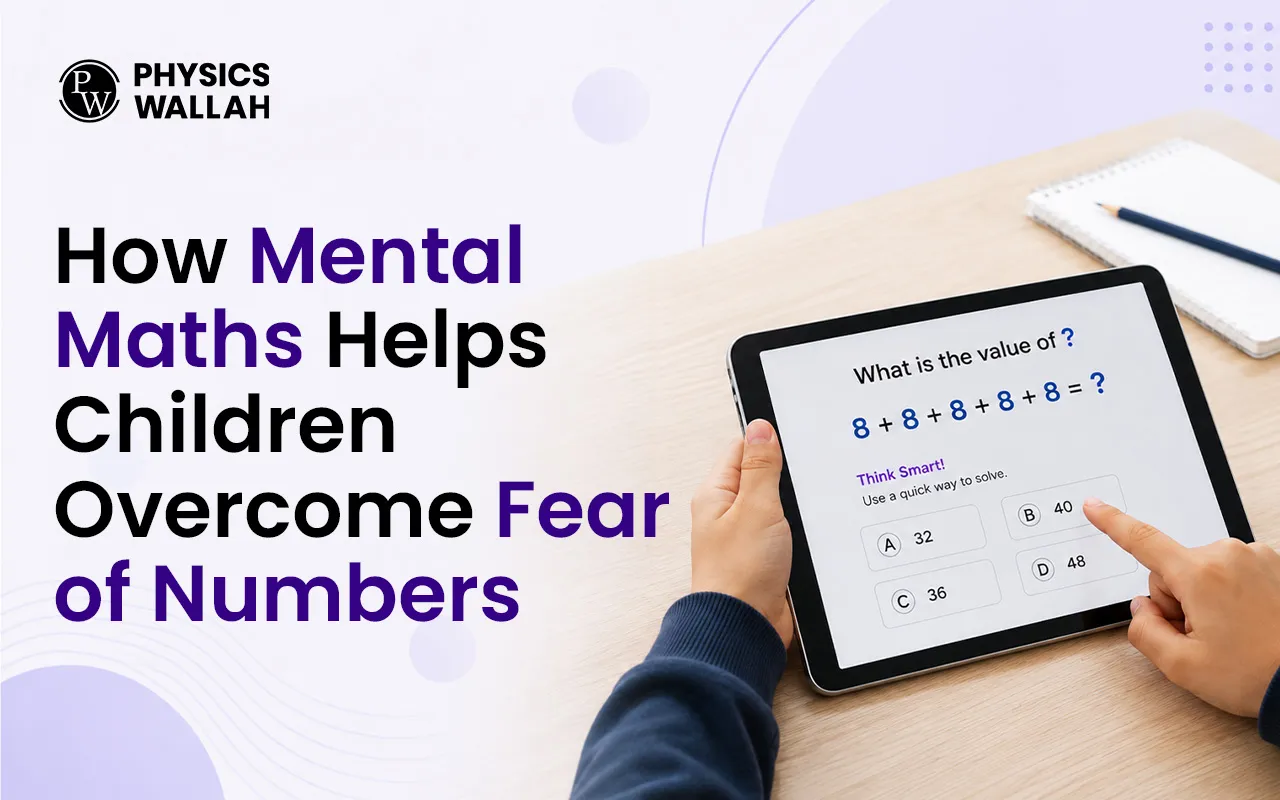
The key to success is that parents use CuriousJr; it helps children become more confident with numbers. It is a stress-free curriculum where highly interactive online classes and engaging and fun learning games are deployed along with puzzles to learn the maths concepts in an easy way. With friendly teacher guidance and regular practice, kids learn to overcome fear of maths and calculation mistakes that lead to careless calculation errors, fostering the deep academic confidence needed to respond well across all school subjects.




How Mental Maths Training Improves Performance Across All School Subjects FAQs
How exactly does mental maths improves school performance in subjects like science?
At what age should parents consider online mental maths classes for children?
What are the main mental maths benefits for students who experience severe exam stress?
How does learning mental arithmetic and academics connect with computer coding?



Get Free Counselling Today
and Clear up all your Doubts
 Live & recorded classes available at easeDashboard for progress trackingLakhs of practice questions

