
How to Help a Class 4 Child Who Is Fast but Keeps Making Careless Errors
 Nikita Aggarwal15 Jun, 2026

Why Speed Causes Careless Maths Errors Class 4 Students Make?
Children at this age often confuse finishing fast with being smart. They view speed as a sign of intelligence, which makes them race through questions without reading them properly. This rapid pace is the leading cause of careless mistakes Class 4 pupils experience during tests. When a child moves too quickly, their brain outruns their hand, causing them to misread operational signs or miss crucial constraints in word problems.
To help them improve, you must first understand the root cause of this speed. The table below outlines the common reasons behind rapid, inaccurate work and how they manifest in daily homework.
Before addressing the habit, it helps to pinpoint exactly why your child is rushing through their papers:
|
Root Cause of Rushing |
How It Appears in Schoolwork |
|
Desire for Playtime |
Finishing homework in minutes to watch TV or play video games. |
|
Misguided Competition |
Trying to be the first person in the classroom to submit the exam paper. |
|
Overconfidence |
Assuming the question is simple without reading the entire text. |
|
Cognitive Fatigue |
Rushing at the very end of a long test because they are tired. |
How to Reduce Careless Maths Errors Class 4 Students Make in Exams?
To change this behaviour, you need to introduce practical strategies that force a natural pause in their workflow. Telling a child to slow down rarely works on its own. Instead, give them concrete actions to take while solving problems.
“If you are studying, making structural changes builds better habits. Here are some practical ways to help your child with accuracy:
-
Circle the Operational Signs: Have your child use a coloured pencil to circle the plus, minus, multiplication, or division signs before solving. This minor action brings their focus back to the specific operation required.
-
Write One Step Per Line: Rushing students love doing multiple calculations in their heads. Insist that they write down every single step of the problem on a separate line to keep track of their thoughts.
-
Use the Finger-Tracking Method: When reading word problems, your child should point at each word with their finger or pencil. This physical movement slows down their reading speed and improves their comprehension.
-
Create a Personal Error Log: Keep a small notebook where your child writes down their frequent slip-ups, such as forgetting to carry over a number. Reviewing this log before an exam keeps those specific traps fresh in their mind.
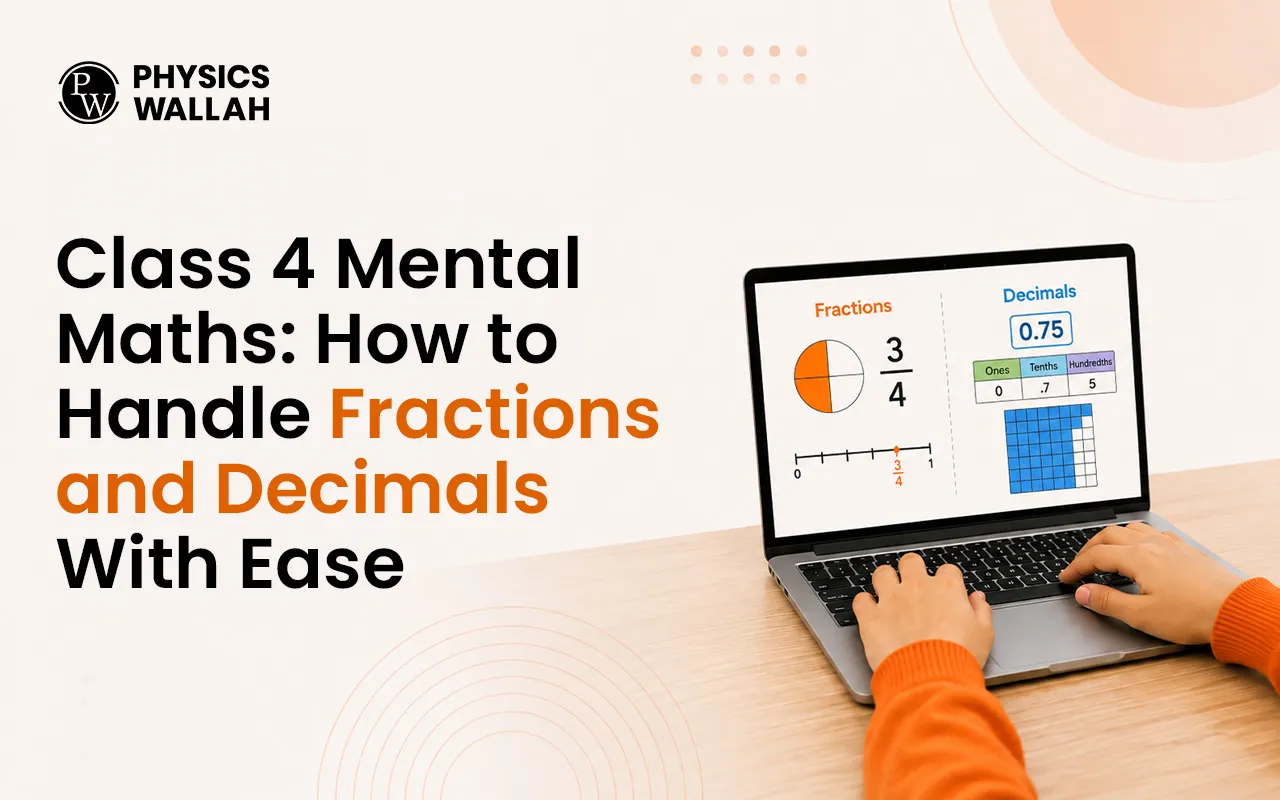
Read More - Class 4 Mental Maths: How to Handle Fractions and Decimals With Ease
Activities to Reduce Careless Maths Errors Class 4 Students Face
You need regular interesting practice (beyond the normal school textbooks) to develop accuracy. You can teach your child that accuracy is as important as speed through daily routines and simple games.
The following exercise methods are highly effective for training young minds to look closely at numbers and operations:
-
The Reverse Teacher Game: Give your child a completed worksheet that contains deliberate mistakes. Ask them to act as the teacher, find the errors with a red pen, and explain why the answer is wrong.
-
The Double-Check Timer: Introduce a rule during home study where they cannot hand in their work until a specific timer goes off. If they finish early, they must use the remaining time to solve the questions backward to verify their answers.
-
Real-World Budgeting: Involve your child in grocery shopping. Give them a budget and ask them to add up the prices of items in the cart. The real-world consequence of running out of money encourages precise calculation.
Read More - Mental Division Tricks for Class 4
How Attention to Detail Helps Reduce Careless Maths Errors Class 4 Students Make?
Paying attention to minor details is a skill that must be practiced explicitly. In Class 4, the math curriculum expands to include larger multi-digit numbers, fractions, and complex word problems. A single misplaced digit can ruin an entire page of calculations. Developing strong maths attention to detail Class 4 requirements ensures that students do not lose marks on concepts they fully comprehend.
When kids learn to respect the details, they have more confidence in their overall academic ability. They learn to view an exam paper not as a race to the finish line but as a puzzle that needs to be carefully pieced together. That structural focus means they can easily move into more advanced topics in later years.
How Mental Maths Practice Helps Reduce Careless Maths Errors Class 4 Students Make?
A great way to balance speed and correctness is to train the brain to handle numbers more efficiently. When the fundamental mechanics of addition, subtraction, and multiplication tables become second nature, the brain frees up processing power to focus on the structure of the question. Developing the mental maths accuracy Class 4 students require helps eliminate the basic counting finger errors that occur during stressful exam situations.
Daily brain games give your child a workout for their cognitive focus. Short, sharp sessions of five to ten minutes a day are far more effective than long hours of cramming at the weekend. This consistency helps to create a reliable mental framework.
Tips to Reduce Careless Maths Errors Class 4 Students Make During Tests
Exam environments add an extra layer of pressure, which often accelerates a child's natural tendency to rush. To reduce careless maths errors Class 4 students must learn specific exam-room strategies. These techniques give them a sense of control and a systematic path to follow from the moment they receive the question paper.
Teach your child to treat an exam paper like a project with distinct phases rather than a single sprint. The following steps can guide their approach during the test day:
-
The First-Pass Strategy: Instruct your child to answer all the easiest questions first. This builds early confidence and ensures they secure guaranteed marks before tackling tougher problems.
-
Cover the Answer Box: When reviewing their work, they should cover their previous calculation with a blank sheet of paper and solve it again on rough paper. This prevents the brain from simply reading and agreeing with the old, incorrect work.
-
Check the Units: Make sure they verify that the units in the answer match the question, such as converting centimetres to metres or correctly labelling currency.
Study Habits That Help Reduce Careless Maths Errors Class 4 Students Make
A child’s attention span is still developing at the age of nine. It is neither realistic nor helpful to expect them to sit still and focus completely for an hour, and it often leads to more sloppy mistakes later in the session. To keep their focus on Class 4 maths, you will need to break their study blocks into manageable intervals.
This is a framework for structuring a typical forty-five minute home study session to maximise focus and minimise fatigue-driven errors.
Plan the session prior to your child sitting down to study using a balanced time distribution model:
|
Session Phase |
Duration |
Primary Activity |
Focus Goal |
|
Phase 1: Warm-Up |
5 Minutes |
Light mental arithmetic or flashcards. |
Wake up the brain without stress. |
|
Phase 2: Core Work |
20 Minutes |
Solving main homework or textbook exercises. |
Deep focus on writing clean steps. |
|
Phase 3: Rest Break |
5 Minutes |
Stretching, drinking water, or walking around. |
Reset attention span. |
|
Phase 4: Review |
10 Minutes |
Using the error log to check the core work. |
Finding and fixing careless slip-ups. |
|
Phase 5: Reward |
5 Minutes |
Verbal praise or a small fun game. |
Associate accuracy with positive outcomes. |
How Does CuriousJr Help Reduce Careless Maths Errors Class 4?
Building sustainable habits requires the right guidance and structured practice modules. Parents looking to balance their child's natural speed with absolute precision can benefit from specialized resources designed for this age group. A fantastic way to reinforce these concepts is through the CuriousJr Mental Maths Class 4 course, which transforms core arithmetic into an engaging learning journey.
CuriousJr online class 4 mental maths classes use interactive methods to guide rapid thinkers into becoming accurate problem solvers. By participating in regular exercises that reward both correct answers and methodical thinking, your child can naturally learn to reduce careless maths errors Class 4 habits often create, ensuring their test scores finally reflect their excellent potential.




How to Help a Class 4 Child Who Is Fast but Keeps Making Careless Errors FAQs
How can I tell if my child is rushing or if they genuinely do not understand the math concept?
Should I punish my Class 4 child for making silly mistakes on homework?
How long does it take to see improvements in a child mathematical accuracy?






Get Free Counselling Today
and Clear up all your Doubts
 Live & recorded classes available at easeDashboard for progress trackingLakhs of practice questions

