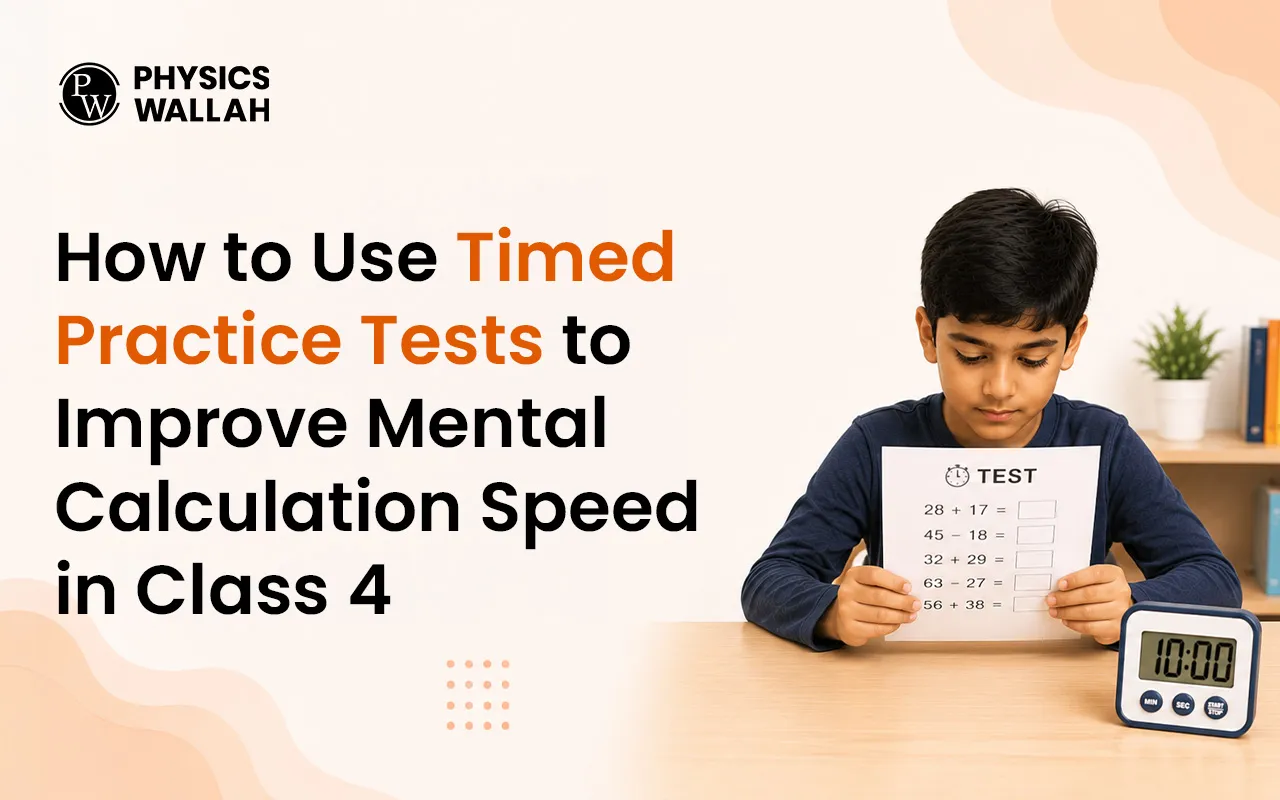
How to Use Timed Practice Tests to Improve Mental Calculation Speed in Class 4
 Nikita Aggarwal15 Jun, 2026
Importance of Timed Maths Practice Test Class 4
At this stage, primary school tracking shifts from basic counting to multi-step arithmetic. If a child spends too long calculating basic multiplication facts, they lose track of the actual problem-solving process.
Developing strong computational skills early ensures that future academic transitions feel smooth rather than overwhelming.
Building Mathematical Fluency
Fluency means solving a problem accurately, efficiently, and flexibly. Regular speed drills teach the brain to bypass tedious finger-counting. When numbers are processed automatically, the working memory is freed up to tackle complex word problems.
Reducing Academic Anxiety
Much of the panic comes from feeling rushed during school exams. Low-stakes, controlled time limits at home desensitise learners to the clock. Children learn that time is a predictable part of the game, not an enemy.
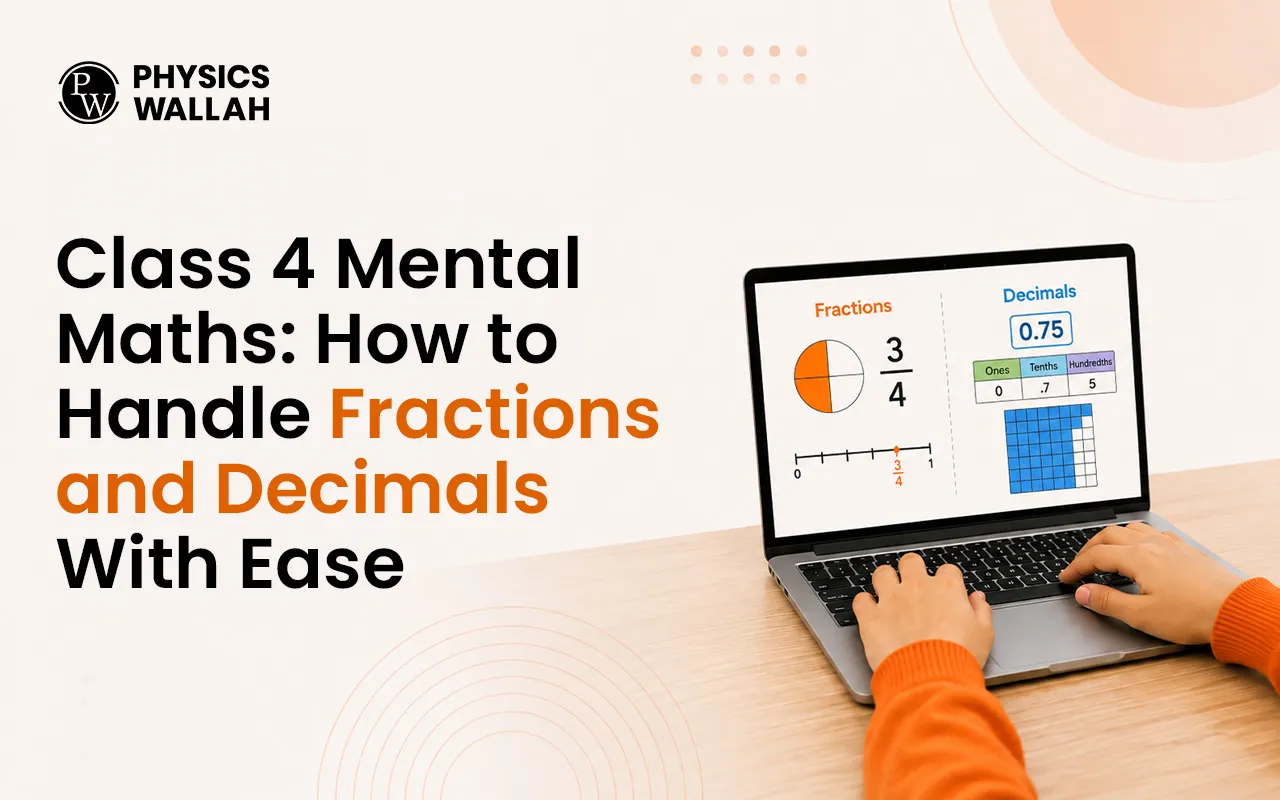
Read More - Class 4 Mental Maths: How to Handle Fractions and Decimals With Ease
How to do Timed Maths Practice Test Class 4 at Home?
Setting up effective timed maths practice tests Class 4 children requires a structured approach. It is not about handing a child a long worksheet and setting a loud alarm. It is about creating manageable milestones.
This is how you can create a balanced routine that will help you improve gradually without adding unnecessary frustration to your life.
Keep the Sessions Short
Long tests exhaust young minds and destroy motivation. Focus on short, intense bursts of activity rather than marathon study sessions.
-
One-minute sprints: Perfect for testing single-digit multiplication or quick addition.
-
Two-minute challenges: Ideal for double-digit subtraction or simple division sets.
-
Five-minute milestones: Best used at the end of the week to review combined topics.
Focus on Individual Progress
Never compare your child's score to classmates or peers. But encourage them to better their own personal bests from the past. This mindset shifts the focus from external pressure to internal growth, making the learning journey a whole lot more rewarding.
How to do Timed Maths Practice Test Class 4 Drills?
To get the most out of daily sessions, use specific Class 4 mental maths speed drills that target key arithmetic areas. Varying the style of the drills keeps the routine fresh and prevents boredom.
The table below outlines a standard weekly plan that balances different types of mental calculations.
|
Day |
Drill Focus |
Target Skill |
Goal |
|
Monday |
Number Bonds |
Addition to 100 |
Speed up multi-digit addition |
|
Tuesday |
Times Tables |
Tables 2 to 12 |
Instant recall without counting |
|
Wednesday |
Doubling & Halving |
Strategic division |
Simplify larger numbers mentally |
|
Thursday |
Missing Numbers |
Inverse operations |
Prepare for basic algebraic thinking |
|
Friday |
Mixed Review |
All operations |
Build mental flexibility under time |
The Grid Challenge
Create a simple grid with numbers across the top row and down the left column. Set the timer for sixty seconds and have the child do the intersecting squares by multiplication or addition. This format allows visual learners to digest data quickly.
Flashcard Eliminators
Hold up a series of flashcards with mathematical operations. The child must call out the answer within three seconds to eliminate the card. Any cards missed go back to the bottom of the pile for a second attempt.
Read More - Mental Division Tricks for Class 4
How Does Timed Maths Practice Test Class 4 Help Students?
Using timed tests for Class 4 does more than just accelerate calculation times. It changes how students perceive their own academic capabilities, transforming maths from a chore into a rewarding challenge.
When children notice their times dropping from two minutes to one minute, their self-esteem receives a massive boost.
Transforming Mistakes into Clues
Children make mistakes naturally when under pressure of time. Regular practice teaches them that a wrong answer isn't a failure, but a clue to the number combination needing more attention. This builds resilience that helps you in all your school subjects.
Enhancing Concentration and Focus
Focusing with total concentration for sixty seconds straight is great training for a young brain. Over time, this intense concentration naturally leaks into the regular classroom lessons. Children listen better and can easily remember the information.
Tips to Improve Timed Maths Practice Test Class 4
To successfully improve maths speed Class 4 learners need specific mental shortcuts. Simply telling a child to think faster does not work; they need practical tools to rearrange numbers logically in their heads.
The list below highlights common mental strategies that make calculations significantly quicker.
-
Compensation method: When adding 29, add 30 instead and then subtract 1.
-
Left-to-right addition: Add the tens column first, then add the units column.
-
Bridging through ten: Break numbers down to reach the nearest multiple of ten quickly.
-
Halving and doubling: Multiply one number by two and divide the other by two to simplify the sum.
Using these techniques prevents children from relying on mental images of standard pen-and-paper column methods, which are often too slow for rapid calculation.
Quality Class 4 Maths Practice Tests
Not all materials are created equal. When selecting Class 4 maths practice tests, ensure the difficulty level matches your child's current school curriculum. Materials that are too easy provide no challenge, while overly difficult ones damage enthusiasm.
Look for resources that gradually scale up the complexity of the questions as the weeks progress.
Look for Clear Layouts
Cluttered pages with distracting illustrations distract the eye. Choose clean, minimalist sheets where the focus remains entirely on the numbers. This helps children maintain their train of thought during a speed run.
Mix Word Problems and Equations
While pure number equations build raw speed, adding occasional short word problems tests comprehension. True mathematical fluency means knowing both how to calculate quickly and which operation to use in a real-world scenario.
Fun Challenges to Improve Timed Maths Practice Test Class
Enforcing strict testing schedules can sometimes feel rigid. Introducing playful, time-based games helps maintain an excellent balance between structured study and casual learning. This keeps motivation levels high over extended periods.
Using these lighthearted approaches ensures that your child looks forward to their daily practice sessions.
Beat the Parent
Let your child time you as you complete a worksheet, perhaps intentionally making a slow mistake. Then, let them try the same sheet to see if they can beat your score. This role reversal creates a fun, encouraging atmosphere.
The Countdown Kitchen Game
Use everyday moments for quick-fire drills. Give your child a calculation while setting a short kitchen timer during dinner prep. If they answer before the buzzer sounds, they win a small point towards a weekend reward.
How Does CuriousJr Help with Timed Maths Practice Test Class 4?
While printed worksheets are highly effective, integrating digital tools adds a dynamic element to learning. Utilizing structured online mental maths Class 4 resources keeps children engaged through instant feedback and interactive rewards.
Digital modules often adjust their difficulty automatically based on how fast a child answers, ensuring the challenge remains perfectly tuned to their growth.
For parents looking to support this journey, finding dedicated platforms tailored to foundational skills is key. Exploring curated modules, such as the CuriousJr Class 4 Mental Maths Course, provides a guided path where gamified challenges naturally encourage quicker thinking and daily progress.




How to Use Timed Practice Tests to Improve Mental Calculation Speed in Class 4 FAQs
How many minutes a day should a Class 4 student practice mental maths?
What should I do if my child panics during timed practice tests?
Are times tables essential for speed drills at this level?
Can online practice replace traditional paper worksheets entirely?

Get Free Counselling Today
and Clear up all your Doubts
 Live & recorded classes available at easeDashboard for progress trackingLakhs of practice questions