Why Kids Struggle with Multiplication in Class 8
 Nivedita Dar15 May, 2026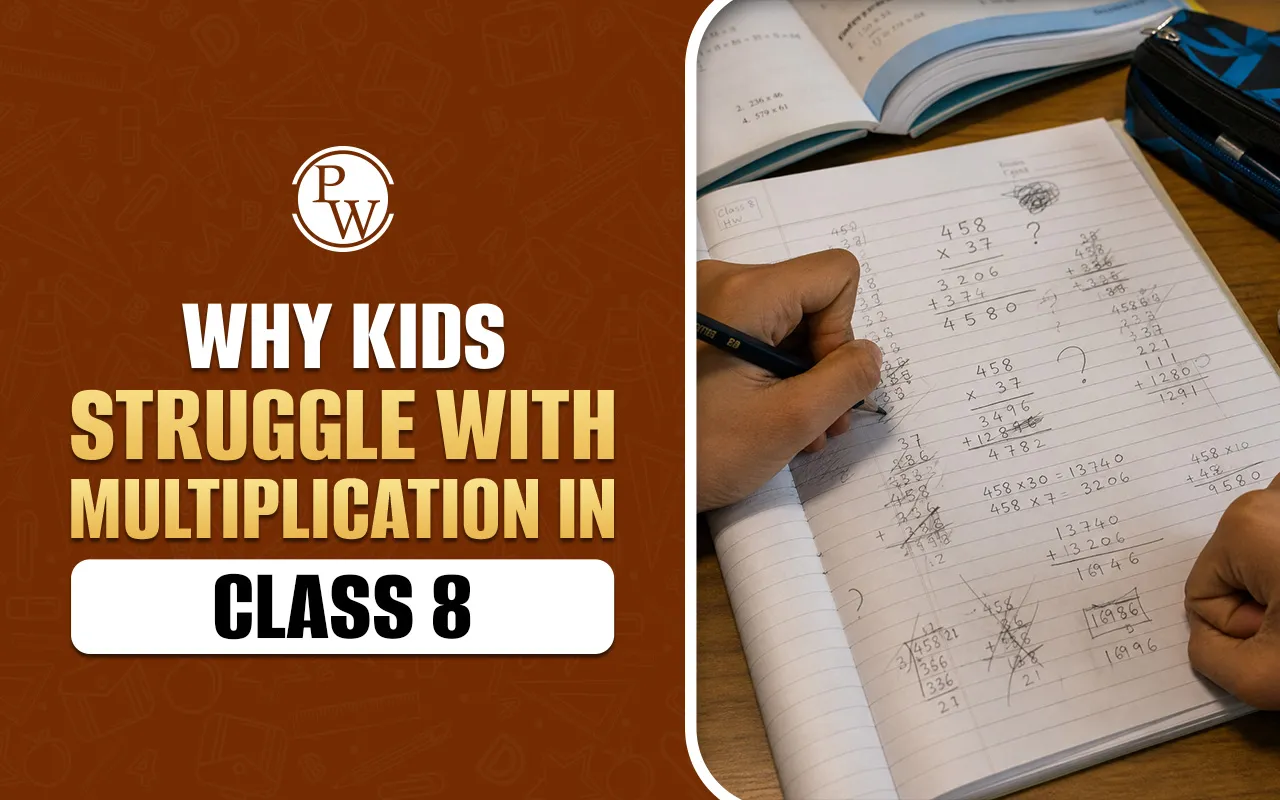
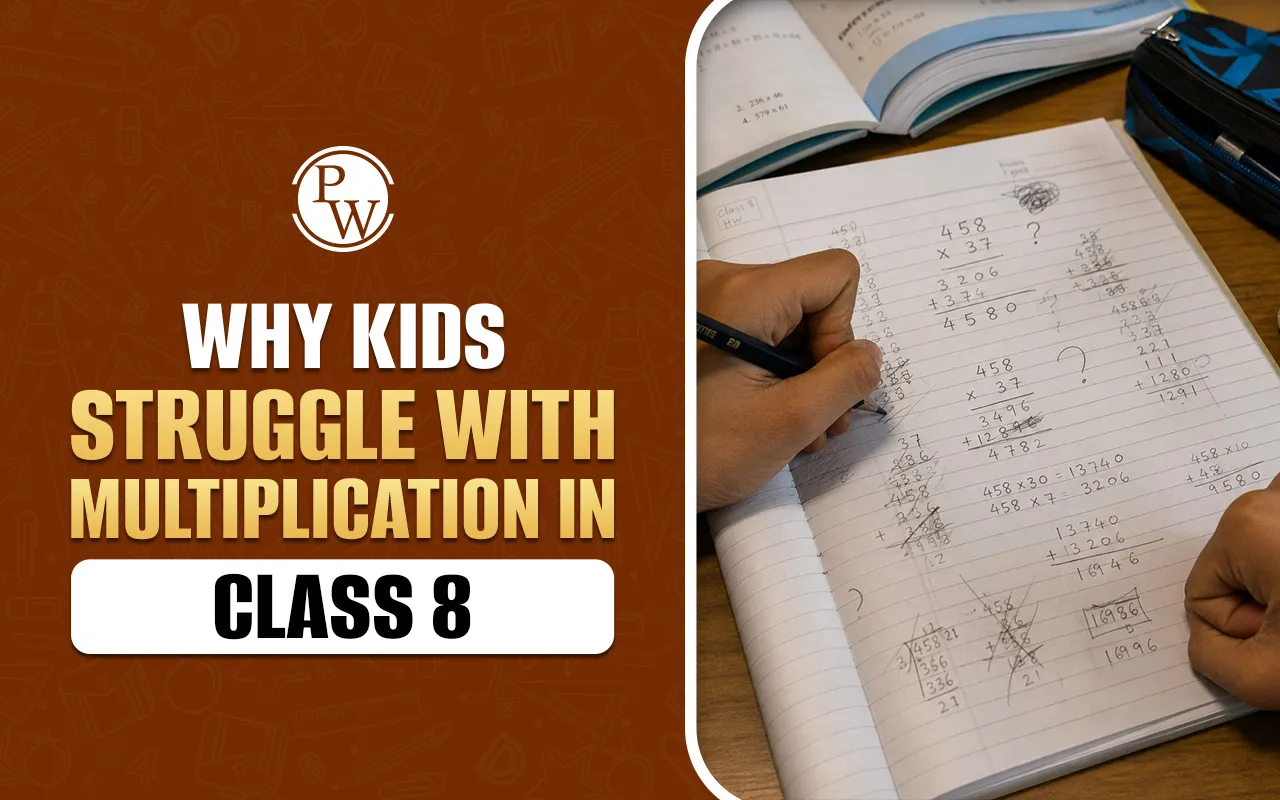
When you do a timed test and face many sums, it can seem like a race. You are not alone when you count on your fingers or scratch your head over many numbers. In this multiplication problem class 8 solving tutorial, learn how to solve multiplication problems by applying mental arithmetic while becoming a fast calculator.
This guide will teach you difficulties and solutions to improve your multiplication problems and help you understand better.
Multiplication Problems Class 8
A significant increase in the level of mathematical knowledge is required for entry into Class 8. Students leave simple tables and are introduced to multiplication problems class 8 with decimals, large multi-digit numbers and algebraic variables. Many students get to this point feeling overwhelmed, not from a lack of basic concepts, but because traditional, lengthy approaches get tedious and error-prone.
When they have to carry over digits, they will lose that confidence, especially if they have more than one step in their mind. It is crucial to address these challenges quickly to prevent them from disliking the subject. These challenges become manageable to overcome when students move away from mere memorisation and use logical shortcuts.
Difficulties of Multiplication Problems Class 8
Multiplication is not restricted to the use of simple numbers in Class 8, but intertwines multiple concepts. That's why it is so much harder to understand.
-
Large Numbers: When multiplying three or four-digit numbers, rows of calculations are very long. If one of the numbers is added incorrectly at the end, the entire answer is incorrect.
-
The Decimal Point: Decimals can be tricky! Some students have been known to forget to count all the decimal places or to put the decimal point in the wrong place (e.g., 1.25 as 12.5).
-
Fractions: Students can get confused when multiplying fractions and mix up the cross-cancelling and multiplying straight through, or they may not reduce the answer.
-
Confused by algebra: multiplying with letters! And then you multiply 3x by 4y or use powers like x² × x³ , you have a new type of "alphabet soup" in maths.
-
Brackets: The distributive property of multiplication over addition or subtraction can be used to multiply a number outside a set of brackets by all the terms within the brackets. The ability to operate correctly can easily be confused with multiplying the number outside the brackets by only the first term (e.g., 5(2a + 3b) is often miswritten as 5(2a) + 3b).
-
Multi-Step Expressions: One of the main reasons for maths mistakes in class 8, especially in a long string of pluses and minuses, is not using the correct order (BODMAS) when multiplying.
-
Tricky Word Problems: It is not easy to convert a long paragraph into a multiplication equation. It requires a good deal of focus to know what numbers are important and what numbers are just distractions.
Strategy For Multiplication Problems Class 8
The multiplication of numbers is a crucial skill to master in Class 8 and requires a combination of solid knowledge and intelligent approaches. Here are some ways to overcome the dilemma:
-
Strengthen Multiplication Tables: Tables up to 20 must be mastered. Eliminates the "calculation load" and enables the brain to concentrate on the problem at hand.
-
Improve Number Sense: Get children to explore numbers. For example, knowing 25 × 4 = 100 makes multiplying 25 × 16 much faster.
-
Revise Weak Basics: The issue is not class 8 maths but the basics that one has forgotten from class 5, such as regrouping or carrying over numbers.
-
Practice Decimal Multiplication Separately: Work out the multiplication as a whole. Write the numbers first, and then count the decimal places.
-
Teach Pattern Recognition: Show how multiplying by 10, 100, or 0.1 follows a pattern of moving the decimal point.
-
Reduce Careless Mistakes: Apply "estimation". The multiplication 49 x 11 should be approximately 500. When a student receives 5000, they immediately know there is something wrong.
-
Fast Multiplication Tricks: Practice Vedic maths multiplication methods, such as the base method or cross-multiplication, to reduce the time taken for multiplication.
Read More - Learn Subtraction without Borrowing (Class 1)
Practise Sheet to Improve Multiplication Problems Class 8
Test your speed and get rid of mistakes with this structured practice sheet.
Section 1: Mental Warm-Up
-
42 × 11 = ________
-
88 × 5 = ________
-
12 × 15 = ________
Section 2: Pattern Recognition & Decimals
-
4.5 × 10 = ________
-
0.12 × 100 = ________
-
0.5 × 0.5 = ________
Read More - Speed Maths Test for Class 8 (Try Now)
Section 3: Error Detection (Spot the Mistake)
Calculate the following sum and correct any error in it:
25 × 1.2 = 300
-
The Mistake: ________________ (Answer: Decimal point missing, should be 30.0)
Section 4: Real-Life Word Problems
-
Shopping Trip: What will be the cost of 11 notebooks if one notebook costs ₹45?
-
Answer: ₹________
-
Electricity Bill: The cost of a bulb is 0.5 units per hour. How many units are consumed if it operates for 24 hours?
-
Answer: ________ units.
-
Monthly Savings: Rahul saves ₹1,200 every month. How much will he save in 1 year?
-
Answer: ₹________
How Does CuriousJr Help with Class 8 Multiplication Problems
CuriousJr is not a memorisation course. It's logic-based learning. CuriousJr online menta maths class offers a step-by-step methodology in case students find it difficult to solve multiplication problems class 8 to get it right:
-
Interactive Mental Maths Modules: These are designed for students to practise calculating using mental skills and logical thinking, not to drudge with pen and paper.
-
Visualising Vedic Maths: Vedic maths multiplication is explained through the use of visual aids and animations to help explain the "why" behind the trick, making it easier to remember when performing in exams.
-
Gamified Practice: Rather than giving students boring worksheets, they are presented with multiplication problems and rewarded for their practice to help keep them motivated.
-
Personalised error detection: The system spots common math mistakes class 8, e.g., place value errors, and offers exercises to correct these mistakes right away.