Class 4 Word Problem Solving Tricks
 Nivedita Dar16 May, 2026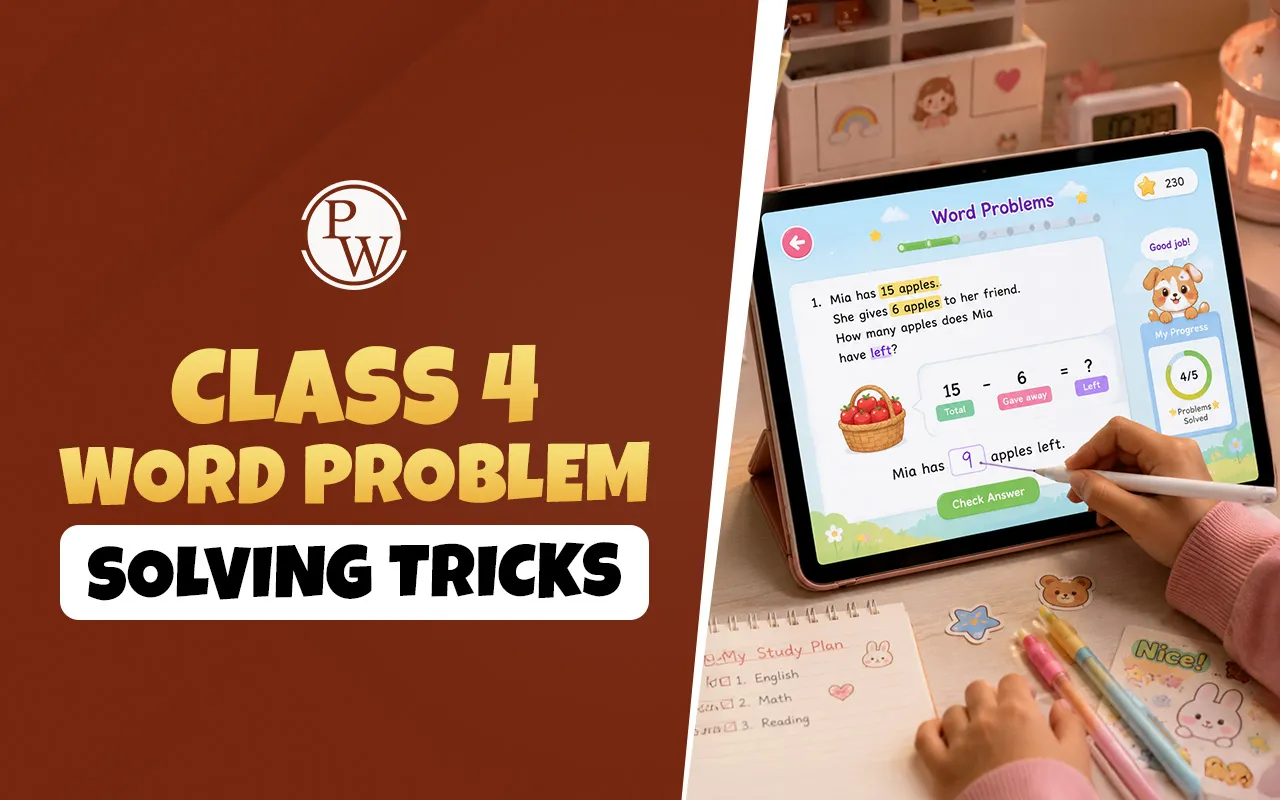
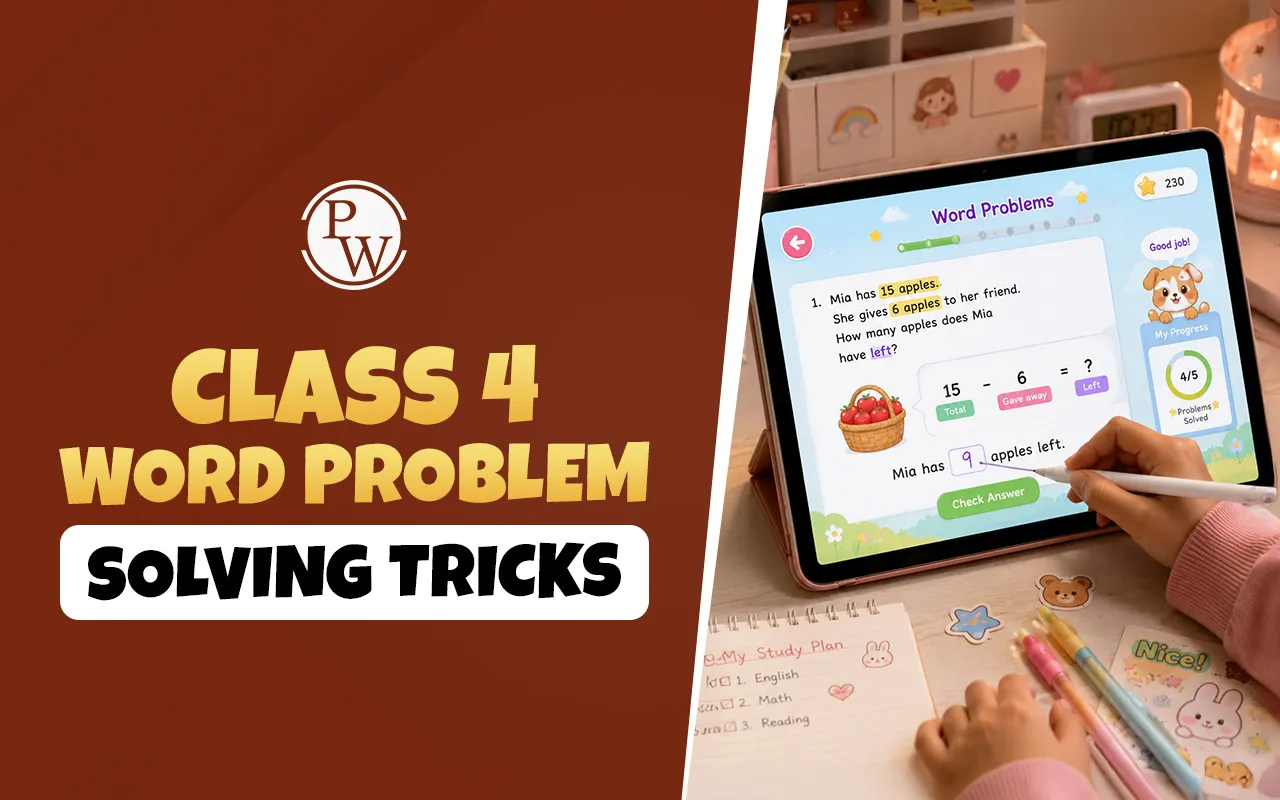
Many students find themselves staring at a math page, feeling stuck. You know how to add, subtract, and multiply, but when those numbers are hidden inside a story, everything feels different. This is the primary challenge with word problems class 4. It isn't just about the numbers; it is about understanding the "why" behind the question. If you struggle to figure out which operation to use or feel overwhelmed by long sentences, you are not alone. This article will show you how to use logical thinking to decode any problem and build mental maths confidence quickly.
Why Word Problems Class 4 Feel Difficult
At the Class 4 level, math shifts from simple sums to situational puzzles. A word problem asks you to be a detective. You have to find the "clues" (numbers) and the "action" (the operation). Without a solid plan, it is easy to get lost.
The secret lies in mental maths class 4 techniques. Instead of jumping straight to your pencil and paper, you should first try to "see" the story in your head. When you treat math like a real-life scenario—like sharing sweets or counting cricket scores—the logic becomes much clearer.
Tricks to Solve Word Problems Class 4
To get better at analytical skills, you need a toolkit. Here are seven tried-and-tested maths reasoning tricks that make the process much smoother:
The "Circle and Underline" Method
Before you solve anything, grab your pencil. Circle the numbers and underline the question. Often, word problems include extra information you don't actually need. By marking the important parts, you filter out the "noise" and focus on the data that matters.
Look for "Action Words"
Certain words act as secret codes for math operations. Learning these is the fastest way to improve your mental math confidence.
-
Addition: Total, sum, altogether, in all, plus.
-
Subtraction: Difference, left, remain, how many more, fewer.
-
Multiplication: Product, times, each (when finding a total).
-
Division: Share, distribute, average, each (when splitting a total).
Draw a Simple Model
If the words are confusing, draw a picture. You don't need to be an artist. Use circles, squares, or "bar models" to represent the numbers. Seeing the physical relationship between the values makes logical thinking feel more like a game and less like a chore.
The "Smaller Number" Substitution
If a problem uses big numbers that scare you, try replacing them with tiny numbers like 2 or 5.
Example: "A truck carries 4,500 kg of rice..." Change it to "A truck carries 5 kg."
Suddenly, the operation (add, subtract, etc.) becomes obvious. Once you know what to do, just put the big numbers back in!
Work Backwards
Some word problems class 4 tell you the ending and ask for the beginning. In these cases, reverse the operations. If the story says someone added 10, you subtract 10. This is a classic maths reasoning trick used in competitive exams.
Rounding for a "Quick Check"
Use mental math to estimate the answer before you do the hard work. If you are adding 98 and 47, think of it as 100 + 50. If your final answer is nowhere near 150, you know you’ve made a mistake and can fix it immediately.
Read It Out Loud
Sometimes your ears understand what your eyes miss. Reading the problem out loud helps you catch the rhythm of the story. If a sentence sounds like "taking away," your brain will naturally lean toward subtraction.
Read More - Subtraction Tricks Without Fingers for Class 1
Step by Step Method to Solve Word Problems
Success in word problems class 4 comes from following a consistent routine. Don't rush. Follow these steps every time:
-
Step 1: Read Twice. The first time is for the story; the second time is for the math.
-
Step 2: Identify the Goal. Ask yourself, "What exactly do I need to find out?"
-
Step 3: Choose Your Tool. Decide if you need to add, subtract, multiply, or divide.
-
Step 4: Solve and Label. Don't just write "20." Write "20 apples." Labels prevent silly mistakes.
-
Step 5: The Reality Check. Ask, "Does this answer make sense?" If a shopkeeper has 10 oranges and sells some, he cannot have 50 oranges left!
Read More - Two Digit Addition Tricks for Class 2
Word Problems Class 4 Practice Questions
Let’s put your logical thinking practice to the test with a few quick scenarios. Try to solve these in your head using the tricks above.
Scenario A:
Rohan has 45 marbles. His sister gives him 12 more. How many does he have in total?
-
Trick: Look for the action word "total." 45 + 10 is 55, plus 2 is 57. Easy!
Scenario B:
A box contains 60 chocolates. They are shared equally among 5 friends. How many does each get?
-
Trick: "Shared equally" means division. 60 divided by 5 equals 12.
Using these Class 4 mental maths moments throughout your day—like when you're at the grocery store or playing sports—is the best way to build lasting skills.
Improve Problem Solving Skills with CuriousJr
You need more than simply reading to be confident with mental maths, you need interaction, practice and clever ways to solve problems. CuriousJr provides mental maths sessions tailored for Class 4 pupils. With our engaging activities and disciplined learning methods, we make maths fast, fun and fearless.
The website assists students to reinforce the principles of multiplication, division, fractions, geometry, symmetry, data processing and word problems class 4 through live interactive classes, puzzles, quizzes and visual learning exercises. Beyond school syllabus support, MAT concepts like patterns, sequencing, analogies, Sudoku and reasoning games help pupils increase their brain strength and quick decision-making, along with developing their logical thinking skills.
CuriousJr online mental Maths Classes also provides Vedic mathematics strategies like complements to 10, doubling and halving, left to right addition and finger multiplication to assist kids accomplish calculations faster without leaning too much on calculators or rough work. Students increase their speed, accuracy, memory and overall math reasoning skills with gamified practice, quick feedback and step-by-step explanations.
It offers personalised mentor support, homework aid, doubt resolution, regular progress monitoring, and parent updates to ensure constant improvement. CuriousJr provides Class 4 pupils with the flexibility to learn online, regular practice exercises and interactive challenges to strengthen problem-solving skills, boost mental math confidence and solve maths questions with clarity and confidence.