Adjective Worksheet for Class 1 Students
 Nikita Aggarwal10 Mar, 2026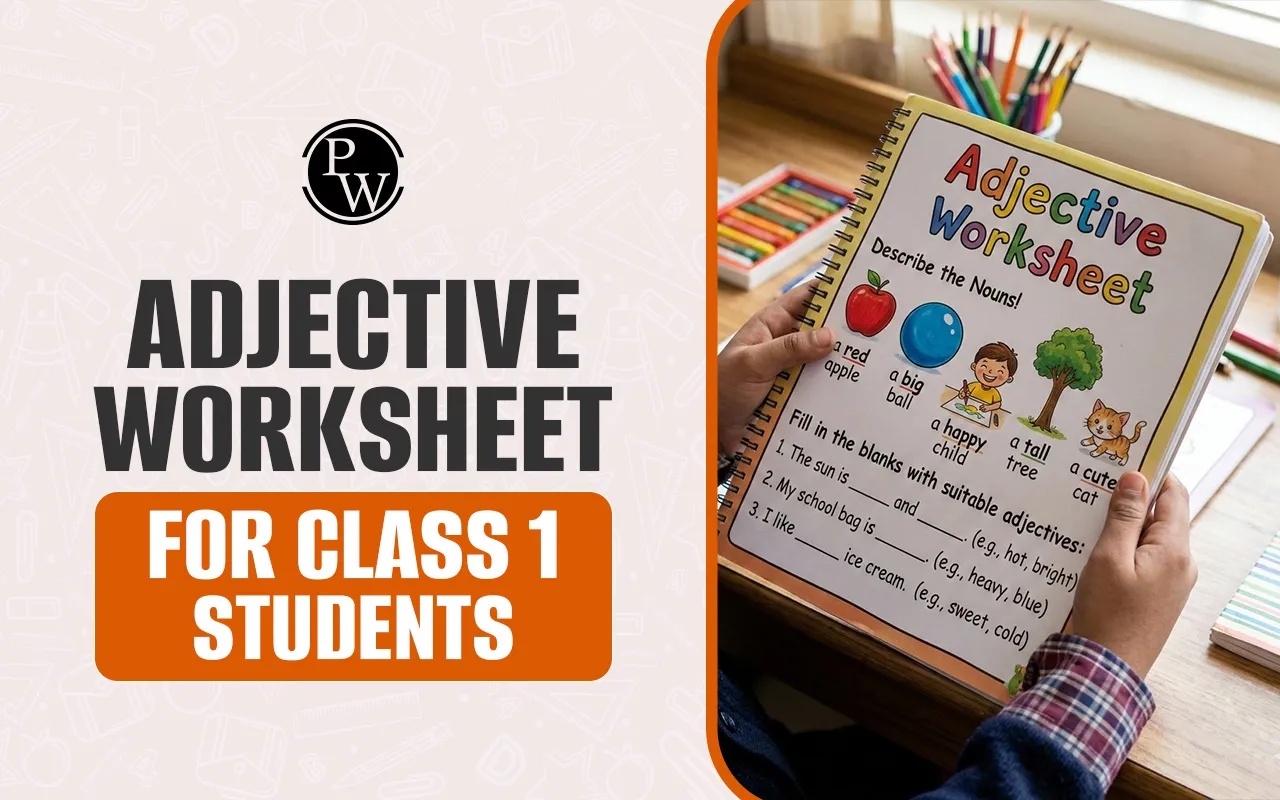
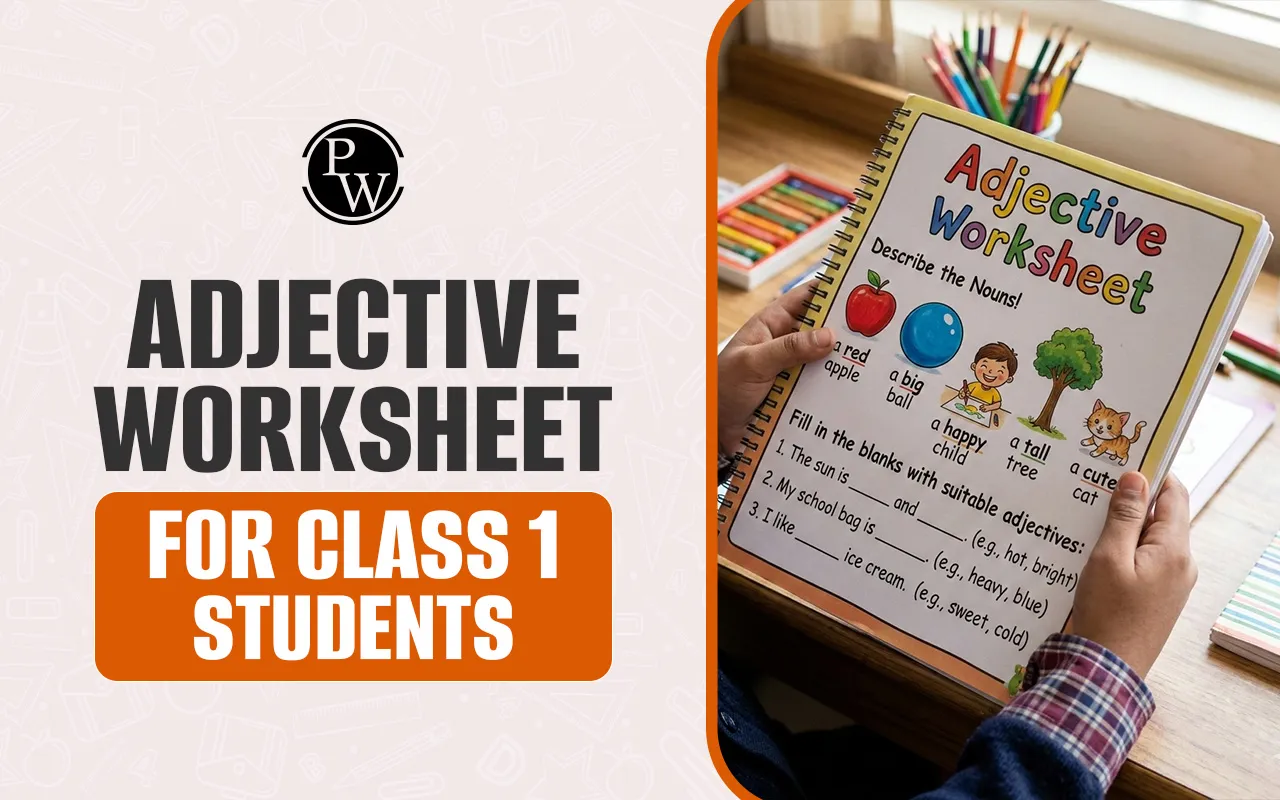
Adjective Worksheet for Class 1
At the age of six or seven, children are naturally curious about their surroundings. They notice the "tiny" ladybird or the "loud" horn on the street. Using an adjective worksheet for grade 1 helps formalise this natural observation into an academic skill. It gives them the specific terminology to categorise what they see, hear, and feel.
Grammar does not have to be a chore of memorisation. Instead, a well-designed 1st grade adjective worksheet turns a lesson into a game of discovery. When a child identifies that "sweet" describes a mango, they are doing more than just completing a task; they are understanding the relationship between nouns and the words that modify them.
Benefits of Early Grammar Practice
-
Reading Comprehension: Helps children visualise stories more clearly.
-
Vocabulary Growth: Introduces varied words beyond "good" or "bad."
-
Confidence: Empowers students to express their feelings accurately.
Key Features of a Great Adjective Worksheet for Class 1
A good worksheet for young learners needs to be visually engaging and simple to follow. If the layout is too cluttered, the child might lose focus or feel discouraged. Here are the core elements you should look for in high-quality adjectives for class 1 resources:
|
Feature |
Description |
|
Visual Aids |
Pictures of animals, fruits, and everyday objects to provide context. |
|
Simple Sentences |
Using words already found in a typical Year 1 vocabulary. |
|
Variety of Tasks |
Mixing, matching, circling, and filling in the blanks to keep interest high. |
|
Clear Instructions |
Short, direct sentences that tell the child exactly what to do. |
Types of Exercises in an Adjective Worksheet for Class 1
To keep a child engaged, the exercises should vary throughout the session. You cannot just ask them to underline words for twenty minutes without losing their attention. Here are the most effective exercise types found in a standard adjective worksheet for class 1:
1. The Circle the Adjective Challenge
In this activity, a child reads a short sentence like "The sun is hot." Their task is to find the word that tells us more about the sun. This helps them distinguish between the subject (noun) and the description (adjective).
2. Matching Opposites
This is a favourite in many adjectives class 1 worksheet sets. Kids match words with their total opposites. Common pairs include:
-
Big and Small
-
Happy and Sad
-
Hot and Cold
-
Fast and Slow
3. Filling the Blanks with Colours
Colours are the easiest adjectives for beginners. A prompt might say, "The grass is ____," and the child writes "green." This builds confidence because they already know the answers; they are just learning the grammatical label for those answers.
Read More - Class 1 Worksheet on This and That
Adjective Worksheet for Class 1 with Answers
Let’s look at a practical example inspired by educational standards. You can use these prompts to create a quick practice session at home or in the classroom to test their progress.
Exercise A: Fill in the Blanks
-
The elephant is very big.
-
I like eating sweet mangoes.
-
My teacher is very kind.
-
The rabbit has soft fur.
-
The coffee is hot.
-
The giraffe is tall.
Exercise B: Choose the Correct Adjective
-
The mouse is (small / heavy).
-
The ice is (cold / warm).
-
The sky is (yellow / blue).
-
My new bag is (heavy / light).
Answer Key for Parents:
-
Exercise A: 1. big, 2. sweet, 3. kind, 4. soft, 5. hot, 6. tall.
-
Exercise B: small, cold, blue, heavy.
Using an adjective worksheet for class 1 with answers allows for immediate feedback. This is crucial for young learners who need to know if they are on the right track before moving to the next page.
Read More - Class 1 English Practice Worksheet A, An, The
Categories of Adjectives for Class 1 Students
When introducing these words, it helps to group them logically. This prevents the child from feeling like they are learning a random, disconnected list of words.
Size and Shape
These are the most visible adjectives. Words like round, square, tiny, huge, and short fall into this category. An adjective worksheet for grade 1 often starts here because children can point to these physical traits easily in the room around them.
Feelings and Emotions
How do we feel today? Sad, angry, glad, or brave. These are more abstract but very important for emotional intelligence. Exercises that ask, "How is the boy feeling in the picture?" are excellent for teaching these types of adjectives for class 1.
Appearance and Texture
Teaching textures helps children connect grammar to their sense of touch. Common words include:
-
Hard (like a rock)
-
Soft (like a pillow)
-
Smooth (like glass)
-
Rough (like bark)
Tips to Complete an Adjective Worksheet for Class 1
Writing on a 1st grade adjective worksheet is just one part of the learning process. To make the lessons stick, try these active learning tips that move beyond the paper:
-
The Mystery Bag: Put an object in a bag and have the child describe it using only adjectives (e.g., "It is cold and smooth") until you guess the object.
-
Sentence Building: Start with a noun like "dog." Ask the child to add one word ("brown dog"). Then add another ("big brown dog").
-
Read Aloud: While reading a bedtime story, pause and ask, "What word did the author use to describe the dragon?"
Boost Your Child’s English Confidence with CuriousJr
Does your child hesitate to speak English or struggle to make correct sentences? This can impact their participation in class and slowly reduce their confidence. CuriousJr’s English Online Classes are designed to help children learn English in a simple, interactive, and enjoyable way.
Our program focuses on strengthening grammar basics, improving pronunciation, building vocabulary, and developing basic writing skills. Through live interactive sessions, children get regular speaking practice guided by trained mentors. Engaging activities like storytelling, games, and creative writing make every class fun and effective for young learners.