
Tone of Voice - Definition, Types, Examples
 Nikita Aggarwal10 Apr, 2026
What is Tone of Voice in English?
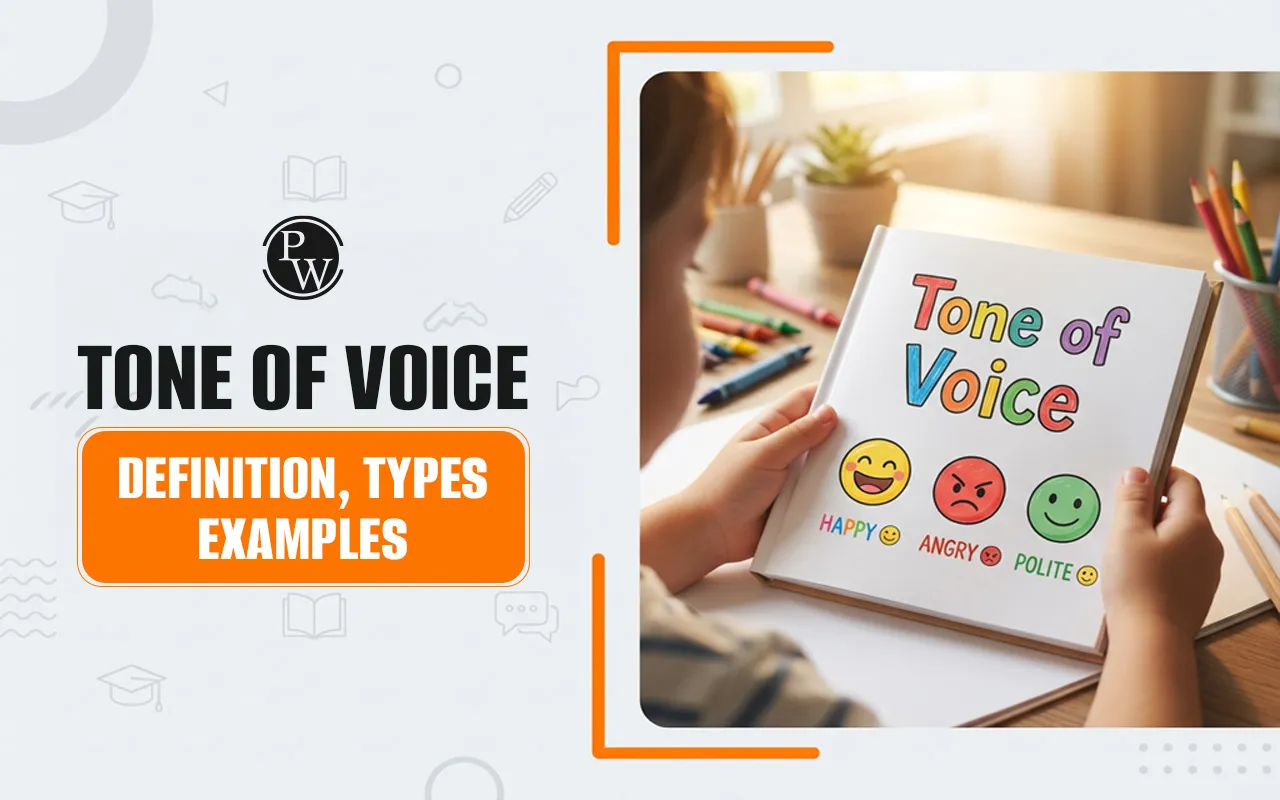
It means the way someone talks or writes that shows how they feel or what they think. It has to do with the pitch, volume, and speed of your speaking. It is made in writing with words, sentence structure, and punctuation.
It is crucial to know the difference between "tone" and "voice." Your "voice" is your unique personality, it stays relatively consistent. But the way you talk changes depending on the situation. For example, you wouldn't talk to your friends the same way you would talk to your teacher about a project.
Importance of VoiceTone in Communication
-
Building Trust: If you use the same tone all the time, people will think you are trustworthy.
-
Clarity: It helps the audience get the "vibe" of the content, whether it's a severe warning or a light-hearted recommendation.
-
Emotional Impact: The correct tone can move, calm, or convince an audience.
Importance of Tone in Public Speaking
When speaking, your physical tone is influenced by:
-
Pitch: High pitch can signal excitement or nervousness; low pitch signals authority.
-
Volume: Speaking too loudly can seem aggressive, while whispering can seem timid.
-
Pace: Fast talking suggests urgency, while slow speech helps emphasise important points.
By controlling these elements, you ensure your tone aligns with your written words, creating a cohesive and powerful message.
Common Types of Tone of Voice
You can adjust to diverse social and professional settings if you know the different types. These are the most typical tones people employ when they talk to each other:
1. Formal Tone
This tone is polite, professional, and objective. It doesn't use contractions or slang words like "don't" or "can't." It is common for corporate reports, academic papers, and legal documents.
-
Example: "We regret to inform you that the meeting has been rescheduled."
2. Informal Tone
The tone is casual and conversational. It sounds like how we talk to our friends and family. It commonly includes slang, abbreviations, and shorter words to make people feel at ease.
-
Example: "Hey! I just wanted to let you know that the meeting has been moved. See you later!"
3. Professional Tone
A professional tone is clear and polite at the same time. People often use it at work to talk to each other in a way that is both polite and easy to understand.
-
Example: “Thank you for the update. I will share my part by 4 PM today.”
4. Respectful Tone
A polite tone is one that shows respect for other people. It makes sure that the message is polite and doesn't offend anyone, therefore it's good for most people.
-
Example: “Thank you for your feedback. I truly appreciate your input.”
5. Informative Tone
An informed tone is one that is based on facts and is not biased. When you want to provide information or explain something properly without showing how you feel or what you think, you utilise it.
-
Example: “This process involves three key steps to ensure accurate results.”
Tone of Voice Comparison Chart
To help you see how these tones are different, think about how the same message changes depending on the tone:
|
Context |
Message Goal |
Tone Type |
Example Sentence |
|
Academic |
Requesting an extension |
Formal |
I am writing to request an extension on my assignment due to unforeseen circumstances. |
|
Social |
Asking for more time |
Informal |
Can I get a few more days for this? Things got a bit crazy this week! |
|
Leadership |
Setting a deadline |
Assertive |
Please ensure the report is submitted by 5 PM today to keep the project on track. |
|
Support |
Helping a friend |
Empathetic |
I’m so sorry you’re feeling overwhelmed; let’s figure this out together. |
|
Motivation |
Encouraging a team |
Optimistic |
We have a great challenge ahead, and I know our hard work will pay off! |
Tone of Voice in Writing
When we talk about voice tone, we often look at how specific words change the "temperature" of a sentence. In writing, you don't have the benefit of facial expressions or hand gestures. Therefore, your word choice does all the heavy lifting.
Importance of Diction in Voice Tone
"Diction" means the words you choose. Your tone gets professional when you employ words like "beholden" or "subsequent." It sounds less formal if you say "thanks" or "later."
Sentence Structure in Voice Tone
Long, complicated phrases generally sound more serious or scholarly. Short, punchy sentences sound current, informal, or urgent. Mixing these lengths keeps the reader interested and helps you find your own voice.
Read More - Voice in Grammar - Definition, Types, Examples Types, and Transformation Rules
Tone of Voice Examples
Let’s look at how tone functions in different scenarios to see the theory in action.
Scenario A: Giving Feedback
-
Negative/Critical Tone: "This work is full of mistakes. Fix it."
-
Constructive Tone: "I noticed a few areas where we can improve the accuracy. Let’s go over them together."
This shows how tone can change how your message is received. A harsh tone may create resistance, while a constructive tone encourages collaboration and better understanding.
Scenario B: Responding to an Invitation
-
Formal Tone: "I would be delighted to attend the ceremony on Saturday."
-
Informal Tone: "I’ll be there! Can’t wait to celebrate with you."
In this case, tone influences the impression you create. A formal tone reflects respect and professionalism, while an informal tone creates warmth and familiarity.
Scenario C: Workplace Communication
-
Professional Tone: "Could you please provide an update on the status of the project?"
-
Casual Tone: "How’s the project coming along? Give me a shout when you have a sec."
Here, tone affects workplace relationships. The right tone helps maintain professionalism while still keeping communication clear and approachable.
Importance of Tone in These Examples
As you can see, the same message can create very different outcomes depending on the tone used. A tone influences:
-
how your message is perceived
-
how people respond to you
-
the level of respect and clarity in communication
Using the right tone helps ensure that your intention is understood correctly and that your message has the desired impact.
Read More - Public Speaking Skills for School Students
How to Choose the Right Tone
Selecting the right tone requires a bit of social awareness. Before you speak or write, ask yourself these three questions:
-
Who is my audience? (A principal, a peer, or a younger sibling?)
-
What is the setting? (A classroom, a playground, or a job interview?)
-
What is my goal? (To inform, to persuade, to entertain, or to apologise?)
If you are writing for a brand or a school blog, you might need to follow a specific "style guide" that dictates the tone you should use. Most modern brands prefer a "friendly but professional" tone to appear approachable yet competent.
How to Improve Your Tone of Voice
Improving your tone requires consistent practice and awareness. Here are some simple techniques you can use to develop better control over how you communicate:
-
Practice using different tones: Take a single sentence and try saying it in different tones, such as formal, informal, assertive, and empathetic. This helps you understand how tone changes the meaning of the same words.
-
Record and listen to yourself: Recording your voice while speaking or reading aloud allows you to evaluate your pitch, speed, and clarity. Listening back helps you identify areas where your tone can be improved.
-
Emphasise key words: While speaking, stress the important words in a sentence to guide attention and improve clarity. This ensures your message is delivered effectively.
-
Match tone with your intention: Before speaking or writing, think about your purpose. Whether you are informing, requesting, or persuading, your tone should align with your goal.
-
Adapt to your audience: Your tone should change depending on who you are communicating with. A formal tone works best in professional settings, while a friendly tone is suitable for casual conversations.
Tone of Voice Practice Exercise
To better understand how tone works, try this simple exercise:
Take the sentence:
“You need to complete this task.”
Now rewrite or say the same sentence in three different tones:
-
Formal tone
-
Friendly tone
-
Assertive tone
This exercise helps you observe how the same message can sound completely different depending on the tone used. Practising this regularly will improve your ability to adjust your communication in real-life situations.
Help Your Child Build Strong English Skills with PW CuriousJr
PW CuriousJr provides well-structured online English classes designed to make learning easy and effective for young learners. With small batch sizes, every child receives personal attention, ensuring better understanding and support. Engaging activities keep students involved while helping them build confidence in reading, writing, speaking, and listening.
The curriculum is aligned with globally recognized English standards, enabling children to use the language comfortably in everyday life. Each course is simple, focused, and easy to follow, creating a smooth and enjoyable learning journey.
In addition to live classes, students also get access to recorded video lessons for revision and extra practice. These recordings help them revisit concepts anytime and learn at their own pace. Together, live sessions and recorded lessons offer a complete and balanced English learning experience.