Postcard Writing | Meaning, Format, Examples
 Nikita Aggarwal23 Mar, 2026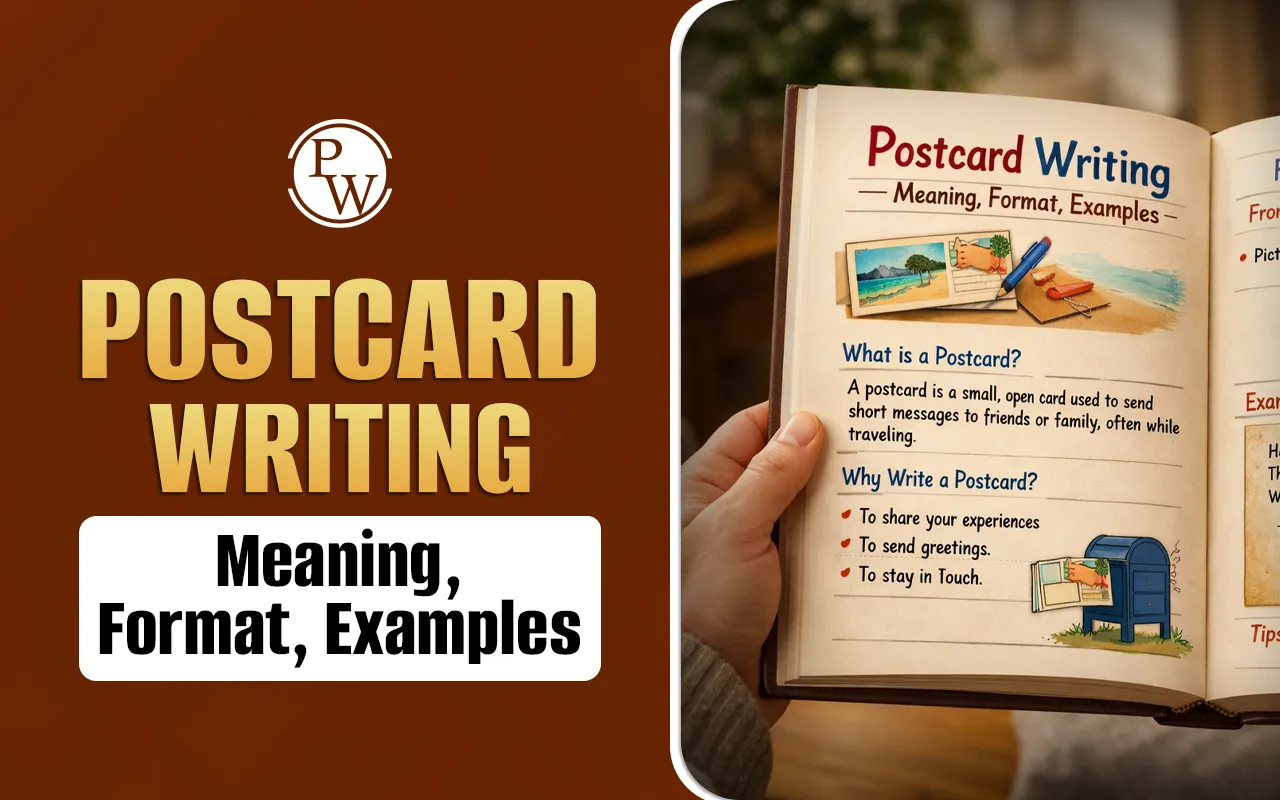
What is Postcard Writing?
A postcard is a rectangular piece of thick paper intended for writing and mailing. It is a popular way for travelers to send quick greetings from famous landmarks. Because the space is very small, the writer must pick only the most exciting details to share.
Learning what is postcard writing starts with its structure. A postcard has a picture on one side and is divided into two sides. One side is for the recipient's address, and the other side is for your own message. It is a physical memory that one can hold for a long period. A postcard is different from a digital message in that it is tangible and can be shown off.
Format of Postcard Writing
To make sure your message reaches the right person, you must follow the correct postcard writing format. Here is how you should organize your card to ensure it looks neat and is easy for the post office to deliver:
1. Header and Salutation
-
Date and Place: Write these in the top left corner so the reader knows when and where you are.
-
Greeting: Use a friendly opening like "Dear [Name]" or "Dearest [Name]." Since postcards are informal, you can even use "Hi!" or "Hello!"
2. The Main Body and Closing
-
The Body: Write 3 to 5 sentences. Talk about the weather, a famous site you visited, the food you ate, or how much you miss the person.
-
Signature: End with a warm closing like "With love," "See you soon," or "Wish you were here." Sign your name clearly below the closing.
3. Delivery Details
-
Stamp Area: Stick the postage stamp in the top right corner.
-
Address Section: Write the full name and complete address of the person receiving the card on the right side. Be very neat with the house number and pincode.
Read More - How to Write Descriptive Writing? - Format with Examples
How to Write a Postcard - Step by Step Guide
You will succeed at creating an excellent card design if you execute these particular instructions. The guide on how to write a postcard provides all essential elements required for creating an entertaining message that maintains its elements of fun to the recipient.
Step 1: Choose a Card: Select a postcard that displays an image matching either your current location or the emotional tone of your message.
Step 2: Use the Back Side: The card needs to be turned over to the back side. The right side serves as the area to write the address and place the stamp while your story needs to be written on the left side.
Step 3: Write the Date and Location: This writing provides the reader with information about your exact location and time of vacation activities.
Step 4: Keep it Personal: Choose a memory which you wish to share with the recipient of your card. The experience includes either a humorous animal encounter from your vacation or the memory of a tasty dish you enjoyed.
Step 5: Address it Clearly: The address needs to be written in block letters which include the recipient's name and residential address to assist the mail carrier with delivery.
Examples of Postcard for Students
Looking at a sample how to write a postcard is the best way to learn how to do it. Here are two different styles you can use for your school assignments or personal travel to see how the layout works in practice.
Example 1: A Travel Postcard to a Friend
Mumbai, 12th March 2024 Dear Rahul,
I am having an amazing time in Mumbai! Today, I visited the Gateway of India and took a boat ride. The sea breeze felt so refreshing. I also tried the famous Vada Pav, and it was delicious! I bought a small souvenir for you. See you back at school next week!
Best wishes,
Aman
Example 2: A Holiday Greeting to Grandparents
Goa, 20th December 2023 Dear Grandma and Grandpa,
Merry Christmas! We are spending our winter break at the beach in Goa. I spent the whole morning building a huge sandcastle and collecting colorful shells. The weather is warm and sunny here. I miss your homemade cookies and can't wait to see you for New Year’s.
With lots of love,
Sanya
30 Creative Ideas for Postcard Writing
If you are stuck on how to write a postcard, use these creative prompts to get started. These ideas help you focus on small, interesting details that fit perfectly in the limited space provided on a standard card.
-
Describe the most beautiful building you saw today.
-
Tell a friend about a funny animal you met at a zoo.
-
Describe a local dish that tasted very different from home.
-
Write about a goal you scored in a football match.
-
Tell your parents about a new skill you learned at camp.
-
Describe the view from your hotel window.
-
Write a "thank you" note for a birthday gift.
-
Tell your sibling about a long train or plane journey.
-
Describe a festival or parade you attended.
-
Write about the coldest or hottest weather you have ever felt.
-
Send a "get well soon" message to a sick classmate.
-
Share a secret about a hidden spot you discovered.
-
Describe a colorful market you visited.
-
Write about a famous person’s house you walked past.
-
Tell your cousin about a movie you just watched.
-
Describe the sound of the ocean at night.
-
Write about a cool souvenir you found for your sister.
-
Mention a new word you learned in a different language.
-
Describe the bright colors of the flowers in a local park.
-
Tell your best friend about a scary ride at a theme park.
-
Write about a street performer you watched for an hour.
-
Describe the smell of fresh bread from a local bakery.
-
Tell me about a mistake you made while trying to find your way.
-
Describe a mountain that looks like it touches the clouds.
-
Write about a boat trip where you saw dolphins.
-
Mention a local tradition you found very interesting.
-
Describe a statue that was much bigger than you expected.
-
Tell me about a friend you made from another country.
-
Write about the starriest sky you have ever seen.
-
Share your excitement about a special meal planned for tonight.
Read More - Paragraph Writing - Structure and Types
Extra Practice on Writing a Postcard
To improve your skills, try these tasks based on the postcard for students ideas. These exercises will help you become comfortable with the space constraints and the informal tone required for this type of writing.
-
Task 1: Science Trip: Imagine you are on a school trip to a science museum. Write a card to your younger brother about the coolest invention you saw today.
-
Task 2: Visiting Family: You are visiting your aunt in a different city. Write a note to your parents telling them you arrived safely and describing her house.
-
Task 3: Adventure Story: You went on a jungle safari. Write a postcard describing the moment you saw a tiger or a rare bird in the wild.
Revision Tips for the Postcard Writing
-
Pick One Highlight: You don't have space for a whole story. Choose the best thing that happened that day to keep your postcard writing format clean.
-
Write Small: Postcards have tiny spaces. Use a fine-tip pen and write clearly to ensure every word is readable for your friend or family member.
-
Informal Tone: You don't need to be very formal. It is okay to use contractions like "I'm" or "We've" and fun exclamation marks to show your excitement.
-
Don't Forget the Stamp: A postcard cannot travel without a postage stamp! Always check the postage rate for the country or city you are mailing to.
Help Your Child Build Strong English Skills with PW CuriousJr
PW CuriousJr offers thoughtfully designed online English classes that make learning simple and effective for young learners. With small batch sizes, each child gets individual attention, leading to better understanding and guidance. Interactive activities keep students engaged while building confidence in reading, writing, speaking, and listening.
The curriculum follows globally recognized English standards, helping children use the language comfortably in everyday situations. Each course is clear, focused, and easy to understand, ensuring a smooth learning experience.
Along with live classes, students also get access to recorded video lessons for revision and additional practice. These recordings allow them to revisit concepts anytime and learn at their own pace. Together, live sessions and recorded content create a complete and well-rounded English learning experience.