
Number Sequence Practice for Better Brain Development (Class 1)
 Nivedita Dar28 May, 2026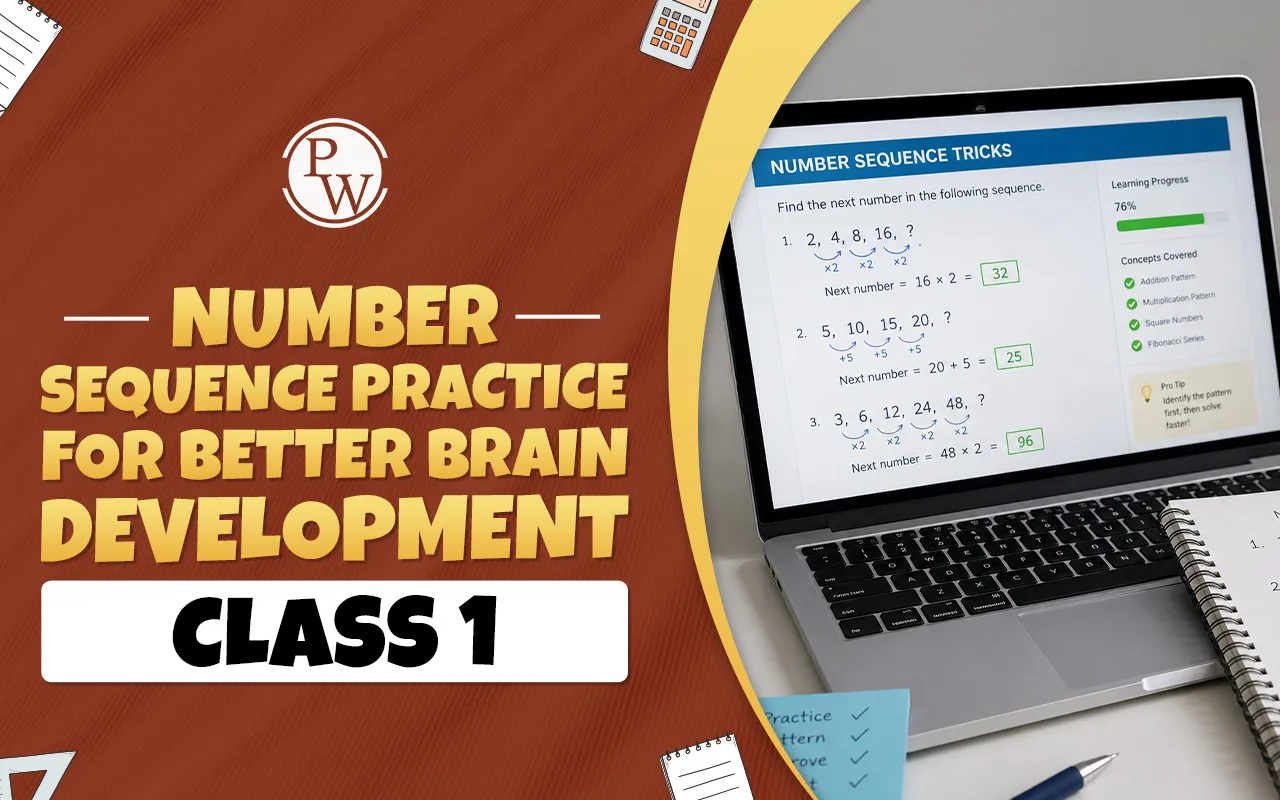
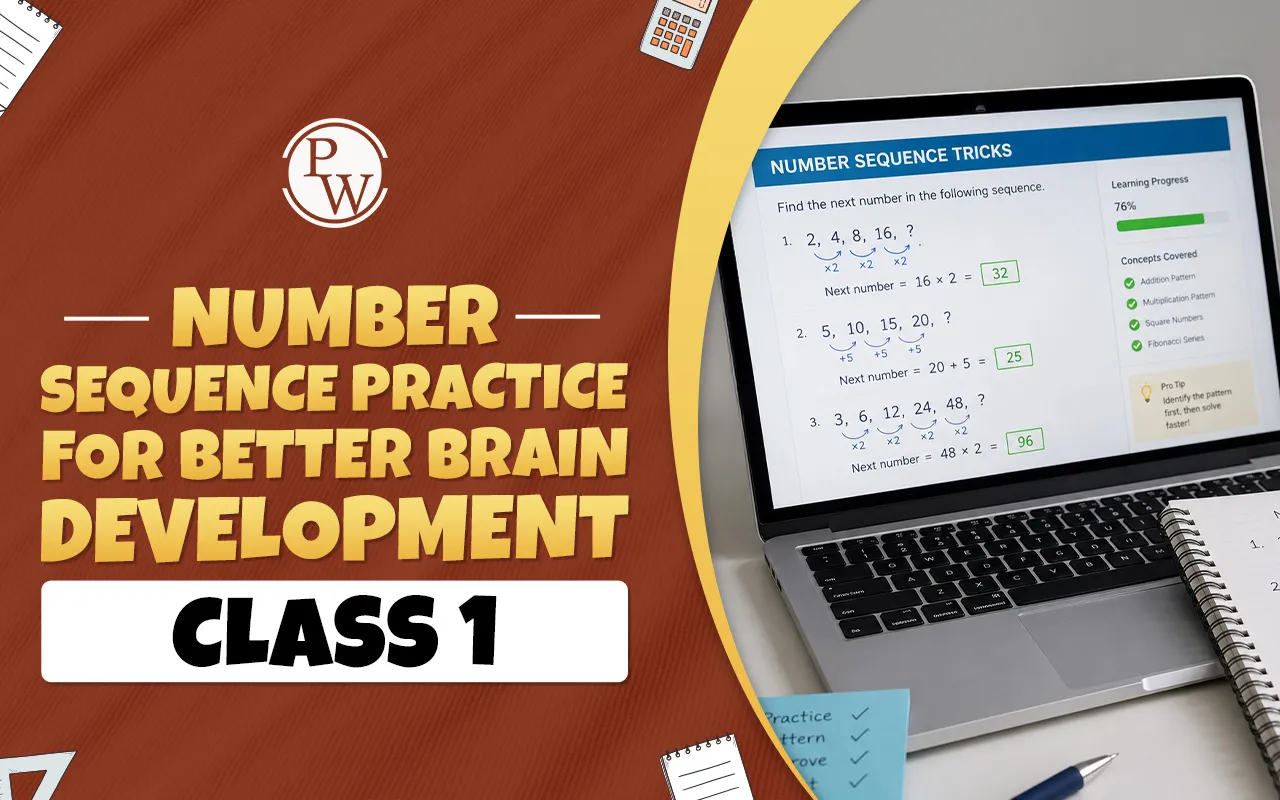
For young learners, math can seem more like a chore than a game, especially if they can’t see the logic behind a string of digits. When a child cannot predict what will happen next, they lose confidence in their ability to problem-solve. Number sequence tricks help bridge this gap, turning abstract numbers into predictable patterns. This way, early maths training is simplified so that students move from basic counting to more advanced logical thinking easily and excitedly.
Why Use Number Sequence Tricks for Class 1 Kids?
The first step in developing high level reasoning is teaching children to see patterns. Once children know the ‘why’ of a sequence, rote memorisation is no longer required. This creates a sense of number fluency that helps with more complex arithmetic later.
The benefits of focusing on sequencing include:
-
Faster Calculation: Kids start seeing groups of numbers rather than individual units.
-
Pattern Recognition: This is a core component of brain development maths and supports logical thinking.
-
Reduced Math Anxiety: Knowing the "trick" makes the subject feel manageable.
Number Sequence Tricks to Improve Accuracy
For a six-year-old, the jump from counting 1 to 100 and identifying missing numbers can be daunting. Using specific number sequence tricks can make this process intuitive. One effective method is the "skip counting" visual, where children jump over one number to find the next in a series of evens or odds.
Consider these common patterns found in Class 1 curriculum:
|
Sequence Type |
Example Pattern |
The "Trick" to Remember |
|
Ascending |
2, 4, 6, 8... |
Always add a fixed amount (e.g., +2). |
|
Descending |
10, 9, 8, 7... |
Count backwards like a rocket launch. |
|
Five-Step |
5, 10, 15, 20... |
Look for numbers ending in 0 or 5. |
|
Skip Counting |
1, 3, 5, 7... |
Skip every second number on the list. |
By using these visual cues, students can solve mental maths class 1 problems without needing to use their fingers for every single step.
Read More - Mental Maths Games Using Dots for Class 1
Number Sequence Tricks for Class 1 Logic Skills
Logic is the ability to follow a path of thought to a valid conclusion. In the context of mathematics, class 1 logic skills are nurtured when a child looks at a partial sequence and deduces the missing link. This requires them to analyse the relationship between the numbers they see and apply a rule to find the numbers they don't see.
What is the "What Comes Before and After" Strategy
Understanding the position of a number is vital. You can practice this by:
-
Giving a middle number (e.g., 15) and asking for the "neighbours."
-
Creating "number sandwiches" where the middle is missing (e.g., 21, __, 23).
-
Asking for the number that is "two more" or "two less" than a target.
Tricks for Sorting Numbers
Logic also involves categorisation. Asking a student to pick out all the "even" numbers from a random pile of flashcards is a great way to reinforce number sequence practice while building organizational skills in the brain.
Number Sequence Tricks Practice for Class 1
In early childhood education, repetition is the key to learning it. Short, daily practice is much more effective than long weekly study sessions. It keeps the neural pathways firing and makes sure that the concepts get transferred from short term memory to long term memory.
You can work practice into your daily routines:
-
During Mealtime: Count the number of peas or carrots in steps of two.
-
While Walking: Look at house numbers and predict if the next one will be higher or lower.
-
Before Bed: Try to count backwards from 20 to 1 as a calming mental exercise.
Consistent early maths training ensures that these patterns become second nature, allowing the child to focus on more difficult concepts like addition and subtraction without being slowed down by basic number recognition.
Number Sequence Tricks for Brain Development
The way a child’s brain grows in the first few years of schooling is remarkable. Engaging in brain development maths helps create strong synaptic connections. When a child solves a sequence, they aren't just doing math; they are engaging their spatial awareness, memory, and executive function.
Tricks Using Number Lines
A mental number line is a powerful tool. Children who can "see" the numbers in their head tend to be better at estimation and measurement later in life. Sequences help build this internal map by showing how numbers relate to one another in space.
Tricks to Improve Thinking Skills
Sometimes, a sequence doesn't follow a simple "+1" rule. It might be "+2" or "-1." Teaching kids to switch between these rules improves cognitive flexibility. This is the ability to adapt to new information or changing rules, which is a life skill far beyond the classroom.
Read More - Weak Number Recognition Mental Maths Tricks for Class 1
Easy Number Sequence Tricks for Early Maths Learning
The best maths training involves a mix of tactile, visual, and auditory learning. For Class 1 students, using physical objects like beads or blocks helps ground abstract numbers in reality.
Effective techniques include:
-
Bead Stringing: Stringing beads in alternating colours (2 red, 2 blue) mirrors numerical sequences.
-
Number Songs: Rhythmic counting helps auditory learners remember the order of digits.
-
Drawing Patterns: Having kids draw shapes that correspond to numbers (1 circle, 2 squares, 3 circles) connects geometry with sequencing.
Using these varied methods ensures that the child stays engaged and that the tricks they learn are applied in different contexts.
Improving Mental Maths Performance for Class 1
Speed and accuracy are the two pillars of mental maths class 1. While accuracy is the initial goal, speed develops as the child becomes more comfortable with the patterns. One way to improve this is through "Timed Challenges" where the child tries to complete a sequence within a minute.
The "Double It" Strategy
Doubling numbers (2, 4, 8, 16) is a sequence that fascinates kids. It teaches them about rapid growth and multiplication without them even realising they are doing it.
Tricks to Find the Odd One Out
Give a sequence that is almost correct but has one mistake (e.g., 5, 10, 12, 20). Asking the child to find the "imposter" number is an excellent way to test their deep understanding of the pattern rules.
How CuriousJr Helps Class 1 Students Learn Patterns
To make learning truly interactive, digital tools can provide a structured environment for children to test their skills. When kids engage with platforms like CuriousJr, they are introduced to a world where logic and creativity meet. By solving puzzles that require these tricks, they build the confidence needed to tackle more complex coding and logic-based tasks in the future. This interactive approach ensures that the fundamental skills learned in Class 1 are reinforced through play and exploration.
1. Maths Games and Activities
Fun activities help children enjoy learning instead of feeling pressure.
2. Easy Visual Explanations
Simple visuals make mental arithmetic for Class 1 easy to understand
3. Interactive Practice
Children actively solve problems instead of only listening.
4. Friendly Teacher Support
Teachers guide every child patiently, making mental maths for kids comfortable and enjoyable.