
Maths Habits Every Class 1 Parent Can Build with CuriousJr Mental Maths
 Mishika Gupta13 Aug, 2026
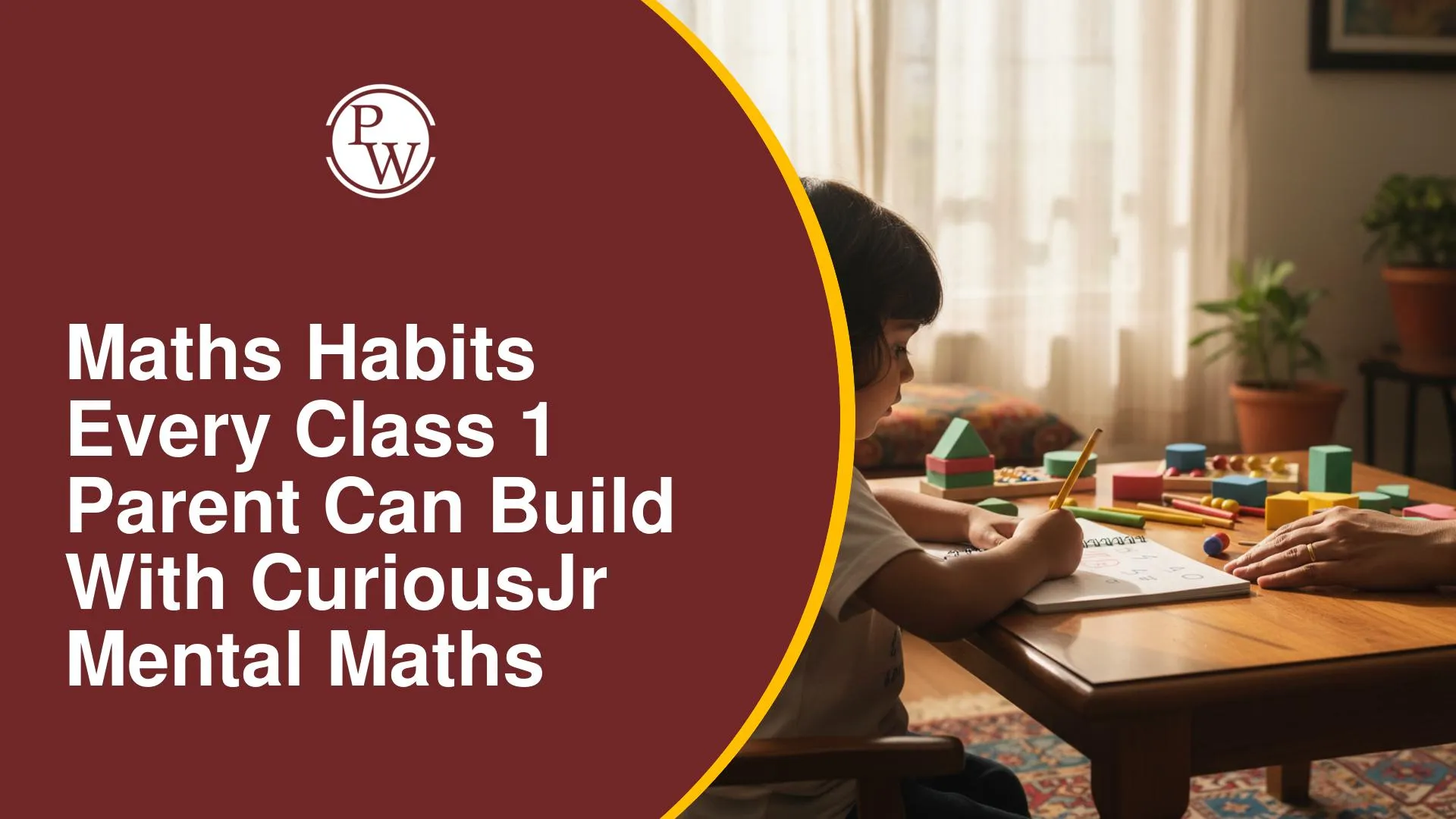
Class 1 is when children begin developing the basic Maths skills they will use in higher classes. Counting, recognising numbers, solving simple sums and understanding patterns become part of everyday learning. Building good Maths habits early can make these concepts easier to understand and practise.
For parents, the goal is not to make children spend hours with worksheets. Short, regular practice, everyday Maths activities and encouragement can help children become more comfortable with numbers. CuriousJr Mental Maths supports this approach through live interactive classes, guided practice, age-appropriate activities and teacher support, helping children develop stronger Maths habits from an early stage. With the right habits, Maths can become a natural and enjoyable part of a child’s daily routine.
Why Good Maths Habits Matter in Class 1
Class 1 introduces children to important mathematical ideas, from numbers and shapes to addition, subtraction, measurement and patterns. Regular practice helps children become familiar with these concepts without feeling overwhelmed.
Good Maths habits can help your child:
-
Build stronger number sense.
-
Remember concepts for longer through regular revision.
-
Become more comfortable with basic calculations.
-
Develop confidence while solving questions.
-
Understand concepts instead of simply memorising answers.
-
Approach Maths with a positive attitude.
The focus should be on helping your child understand why an answer is correct, not only whether the final answer is right.
What Should Your Child Practise in Class 1 Maths?
Class 1 Maths practice should cover both school concepts and basic thinking skills. Children can gradually build their understanding through the following areas:
|
Learning Area |
What Your Child Can Practise |
|
Numbers |
Numbers 1–9, 10–20 and 21–99 |
|
Addition & Subtraction |
Single-digit sums and calculations up to 20 |
|
Shapes & Measurement |
Basic shapes, length and measurement |
|
Patterns |
Finding and continuing simple patterns |
|
Time & Money |
Daily routines, time and basic money concepts |
|
Multiplication |
Understanding multiplication through simple examples |
|
Data Handling |
Reading and understanding simple quantities and information |
Read More - Number Sequence Practice for Better Brain Development (Class 1)
Alongside these topics, your child can also practise:
-
Classification
-
Odd one out
-
Sequencing
-
Analogies
-
Visual discrimination
-
Spatial understanding
-
Logical reasoning
-
Quantitative reasoning
-
Memory skills
These activities help children look for relationships, compare information and think through problems instead of simply recalling answers.
7 Simple Maths Habits Parents can Build at Home
Parents can introduce small Maths activities into the daily routine without making learning feel like extra homework.
-
Set a Regular Practice Time
Keep a short, consistent time for Maths practice each day so your child knows when to focus on it. -
Practise Counting and Numbers
Ask your child to count objects, identify numbers around the house or arrange numbers in order. -
Use Everyday Situations for Calculations
Shopping, sharing snacks or arranging toys can become simple opportunities to practise addition, subtraction and counting. -
Ask How the Answer was Found
Instead of asking only for the answer, encourage your child to explain the steps or method used. -
Include Maths Games
Number games, puzzles, patterns and quick questions can make practice more enjoyable. -
Praise Effort and Improvement
Recognise your child for trying, correcting mistakes and completing regular practice instead of focusing only on correct answers. -
Encourage Independent Solving
Give your child enough time to think before providing the answer. This helps develop confidence and problem-solving ability.
Read More - Mental Maths Games Using Dots for Class 1
How to Make Daily Maths Practice More Engaging
Daily practice does not have to mean completing pages of sums. Simple activities can make Maths more interesting while strengthening important skills.
-
Counting: Count fruits, toys, pencils or other objects around the house.
-
Grouping: Ask your child to group objects by colour, size or quantity.
-
Patterns: Create patterns with toys, colours or household objects and ask your child to continue them.
-
Mental addition: Ask quick questions such as adding two small quantities mentally.
-
Doubles: Practise simple doubles using objects or fingers.
-
Complements to 10: Give a number and ask what needs to be added to make 10.
-
Skip counting: Practise counting in simple steps while playing or moving around.
-
Adding 9: Introduce simple ways of mentally working with numbers close to 10.
Keep these activities short and age-appropriate. The aim is to help your child think about numbers regularly rather than turn every activity into a test.
How CuriousJr Mental Maths Supports These Habits
CuriousJr Mental Maths for Class 1 combines school Maths with activities that help children develop calculation skills, logical thinking and confidence. The learning experience includes:
-
Daily live interactive classes to maintain regular learning.
-
School Maths and fast calculation techniques so children can connect mental skills with classroom concepts.
-
Practice material for revision and continued practice.
-
Interactive learning activities that encourage children to participate rather than only listen.
-
Dual-teacher support, where the Master Teacher focuses on concept teaching and the Class Teacher helps with homework, doubts and academic follow-up.
-
Homework support and doubt solving to help children continue their learning after class.
-
Performance reviews and progress reports to help parents understand their child’s development.
-
Parent-teacher meetings to discuss learning and progress.
-
Age-appropriate techniques such as complements to 10, subtraction from 10, adding 9, doubles, finger Maths, skip counting, grouping objects and left-to-right addition.
This support can make it easier for children to maintain regular Maths practice while receiving guidance when they find a concept difficult.
Building good Maths habits in Class 1 does not require hours of practice. Small daily activities, regular revision and encouragement can help your child develop stronger number skills and confidence. With consistent practice and support from CuriousJr Mental Maths, these early habits can create a positive foundation for future Maths learning.
Maths Habits Every Class 1 Parent Can Build with CuriousJr Mental Maths FAQs
How much Maths practice does a Class 1 child need daily?
How can parents make Class 1 Maths practice enjoyable?
Should Class 1 children focus on speed or accuracy?
What mental Maths skills can Class 1 children learn?







Get Free Counselling Today
and Clear up all your Doubts
 Live & recorded classes available at easeDashboard for progress trackingLakhs of practice questions

