NCERT Solutions for Class 6 Science Chapter 1 Components of Food
 Shivam Singh15 Sept, 2026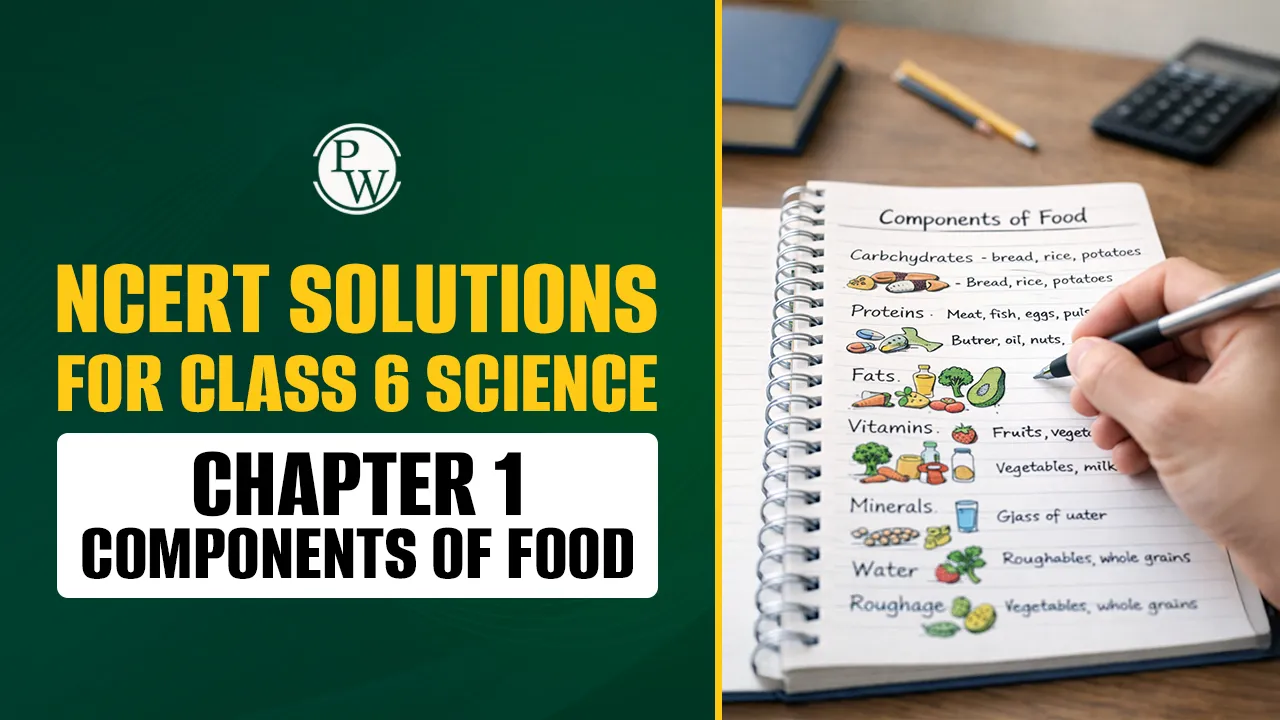
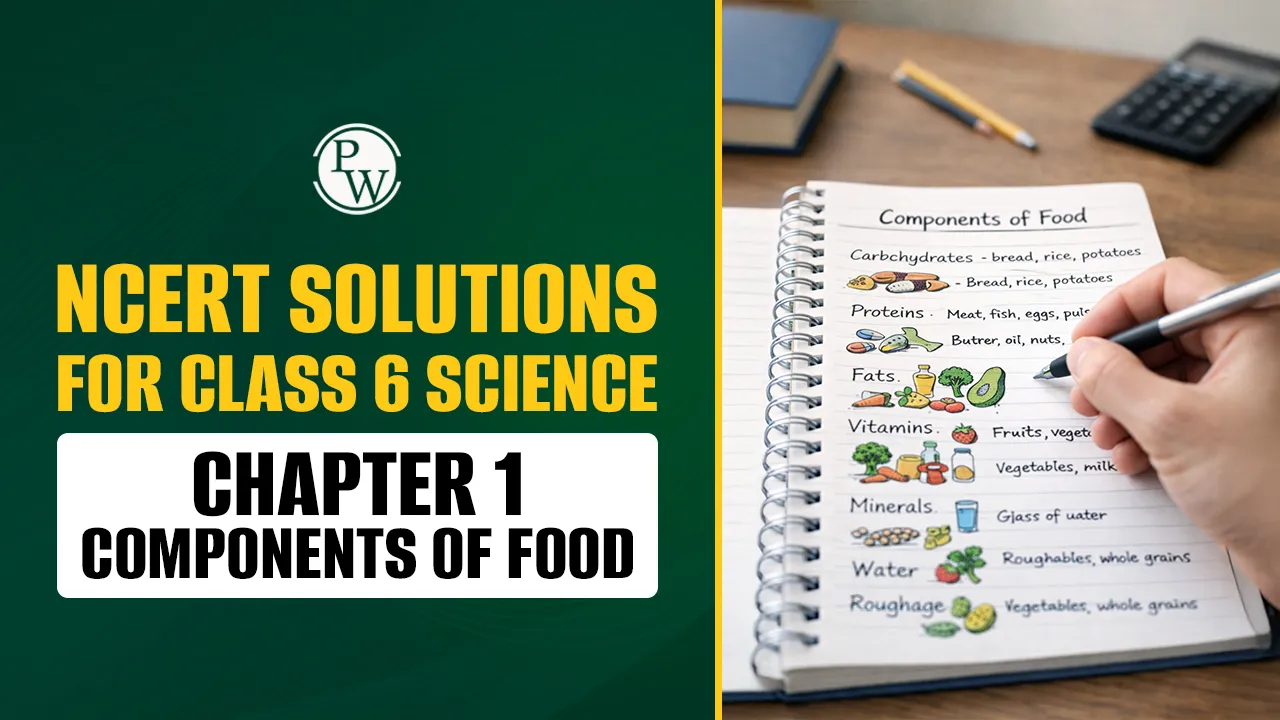
NCERT solutions for class 6th science chapter 1 are an important learning resource for students studying the chapter Components of Food. These solutions are prepared according to the NCERT syllabus and help students clearly understand the basic concepts of food and nutrition. The chapter explains why food is necessary for the body and introduces different nutrients such as carbohydrates, proteins, fats, vitamins, and minerals. Studying 6th class science chapter 1 with well-structured solutions makes learning easier and more effective.
The components of food class 6 questions and answers provide step-by-step explanations for all textbook questions. They help students identify various food groups and understand the functions of nutrients in the human body. These questions and answers also explain simple experiments used to test the presence of nutrients in food items, such as testing for starch using iodine solution and testing for proteins using copper sulphate and caustic soda. This practical knowledge helps students connect theory with real-life applications.
Using class 6 science chapter 1 question answer is especially helpful during exam preparation. These solutions help students revise important topics quickly and improve their confidence while answering both short and long questions. They are also useful for objective-type questions, including MCQs, which are commonly asked in exams.
Overall, NCERT solutions for class 6th science chapter 1 make the learning process simple and student-friendly. Regular practice of the components of food class 6 questions and answers strengthens basic concepts, improves understanding, and helps students score better marks in 6th class science chapter 1 examinations.
NCERT Solutions Class 6 Science Chapter 1 Components of Food Questions Answers
The NCERT Solutions for Class 6 Science include answers to various questions like matching, filling in the blanks, and long-answer questions. These help improve students' problem-solving skills. Studying these solutions thoroughly will help you grasp the topic in-depth and build a strong foundation for future studies. To make the most of these study materials, it is recommended for students to study the answers carefully.
Exercise Questions
1. Do you find that all living beings need the same kind of food?
Solution: No, all living beings do not need the same kind of food. Some animals eat plants as food, and they are called herbivores. Some animals eat other animals, and they are called carnivores. Some others eat food from plant sources as well as animals, and such living beings are called omnivores. 2. Name five plants and their parts that we eat. Solution: Brinjal – Fruit Beetroot – Roots Potato – Stem Groundnut – Seed Spinach – Leaves 3. Match the items given in Column A with that in Column B
| Column A | Column B |
| Milk, Curd, Paneer, Ghee | Are Vegetables |
| Spinach, Cauliflower, carrot | Eat plants and plant products |
| Lions and tigers | Eat other animals |
| Herbivores | Are all animal products |
Solution:
| Column A | Column B |
| Milk, Curd, Paneer, Ghee | Are all animal products |
| Spinach, Cauliflower, carrot | Are vegetables |
| Lions and tigers | Eat other animals |
| Herbivores | Eat plants and plant products |
4. Fill up the blanks with the words given: herbivore, plant, milk, sugarcane, carnivore (a) Tiger is a ____________________ because it eats only meat. (b) Deer eat only plant products and so, are called ______________. (c) Parrot eats only _________________ products. (d) The ________________ that we drink, which comes from cows, buffaloes and goats is an animal product. (e) We get sugar from ___________________. Solution: (a) Tiger is a carnivore because it eats only meat. (b) Deer eat only plant products and are therefore called herbivores . (c) Parrot eats only plant products. (d) The milk that we drink, which comes from cows, buffaloes and goats is an animal product. (e) We get sugar from Sugarcane.
NCERT Solutions for Class 6 Science Chapter 1 Food: Where Does it Come From PDF Download
The PDF link for the NCERT Solutions for Class 6 Science Chapter 1, titled "Food: Where Does It Come From?" is available below. This resource provides detailed solutions to all the exercises in the chapter, helping students understand the origins of different foods the role of plants and animals in food production, and the importance of various food sources. By downloading the PDF students can access a valuable tool for studying and revising the chapter, ensuring a solid grasp of the concepts and better preparation for their exams.
NCERT Solutions for Class 6 Science Chapter 1 PDF Download
Class 6 Science Chapter 1 Food: Where Does it Come From Topics
Food Variety
Science Class 6 Chapter 1 explains the fundamental importance of food for humanity. It encourages students to explore the various types of food available in different parts of India. The chapter details the ingredients required to prepare each type of food. PhysicsWallah’s NCERT Solutions offer students activities to collect data for easy understanding.
Food Materials and Sources
This chapter educates students about the sources of the food they consume. PhysicsWallah’s NCERT solution uses activities to help students understand where different foods come from, such as fruits, vegetables, milk, meat, cereals, grains, pulses, etc.
Plant Parts and Animal Products Have Food
This section focuses on how different parts of plants provide food materials. For example, leaves become leafy vegetables, roots yield vegetables, seeds provide edible oils, and flowers and plants yield direct vegetables. Animal products, like milk, are also utilised in various ways.
Activity on Plant Parts as Food
PhysicsWallah’s official website provides activities for students to understand concepts in Chapter 1. In one activity, students create a list of food items and identify the plant parts they belong to.
What do Animals Eat?
NCERT Solutions in Science Class 6 Chapter 1 informs students about animal food habits. It categorises animals based on their diets, such as carnivores, herbivores, and omnivores. Exercises:
- Two long-answer questions.
- Matching exercise.
- Five fill-in-the-blanks.
- Four projects provided in the NCERT Solutions of Class 6 Science free PDF on PW website.
Read More: Human Digestive System
Detailed Study of Nutrients, Balanced Diet, and Deficiency Diseases
The study of food components is about figuring out what our bodies require to work, grow, and heal. Carbohydrates, proteins, lipids, vitamins, and minerals are the main nutrients in our food. Food also has dietary fibres (roughage) and water, which are both very important for the body to work properly.
Major Nutrients and Their Functions
Every nutrient has a job to do. Most of the time, carbohydrates and lipids are "energy-giving foods." Both fats and carbs provide you energy, but fats give you a lot more energy than the same number of carbs. Proteins, on the other hand, are called "body-building foods" because we require them to grow and fix our bodies.
Vitamins help maintain our bones, teeth, gums, and eyes healthy and protect us from getting sick. They are necessary in modest amounts, but they are very important. For instance:
-
Vitamin A: Good for your skin and eyes.
-
Vitamin C: Helps the body fight off a lot of ailments.
-
Vitamin D: Helps our bodies use calcium to build strong bones and teeth.
Testing for Nutrients in Food
You can do certain chemical tests to find out what nutrients are in raw ingredients or cooked food. The NCERT standards say to do the following:
-
Check for Starch: Get a little bit of food. Put in 2 to 3 drops of a diluted iodine solution. If the colour is blue-black, it means there is starch.
-
Check for Protein: Put a small amount of food in a test tube with 10 drops of water and mash it up. Put in 10 drops of caustic soda and 2 drops of copper sulphate solution. A purple colour means there is protein.
-
Check for Fats: Put a little bit of food on a piece of paper and rub it in. A translucent greasy area that allows light through shows that fat is there.
Dietary Fibers and Water
Plant-based foods are the main source of roughage, or dietary fibre. It doesn't give us any nutrients, but it's an important part of our diet since it adds bulk and helps our bodies get rid of food that hasn't been digested. Whole grains, legumes, potatoes, fresh fruits, and vegetables are all good sources. Water is just as important since it helps the body get nutrients from food and get rid of waste through urine and sweat.
What Balanced Diet Means
A balanced diet is one that has all the nutrients our bodies require in the appropriate amounts, combined with a lot of water and roughage. As a general rule, it's advisable to make sure that you don't eat too much of one vitamin while ignoring others. Not only should you eat the right kinds of food, but you should also cook them in a way that keeps their nutrients. For instance, washing grains and lentils over and over again may take away some vitamins and minerals.
Deficiency Diseases
A person may have enough food to consume, but the food may not have a certain nutrient. If this keeps happening for a long time, the person may not have enough of it.
-
Vitamin A deficiency leads to loss of vision (night blindness).
-
Vitamin B1 deficiency causes Beriberi (weak muscles and very little energy).
-
Vitamin C deficiency results in Scurvy (bleeding gums).
-
Vitamin D deficiency leads to Rickets (soft and bent bones).
-
Calcium deficiency causes bone and tooth decay.
-
Iodine deficiency leads to Goiter (swollen glands in the neck).
-
Iron deficiency results in Anemia (weakness).
Also Read: Difference Between Physical and Chemical Changes
How CuriousJr Online Tuition Classes Improve Learning Outcomes
CuriousJr’s online tuition classes are thoughtfully designed for students from Class 3 to Class 8. These sessions help children build strong subject understanding and gain confidence in handling their everyday school studies.
Key features of CuriousJr classes include:
-
Daily interactive lessons that keep students engaged and help concepts become easier to understand and remember.
-
Complete coverage of Maths, Science, English, and Social Studies aligned with the latest school curriculum.
-
Regular tests and detailed feedback to track performance and ensure continuous improvement.
-
Personalised mentor guidance, where teachers focus on individual strengths and address learning gaps effectively.
|
Related Articles |





Components of Food Class 6 Questions and Answers FAQs
What are the main parts of food?
What meals are proven to give you energy?
What does it mean to eat a balanced diet?
What happens if we don't get enough Vitamin C in our diet?
Can PW Curious Junior classes help me with science assignments at school?

Get Free Counselling Today
and Clear up all your Doubts
 Live & recorded classes available at easeDashboard for progress trackingLakhs of practice questions