Components of Food – Carbohydrates, Proteins, Fats
 Shivam Singh20 Jan, 2026
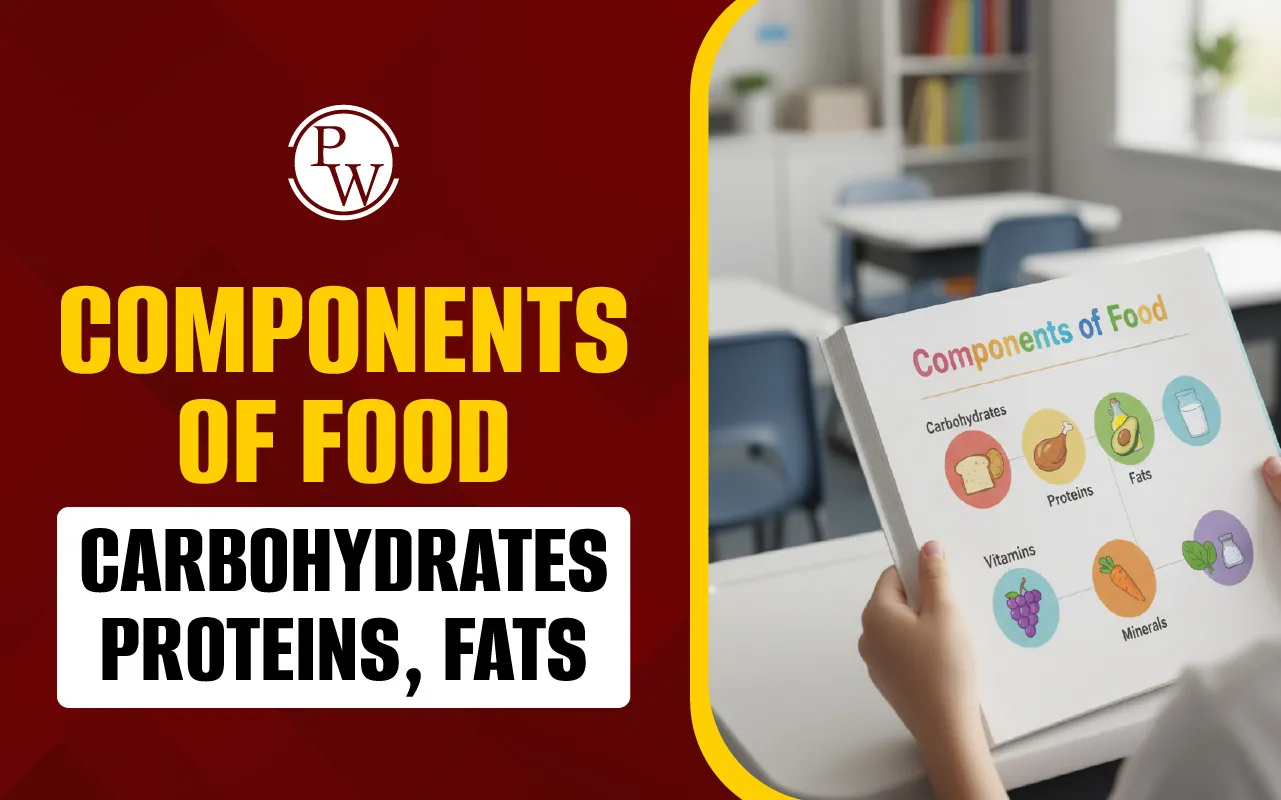
Every food item we eat contains essential components called nutrients that help us to grow, remain active, and stay healthy. Each of these components of food significantly contributes to our physical and mental well-being. Students must have a thorough knowledge of these essential food components that help them make better food choices and dietary styles.
In the growing age of children, the outcome of having a balanced diet with important food components is a healthy and active life. To make students more health-conscious, we will provide details about the components of food and how they function together to keep us fit and fine.
Read More: Human Digestive System
What Are the Components of Food?
The components of food are the basic nutrients present in the food that we consume. Each component serves a useful purpose to maintain our health. The different types of food components can be divided into three main categories based on their functions:
-
Energy-giving components: Carbohydrates and fats.
-
Body-building components: Proteins and minerals like calcium.
-
Protective components: Vitamins, minerals, fiber, and water.
When all of these are present in the right amount, they make up a balanced diet.
The 7 Components of Food
The human body requires seven main nutrients for proper physiological functioning of organs. These are often referred to as the 7 components of food. These are as follows:
-
Carbohydrates
-
Proteins
-
Fats
-
Vitamins
-
Minerals
-
Fiber
-
Water
We will discuss each of these components of food in detail:
Carbohydrates
Carbohydrates are the body’s main source of energy. When we eat food containing carbohydrates, it gets broken down into glucose in our body, which provides energy for all our activities.
Sources: Rice, bread, chapati, potatoes, pasta, fruits, and sugar.
Functions:
-
Provide instant energy during activities.
-
Help the brain and muscles work efficiently.
-
Maintain body temperature by burning energy.
There are two types of carbohydrates:
-
Simple carbohydrates (sugar, honey, sweets) that break easily and give quick energy.
-
Complex carbohydrates (rice, wheat, pulses, oats) that provide long-lasting energy.
Proteins
Proteins are often known as building components of the body because they are responsible for the growth, repair, and maintenance of body tissues. Without proteins, muscles, skin, hair, and even hormones cannot function properly.
Sources: Milk, eggs, pulses, fish, chicken, soybeans, nuts.
Functions:
-
It helps in growth and repair of tissues.
-
Strengthens muscles and bones.
-
Improves immunity by forming antibodies.
Proteins play a major role in growing children, athletes, and patients recovering from illness.
Read More: What is Mass?
Fats
Fats are the reserved sources of energy and are stored in our body. They provide more energy than carbohydrates but don’t break easily. Apart from energy, fats also help in absorbing vitamins and keeping the body warm.
Sources: Ghee, butter, oil, nuts, cheese.
Functions:
-
Provide energy storage for the body.
-
Protect organs by providing cushioning.
-
Maintain body temperature by providing an insulation effect.
There are two main types of fats:
-
Unsaturated fats found in nuts, olive oil, and seeds.
-
Saturated fats found in oil and fried food.
Vitamins
Vitamins are essential for the smooth functioning of the various parts of our body. They help in controlling life processes and protecting us from infection and diseases.
There are two main types of vitamins:
-
Fat-soluble vitamins (A, D, E, K), which are stored in the body’s fat.
-
Water-soluble vitamins (B-complex, C), which are not stored in the body, so they must be taken daily.
Sources and Functions of Different Types of Vitamins
Different types of vitamins perform different functions to keep us fit, healthy, and disease-free. Consuming the right amounts of vitamins is essential because a lack of vitamins can cause different deficiency diseases.
The table below shows the sources, functions, and deficiency diseases for different types of vitamins as essential nutrients:
|
Sources and Functions of Different Types of Vitamins |
|||
|
Vitamin |
Sources |
Functions |
Deficiency Diseases |
|
Vitamin A (Retinol) |
Carrots, spinach, milk, butter, fish liver oil |
Good eyesight, healthy skin |
Night blindness, dry skin, poor growth |
|
Vitamin B1 (Thiamine) |
Whole grains, nuts, seeds, pork, legumes |
Helps in energy metabolism, healthy nerves |
Beriberi, fatigue, nerve weakness |
|
Vitamin B2 (Riboflavin) |
Milk, eggs, green leafy vegetables, almonds |
Energy production, healthy skin and eyes |
Cracks at corners of mouth, skin disorders |
|
Vitamin B3 (Niacin) |
Meat, poultry, fish, peanuts, whole |
Improves digestion, nervous system health |
Pellagra, dermatitis, diarrhoea, |
|
Vitamin B6 (Pyridoxine) |
Bananas, potatoes, poultry, fish, nuts |
Helps in protein metabolism, red blood cell formation |
Anaemia, irritability, skin disorders |
|
Vitamin B12 (Cobalamin) |
Meat, eggs, dairy, fish |
Healthy nerves, red blood cell production |
Pernicious anaemia, nerve damage |
|
Vitamin C (Ascorbic Acid) |
Orange, lemon, tomatoes, guava |
Boosts immunity, heals wounds, antioxidant |
Scurvy (bleeding gums), weakness |
|
Vitamin D |
Sunlight, fish, egg yolk, fortified milk |
Helps in calcium absorption, strong bones and teeth |
Rickets in children, bone damage in adults |
|
Vitamin E (Tocopherol) |
Nuts, seeds, vegetable oils, spinach |
Antioxidant, protects skin and tissues |
Weak muscles, poor immunity |
|
Vitamin K |
Green leafy vegetables, cabbage, broccoli |
Helps in blood clotting and wound healing |
Excessive bleeding, delayed clotting |
Read More: Heat and Temperature
Minerals
Minerals are inorganic substances that are needed in small quantities but are very important nutrients for the human body to avoid health complications.
Sources and Functions of Different Types of Mineral
Consuming the foods that contain minerals is essential to help our body function properly. The different minerals, their sources, functions, and deficiency diseases are detailed in the table below:
|
Sources and Functions of Different Types of Minerals |
|||
|
Mineral |
Sources |
Functions |
Deficiency Diseases |
|
Calcium |
Milk, cheese, yogurt, green leafy vegetables, fish |
Builds strong bones and teeth, helps in muscle contraction and blood clotting |
Rickets, osteoporosis, weak bones and teeth |
|
Iron |
Red meat, spinach, beans, eggs, liver |
Formation of haemoglobin, carries oxygen in blood |
Anemia, fatigue, weakness |
|
Iodine |
Iodized salt, seafood, dairy products |
Regulates thyroid function, controls metabolism |
Goiter, stunted growth |
|
Phosphorus |
Milk, meat, fish, eggs, nuts |
Strengthens bones and teeth, helps in energy production |
Weak bones, poor growth |
|
Potassium |
Bananas, potatoes, tomatoes, oranges |
Maintains fluid balance, helps in nerve and muscle function |
Muscle weakness, irregular heartbeat |
|
Sodium |
Table salt, processed foods, dairy products |
Maintains water balance, nerve impulses, muscle contraction |
Muscle cramps, low blood pressure |
|
Magnesium |
Nuts, whole grains, spinach, beans |
Helps in enzyme action, muscle and nerve function |
Muscle cramps, weakness, poor coordination |
|
Zinc |
Meat, seafood, nuts, seeds, legumes |
Boosts immunity, wound healing, growth and development |
Stunted growth, delayed wound healing |
Fiber
Fiber, also called roughage, is the part of food that cannot be digested by the human body. But it plays a key role in maintaining digestive health and easy removal of wastes from the body.
Sources: Whole grains, fruits, vegetables, beans, and oats.
Water
Water is one of the most important components of a healthy diet. About 60–70% of our body is made up of water, and it is needed for almost every life process, especially for digestion, transportation, and excretion.
Functions of water:
-
Helps in digestion and absorption of food.
-
Regulates body temperature.
-
Removes waste products from the body.
-
Keeps skin and tissues hydrated.
Components of a Healthy Diet
An ideal healthy diet, also known as a balanced diet, contains all the nutrients in the right proportion. The components of a healthy diet must include the following:
-
About 50–60% carbohydrates
-
Around 20–25% proteins
-
Limited to 15–20% healthy fats.
-
Adequate vitamins and minerals
-
Sufficient fiber to aid digestion.
-
Plenty of water to stay hydrated.
Also Read; Difference Between Physical and Chemical Changes
Why Understanding Food Components Is Important?
Knowing about the types of food components is important for students and parents. It helps to maintain a healthy dietary pattern that can effectively support the child’s growth and development from an early age. Understanding food components and their importance helps your child in the following way:
-
Encourages children to eat a balanced diet and avoid unhealthy foods
-
Prevents lifestyle complications like obesity, diabetes, and heart problems.
-
Helps develop immunity and capacity to fight against infections
-
Promotes overall physical and mental well-being and development.
Food is not just to satisfy hunger; it is the fuel that powers our body and mind. The primary components of food work together to give us strength, energy, and immunity. A balanced diet includes all these nutrients in the right proportions and helps in maintaining good health and well-being.
Help Your Child Enjoy Learning Science with CuriousJr
Many children find science confusing or overwhelming because lessons in school often move too fast or feel difficult to connect with. This can lead to memorizing information just to pass exams, without really understanding what they are learning.
CuriousJr online tuition classes make learning easier and more enjoyable. By using everyday examples, and simple explanations, we help children relate to science and feel more confident in the subject.
Our teachers guide students step by step, taking the time to explain each topic clearly and answer every question. As a result, children start to enjoy science, solve problems more easily, and feel proud of their progress.
We also keep parents informed with regular updates and meetings, so you are always involved in your child’s learning journey.
So waiting for what? Book a demo class today to know more about how we support your child's success in science.