Meaning of Government: Responsibilities, Levels, Forms
 Shivam Singh17 Dec, 2025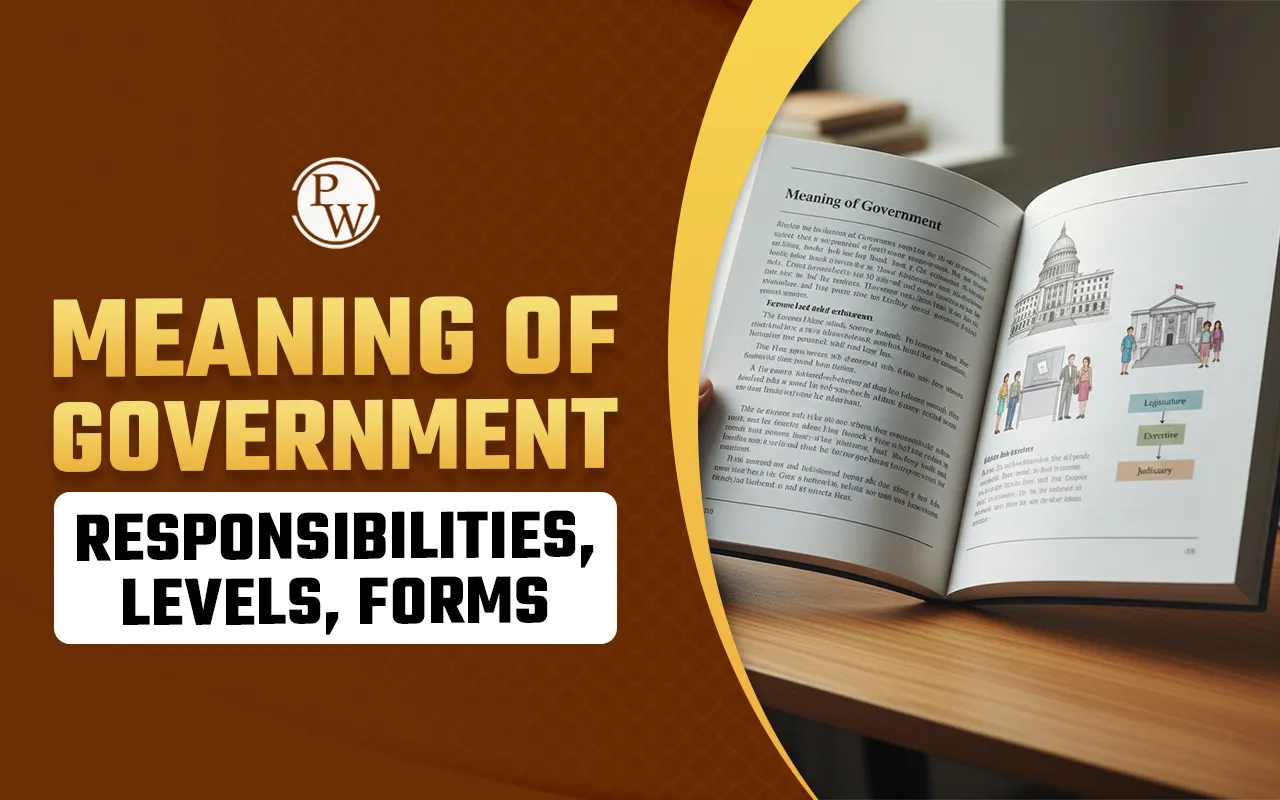
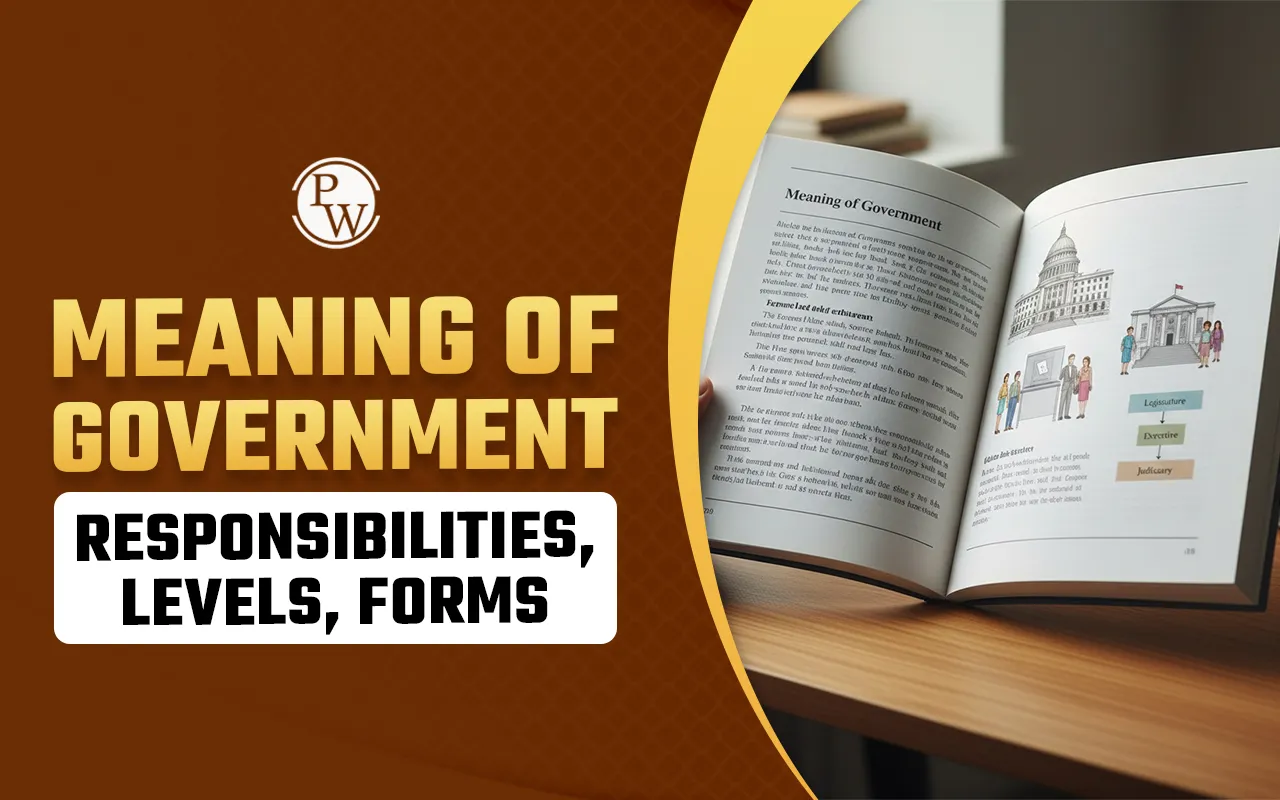
Meaning of Government: Government is a group of people who have the authority to make rules and manage a country, state, or community. A government is the central authority of a country or community. It helps in keeping order, ensuring safety, and providing essential services to the people. The government also safeguards the rights of the people and ensures development. It collects taxes, builds roads, runs schools, and maintains safety.
A government helps a place run smoothly and keeps the people safe and organised. There are three different kinds of government: Democracy, Autocracy, and Oligarchy. Each one of them works differently, but they help keep society organised and strong.
Read More: What is Diversity
Key Responsibilities of Government
The government is an assembly of individuals or institutions governing and running the country or community. It creates laws to keep order and maintain the safety of all.
Among the many duties of governments are:
-
The Government ensures that the laws are made and implemented, and peace and order in society are maintained. It does so through police forces and courts.
-
Aims to protect the country from external dangers. The national borders are protected by maintaining an army, navy, and air force.
-
The government provides public goods and services that may be unaffordable or beyond the reach of individuals. The things included in it are roads, schools, hospitals, electricity, and water supply.
-
A government is responsible for economic management. They make policy decisions on taxation, international commerce, and expenditure.
-
Most governments try to develop the well-being of the people in their country by involving healthcare programs, unemployment benefits, and support for vulnerable groups.
-
Governments represent their country in the international arena, make treaties, and engage in diplomacy.
Different Levels of Government
Governments often work at different levels to manage diverse regions effectively. The different levels of government are:
-
Local Government: This is the level operating in a small area, for example, a village, town, or city. It governs all local services: garbage collection, local roads, and parks. People often have more direct contact with this level.
-
State or Provincial Government: It represents an upper level of region, like a state or province within the country. Its responsibilities often include education, healthcare, and state-level infrastructure.
-
National or Central Government: This is the highest level, governing the entire country, and deals with matters of national importance such as defence, foreign policy, currency, and national laws.
Read More: Latitudes and longitudes
What are Three Forms of Government?
There exist three forms of government: Democracy, Autocracy, and Oligarchy. They all represent different forms of decision-making and ways of managing society. Each form has rules that it obeys in terms of leadership and control.
1. Democracy
Democracy is a system of governance in which power resides with the people. Through free, fair, and periodical elections, citizens exercise their right to vote to choose their leaders, thereby ensuring that everyone's voices are heard with regard to decision-making processes. It fosters equality, participation, and accountability. In a democracy, laws apply to all equally, and citizens have access to basic freedoms like freedom of speech and expression. Public opinion, transparency, and collective responsibility form salient features of this type of government.
2. Autocracy
It is the government where power lies in the hands of a single person who makes all major decisions. All authority belongs to the leader, whereas citizens have little or no role to play in government. In an autocratic government, there are frequent restrictions on political freedom, control over the media, and public expressions. Decisions can be reached rapidly, but they express the will of the ruler instead of the needs of the subjects. Power is retained by the use of strict control, force, or fear.
3. Oligarchy
Oligarchy is the government by a few individuals, usually wealthy and influential, or coming from the same social, military, or political class. It decides on issues very often for its good itself rather than for all the citizens it represents. No ordinary citizen has much influence or involvement in governance. Oligarchies are similar to concentrating power in the hands of a few, which therefore reduces equality and public involvement in the political process.
Read More: Facts About the Earth Everyone Should Know
How Does Government Work?
A government is like a team that runs a country by creating rules, keeping people safe, and fixing problems regarding roads or schools. People vote to choose leaders, who divide the jobs into three parts:
-
The legislature is the body that makes laws.
-
The executive runs the daily work, and
-
The judiciary checks whether everything is done fairly.
Everything is paid for by money from taxes, approved by lawmakers. Local governments handle city or state stuff. This system keeps things fair and organised for everyone.
Also Read: Types of Natural Disaster
Make Your Child Love Learning with CuriousJr Online Classes
Do you want your child to enjoy studying and stay confident in school? At CuriousJr, our school tuition online classes make learning exciting and easy to understand for students from Classes 1 to 9. Through live, interactive lessons that follow the CBSE, ICSE, and state board syllabus, we help children stay ahead while enjoying their studies.
Here’s how CuriousJr’s online school tuition supports your child’s learning:
-
Interactive lessons that make complex topics simple and engaging
-
Practice exercises based on school subjects for better understanding
-
Personalised homework help to clear doubts and complete assignments on time
-
Daily learning updates to keep parents informed and involved
-
Subjects covered: Maths, Science, Social Studies, and English
-
Regular study routine that builds focus, discipline, and consistency
. Book a demo class today and experience how our online classes make learning enjoyable and effective.
Meaning of Government FAQs
What is the Government?
What are the main responsibilities of a government?
What are the three main levels of government?
What is a democratic government?
How do governments maintain law and order?