
How to Help Class 4 Kids Understand Food Chains and Ecosystems Simply
 Nikita Aggarwal11 Jun, 2026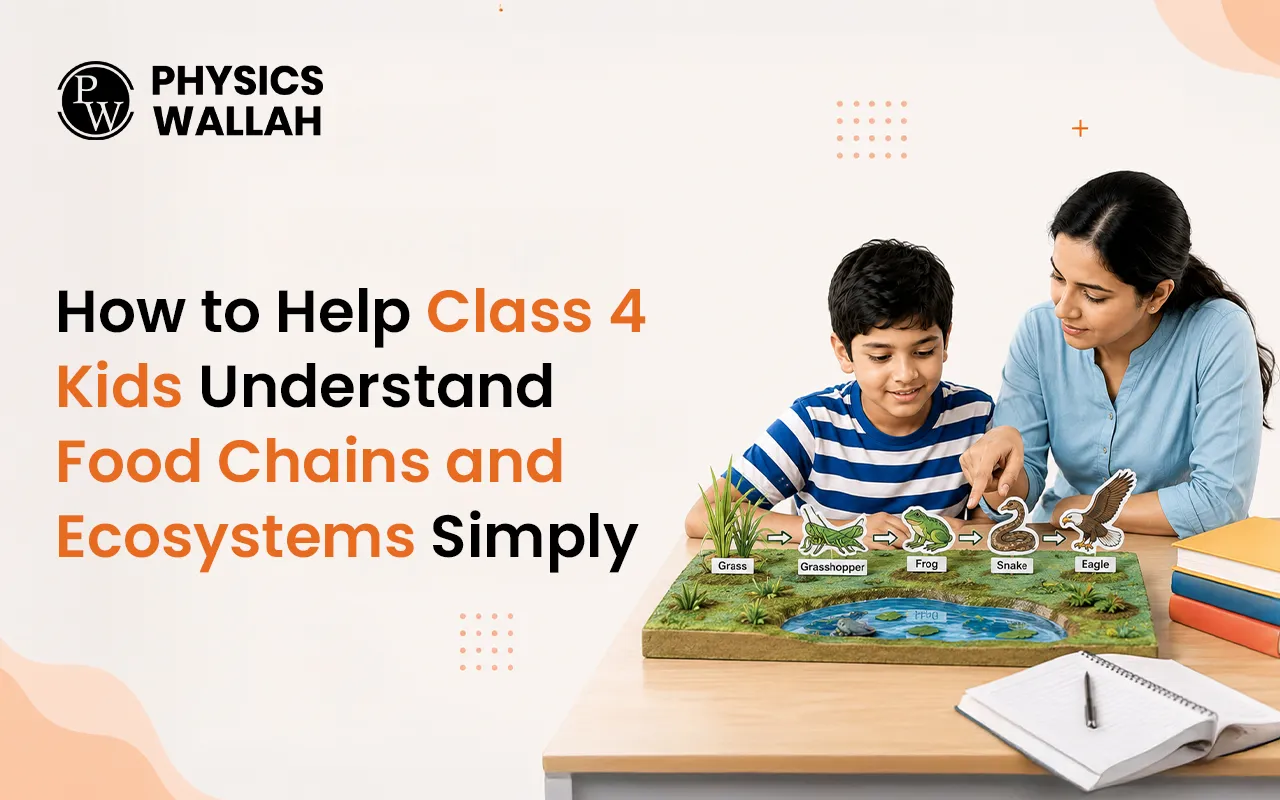
Food Chains and Ecosystems Class 4 Science Overview
An ecosystem is a biological community where living organisms interact with their non-living environment. For a nine-year-old child, think of an ecosystem as a busy neighborhood where everyone has a specific role to play. Living parts like plants and animals live alongside non-living parts like sunlight, water, soil, and air.
When you teach ecosystems to kids, it helps to focus on a local pond or a backyard garden. A garden ecosystem includes:
-
Living elements: Green grass, earthworms, butterflies, frogs, and birds.
-
Non-living elements: Mud, puddle water, warm sunlight, and fresh air.
Within these natural neighbourhoods, energy moves through a sequence called a food chain. A food chain shows exactly who eats whom to get energy. Without this continuous transfer of energy, life on our planet would stop functioning entirely.
Understanding these connections forms the core of Class 4 biology basics. When children see how a tiny insect depends on a leaf, and how a frog depends on that insect, they begin to see the grand balance of nature.
Read More - NCERT Solutions for Class 4 All Subjects 2026-27
Key Parts of Food Chains and Ecosystems Class 4 Science
To make these science concepts Class 4 friendly, we divide the living members of any ecosystem into three major groups. Each group plays an essential part in keeping the environment healthy and stable.
1. The Producers
Producers are living things that create their own food. Green plants are the primary producers on earth. They use sunlight, water, and gases from the air to make sugary food through photosynthesis. Because they produce food for themselves and others, they always sit at the very start of any food chain.
2. The Consumers
Consumers cannot manufacture their own food. They must eat plants or other animals to survive. To explain this clearly during Class 4 science online tuition, we divide consumers into three simple categories:
-
Herbivores: Plant-eating creatures like rabbits, cows, deer, and grasshoppers.
-
Carnivores: Meat-eating creatures like lions, hawks, frogs, and snakes.
-
Omnivores: Creatures that eat both plants and meat, such as crows, bears, and humans.
3. The Decomposers
Decomposers are nature's ultimate clean-up crew. These include tiny organisms like fungi, bacteria, and earthworms. When plants and animals die, decomposers break down the dead matter and return rich nutrients back to the soil. This recycling process allows new plants to grow, completing the natural cycle beautifully.
Examples of Food Chains and Ecosystems Class 4 Science
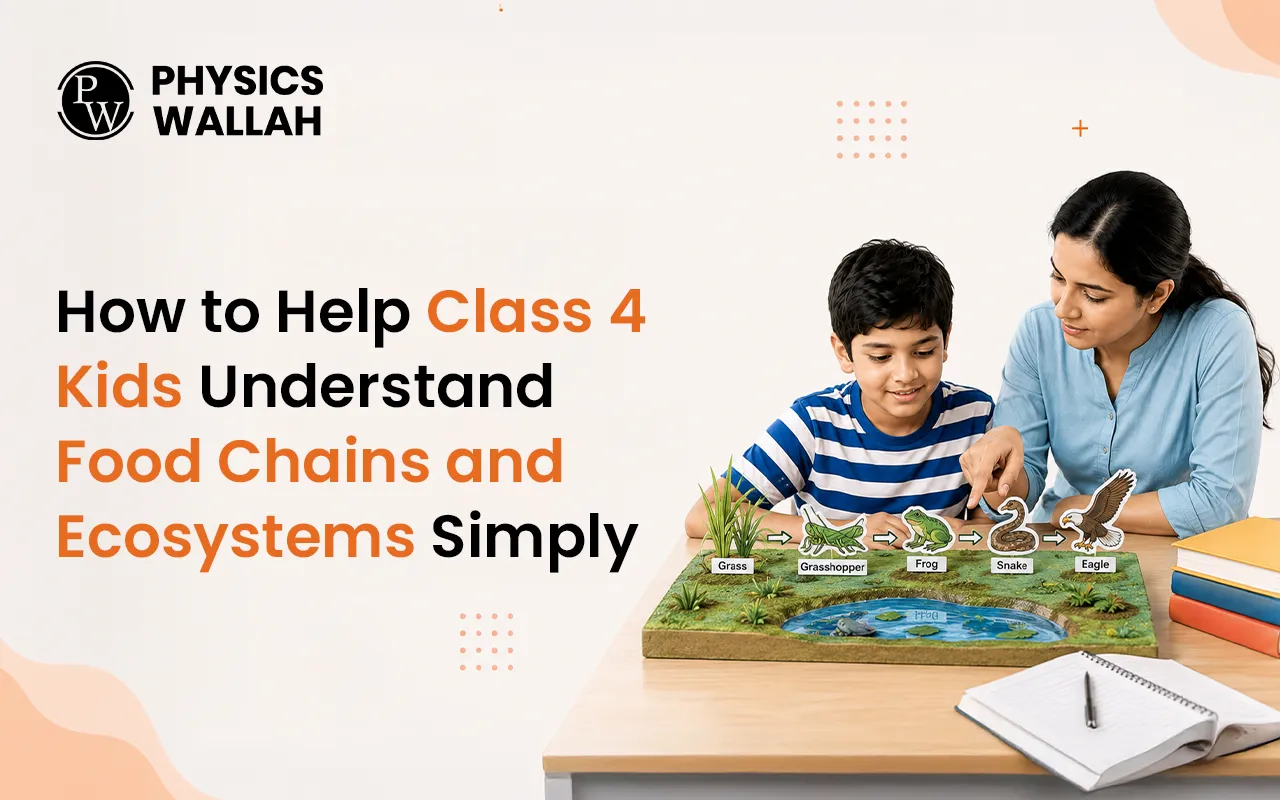
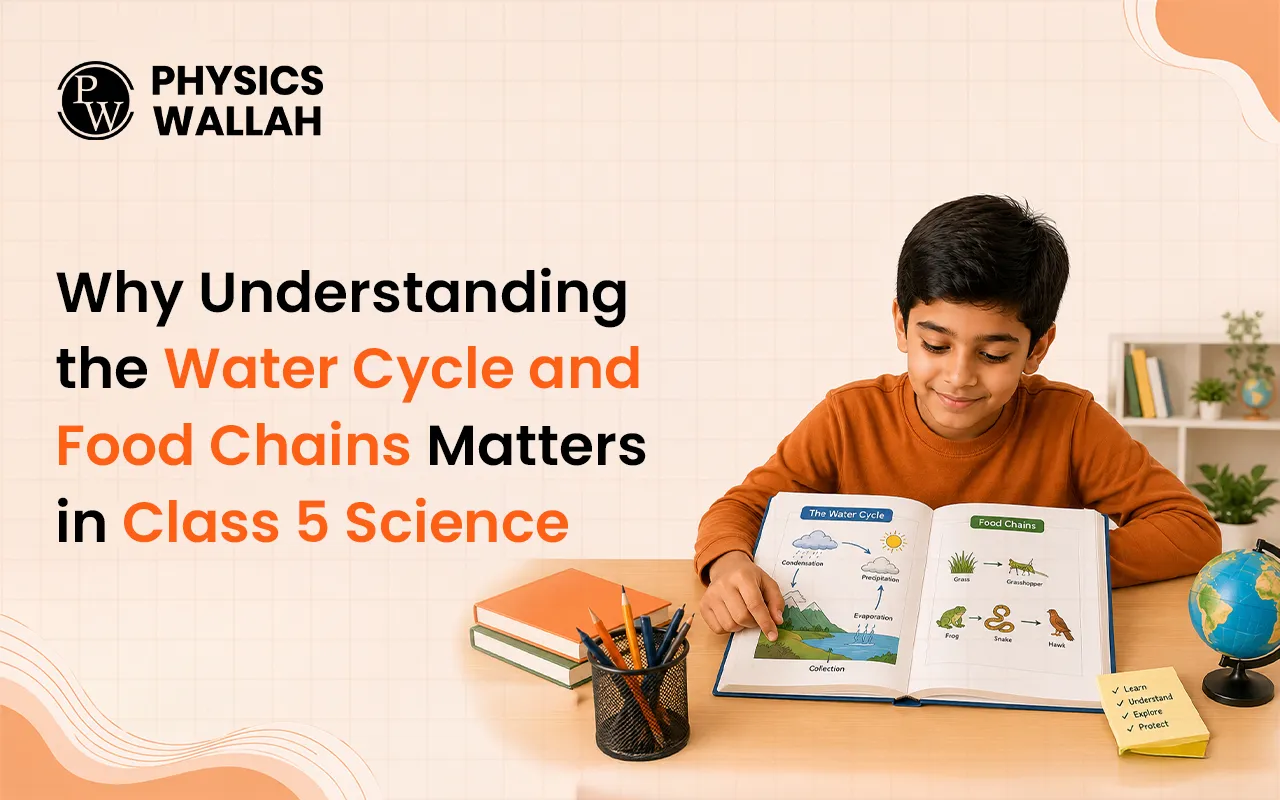
The easiest way to explain a Class 4 EVS food chain is by tracing a single line of energy transfer. Here are two clear examples that you can sketch out with your child at home.
The Terrestrial Food Chain (Land-Based)
This simple sequence happens in fields, forests, and backyard gardens:
-
Sunlight and Grass (Producer): The grass captures light to grow big and green.
-
Grasshopper (Primary Consumer): The herbivore grasshopper eats the grass for energy.
-
Frog (Secondary Consumer): The carnivore frog leaps forward and eats the grasshopper.
-
Snake (Tertiary Consumer): The larger predator snake hunts and eats the frog.
-
Fungi (Decomposer): When the snake grows old and dies, fungi break down its remains, enriching the soil for new grass.
The Aquatic Food Chain (Water-Based)
This energy transfer occurs inside ponds, lakes, and oceans:
-
Algae (Producer): Tiny green water plants use sunlight to grow in the pond.
-
Small Fish (Primary Consumer): Little fish swim around and feed on the algae.
-
Large Fish (Secondary Consumer): Bigger fish hunt and consume the smaller fish.
-
Kingfisher Bird (Tertiary Consumer): The bird dives into the water to catch the large fish.
|
Role in Chain |
Grassland Example |
Pond Example |
Primary Food Source |
|
Producer |
Green Grass |
Tiny Algae |
Sunlight and Water |
|
Primary Consumer |
Grasshopper |
Small Fish |
Eats Producers Only |
|
Secondary Consumer |
Field Frog |
Large Fish |
Eats Smaller Animals |
|
Tertiary Consumer |
Wild Snake |
Kingfisher Bird |
Eats Secondary Consumers |
|
Decomposer |
Ground Mushroom |
Water Bacteria |
Dead Organic Matter |
Read More - SST for Class 4: Simple Ways to Help Kids Remember Maps and Timelines
Fun Activities to Learn Food Chains and Ecosystems Class 4 Science
Children learn best when they can touch, see, and build things themselves. You can move away from boring textbook reading by using these interactive learning methods.
Build a Paper Chain Game
Grab some coloured paper strips, scissors, and a marker pen. Ask your child to write down a specific organism on each paper loop:
-
Write "Green Leaf" on a green strip.
-
Write "Caterpillar" on a yellow strip and link it through the green loop.
-
Write "Sparrow Bird" on a blue strip and link it through the yellow loop.
-
Write "Wild Cat" on a red strip and link it through the blue loop.
This physical activity shows how pulling one single loop affects the entire connected chain.
The Ecosystem Collapse Experiment
Stack a tower of wooden building blocks together. Label the bottom blocks as plants, the middle blocks as herbivores, and the top blocks as carnivores.
Gently pull out one of the bottom "plant" blocks. Watch the entire tower wobble and crash down. This simple game teaches kids that if we remove producers or damage our environment, the higher animal levels cannot survive.
Learn Food Chains and Ecosystems Class 4 Science with CuriousJr
When school lessons become fast-paced, children often need extra guidance at home. Enrolling your child in an online science class for Class 4 provides structured support that removes study stress completely.
CuriousJr online class 4 tuition offers a specialized curriculum tailored for young school students. Through their digital platform, children learn complex environment and nature chapters using live interactive sessions. Experienced educators guide students step-by-step through standard primary science topics, ensuring every child resolves their doubts immediately.
By using visual presentations, educational games, and live quizzes, the platform turns abstract topics into highly enjoyable lessons. This regular practice gives students the confidence to finish school homework independently and score higher marks in class assessments.




How to Help Class 4 Kids Understand Food Chains and Ecosystems Simply FAQs
What is the difference between a food chain and a food web?
Why are green plants so important in food chains and ecosystems Class 4 science?
What happens if one animal disappears from a Class 4 EVS food chain?
How does an online science class for Class 4 help kids learn biology?
Can an ecosystem exist without decomposers?



Get Free Counselling Today
and Clear up all your Doubts
 Live & recorded classes available at easeDashboard for progress trackingLakhs of practice questions

