
Is Your Class 4 Child Falling Behind? Early Signs and How to Help
 Nikita Aggarwal11 Jun, 2026

Why Is Your Class 4 Child Falling Behind in School?
The primary reason why a Class 4 child falling behind in school happens is the shift from "learning to read" to "reading to learn". Academic expectations increase rapidly across all core subjects. If foundational basics are shaky, the gap between what the teacher explains in the classroom and what the student actually understands grows wider each day.
The Shift in Mathematics Requirements
In the early years, maths is mostly about counting and simple calculations. In fourth grade, the curriculum introduces multi-step operations that require deeper mental processing:
-
Multiplication and Division: Moving beyond simple tables into multi-digit division and long multiplication problems.
-
Fractions and Decimals: Introducing parts of a whole, which requires abstract visualization.
-
Advanced Word Problems: Students must act like detectives to identify numerical clues and apply the correct mathematical operation.
-
Geometry and Measurement: Learning about perimeter, area, and converting metrics like length, weight, and time.
When children lack calculation speed, homework takes much longer, and they quickly lose interest or make frequent silly mistakes.
The Complexity of English Language and Literacy
English in fourth grade is no longer just about spelling simple words or identifying common nouns. The curriculum advances to:
-
Advanced Grammar: Deep dives into tenses, subject-verb agreement, adverbs, and conjunctions.
-
Comprehension Skills: Reading longer text passages and answering contextual, inferential questions rather than direct ones.
-
Structured Writing: Expecting students to write cohesive paragraphs, imaginative stories, diary entries, and formal notices.
If a child struggles to form accurate sentences or decode vocabulary in context, they face major roadblocks in other subjects like Science and Social Studies too.
Expanded Horizons in Science and Environmental Studies (EVS)
Science and Social Science subjects expand dramatically, moving from general observations to conceptual frameworks:
-
Scientific Systems: Understanding the human body, plant growth, ecosystems, and the solar system.
-
Social and Civic Concepts: Learning about travel systems, governance, rural versus urban life, and map navigation.
Without structured reading habits, memorising these vast topics becomes overwhelming for young minds.
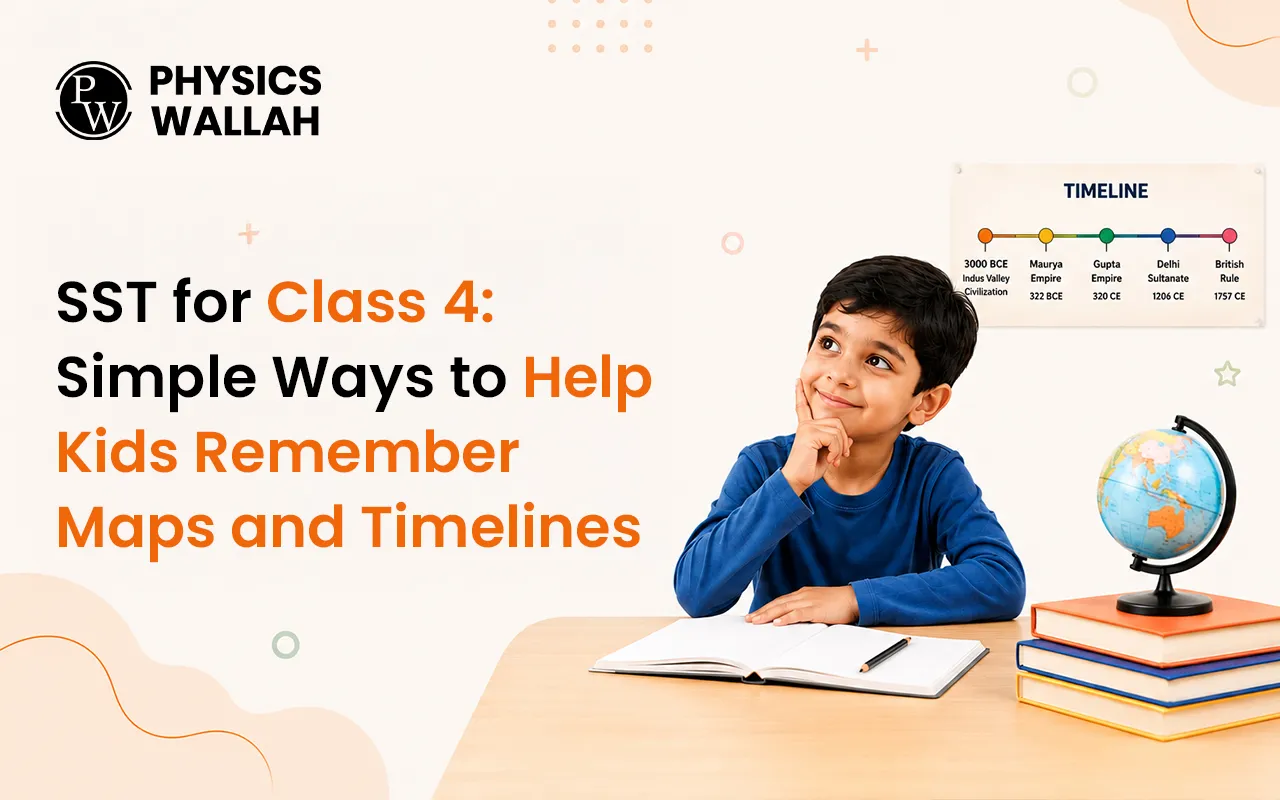
Read More - SST for Class 4: Simple Ways to Help Kids Remember Maps and Timelines
Signs Your Class 4 Child Falling Behind in School
It is easy to mistake a child’s academic struggles for laziness or a lack of attention. However, prolonged avoidance is a primary psychological coping mechanism for a student who feels lost. Parents should look out for these indicators to determine if a Class 4 child falling behind in school needs immediate intervention.
|
Warning Sign |
How It Presents at Home and School |
|
Excessive Homework Time |
Spending hours on basic assignments that should take thirty minutes, often leading to tears or total frustration. |
|
Loss of Academic Focus |
Zoning out, staring blankly at textbooks, or constantly finding excuses to avoid sitting down to study. |
|
Frequent Careless Errors |
Making basic calculation or spelling errors despite knowing the general rules, indicating a rushed or anxious mind. |
|
Low Classroom Confidence |
Hesitating to raise their hand, avoiding asking questions due to fear of judgment, or feeling nervous before simple tests. |
|
Avoidance of Specific Subjects |
Showing intense anxiety specifically toward maths homework or refusing to read comprehension passages aloud. |
Read More - NCERT Solutions for Class 4 English Mridang Chapter 4 – One Thing at a Time
How to Help a Class 4 Child Falling Behind in School
When you realize a Class 4 child falling behind in school, taking prompt, structural steps at home can halt the academic slide before it impacts their long-term self-esteem.
Find the Root Cause of the Learning Problem
Do not generalise academic struggle as a total failure in a subject. Sit down with your child's recent exam papers and worksheets. Is the issue with subtraction or specifically with fractions? Are they struggling with writing altogether, or is it just tenses? Finding the exact conceptual root makes it easier to provide targeted Class 4 academic support.
Use Visual and Hands-On Learning Methods
Abstract ideas become simple when children can see them. Use everyday items around the house to clear up confusing topics:
-
For Fractions: Slice pizzas, apples, or fold sheets of paper to explain denominators and numerators visually.
-
For Measurements: Use kitchen scales, measuring tapes, and clocks to make weight, distance, and time physical realities.
-
For Science: Watch animations of the solar system or plant photosynthesis to connect text descriptions with vivid visuals.
Break Down Word Problems into Simple Steps
Word problems can be deeply intimidating because they combine reading literacy with mathematical logic. Train your child to follow a five-step detective strategy:
-
Read Twice: Read the first time to understand the story, and the second time to spot the math numbers.
-
Highlight Goals: Underline exactly what the question wants them to calculate.
-
Identify Action Keywords: Look for clue words (e.g., total means add, left means subtract, share means divide).
-
Solve and Label: Write down the answer with its proper unit (e.g., "15 apples" instead of just "15").
-
Reality Check: Ask your child if the final number makes practical sense in the real world
How to Choose the Right Academic Support for Your Child
Sometimes, parental guidance alone isn't enough due to work schedules or evolving school methodologies. Recognising the signs a child needs tuition in Class 4 early helps prevent small learning gaps from turning into permanent learning hurdles.
If homework sessions regularly turn into arguments, or your child continues to underperform despite practicing daily, it is time to seek professional teaching help.
When exploring tutoring options to improve Class 4 grades, parents usually weigh traditional home tutors against modern digital setups:
-
Traditional Offline Tuition: Often involves rigid schedules, exhausting commutes after school, and large batch sizes where individual doubt-clearing is difficult.
-
Interactive Online Tuition: Offers flexible scheduling from the safety of home, automated performance reports, and visual tools like 3D models and animations that keep young minds deeply engaged.
For a child who is already feeling anxious about school, a private, interactive digital space allows them to ask questions freely without the fear of being judged by peers.
How CuriousJr Helps a Class 4 Child Falling Behind in School
To systematically resolve Class 4 school struggles, the learning process must become interactive, personalized, and highly engaging. This is where CuriousJr helps students bridge academic gaps easily.
CuriousJr online class 4 tuition transforms passive text learning into a lively, interactive journey designed to resolve the issues of a Class 4 child falling behind in school:
-
The Two-Teacher Learning Model: Every live session features a primary master educator to teach the core concept clearly, alongside a dedicated co-teacher to answer individual student doubts in real-time.
-
Play-Based Concept: Instead of dry textbook definitions, lessons use interactive quizzes, educational games, and real-life projects to show how subjects like science and grammar work in everyday life.
-
Mental Maths and Vedic Tricks: To counter calculation anxiety, children learn clever mental math strategies like doubling and halving, complement bases, and left-to-right addition. This directly increases computation speed and stops careless testing mistakes.
-
Complete Syllabus Alignment: The material directly supports major educational boards, including CBSE, ICSE, and various State Boards, ensuring that what a child practices online matches their school tests perfectly.
-
Cambridge English Framework: Language programs align closely with the Cambridge English Scale and CEFR standards, strengthening reading comprehension, vocabulary, and paragraph-writing skills from the ground up.
Providing structured online tuition for weak students in Class 4 changes their perspective on learning. Instead of viewing study time as a stressful chore, interactive digital toolkits convert school curriculum subjects into an exciting space for discovery.




Is Your Class 4 Child Falling Behind? FAQs
Why is my Class 4 child is falling behind in school suddenly after doing well earlier?
What are the main signs child needs tuition Class 4 support?
Can online tuition for weak students Class 4 options provide enough individual attention?
How can I help my child improve Class 4 grades in mathematics?
How does CuriousJr help a student overcome Class 4 school struggles?









Get Free Counselling Today
and Clear up all your Doubts
 Live & recorded classes available at easeDashboard for progress trackingLakhs of practice questions

