Class 9 Biology: Understanding Cells, Tissues, and Living Organisms Clearly
 Nikita Aggarwal12 Jun, 2026
Class 9 Biology Cells Tissues Living Organisms Short Summary
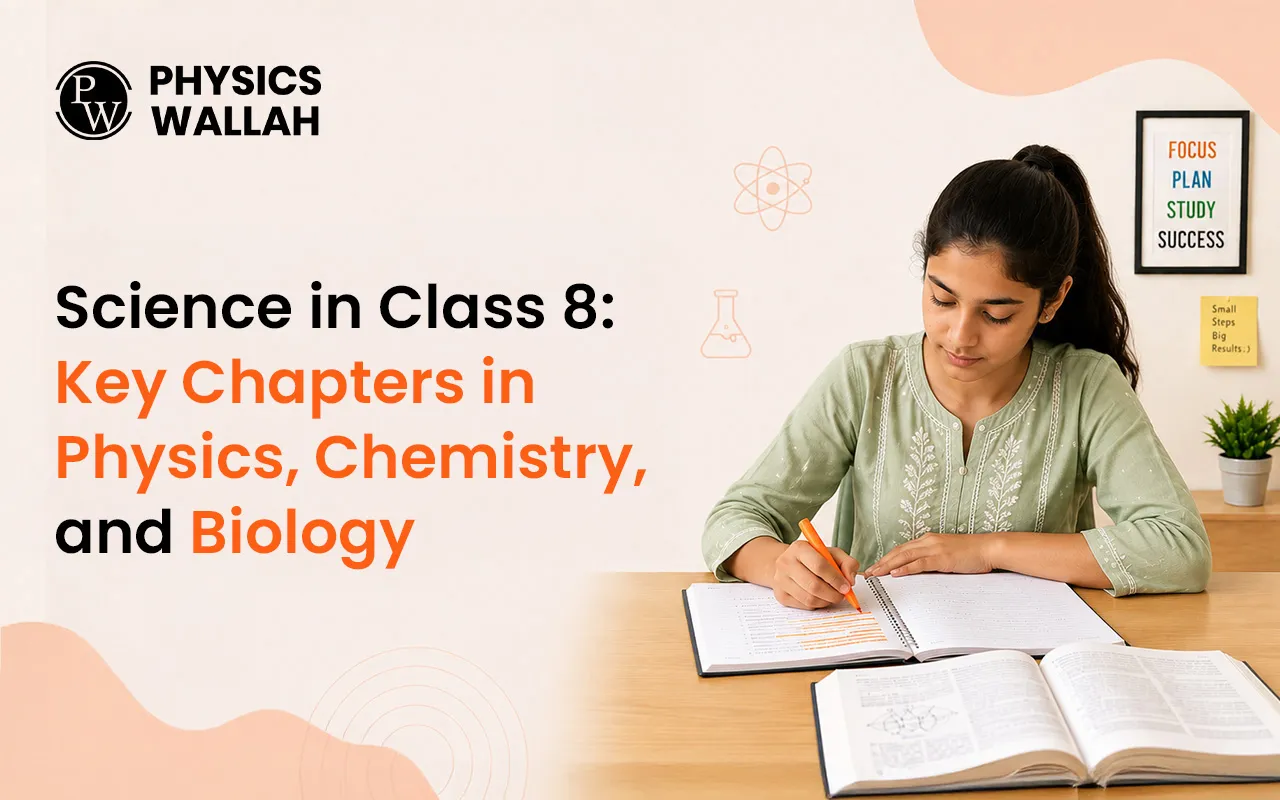
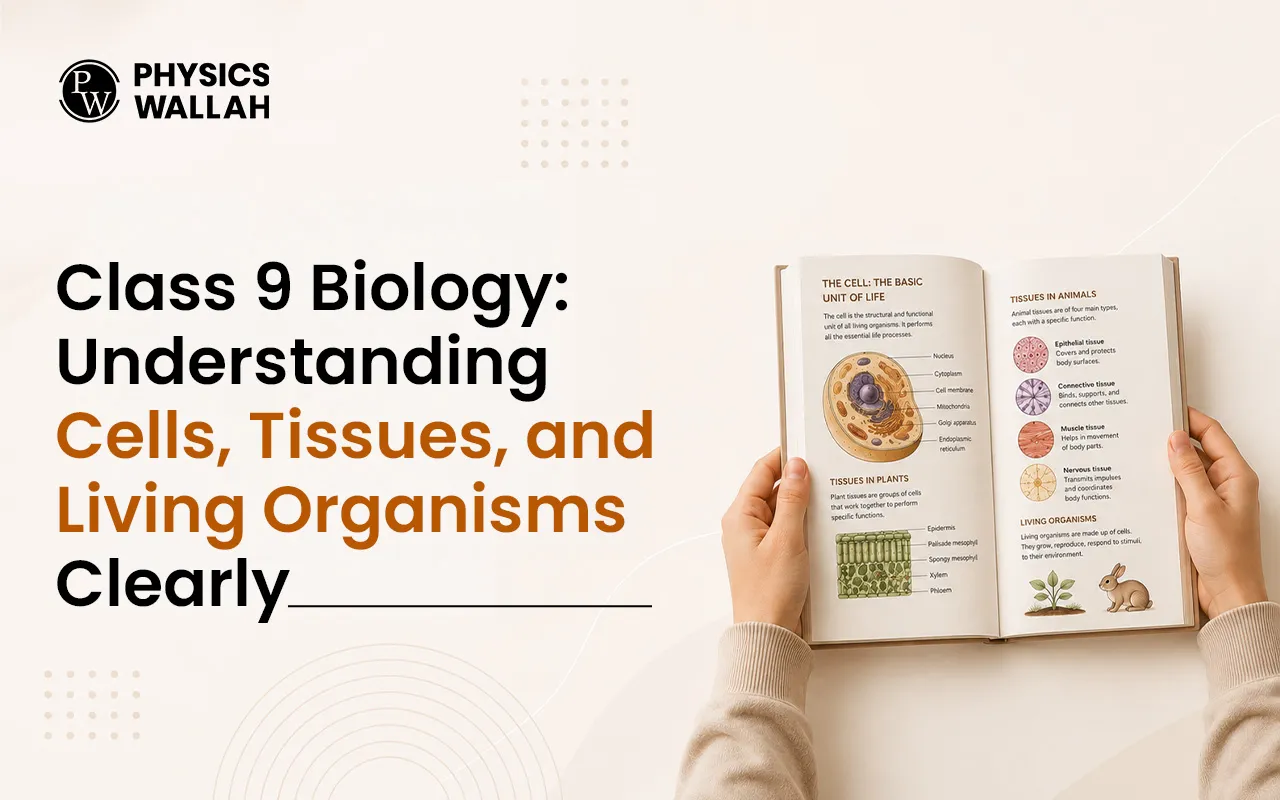
Biology Cells, Tissues, and Living Organisms is a very basic field of biology that describes the primary structure or organisation of life. All living organisms are made from cells, the smallest units of life; a collection of similar types of cells that work together to carry out specific functions is known as tissue. This is where students understand how ecosystems work and the impact on life.
This subject lays the groundwork for higher-level biological concepts like organs, organ systems and genetics. Understanding cells, tissues and living organisms helps them to be aware of how complex life is! The result is the development of scientific thinking and an expanded understanding and appreciation for living systems and their diversity in shape, form, behaviour, organisation, history and processes at different scales.
We need to start with the organisation of life around us, in class 9 biology cells tissues living organisms – how life organises itself. In unicellular organisms, one cell performs all the processes necessary for life: respiration, digestion and elimination of wastes. But multicellular organisms rely on a hierarchical division of labour in order to thrive.
The Structural Hierarchy of Life
These living entities are arranged in a very step-by-step approach, which indicates that:
-
Cells: The basic structural unit of all known living organisms.
-
Tissues: Collection of closely related (homogeneous or heterogeneous) cells having a common origin that work together to perform a particular function effectively.
-
Organs: collections of tissues working together (e.g., a stomach or a leaf).
-
Organ Systems: Groups of organs working together to perform one or more functions in the body.
-
Organism: The complete, individual living entity.
Read More - Why Concept-Based Learning in Class 9 Matters More Than Rote Memorisation
What are Plant Tissues in Class 9 Biology
Plants are immobile organisms; their structural requirements are largely about support and strength and local growth. Plant tissues are classified into two broad categories in Class 9 science biology according to their ability to divide – meristematic and permanent.
1. Meristematic Tissues
Plant growth occurs only at certain locations. Meristematic tissues are the kind of tissues present in these growing zones. They are loaded with immature cells that keep dividing perpetually during their life span.
Key Characteristics:
-
They have a very thin, flexible primary cell wall made of cellulose.
-
They have dense cytoplasm containing a large nucleus.
-
No vacuoles, but if present, extremely small.
2. Permanent Tissues
Differentiation of meristematic cells is basically any time when it takes on an actual role or stops dividing. Thus, they become permanent tissues with mature cells.
Simple Permanent Tissues
You are still working with a single cell type that does simple support and storage functions:
-
Parenchyma: The most primitive, fundamental type of tissue with loosely arranged living cells and thin walls. It stores food. If it is involved in photosynthesis and has chlorophyll, starch or both within its vacuoles, it is called 'chlorenchyma'. It is called 'aerenchyma' when there are big air cavities in it that aid plants in floating on water.
-
Collenchyma: A living supporting tissue that bends without breaking, enabling flexibility in plant stems (especially young dicot ones) and leaf margins. Describes localised hydrophilic deposits of pectocellulose at corners. They are completely absent in monocots and roots.
-
Sclerenchyma: The major supportive tissue that makes the plant hard/firm (the very shell of a coconut). It consists of narrow, dead cells with thick, heavy, lignified walls and conductive tissue containing large quantities of chemical deposits.
Complex Permanent Tissues
These are made up of multiple cells working together as an individual functional unit that establishes the transport network:
-
Xylem: brings water and mineral nutrients upwards from the roots to its leaves. It contains tracheids, vessels and associated elements like xylem parenchyma present as well as some fibres, such mechanical tissue.
-
Phloem: Its main function is to transport the food material made by leaves to all other parts of the plant. It consists of sieve cells, companion cells & phloem parenchyma as well as fibres.
Protective Tissue: The Epidermis
The epidermis is the outermost single layer covering all plant organs. Instead, it has thicker outer walls and is covered in a waxy layer or cuticle that helps the plant lose less water so pathogens cannot get into its cells. We repeat the multi-layered epidermis for abrasion in arid deserts—from the Sahara to Saudi Arabia.
Stomata are small pore entry structures that penetrate the leaf epidermis. These are surrounded by curved guard cells that control the exchange of gases and transpiration in your cells and tissues Class 9.
Read More - How to Prepare for Class 10 Board Exams Starting From Class 9 Itself
What are Animal Tissues in Class 9 Biology
In contrast to plants, animals are motile, expending energy for movement and necessitating extremely specialised but flexible structures. Notably, animal cells grow across the entire body, rather than in restriction zones. Animal bodies can be divided into four groups.
1. Epithelial Tissue
This form of tissue is the easiest outer lining that forms on any organism type. It contains internal organs, lines, body cavities and forms a protective boundary to protect the separated interior systems.
Blood vessels cannot penetrate epithelia because the cells are compact, with very little cementing material and no spaces in between them. These cells obtain nutrients directly from the underlying connective tissues.
-
Squamous Epithelium: A single layer of thin, flat cells with irregular contours. It will then build an epithelium in lung air sacs and blood vessel walls, where it is considered to be the diffusion barrier.
-
Cuboidal Epithelium: Single-layer cells resembling a cube, common in kidney tubules and gland ducts. They are specialised for absorption and secretion.
-
Columnar Epithelium: Tall, slender cells lining the stomach and intestines to assist nutrient absorption. If they bear hair-like projections, they are called ciliated epithelium, which helps move particles or mucus in a specific direction.
-
Compound Epithelium: a multi-layered cell that provides the most protection against both mechanical and chemical abrasion seen on outer dry skin surfaces or as an inner lining of salivary ducts.
2. Connective Tissue
This cohort serves a binding, packing and supporting role for multiple organs while forming an obvious functional connection throughout the body.
-
Areolar (Loose) Connective Tissue: Located beneath skin and between organs. As packing material with ground matrix fluid (for compressibility) and two proteins, collagen white fibres for strength and elastin yellow fibres to allow stretch. Can consist of fibroblasts and mast cells, pathogen-fighting macrophages.
-
Adipose Tissue: found under the skin and around certain organs. It is composed largely of adipocytes (fat cells), which contain fat droplets that expand and shrink with the body's energy needs, providing insulation as well as cushioning to absorb shocks.
-
Dense Regular Connective Tissue: Consists mainly of dense fibres. Reinforcing bands of tough tendons (which attach muscles to bones) and elastic ligaments (the connective tissue that binds joints between bones) complete the structure.
-
Specialised Vascular Tissues: Dense bone matrix that is a calcium-salt-rich material, cartilage at the tip of the nose or outer ear and blood. Blood is a special fluid tissue; the liquid plasma accounts for 55%, and blood corpuscles (cells) account for 45%. It has no structural fibres whatsoever.
3. Muscular Tissue
This tissue is made of long, tubular cells called 'muscle fibres', which are the functional units that control all voluntary movements by contracting and relaxing through special proteins.
-
Striated / Skeletal / Voluntary Muscles: Long, unbranched cylindrical cells with multiple nuclei and dark-light bands. You can control them (e.g., arms and legs).
-
Smooth / Unstriated / Involuntary Muscles: Small and tapered at both ends with one nucleus; has no bands of fibres. They are automatic in movement (wherever the digestive tracts move or the iris goes on its own).
-
Cardiac Muscles: Cells that are special unstriated involuntary cells found exclusively in the walls of the heart. They are branched, non-striated and uni-nucleate with special forms of intercalated discs that enable the heart to pump as an integrated whole for your entire life.
4. Nervous Tissue
This specialised network responds to stimuli from the environment, transmitting electrical signals between the brain, spine and parts of the body in quick succession. The human body contains billions of nerve cells known as neurones.
One neurone can be measured a metre long, providing logical conduits for your nervous system to channel orders.
Learn Class 9 Biology Cells Tissues Living Organisms Easily With CuriousJr
Progressing from basic to advanced concepts requires structured guidance of Class 9 NCERT biology and Class 9 life science cannot be done without personalised academic guidance. Conventional classroom teaching fails to focus on core doubts effectively as it depends a lot on individual attention. This is precisely where getting hands on an online biology class class 9 platform actually turns your academic trajectory around.
CuriousJr online class 9 tuition provides the stress-free and modern-day interactive way to learn school curriculum topics without confining yourself to boring rote learning:
-
Interactive Live Classes: Visual animations display the plant and animal tissue setups in a way that breaks down this complex environment to give you an accurate view of cellular structures that actually exist.
-
The Two-Teacher Model: This means that students receive a systematic lecture by an expert teacher, while your personal mentor clears each & every doubt instantly within the same class.
-
Tailored Practice Solutions: Weekly quizzes, personalised practice sets and comprehensive chapter-wise worksheets as per your board syllabus. Find out more.
-
Real-time Homework Assistance: Eliminate those tedious study blocks at midnight and reach out to academic mentors in real time whenever you feel stuck.
Enrolling in specialised Class 9 biology online tuition helps you learn tricky topics systematically. You will build a bulletproof academic foundation for your senior secondary board exams and medical entrance tracks.




Class 9 Biology: Understanding Cells, Tissues, and Living Organisms Clearly FAQs
What is the fundamental difference between plant and animal tissues?
How do meristematic cells transform into simple permanent tissues?
What role does the epidermis play in Class 9 biology cells tissues living organisms?

Get Free Counselling Today
and Clear up all your Doubts
 Live & recorded classes available at easeDashboard for progress trackingLakhs of practice questions