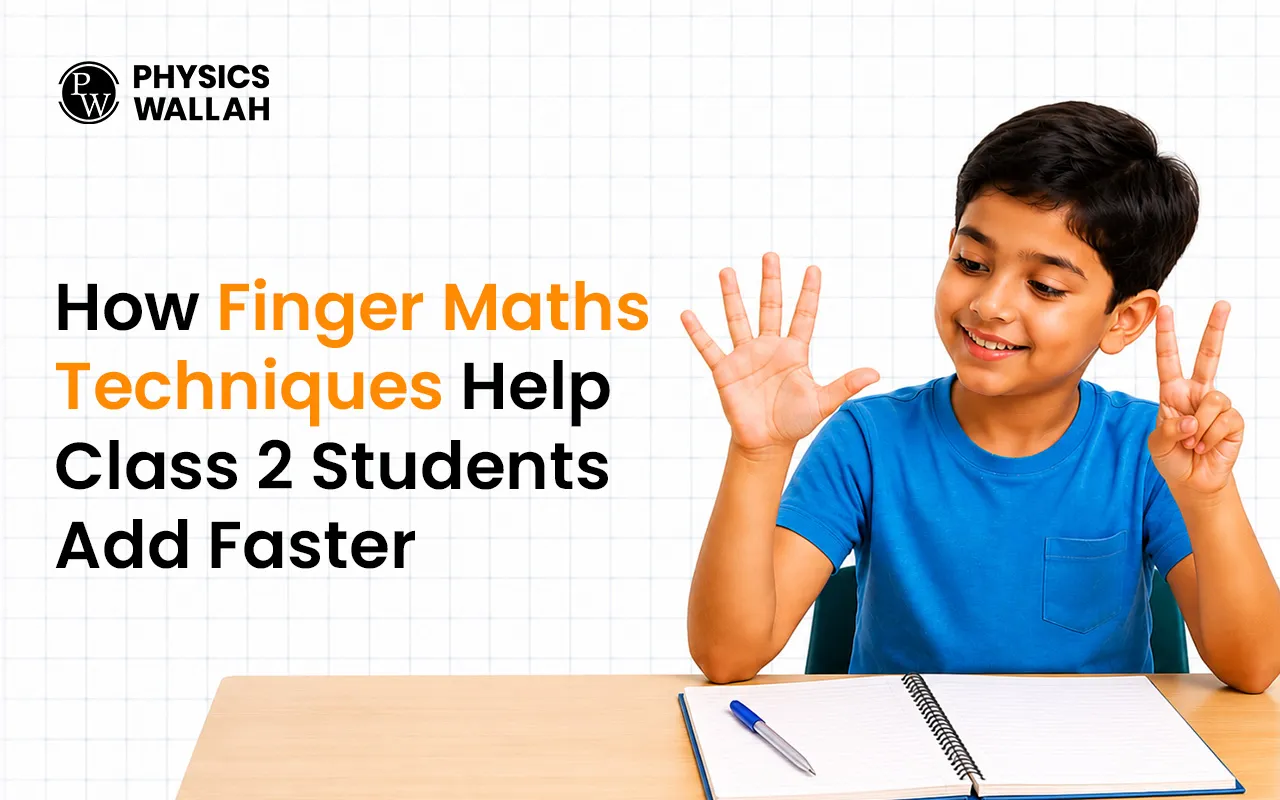
How Finger Maths Techniques Help Class 2 Students Add Faster
 Nikita Aggarwal22 Jun, 2026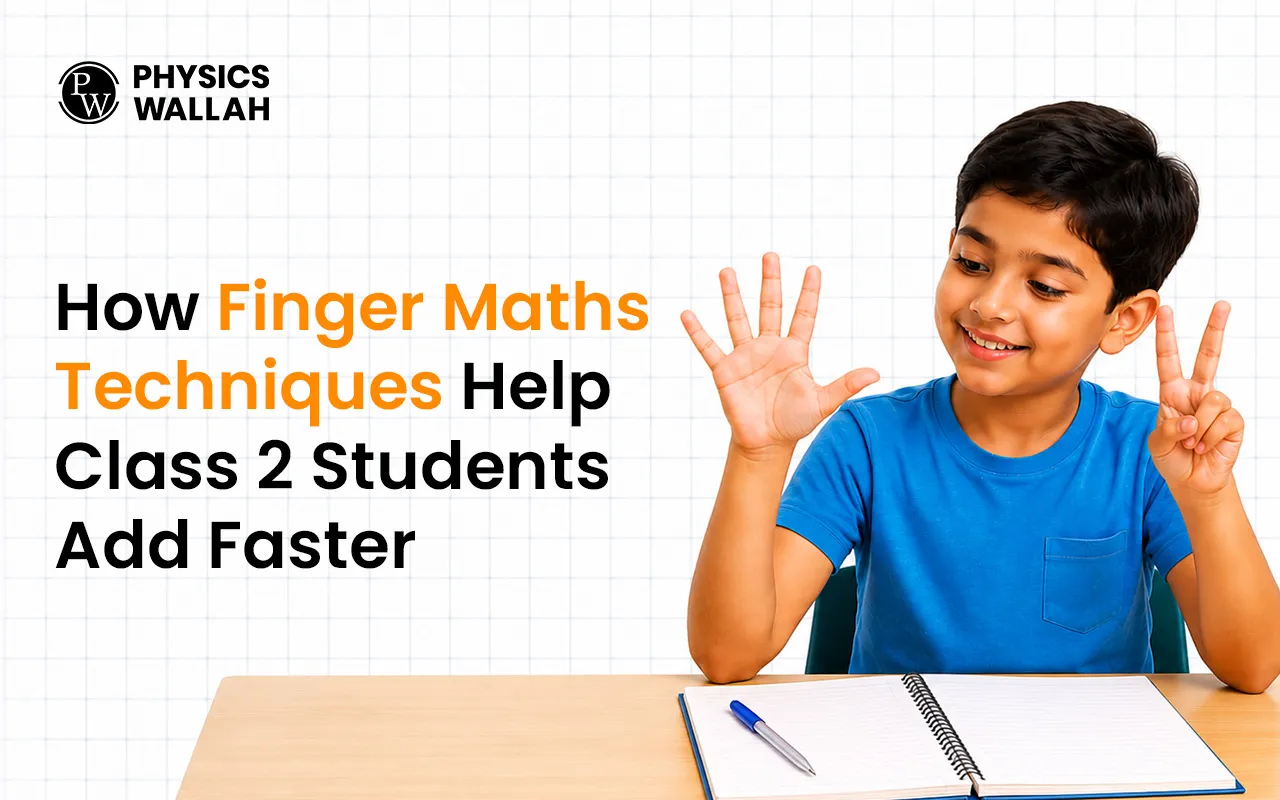
What Is Finger Maths for Class 2 Addition
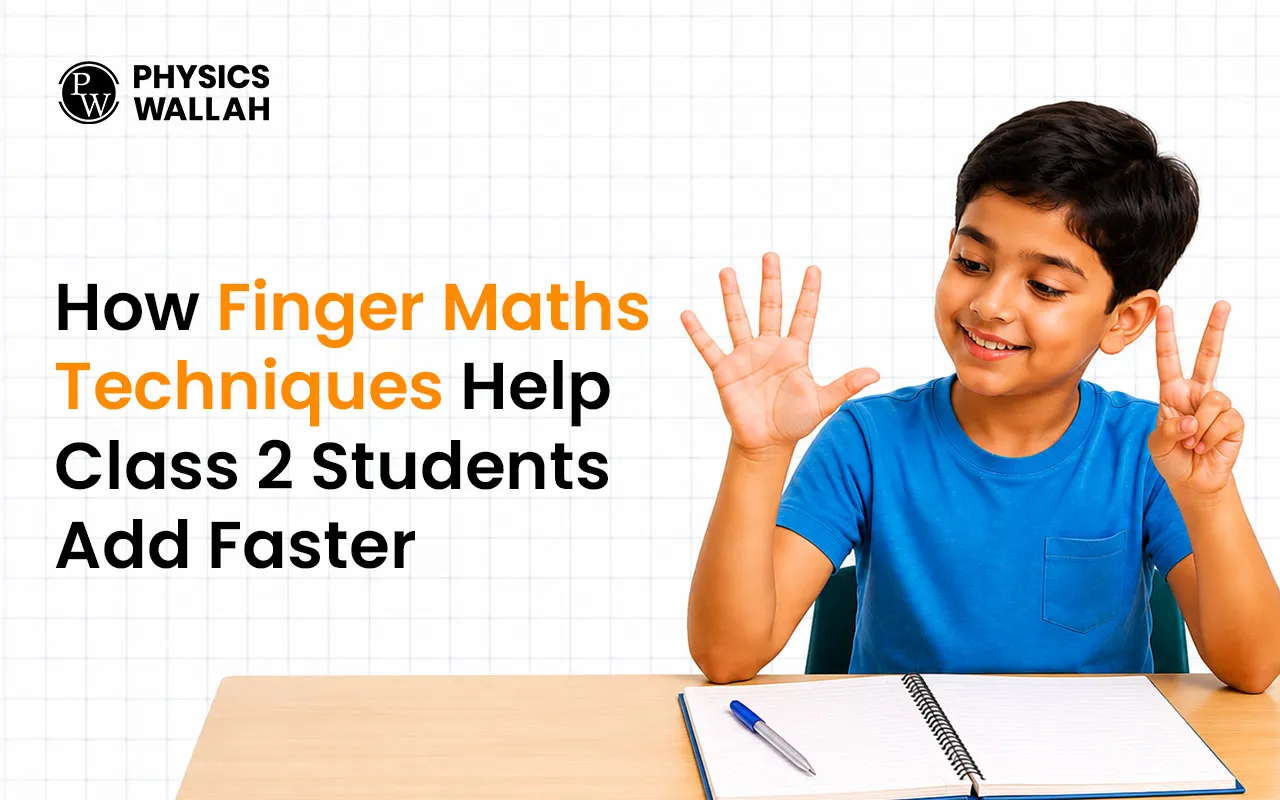
Finger maths is a systematic technique that uses fingers to represent the beads of an abacus, with each finger representing defined place values. In this system, the hands always represent fixed values and countable units, unlike conventional, arbitrary counting where every digit simply equals one. The right hand is for the units (ones) place, and the left one works on tens.
This systematic approach is called the 'finger abacus'. It has the same configuration as a Japanese Soroban abacus. On both hands, a fist means '0'. Children have a visual calculator at their fingertips whenever they keep their hands in front of them. According to the system of counting, only a right thumb represents five. One for each of the other four fingers on that hand. On the left side, you have your thumb for fifty and then four other fingers representing ten each. This helps a child form numbers from 0 to 99 instantaneously using just their ten left fingers.
How Finger Maths for Class 2 Addition Improves Speed
Structured finger strategies should be used to guide students away from incorrect finger counting methods. Children often lose their place during larger calculations when counting one-by-one sequentially. This method makes it harder for children to understand numbers and how they go together.
Finger gnosis, or the link between your sense of finger position and your maths performance. Physical representation of numbers on the hands helps students see how bigger pieces are made from smaller parts. To illustrate, an open right thumb (five) and two fingers (one plus one) allow them to view seven as a single group item rather than seven separate taps.
These are the multiple advantages of this clear visual structure:
-
Prevents memory overload: The hands hold the place value so that memory can concentrate on computing.
-
Simplifies larger numbers: Using one hand for units and another for tens allows kids to grasp double-digit math.
-
Encourages spatial thinking: Turning numbers into physical shapes makes abstract math concepts tangible.
The utility of this method is that it provides a good intermediary step towards complete mental calculation. Rather than struggle to remember numbers in their heads, students can record values physically. This helps children complete homework faster and reduces frustration and makes your child feel confident enough for addition without writing Class 2.
Techniques to Practise Finger Maths for Class 2 Addition
It involved a learning-by-doing process. Your child should practise single digits before attempting double-digit equations. Children will pick up Class 2 maths speed tricks through natural practice.
Step 1: Setting Single Digits on the Right Hand
It always begins with both hands clenched into fists (zero). Count from one to four with your right hand by showing first the index finger, then the middle, third ring and fourth pinky.
To sign five, lower all four fingers and leave the right thumb open. You can keep the thumb open and repeat raising individual fingers to continue counting to nine. An 'eight' is demonstrated by projecting the right thumb plus the extended index/middle/ring fingers.
Step 2: Setting Double Digits Across Both Hands
Then to show numbers over nine, add your left hand for the tens column. For seventy-eight, unbend the left thumb (fifty) and two fingers (ten plus ten); you have now achieved seventy. Again, open the right thumb (five) and three fingers of one hand to form eight.
Step 3: Single-Digit Addition (e.g., 5 + 3)
-
You begin with a fist (zero).
-
At the beginning, you untie my right thumb, which is already set to 5.
-
All you do is extend the right index, middle and ring fingers to add three units.
-
Read the final shape: a thumb and 3 fingers; the total makes eight.
Step 4: Double-Digit Addition Without Carrying (e.g., 52 + 41)
-
Set fifty-two: Open with the left thumb (50) and two fingers of the right hand, Use the left hand for tens and the right hand for units.
-
Add forty-one: left hand four fingers (forty) and right hand one finger (one) equals forty-one.
-
Read the final position: the left hand is 90 (a thumb + four fingers), and the right hand is three (three fingers).
-
The final sum is ninety-three.
Read More - Spot the Odd One Out Mental Maths Tricks for Class 2
Benefits of Learning Finger Maths for Class 2 Addition
The dual benefit is that by performing structured physical movements, you can directly enhance a student's accuracy and numerical fluency. This system has a clear structural advantage over standard teaching aids:
-
Constant availability: Unlike blocks, beads or paper a child's hands are always available for tests and practice in daily life
-
Clear error tracking: In case a place value mistake happens, children can track numbers using their fingers to see exactly where the calculation went wrong.
-
Stronger mental maths foundation: The physical memory of finger patterns helps students visualise calculations internally over time.
-
Better focus: Hands-on engagement helps keep little learners active, decreasing distraction during study time.
This process changes maths from a boring writing task to an interactive learning experience. It provides students with a dependable means of confirming their answers, alleviating the anxieties of testing and lessening stress over daily homework.
Read More - Two Digit Addition Tricks for Class 2
How Does CuriousJr Help With Class 2 Mental Maths?
Although physical tools are a good way to start, the end goal should be that students do all calculations completely in their mind. A child who tracks larger numbers with too many physical objects will have a setback in greater maths. Guiding this transition smoothly are online mental maths Class 2 courses.
CuriousJr are simply online classes for kids that will teach them what to do next after counting on their fingers. Curriculum advances to new numerical concepts that move from physical tracking into efficient mental strategies:
-
Complements of 10 and 20: Teaching students to find the two numbers that produce ten or twenty in order for them to speed up their calculations.
-
Base 10 strategies: Helping children round to the nearest ten first in order to simplify addition.
-
Number-splitting methods: Breaking larger numbers into parts that we can manage with mental computation.
-
Left-to-right addition: This approach helps train the brain to calculate from the leftmost digit (or largest place value) down.
As their internal number sense progresses through systematic practice, that is, they simply drop physical safety nets. This is particularly useful for Class 2 students who are being nurtured both physically and digitally, ensuring they have a holistic foundation in maths or similar subjects.




How Finger Maths Techniques Help Class 2 Students Add Faster FAQs
What is the definition of finger maths for Class 2 addition?
How do these tools help with fast addition for Class 2?
When should a child transition to addition without writing Class 2?
Can regular finger counting limit a student's long-term progress?

Get Free Counselling Today
and Clear up all your Doubts
 Live & recorded classes available at easeDashboard for progress trackingLakhs of practice questions