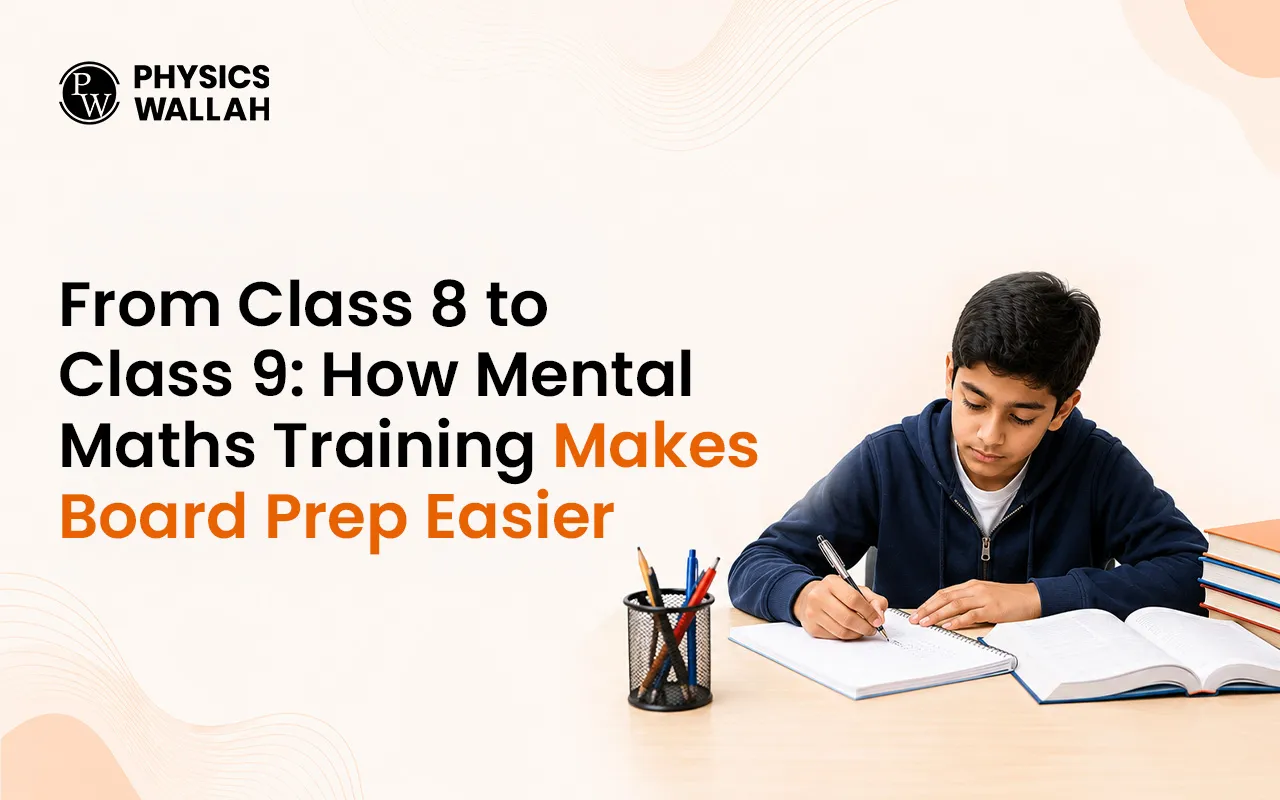
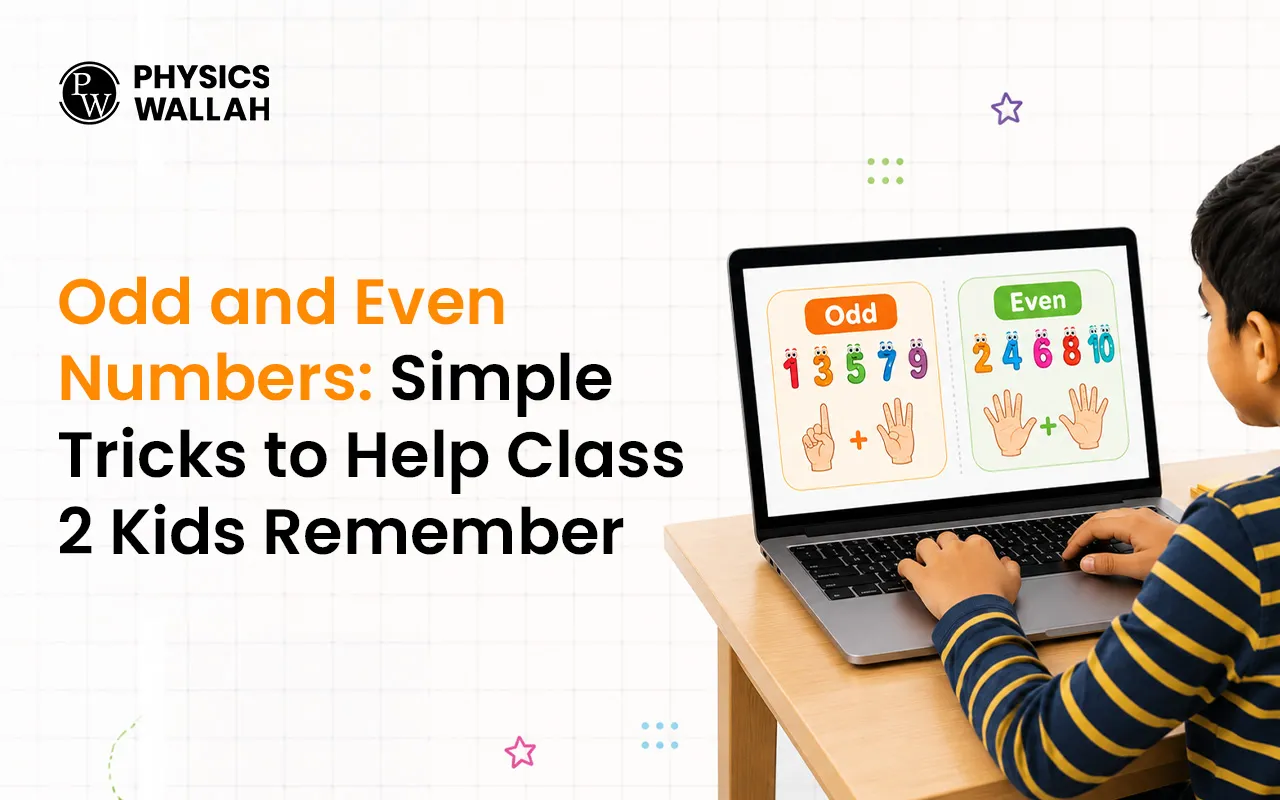
Odd and Even Numbers: Simple Tricks to Help Class 2 Kids Remember
 Nikita Aggarwal22 Jun, 2026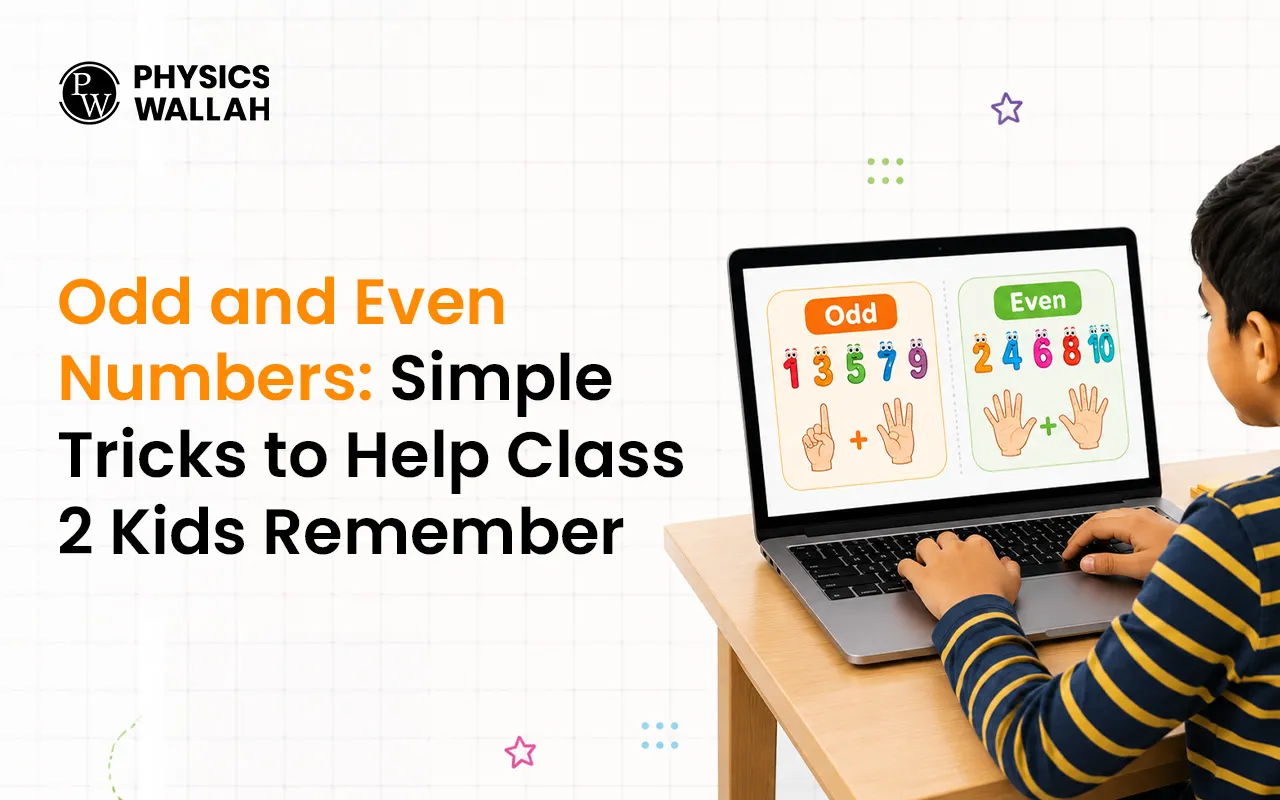
What Are Odd and Even Numbers?
As you progress to Class 2, numbers are divided into two broad categories based on whether they can be evenly divided.
-
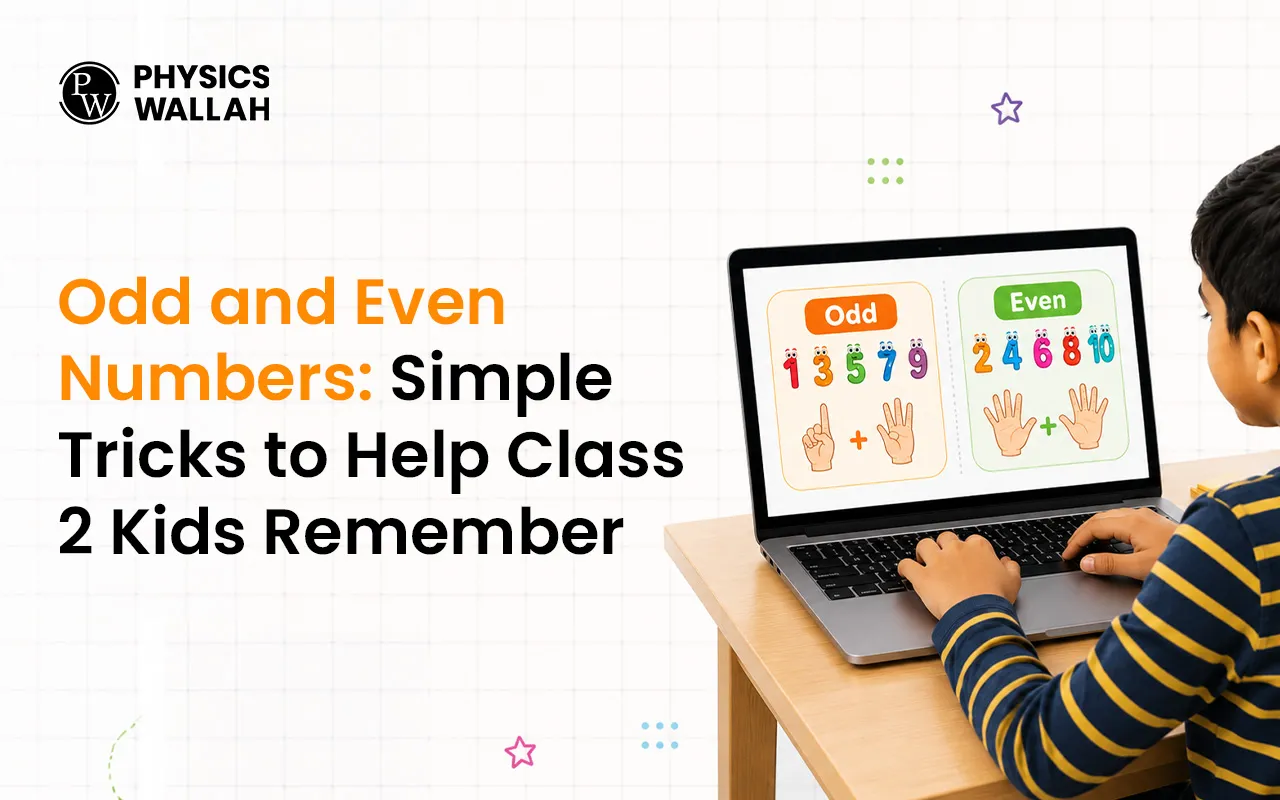
Even Numbers: These refer to quantities that you can equally divide into two groups and no more leftovers. For example, if you have 4 apples and share them equally between two friends, then both will receive exactly 2 apples with no remainder. This makes 4 an even number. Some other simple examples consist of 2, 6 and 8.
-
Odd Numbers: These numbers cannot be divided into two equal groups. There is always an odd-one-out when trying to pair them. This concept is similar to mathematics: if two friends want 5 candies, each of them gets 2, and there remains a leftover candy. So, 5 is an odd number. Odd numbers are 1, 3, 5 (4), and 9.
The right balance is exceptionally important when learning Class 2 maths odd even concepts. It gets kids away from simple memorisation and teaches them how numbers fit together logically.
How to Identify Odd and Even Numbers Class 2
Children often find abstract rules difficult to understand. So instead employ these four simple and effective tricks to remember odd even numbers to Memorise the Concept.
1. The Pairing Method
This pairing is a visual and tactile approach — it works wonders for primary school learners. Make your kid a small toy household, for example, with buttons, beads . Ask them to sort the items in pairs of two.
-
If every single object finds a partner and forms a complete pair, the total number is even.
-
If one object is left standing alone without a partner, the total number is odd.
2. The Last-Digit Rule
For larger two- or three-digit numbers, counting or pairing is not a feasible option. Get your child to look only at the absolute last digit (the ones place) of any number. This one is compelling and works no matter how big the number.
-
Any number finishing with 0, 2, 4, 6 or 8 is even.
-
If a number concludes with 1, 3, 5, 7 or numbers ending with odd numbers
3. Skip Counting Patterns
Skip Counting paves the way for multiplication and teaches children to identify a clear number Patterns Class 2.
-
Counting by 2s, starting from 0, yields all even numbers: 0, 2, 4, 6, 8, 10, 12...
-
Counting by 2s starting from 1 yields all odd numbers: 1, 3, 5, 7, 9, 11, 13...
4. The Finger-Counting Method
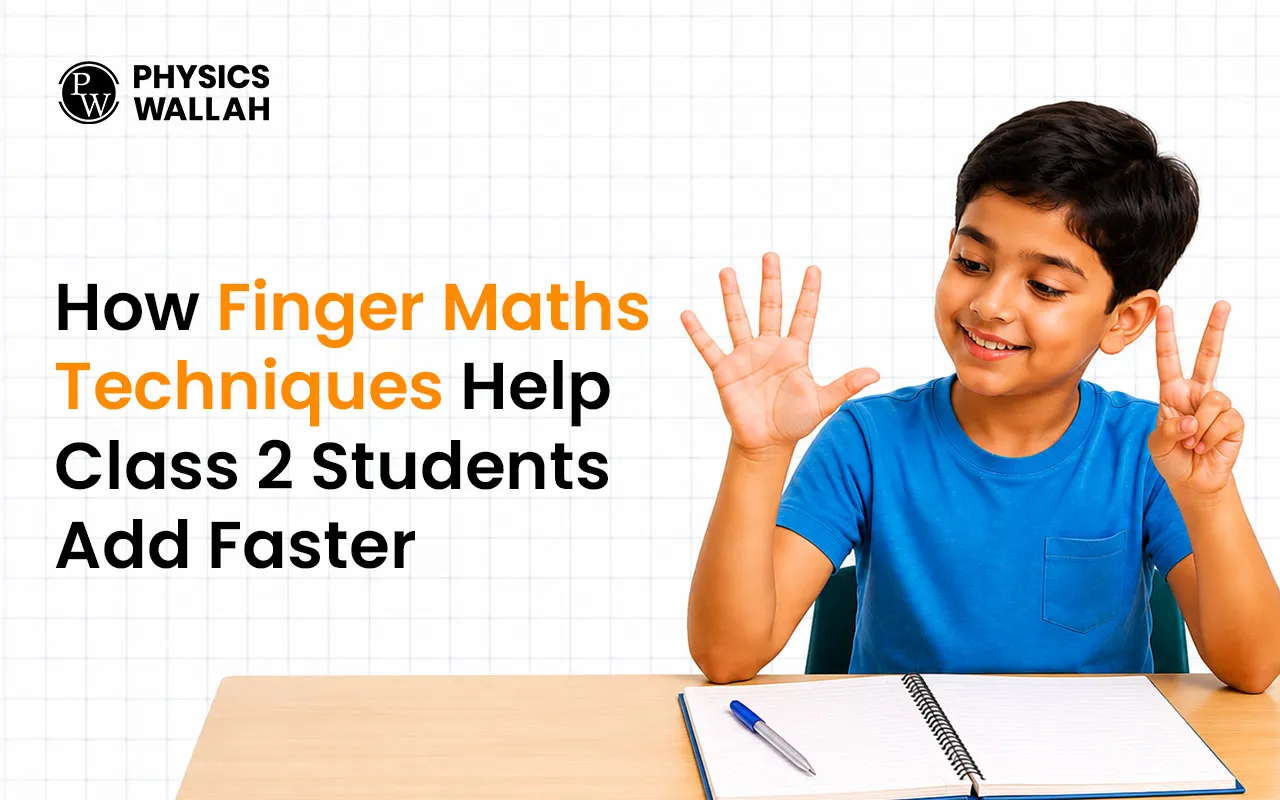
This rapid strategy is quite successful for any kinaesthetic learner who requires action while resolving problems. Have your child hold up a certain number of fingers (anywhere from 1 to 10). Ask them to pair up the fingers in an ordered fashion (e.g., thumb and pinky together, index finger and ring finger). The person counts even if all the raised fingers connect with a partner. If we have an odd finger that is not paired, the number will be matched oddly.
Read More - Spot the Odd One Out Mental Maths Tricks for Class 2
Fun Activities to Learn Odd and Even Numbers Class 2
Fun Activities to Learn Odd and Even Numbers and Playing as they Study Try out these interactive games to practise the concept at home or in your classroom.
The Jump and Learn Game
Use masking tape to make a giant number line (indoor) or chalk on an outdoor playground surface. Be sure to mark numbers from 0 to 20 spaced out along the line. Call out a random number. The child must jump straight onto that number. The most important rule is that when you land on an even number, the student needs to put his two feet together as tightly as possible so they can represent a pair. Landing on an odd number means standing on one leg.
The Clap Game
A fun way to practise listening skills and recognise numbers. Sit your child down and randomly call digits Have them clap 2 times for even numbers and take a single clap for odd numbers. Then you start nice and slow before gradually increasing the speed to turn it into a rapid-fire challenge.
The Number Hunt and Sort
Hide flashcards (with various numbers) throughout the classroom. Provide your child with two boxes—one marked "Evens" and the other "Odds". After an initial search of the room, they need to find and sort where those hidden numbers correctly go in boxes. It fends off hesitation and breeds familiarity as well as speed and accuracy.
Real-World Counting Lookouts
Use the taco party activity to relate math with everyday life by noticing things around you.
-
Shoes: Always come in pairs, representing an even number.
-
Car Wheels: Most standard passenger cars have 4 wheels, which is an even number.
-
Days of the Week: There are 7 days in a week, which represents an odd number.
Read More - Two Digit Addition Tricks for Class 2
Benefits of Learning Odd and Even Numbers Class 2
Being able to understand odd and even numbers is not only about passing a school test every Friday. It lays a strong foundation for overall fluency in mathematics.
-
Develops Strong Mental Maths Class 2 Skills: Resisting the urge to finger-count at a slow pace by finding odd and even patterns They start the view numbers as flexible groupings, which makes mental addition and subtraction faster.
-
Simplifies Division and Multiplication Basics: Understanding Things Like Halvings You train them very early on that everywhere an even number perfectly divides by 2 with no residue and wherever you divide an odd number every time there's always a remainder of one.
-
Improves Problem-Solving Speed: Understanding the patterns of numbers allows kids to check their work more quickly and accurately. For example, they can learn rules of even and odd, such as 'Even + Odd = odd', to perform predictions before performing actual calculations.
-
Reduces Math Anxiety: Children who find patterns quickly tend to have more confidence. This reduces anxiety of homework and makes the classroom alive.
How Does CuriousJr Help with Class 2 Mental Math?
However, in traditional textbooks, that number still becomes black and white papers, which makes them lose their focus while reading. CuriousJr online mental maths for class 2 transforms abstract math rules into an exciting, gamified digital playground to keep your child deeply motivated.
Interactive Learning Modules
CuriousJr replaces repetitive drills with colourful, animated interactive modules and also offers 2nd grade-specific worksheets driven by well-researched pedagogy. Students take a short quiz and immediately get feedback and earn badges. The cycle of instant rewards supports the learning framework and encourages students to solve a few problems on their own.
Structured, Stress-Free Curriculum
The curriculum is laid out reasonably, starting from identifying single-digit numbers and progressing to solving multi-step word problems. CuriousJr uses easy-to-pick tricks from Vedic maths which will help children solve bigger problems in smaller parts that can be solved easily. For example, students quickly classify numbers into tens and ones, or they group them in base-10 to solve calculation problems mentally.
Comprehensive Online Support
CuriousJr offers real-time teacher assistance and regular practice with class 2 number concepts. Great teachers have counterintuitive ideas; they simplify. Doing these activities on the regular develops your child's working memory and makes them independent whilst also getting their brain used to being tested in an academic environment for future tests and school exams.




Odd and Even Numbers: Simple Tricks to Help Class 2 Kids Remember FAQs
What is the easiest trick to identify odd and even numbers Class 2 kids can use it?
Why should my child learn number patterns Class 2 concepts?
How does mental maths Class 2 training stop finger counting?
Are online games helpful for teaching Class 2 online maths tuition topics?

Get Free Counselling Today
and Clear up all your Doubts
 Live & recorded classes available at easeDashboard for progress trackingLakhs of practice questions