Successor and Predecessor in Maths: Meaning, Definition, and Examples
 Shivam Singh19 Jan, 2026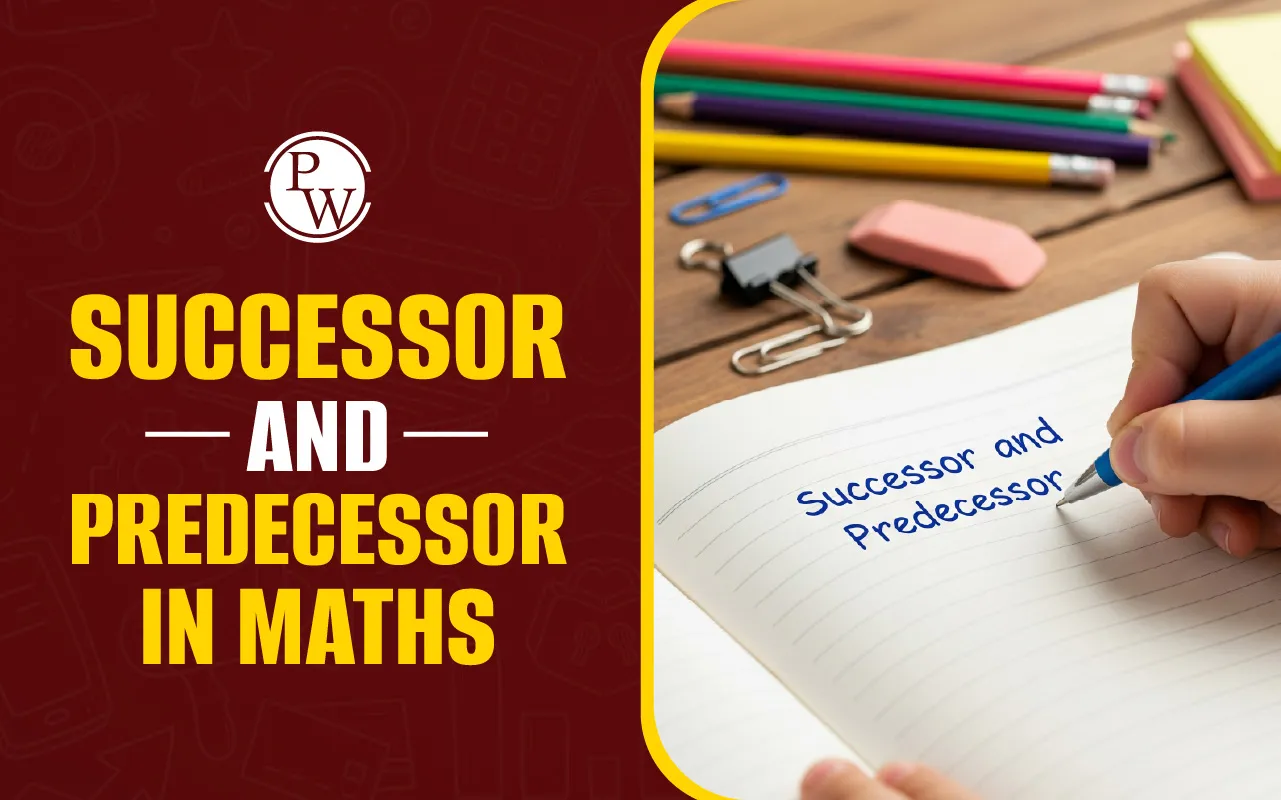
Successor and Predecessor
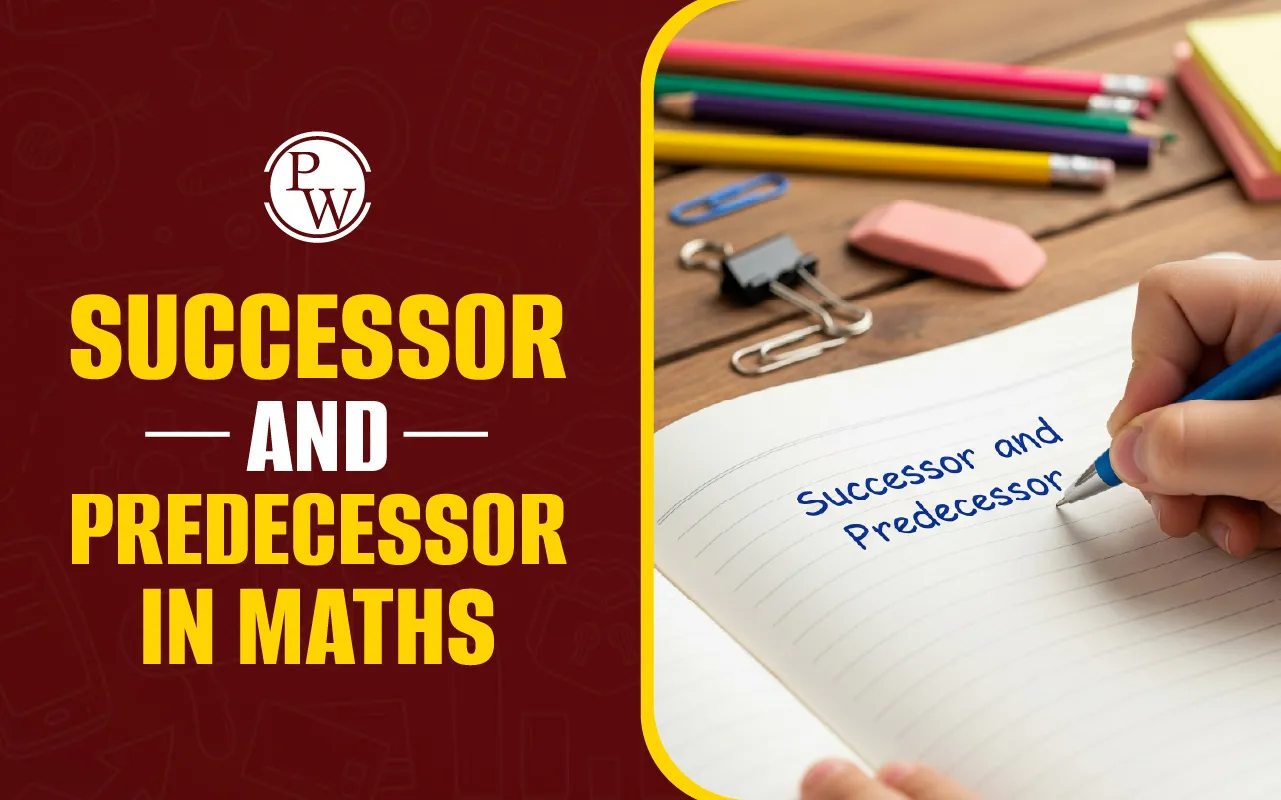
Mathematics is all about numbers and understanding how they relate to each other. One of the most basic concepts in math is knowing which number comes before or after a given number. These ideas are called predecessor and successor. Learn What is Successor in Maths. By learning about successors and predecessors, students can easily count forward and backwards, recognize number patterns, and understand the order of numbers on a number line.
These concepts are not just for small numbers; they work for all integers, including negative numbers, zero, and positive numbers. Read the complete blog to understand the concept of successor and predecessor in detail. Read more about What is Successor in Maths and Predecessor and Successor meaning for better understanding.
Read More: Top 10 Tricks to Master Mental Maths
Successor and Predecessor Definition in Maths
In mathematics, Successor and Predecessor in Maths are terms commonly used when working with number sequences. A successor is the number that comes right after a given number, while a predecessor is the number that comes just before it.
These relationships are easy to visualize on a number line, where each number has a successor to its right and a predecessor to its left. For instance, starting from 0 on a number line, the successor of 0 is 1, and the predecessor of 1 is 0. Moving further along, the successor of 1 is 2, and the predecessor of 0 is -1.
In mathematics, predecessor meaning in maths refers to the number that comes just before a given number, while the successor is the number that comes just after it. To understand what is successor and predecessor, remember that if you take any number, its predecessor is one less and its successor is one more. The predecessor and successor meaning is simple yet important as it helps in learning number order and sequences.
What is Successor in Maths?
A successor in maths is the number that comes immediately after a given number in a sequence. In other words, it is the next number following a specific number. If a number is represented as n, then its successor is calculated as:
Successor = n + 1
Examples of Successor:
-
If n = -6, the successor is -6 + 1= -5
-
If n = 95, the successor is 95 + 1 = 96
-
If n = 28, the successor is 25 + 1= 29
-
If n = 30, the successor is 30 + 1= 31
What is Predecessor in Maths?
Predecessor meaning in maths is discussed here. A predecessor is the number that comes immediately before a given number in a sequence. It is the previous number just before a specific value. If a number is represented as x, its predecessor is calculated as:
Predecessor = x − 1
Examples of Predecessor:
-
If x = 5, the predecessor is 5 − 1 = 4
-
If x = 10, the predecessor is 10 − 1= 9
-
If x = 20, the predecessor is 20 − 1= 19
-
If x = 50, the predecessor is 50 − 1= 49
-
If x = 100, the predecessor is 100 −1 = 99
Thus, the predecessor of any number is always one less than the original number.
Read More: Abacus vs. Vedic Maths
Predecessor and Successor of Integers
Integers are the set of numbers made up of zero, positive whole numbers, and their negative counterparts. In other words, integers include numbers like:
Z= {...,−5,−4,−3,−2,−1,0,1,2,3,4,5,...}
For any integer, the successor is the number immediately after it, and the predecessor is the number immediately before it.
|
Predecessor and Successor of Integers |
||
|
Integers |
Predecessor |
Successor |
|
10 |
9 |
11 |
|
-4 |
-5 |
-3 |
|
-7 |
-8 |
-6 |
|
0 |
-1 |
1 |
|
5 |
4 |
6 |
|
9 |
8 |
10 |
From this table, we can see that the successor is always one more than the number, and the predecessor is always one less. This rule works for all integers, whether negative, zero, or positive.
Read More: Quick Calculation Techniques for School Students
Difference Between Successor and Predecessor
The concepts of successor and predecessor may seem similar, but they are opposite in meaning. The main differences are shown in the table below:
|
Difference Between Successor and Predecessor |
||
|---|---|---|
|
Feature |
Successor |
Predecessor |
|
Meaning |
The number that comes after a given number |
The number that comes before a given number |
|
How to find |
Add 1 to the number |
Subtract 1 from the number |
|
Mathematical Expression |
n + 1 |
n - 1 |
|
Represents |
The next number in the sequence |
The previous number in the sequence |
|
Example |
Successor of 18 is 18+1=19 |
Predecessor of 32 is 32 −1=31 |
Successor and Predecessor Solved Examples
For example, in the predecessor and successor example, the predecessor of 10 is 9 and the successor of 10 is 11. Predecessor and Successor example are given here:
Example 1: Find the successor and predecessor of 27.
Solution:
Successor = 27+ 1 = 28
Predecessor = 27 − 1 = 26
Example 2: Determine the successor and predecessor of -4.
Solution:
Successor = −4 + 1 = − 3
Predecessor = −4 − 1 = −5
Example 3: Find the successor and predecessor of 0.
Solution:
Successor = 0 + 1=10
Predecessor = 0 −1 = −10
Example 4: Write the after numbers of 45 up to 50.
Solution: Numbers after 45: 46, 47, 48, 49, 50
Example 5: Find the successor and predecessor of 100.
Solution:
Successor = 100 + 1 = 101
Predecessor = 100 − 1 = 99
Also read: 10 Minutes Daily Exercises to Improve Mental Maths Skills
Make Your Child a Math Genius with CuriousJr’s Mental Maths Online Classes
Is your child finding maths slow or frustrating? CuriousJr’s Mental Maths Online Classes can help them overcome challenges and make numbers feel easier. Our program for Class 1 to 8 focuses on improving calculation speed, accuracy and the way children approach problem solving.
With live interactive sessions and two teachers in every class, students always get the attention they need. Activities and daily practice keep them engaged, while performance tracking and parent updates make progress clear.
We make maths enjoyable by combining practice with fun learning methods. Children not only sharpen their mental skills but also learn to stay focused and solve problems more effectively. Book a demo class with CuriousJr today and see how your child can enjoy maths and achieve more.