
Advanced English Grammar Ages 12 to 14: Tenses, Conditionals, and Complex Sentences
 Nikita Aggarwal20 Jun, 2026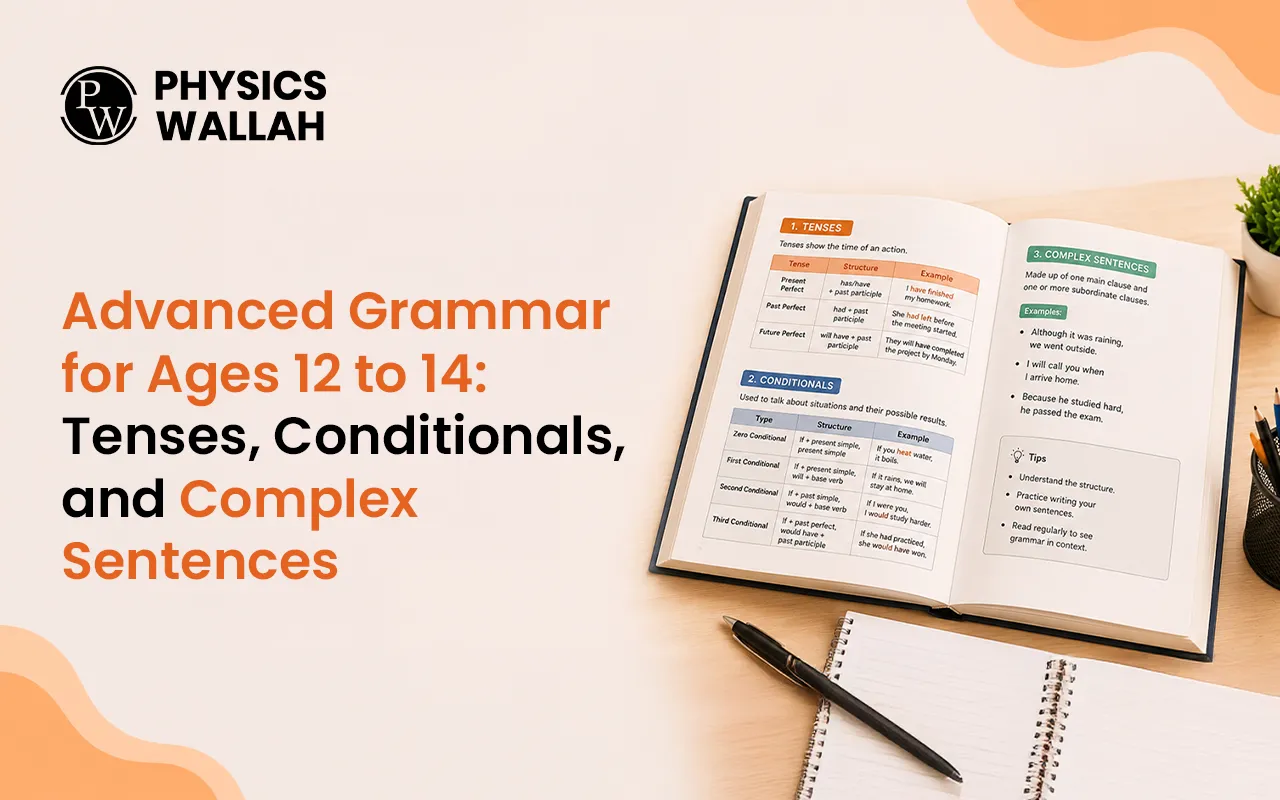
Importance of Advanced English Grammar Ages 12 to 14
Learning advanced English grammar ages 12 to 14 is essential as students transition into more demanding academic environments and higher levels of language learning. During these years, learners are expected to move beyond simple sentence structures and begin expressing complex ideas through essays, presentations, discussions, and formal writing tasks.
The Cambridge B1 grammar framework outlines important language milestones that help students demonstrate greater accuracy, fluency, and confidence. At this stage, learners must use a wider range of vocabulary, grammar structures, and sentence patterns to communicate effectively in both academic and everyday situations.
Mastering advanced grammar skills during these formative years offers several important benefits:
Improves Essay Writing
Students learn how to write well-structured essays, reports, emails, and formal letters using varied sentence structures, linking words, and advanced grammatical forms. This helps them communicate ideas more clearly and effectively.
Boosts Speaking Confidence
A strong understanding of grammar enables teenagers to participate confidently in classroom discussions, debates, presentations, and group activities. They can express opinions, explain ideas, and respond to questions with greater accuracy.
Enhances Reading Comprehension
Advanced grammar knowledge helps students understand more challenging texts, including newspaper articles, academic passages, and literary works. This improves their ability to analyse information and identify deeper meanings within a text.
Strengthens Academic Performance
Many school subjects require strong reading and writing skills. A solid grasp of grammar supports better performance across a wide range of academic tasks, including assignments, projects, and examinations.
Supports Exam Preparation
Understanding advanced sentence structures, verb forms, and grammar rules is essential for success in school assessments and Cambridge Preliminary grammar topics. Regular practice helps students approach exams with greater confidence and accuracy.
Read more - Daily 5 Sentence Practice for English Fluency (Level Preliminary)
Advanced English Grammar Ages 12 to 14 Help with Tenses?
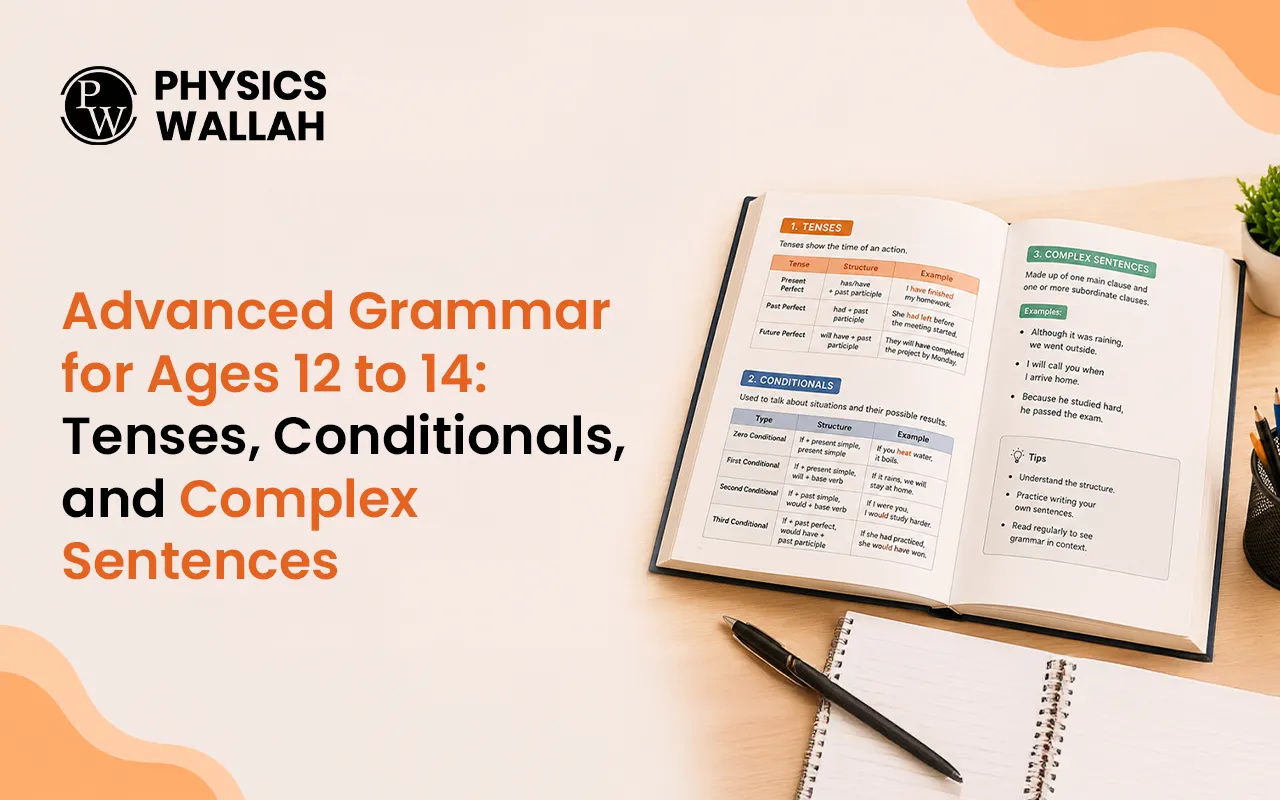
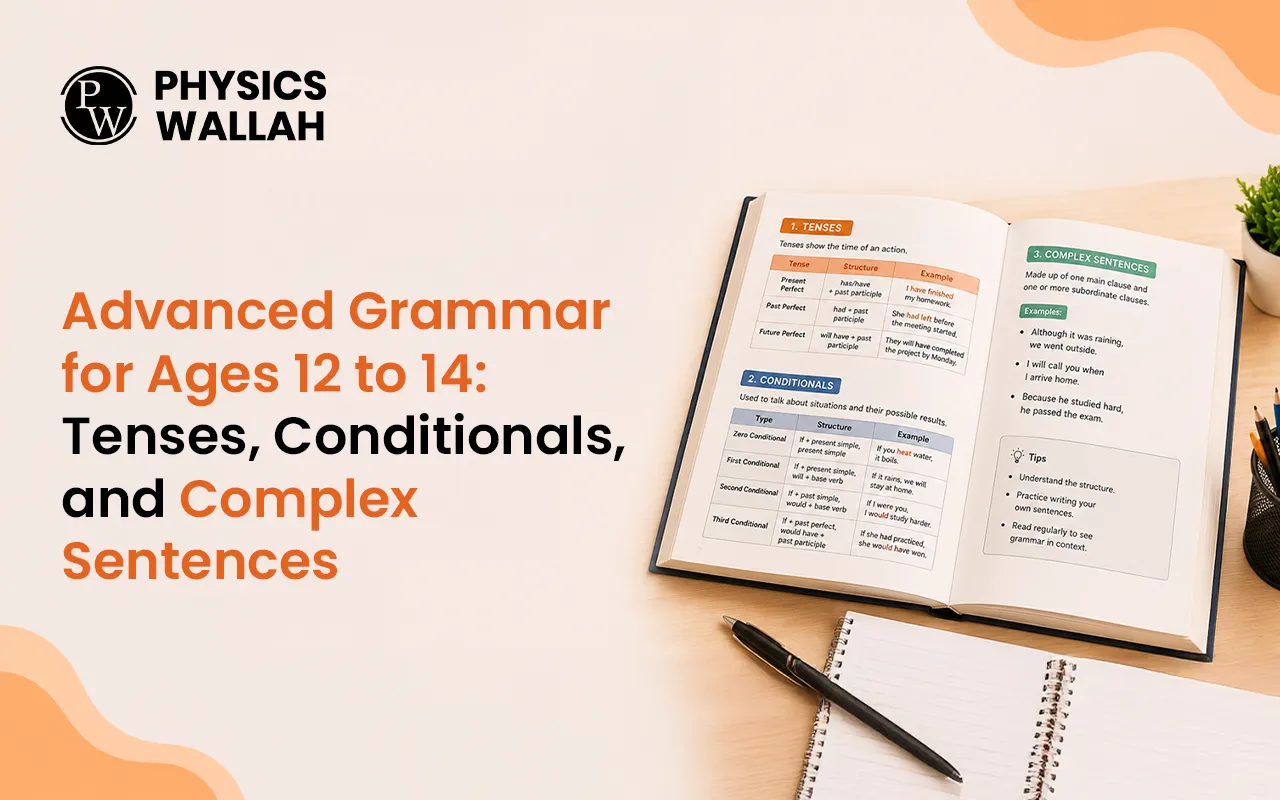
Moving beyond the simple present or past tense is the first step in mastering advanced English grammar for ages 12 to 14. Teenagers need to explain actions that overlap in time, express hypothetical situations, and discuss completed future events.
Understanding advanced tenses for teenagers requires breaking down perfect and continuous aspects into manageable rules.
The Past Perfect Tense
The past perfect tense clarifies the timeline of two completed actions in the past. It shows which action happened before the other.
-
Structure: Subject + had + past participle form of the verb.
-
Example: The students had finished their grammar test before the bell rang.
-
Usage Tip: Use the past perfect for the earlier action, and the simple past for the action that followed.
The Present Perfect Continuous Tense
This tense connects the past to the present moment. It describes an action that started in the past and is still continuing now, or has just finished with a visible result.
-
Structure: Subject + have/has + been + verb-ing.
-
Example: She has been studying Cambridge Preliminary grammar topics for three hours.
The Future Perfect Tense
The future perfect tense projects into the future, looking back at an action that will be completed by a specific timeline.
-
Structure: Subject + will have + past participle form of the verb.
-
Example: By next week, the Class 8 students will have completed their advanced composition portfolio.
Read More - Learn to Summarize Complex Ideas in English (Level Preliminary)
How to Use Conditionals and Complex Sentences in Advanced English Grammar Ages 12 to 14?
Writing engaging paragraphs requires a mix of simple, compound, and complex structures. Relying only on short sentences makes writing sound repetitive. For students working on conditionals and complex sentences Class 7 8 level modules, understanding structural dependency is key.
What are Complex Sentences?
A complex sentence contains one independent clause (which can stand alone as a sentence) and at least one dependent clause (which does not make complete sense on its own). The clauses are joined by subordinating conjunctions such as although, because, since, unless, whereas, or while.
-
Example 1: Although the grammar exam was long, Raj completed it on time.
-
Example 2: Students will struggle with advanced composition unless they practice daily sentence transitions.
Using complex sentences allows teenagers to summarize, explain, and argue complex ideas smoothly during school assessments.
Understanding Conditional Clauses
Conditionals explore hypothetical situations, possibilities, and outcomes. They use an 'if' clause (condition) and a main clause (result). The Cambridge B1 grammar syllabus focuses heavily on three primary conditional types.
|
Conditional Type |
Structural Pattern |
Practical Example |
|
First Conditional (Real Future) |
If + Simple Present, Will + Verb |
If you practice advanced English grammar ages 12 to 14, you will pass the B1 exam. |
|
Second Conditional (Unreal Present/Future) |
If + Simple Past, Would + Verb |
If I had more time, I would read the advanced composition textbook. |
|
Third Conditional (Unreal Past) |
If + Past Perfect, Would Have + Past Participle |
If they had revised the tenses, they would have scored higher. |
Common Mistakes to Avoid in Advanced English Grammar Ages 12 to 14
Even bright students face hurdles when adapting to the advanced English grammar guidelines for ages 12 to 14. Spotting these trends early helps parents and educators fix errors before terminal examinations.
1. Tense Splitting and Inconsistency
Students often start an essay in the past tense but accidentally slide into the present tense halfway through a paragraph.
-
Incorrect: The narrator walked into the room and started talking to the officer.
-
Correct: The narrator walked into the room and started talking to the officer.
2. Misplaced and Dangling Modifiers
A modifier is a word or phrase that describes something in a sentence. When placed incorrectly, it attaches to the wrong noun, confusing the reader.
-
Incorrect: Walking to the grammar class, the textbook fell into the mud. (This implies the textbook was walking.
-
Correct: While the student was walking to the grammar class, their textbook fell into the mud.
3. Mixing Conditional Structures
Teenagers often blend elements of the second and third conditionals incorrectly when discussing past regrets.
-
Incorrect: If I would have known, I would go to the lecture.
-
Correct: If I had known, I would have gone to the lecture.
How CuriousJr Helps with Advanced English Grammar Ages 12 to 14?
CuriousJr online Preliminary English learning class provides a structured and engaging learning platform designed to help students master advanced English grammar concepts for ages 12 to 14 concepts with confidence. As learners move beyond basic grammar rules, they need consistent practice, expert guidance, and opportunities to apply their knowledge in real-world situations.
CuriousJr supports this transition through specialized B1 Preliminary English online classes that combine theory with practical application.
Syllabus Mapping
The curriculum is carefully aligned with Cambridge B1 grammar standards and secondary school learning objectives. This ensures that students focus on the grammar structures and language skills most relevant to academic success and international English assessments.
Live Interactive Classes
Students learn through live discussions, speaking activities, collaborative exercises, and structured writing tasks. Rather than relying solely on memorisation, they actively use grammar concepts in meaningful communication situations.
Step-by-Step Teaching
Complex topics such as conditionals, reported speech, passive voice, relative clauses, and conditionals and complex sentences Class 7 8 concepts are broken down into manageable lessons. This gradual approach helps students build understanding without feeling overwhelmed.
Regular Practice Sessions
Frequent assignments, quizzes, and revision activities reinforce learning and improve long-term retention. Consistent practice helps students gain confidence in using advanced tenses for teenagers and other challenging grammar structures accurately.
Comprehensive Assessment Support
Students receive guided practice in reading comprehension, grammar application, paragraph writing, summaries, emails, and letter writing. These activities strengthen both language accuracy and exam readiness, helping learners perform confidently in school assessments and English proficiency examinations.




Advanced English Grammar Ages 12 to 14: Tenses, Conditionals, and Complex Sentences FAQs
What are the main B1 English grammar topics for a 12 to 14-year-old?
How do conditionals and complex sentences Class 7 8 level work together?
Why do teenagers struggle with advanced tenses for teenagers modules?
Where can I find curated online English grammar Class 8 9 10 content?









Get Free Counselling Today
and Clear up all your Doubts
 Live & recorded classes available at easeDashboard for progress trackingLakhs of practice questions

