Learn English Easily with Simple Words, Speaking and Daily Practice (Level Starters)
 Nikita Aggarwal24 May, 2026

Why Kids Need to Learn English with Simple Words
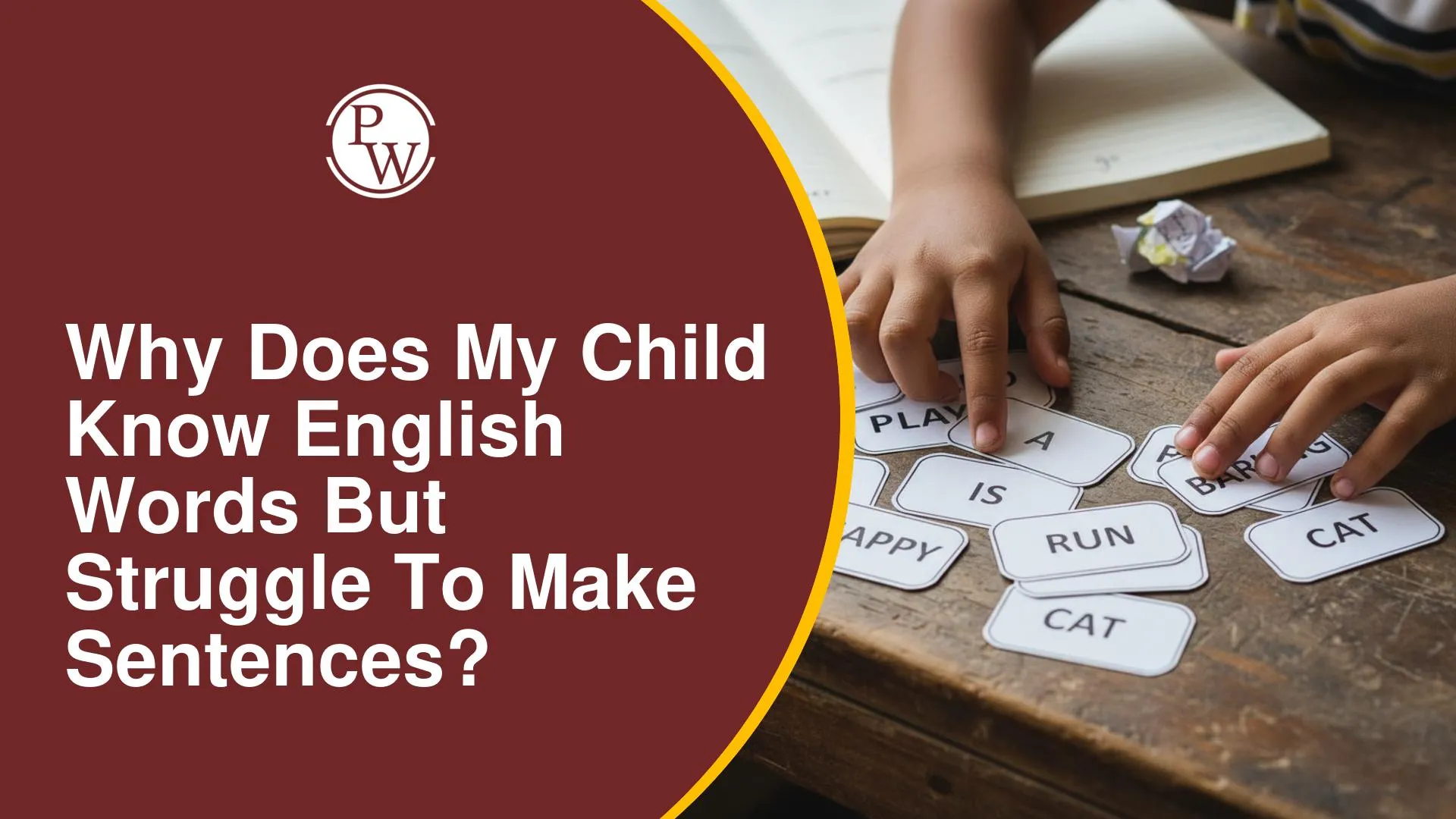
Young children who are at the starter level of language development learn best through mimicry, visual association, and playful interaction. Trying to teach them complex sentence structures or rules too early can cause hesitation and a fear of making mistakes. When children focus on basic terms and phrases, they find it much easier to connect actions directly to language.
-
Skips the Translation Habit: When kids learn English with simple words, they connect the English word directly to an object or feeling instead of translating from their native language.
-
Reduces Learning Pressure: Memorising a few basic words feels like a fun game rather than a stressful school lesson.
-
Encourages Early Speaking: Using brief phrases helps children start communicating immediately without getting stuck on complex grammar.
Simple English Words Every Child Should Learn First
Building a strong language foundation begins with a set of practical words that children can use in their immediate surroundings. Instead of pushing for large vocabulary lists, parents should focus on words that describe daily actions, personal feelings, and common household objects.
The table below outlines the essential word categories that help children learn English with simple words naturally:
|
Word Category |
Examples of Simple Words |
How to Practice at Home |
|
Daily Nouns |
Tree, dog, car, book, bag, chair, bed, shoes |
Use sticky notes to label items in your child's bedroom or kitchen. |
|
Action Verbs |
Run, eat, sleep, jump, play, read, draw, help |
Play a game where your child performs the action as they say the word. |
|
Descriptive Adjectives |
Cold, bright, hungry, tired, big, soft, round |
Ask your child to name one feeling or descriptive word when they wake up. |
Instead of using a bilingual dictionary that encourages translating back and forth, parents can use image searches or physical objects to show what a word means. This visual linking strategy builds instant recognition, allowing young minds to process language smoothly.
Fun English Activities to Help Kids Learn Faster
To help children learn English with simple words, language practice must be interactive and engaging. Sitting with textbooks for long hours rarely helps a young starter build communication skills. Instead, turning practice into short, playful games keeps children active and motivated.
Parents can easily introduce these effective activities into their daily routines:
-
The "What Am I Seeing?" Game: Look out of a window with your child for 30 seconds. Take turns listing everything you see using single terms or short phrases, such as "big car" or "green tree."
-
The Word Jar Method: Whenever your child discovers a fun new word in a story or cartoon, write it on a small slip of paper and place it in a jar. At the end of the week, pull out a slip and try to use that word during dinner.
-
Total Physical Response (TPR): Have your child act out sentences while speaking them aloud. For example, when saying "I can jump high," they should physically jump. This movement helps the brain lock in the meaning of the words.
-
Singing and Roleplay: Use nursery rhymes and simple role-plays, like pretending to be a shopkeeper or a doctor. This introduces structured phrases in a relaxed, low-pressure atmosphere.
Read More - Daily 5 Sentence Practice for English Fluency (Level Starters)
Daily English Speaking Practice for Beginners
Consistency is the most vital factor when helping a child pick up a new language. A brief, daily 20-minute routine is far more effective than a long, exhausting study session once a week. Developing a structured daily plan ensures that children use their skills consistently.
Here is a simple 5-day speaking routine designed to turn easy vocabulary into confident speech:
-
Day 1: Ability Sentences ("I can"): Focus on confidence by having your child say phrases like "I can draw a big sun" or "I can read my book."
-
Day 2: Needs and Wants ("I want / I need"): Teach functional language for daily life, such as "I want some water, please" or "I need my red pencil."
-
Day 3: Describing Things: Use a basic structure to talk about surroundings, such as "The sky is blue" or "My teddy is so soft."
-
Day 4: Social Greetings and Manners: Practice polite interaction terms like "Hello, how are you?" and "Nice to meet you."
-
Day 5: Asking Simple Questions: Encourage your child to lead conversations by asking "Where is my bag?" or "What is for dinner?"
When children participate in this type of regular training, they learn to express their thoughts without fear. The goal at this stage is always fluency over perfect accuracy.
How to Improve English Speaking Confidence in Kids
When young children begin to speak, they will naturally make structural errors. How adults handle these mistakes determines whether the child continues to try or shuts down out of hesitation. Creating a supportive, comfortable environment is essential for early development.
-
Avoid Constant Interruptions: Do not stop a child in the middle of a sentence to correct a minor grammar mistake. Let them finish expressing their thought completely.
-
Model the Correct Way: Instead of telling your child that they are wrong, simply repeat the sentence correctly. If they say, "I went to park," you can respond warmly, "Yes! You went to the park!"
-
Narrate Daily Routines: Become a live commentator for your child by describing your daily actions aloud. Say things like, "I am cutting the carrots" or "Let's put on your blue shoes." This builds essential survival vocabulary naturally.
-
Celebrate Every Attempt: Praise your child whenever they choose to use English, even if the sentence is broken. Building early confidence is the fuel for future language growth.
Read More - Build Vocabulary without Memorizing (Level Starters)
English Learning Levels for Young Children
As children master basic words, they gradually advance through structured proficiency levels. Each stage is designed to match the developmental capabilities of the child's age group.
The table below highlights the progressive steps of the language journey:
|
Learning Stage |
Target Age |
Primary Focus Areas |
Expected Outcomes |
|
Pre A1 Starters |
6 to 8 Years |
Simple everyday vocabulary, greetings, letter sounds, and matching words to images. |
Speak in short phrases, follow basic classroom instructions, and build early confidence. |
|
A1 Movers |
8 to 10 Years |
Reading simple texts, describing routines, and independent sentence formation. |
Ask and answer questions in full sentences, write short paragraphs, and tell brief stories. |
|
A2 Key |
10 to 12 Years |
Real-life communication, advanced grammar patterns, and group discussions. |
Write basic emails, share clear opinions, and communicate smoothly in daily situations. |
|
B1 Preliminary |
12 to 14 Years |
Accuracy and fluency, structured essay writing, and vocabulary growth. |
Take part in debates, analyze articles, and explain complex ideas with confidence. |
Starting early with the right foundation ensures that children do not face psychological or structural barriers as they grow. By focusing on simple communication first, young learners establish a natural rhythm that prepares them for long-term academic and personal success.
Improve Your Child’s English Confidence with CuriousJr
Does your child feel nervous or unsure while speaking, reading, or writing in English? Traditional learning methods often focus more on memorising lessons than building practical communication skills, making it harder for children to speak confidently in everyday situations.
At CuriousJr, our online English learning classes are designed to make learning simple, interactive, and enjoyable. Tailored for children aged 6 to 14, the program includes structured levels such as Starters, Movers, Key, and Preliminary, helping students improve gradually and comfortably at every stage.
Through Cambridge-certified fluency training, children develop strong grammar, vocabulary, speaking, and communication skills using engaging and easy-to-understand activities.
Our live classes provide personalised attention, expert support, and regular feedback, helping children become more confident and fluent in English.
Each level is focused on practical communication, enabling children to understand, speak, and use English naturally in daily conversations and real-life situations.