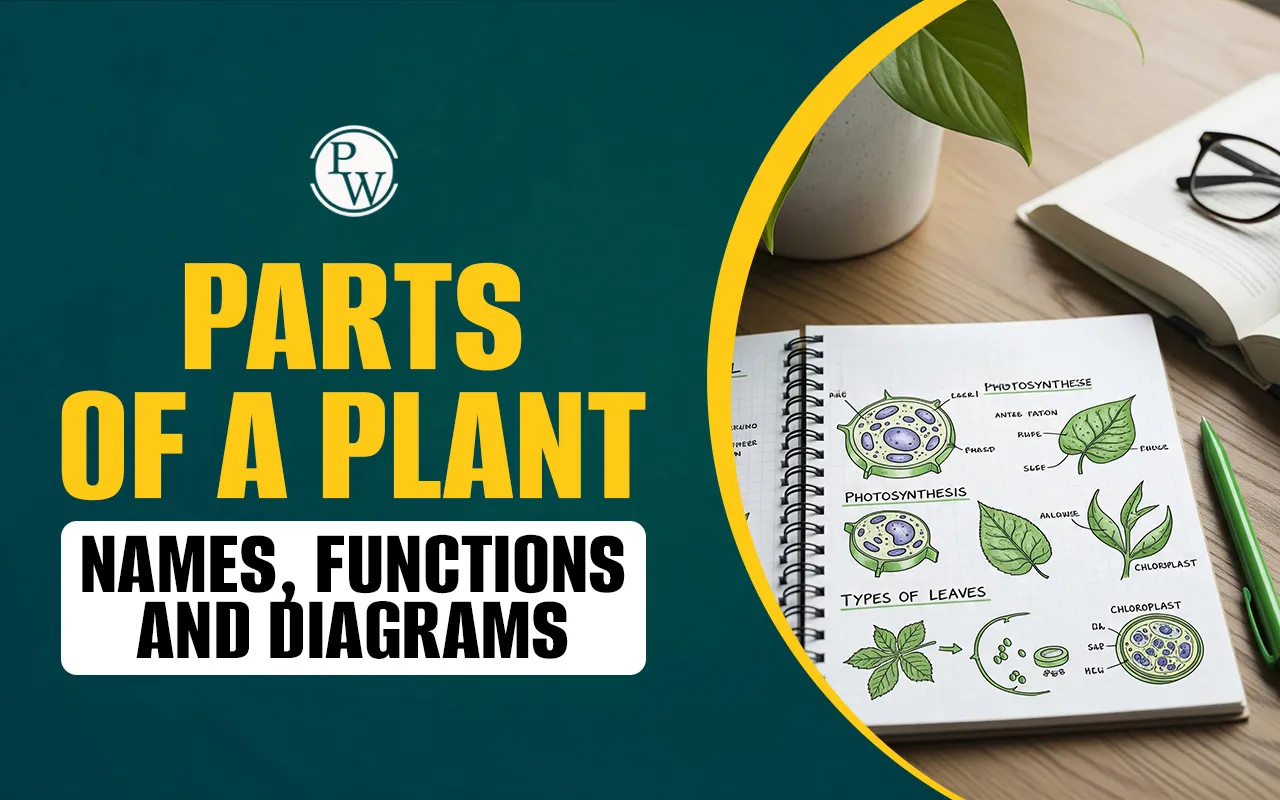
Parts of a Plant - Names, Functions and Diagrams
 Nikita Aggarwal5 Oct, 2025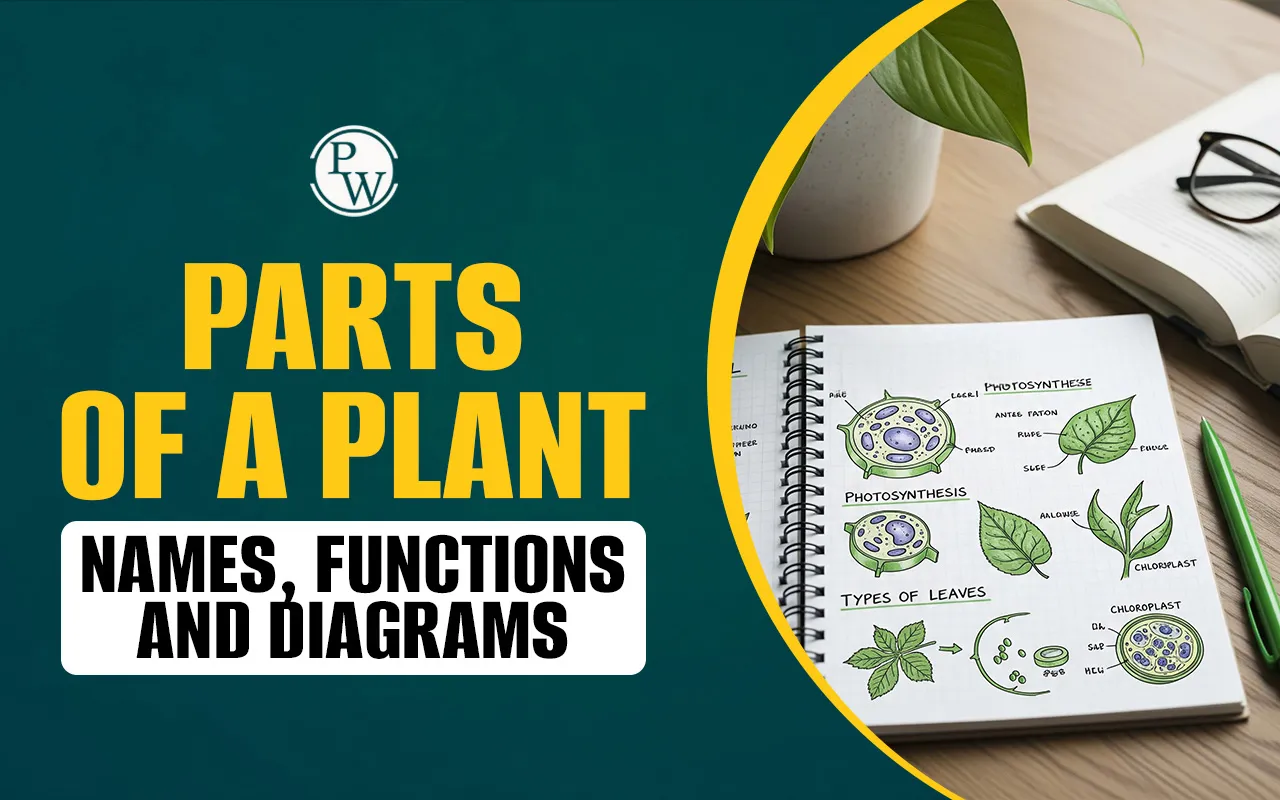
Parts of a Plant
Parts of a plant are its main organs that allow it to live, grow, and reproduce. When asked, “What are the parts of a plant?” the answer usually includes six basic parts:
-
Roots
-
Stem
-
Leaves
-
Flowers
-
Fruits
-
Seeds
These six parts make up the structure of most plants. While some plants develop special features such as thorns or storage organs, the basic design stays the same.
Also read: What is Gravity? - Definition, Facts and Examples
Functions of Parts of a Plant
The functions of parts of a plant are what keep it alive, healthy, and able to reproduce. Each part such as roots, stem, leaves, flowers, fruits and seeds has its own important job. Some parts absorb water and minerals, others prepare food, and some help in reproduction. Below is a brief overview of the main functions of parts of a plant to help students understand them clearly.
Roots
Roots are the underground part of a plant. They grow downward into the soil and form the root system. Roots keep the plant fixed in the ground so it does not fall over. They take in water and minerals from the soil, which are needed by the rest of the plant. In some plants, roots change shape to store food, as in carrot and radish.
There are two types of root systems.
-
In the taproot system, a single thick root grows deep with smaller side roots, as in mango and mustard.
-
In the fibrous root system, many thin roots spread near the surface, as in grass and wheat.
Also read: Respiration - Definition and Types
Stem
The stem is like the backbone of the plant. Its main function is to hold the plant upright so the leaves can reach sunlight. Another important function is transportation. The stem carries water and minerals upward from the roots to the leaves and also transports prepared food from the leaves to other parts of the plant.
Without the stem, movement of water and food would not be possible. In some plants, the stem has the additional function of storing food, as in potatoes and ginger. Stems can also help in vegetative reproduction, allowing new plants to grow from cuttings.
Leaves
Leaves are often called the “food factories” of the plant. Their main function is to prepare food through photosynthesis, using sunlight, water, and carbon dioxide. Leaves also have tiny pores called stomata through which they release extra water.
This process is known as transpiration and it helps to keep the plant cool and maintain the water balance. Some leaves also perform the function of reproduction. For example, the leaves of Bryophyllum can grow new baby plants along their edges.
Flowers
The primary function of flowers is reproduction. Flowers contain the male and female parts needed to produce seeds. They are often brightly colored or scented to attract insects, birds, and other pollinators. Pollination leads to fertilization, after which the flower develops into a fruit. Thus, flowers play the key role in making sure the plant can produce the next generation.
Also read: Components of Food – Carbohydrates, Proteins, Fats
Fruits
Fruits function mainly to protect and spread seeds. After fertilization, the ovary of the flower develops into a fruit that encloses the seeds inside. The fruit acts as a covering that keeps the seeds safe until they are ready to grow. Fruits also help in seed dispersal.
When animals and humans eat fruits, the seeds are carried to new places where they may germinate. In some cases, wind and water also help fruits spread their seeds. Besides their role in reproduction, fruits are an important source of food for humans and animals. Examples include mango, apple, tomato, and beans.
Seeds
The final function is performed by seeds, which are the beginning of new plants. A seed contains an embryo, or baby plant, and stored food to help it grow in its early stages. Seeds are protected by a seed coat. When conditions are right, seeds germinate, producing roots and shoots that develop into a full plant. This ensures the continuation of the plant’s life cycle.
Plant Cell Parts and Functions
Plant cells are the smallest units of life in plants and are called the building blocks of all plant structures. They are eukaryotic cells, which means they have a true nucleus and many specialized parts called organelles. Each organelle has its own function, and together they allow the plant to live, grow, and make food.
Some important plant cell parts and their functions are:
-
Cell Wall: A rigid outer layer that gives the cell shape and support.
-
Cell Membrane: A thin layer inside the wall that controls what enters and leaves the cell.
-
Nucleus: The control center of the cell that stores DNA and directs all activities.
-
Chloroplasts: Green structures with chlorophyll that carry out photosynthesis to make food.
-
Vacuole: A large sac filled with water and nutrients that helps the plant stand firm.
-
Mitochondria: Break down food and release energy, called the “powerhouse of the cell.”
-
Ribosomes: Tiny parts that make proteins for growth and repair.
-
Golgi Apparatus: Packages and sends materials inside the cell.
Together, these plant cell parts and functions make sure plants can prepare food, store energy, grow tall, and reproduce.
Also read: Heat and Temperature - Meaning, Difference, Examples
Help Your Child Master Every Subject with CuriousJr
Is your child losing confidence because studies feel harder each day? Do you notice homework struggles, repeated doubts, or slipping grades? At CuriousJr, we turn those challenges into progress with personalized online classes for Classes 3 to 8.
Here’s what makes CuriousJr school tuition online different:
-
Dual-Teacher Model: One teacher for live lessons, another mentor for 24x7 doubt support and homework help.
-
Complete Coverage: Maths, Science, English, and Social Studies taught step by step with clarity.
-
Confidence Building: Lessons designed to remove confusion, improve marks, and build stronger foundations.
-
Parent Involvement: Regular updates keep you informed of your child’s progress.
Don’t let small doubts become bigger problems. Book a Demo Session today and give your child the support they need.