Respiration - Definition and Types
 Amit Lingwal20 Jan, 2026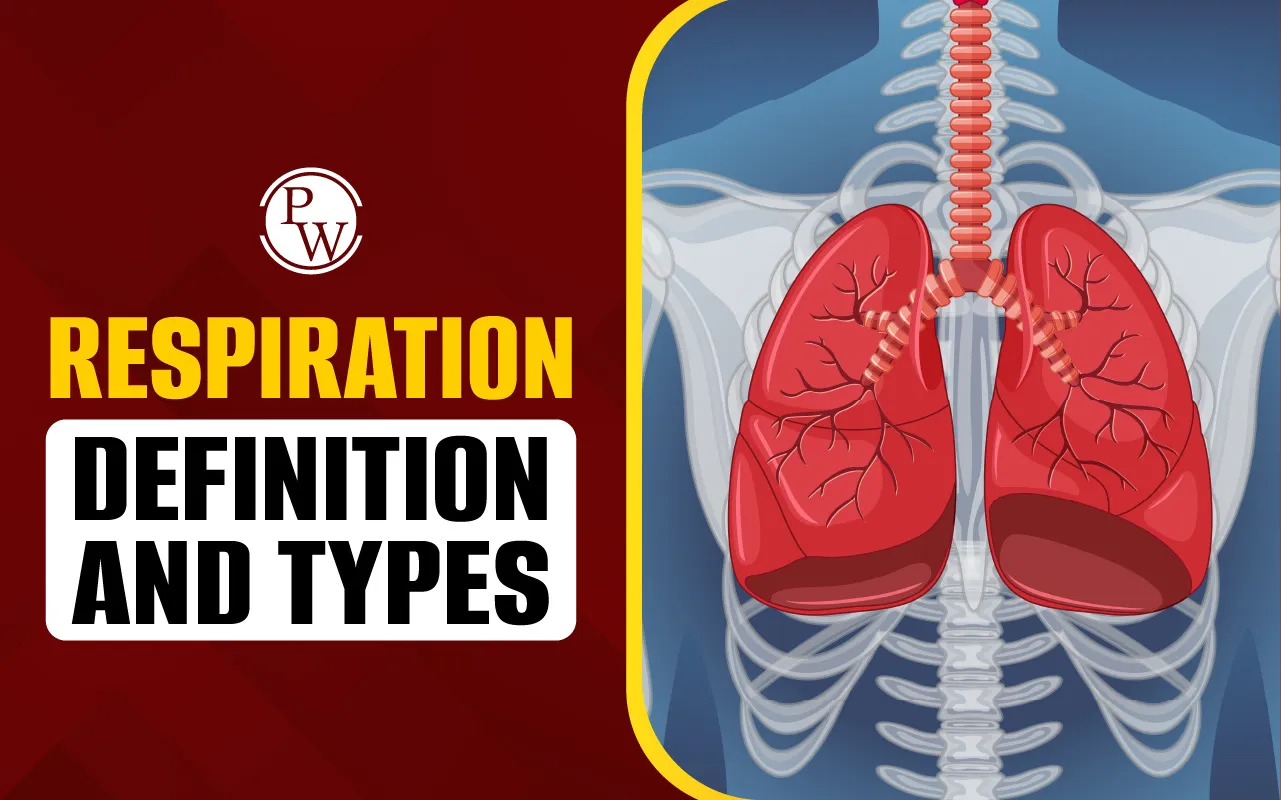
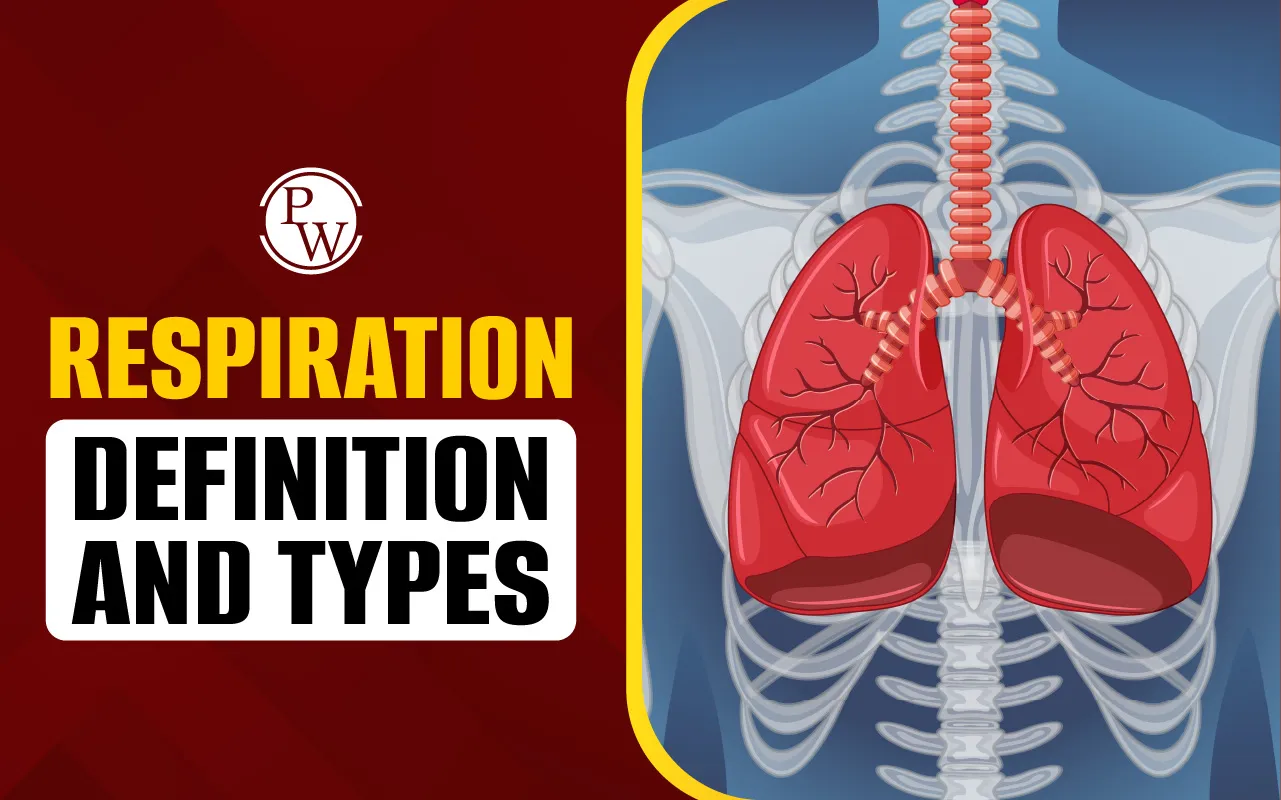
Respiration is one of the most important life processes that keeps us alive. Every time we breathe in air, our body takes oxygen and uses it to release energy from the food we eat. This energy is used by our bodies to perform all functions. Without respiration, the survival of living organisms is not possible.
Respiration is not only important for humans and animals but also for plants, tiny bacteria, fungi, and almost every living thing on Earth. That is why respiration is called a basic life process. To learn the definition, phases, and types of respiration, keep reading.
What is Respiration?
What is respiration? is one of the commonly asked questions on your exams. In biology, respiration means the process that happens inside the cells of all living organisms in order to release energy. The food we eat, like rice, bread, or fruits, has glucose. This glucose is broken down inside our cells with the help of oxygen, and energy is released in the form of a molecule called ATP (Adenosine Triphosphate).
So, through respiration, cells get the energy they need to continue the life processes. This energy is then used for different activities such as movement, growth, repair of tissues, pumping of the heart, and even for breathing and blinking.
Read more: Human Digestive System
Respiration Definition
According to the respiration definition, "It is the process by which living things get energy from the food they eat. During respiration, the cells of our body take oxygen from the air and use it to break down food. This gives energy in the form of ATP, which is needed for all life activities. While doing this, the body also releases carbon dioxide and water as waste."
Types of Respiration
There are two main types of respiration. One takes place in the presence of oxygen, and the other without oxygen. Let's learn about the two types of respiration in detail here:
1. Aerobic Respiration
Aerobic respiration takes place when oxygen is present. In this process, glucose from food breaks down completely with the help of oxygen. This gives a huge amount of energy. Along with energy, carbon dioxide and water are also released.
Most plants and animals, including humans, use aerobic respiration. It is the main way our body gets energy because oxygen is present in the air around us.
2. Anaerobic Respiration
Anaerobic respiration takes place without oxygen. In this process, glucose does not break down fully. Because of this, the energy released is very little. Instead of water, substances like alcohol or lactic acid are formed along with carbon dioxide.
Anaerobic respiration is found in yeast, some bacteria, and parasites. For example, yeast uses anaerobic respiration to produce alcohol. This is why it is used in baking bread and making wine.
Read more: 5 Sense Organs
External Respiration
The process of breathing is also known as external respiration. In this, oxygen from the environment enters the body, and carbon dioxide goes out. This exchange of gases happens through diffusion. Different living beings use different methods for external respiration. For example,
-
Lungs: Mammals like humans use lungs.
-
Gills: Fishes use gills to take oxygen from water.
-
Trachea: Insects and some arthropods use small tubes called trachea.
-
Diffusion into the blood: Worms and amphibians can take oxygen directly through their skin into the blood.
-
Direct diffusion: Simple animals like jellyfish and flatworms exchange gases directly with the environment.
Phases of Respiration
Respiration does not take place in one single step. It takes place in five main phases. Each phase helps the cell slowly release energy from glucose. Here are the five important phases of respiration:
1. Pulmonary Ventilation or Breathing
Pulmonary ventilation is the process of inhaling air in and exhaling it out of the lungs. When we inhale, the chest expands, and air enters the lungs. When we exhale, the chest becomes smaller, and air leaves the lungs.
2. External Respiration
This is the exchange of gases between the lungs and blood. Oxygen from the air goes into the blood, and carbon dioxide from the blood goes into the lungs to be exhaled.
3. Gas Transport
The blood carries oxygen from the lungs to the body’s cells and brings carbon dioxide back to the lungs.
4. Internal Respiration
This is the exchange of gases between blood and body cells. Oxygen moves from the blood into the cells, and carbon dioxide moves from the cells into the blood.
5. Cellular Respiration
Cellular respiration takes place inside the cells. Oxygen is used to break down glucose and produce energy in the form of ATP. There are three main phases of respiration in this type, which are Glycolysis, Citric Acid Cycle or Krebs Cycle, and Oxidative Phosphorylation.
Read more: Health and Hygiene
Respiration in Plants
Plants also need energy to grow and stay alive, so they use respiration day and night. They take in oxygen through tiny openings on their leaves called stomata and through small pores on their stems called lenticels.
The oxygen helps them break down the glucose made during photosynthesis. The energy released, called ATP, is used for all the plant’s activities. Carbon dioxide is also produced as a waste, and during the day, plants can use it again for photosynthesis.
About Human Respiratory System
Learning about the human respiratory system helps us understand how our body inhales oxygen and releases carbon dioxide. This oxygen is used by our cells to release energy from food in the form of ATP, which gives us the energy to do all our activities.
The human respiratory system has different important parts, and each part has its own role in the process of breathing. Check the parts and their roles to better understand about human respiratory system here:
-
Nose: Air enters the body through the nostrils. Tiny hairs and mucus in the nose filter the air and add moisture. The septum divides the nostrils into right and left sides.
-
Pharynx: It is a hollow space that carries air to the lungs and food to the stomach. The epiglottis acts as a switch to prevent food from entering the windpipe.
-
Larynx or Voice Box: Located in the neck, it helps us speak and also sends air into the trachea.
-
Trachea or Windpipe: It is a tube with C-shaped rings that carries air from the larynx to the lungs.
-
Bronchi: The trachea splits into two bronchi, one for each lung. These branch into smaller tubes called bronchioles that lead to tiny air sacs.
-
Alveoli: These are the tiny sacs with thin walls where oxygen enters the blood and carbon dioxide leaves it.
-
Lungs: Lungs are the main organs of respiration. They are spongy and located on either side of the heart. They exchange gases between the air and blood. The right lung is slightly bigger than the left.
-
Diaphragm: It is a muscle below the lungs that moves down when we inhale and up when we exhale to help air flow in and out.
Also read: Types of Natural Disaster
Human Respiratory System Functions
After learning about human respiratory system, it is also important to understand its functions that help our body get energy and stay alive.
Breathing (Inhalation and Exhalation)
The human respiratory system helps us breathe in air and breathe out carbon dioxide. Air travels through the nose, throat, and windpipe into the lungs. Then it comes out the same way.
Gas Exchange in Lungs
In the lungs, tiny sacs called alveoli allow oxygen to enter the blood and carbon dioxide to leave the blood. Oxygen attaches to red blood cells and goes to all parts of the body. Carbon dioxide is sent out when we exhale.
Gas Exchange in Body Tissues
Blood carries oxygen to body cells and gives it to them. At the same time, carbon dioxide from the cells moves into the blood to be taken back to the lungs.
Speaking (Vocal Cords)
When we speak, air passes through the vocal cords in the larynx, making them vibrate to produce sound.
Smelling (Olfaction)
Air entering the nose carries small particles. These particles reach sensors in the nasal cavity, which send signals to the brain to identify smells.
Give Your Child Extra Support to Learn Better With CuriousJr
Many parents worry that their child forgets what they learn in school while doing homework at home, especially in subjects like Science and Maths. This often happens because children need extra support and practice to understand the basic concepts.
CuriousJr’s Online Tuition Classes make learning fun, simple, and interactive. With two dedicated mentors helping in each class, topics are explained step by step using everyday examples and easy activities. This helps children understand concepts better, think logically, and stay curious about the world around them.
Parents also receive regular updates and progress reports to know how their child is learning. Give your child the extra support they need to enjoy Science and feel confident. Book a demo class today and see how CuriousJr can make learning easy and effective.