
Nervous System - Definition, Components, Functions & Disorders
 Swati Kumar26 Sept, 2025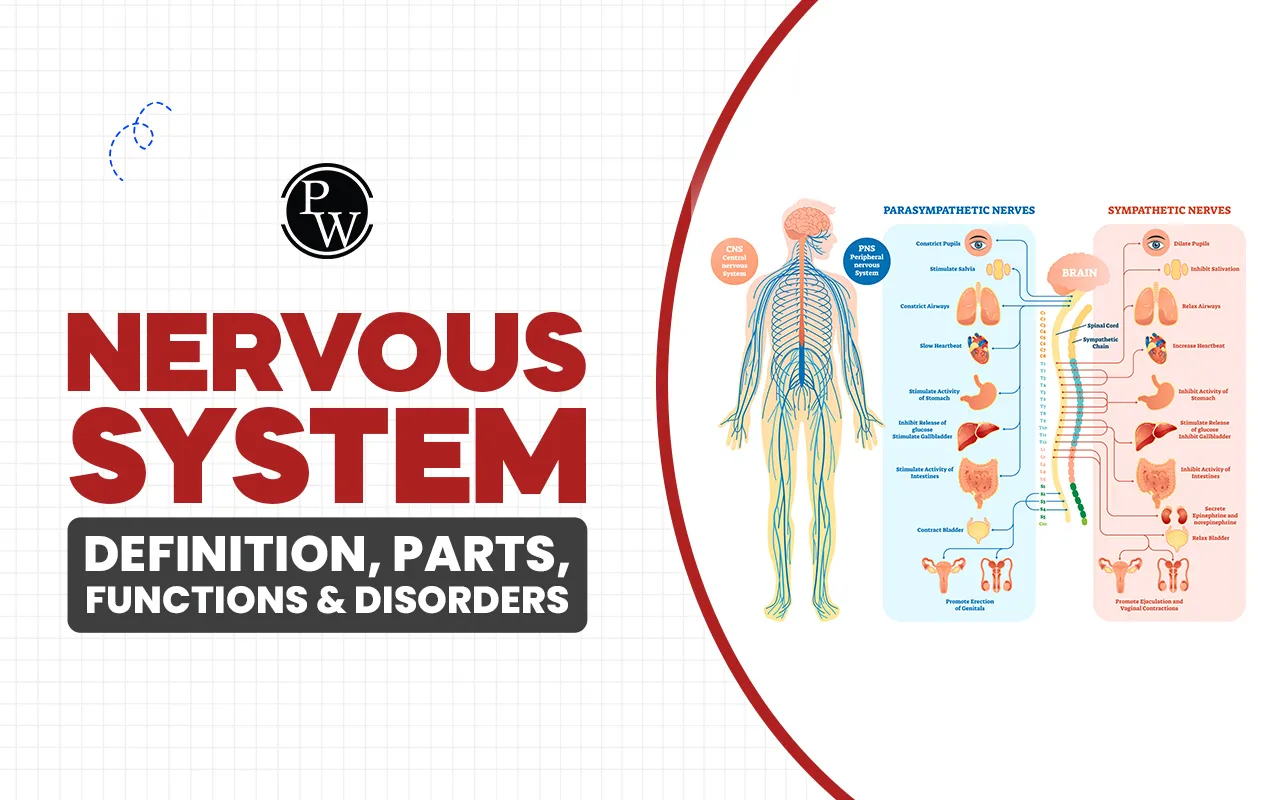
Nervous System
Nervous System is the body's control and communication center. It is a highly complex network of nerves and cells that convey messages from and to the brain and spinal cord to the rest of the body. It allows us to sense, understand, and react to what is happening around us. Nervous system functions also include internal breathing, digestion, and heart pulsing.
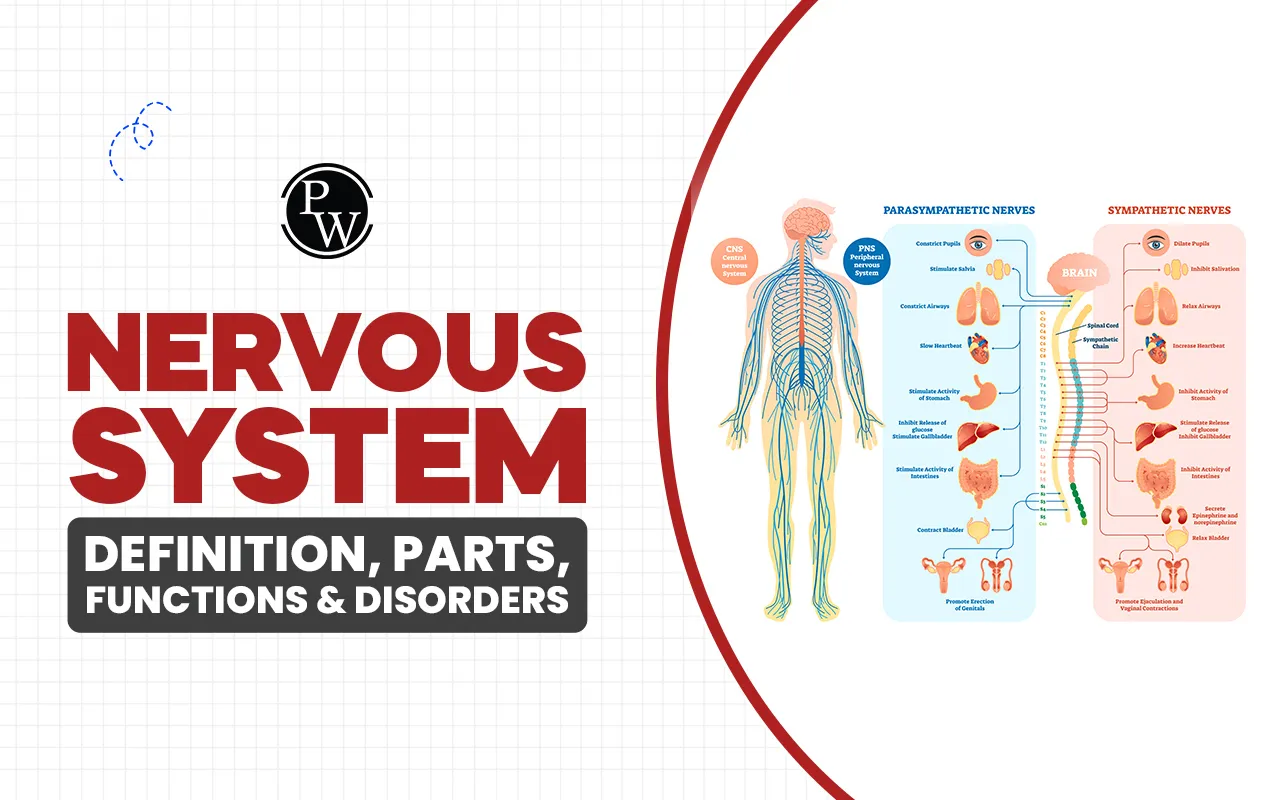
Nervous system parts include the central nervous system and the peripheral nervous system. The Central Nervous System is made up of the brain and spinal cord, while the peripheral nervous system comprises nerves that connect the CNS to the rest of the body.
Nervous system disorders, or neurological diseases, are conditions affecting the central and peripheral nervous systems. They produce an array of symptoms, including paralysis, weakness of muscles, loss of sensation, and seizures. Genes, development, and the environment can lead to these conditions.
What is the Nervous System?
The nervous system is a complex system of specialized nerve cells designed to transmit messages throughout the body. Its complexity increases step by step in more advanced animals. For example, early organisms like jellyfish have a simple nerve net, while crabs possess more complex nerve centers referred to as dorsal and ventral ganglia.
As we move increasingly up the animal scale, vertebrates have a highly evolved brain. It is one of the most intricate organs, made up of billions of interlinked neurons. In humans, it controls organ functions by perceiving and transmitting electrical impulses upon stimulation.
According to the nervous system definition, it integrates sense organs, nerves, the spinal cord, and the brain in order to execute proper nervous coordination and body function. It is a highly developed network that enables organisms to interact with and respond appropriately to their environment.
Read More: Human Digestive System
Parts of the Nervous System
The nervous system is functionally and structurally divided into two main parts:

1. Central Nervous System (CNS): The CNS is the body's central command center and consists of the brain and spinal cord. The brain is the information processing center, thinking, memory, and emotions, and the spinal cord is a superhighway for transmitting signals back and forth from the brain to the rest of the body. Both the brain and spinal cord are wrapped in bones (the skull and vertebrae) and cushioned by cerebrospinal fluid.
2. Peripheral Nervous System (PNS): The PNS is made up of all the nerves running from the CNS to the rest of the body. It is the channel of communication between the CNS and body organs, limbs, and skin. The PNS is also divided into two parts.
- Somatic Nervous System (SNS): Controls voluntary movements by carrying impulses to the skeletal muscles. It also carries sensory impulses from the senses (touch, vision, hearing, etc.) to the CNS.
- Autonomic Nervous System (ANS): Controls involuntary, or unconscious, body functions such as breathing, heart rate, and digestion. ANS is also divided into the sympathetic nervous system (responsible for "fight or flight") and the parasympathetic nervous system (responsible for "rest and digest").
Functions of the Nervous System
There are three key functions of the nervous system:
- Sensory Input: It receives information from sensory receptors inside and outside the body. For example, when you put your hand on something hot, sensory neurons convey information to your brain about the heat.
- Integration: It interprets and evaluates the sensory information received. The brain evaluates the sensory input and passes judgment, such as that the hot surface is dangerous.
- Motor Output: It sends signals from the spinal cord and brain to muscles and glands (effectors) to produce a response. For the hot surface, your brain sends a signal via motor neurons to your hand muscles that will pull away right away.
Read More: 5 Sense Organs
Nervous System Disorders
Nervous system disorders may affect its structure and function, and produce a wide range of symptoms. Some of the most common nervous system disorders are as follows.
- Epilepsy: A neurological disorder characterized by recurring, unprovoked seizures caused by abnormal brain electrical activity.
- Parkinson's Disease: A progressive disease of the central nervous system that affects movement, typically involving tremors. This results from the degeneration of neurons that release dopamine.
- Multiple Sclerosis (MS): A chronic autoimmune condition in which the immune system destroys the insulating myelin sheath that covers nerve fibers, causing communication problems between the brain and the rest of the body.
- Meningitis: Inflammation of the meninges, protective membranes surrounding the brain and spinal cord. It can be caused by a viral or bacterial infection.
- Stroke: Occurs when the blood supply to an area of the brain is blocked or becomes less, depriving brain tissue of oxygen and nutrients.
Also Read: Respiration
How CuriousJr Makes Learning Science Easy for Your Child?
CuriousJr introduces science into action and makes it engaging. Through interactive classes and activities, children learn about complex human systems with ease. Below are the benefits of taking your child through Curious online tuition classes.
- Fun science activities and games for enjoyable learning.
- Live interactive classes for improved understanding.
- Practicing regularly and homework support.
- Infographic utilization increases student involvement.
- Individual guidance by dedicated tutors.
- Includes classes from beginner to expert levels.
Book a demo class today and see how CuriousJr brings your child's home-based learning of science to life and makes it entertaining.