NCERT Solutions for Class 6 Science Chapter 4 Getting to Know Plants
 Nivedita Dar15 Sept, 2026

NCERT Solutions for Class 6 Science Chapter 4 Getting to Know Plants help students understand the plant world around them in an easy and clear way. This chapter introduces children to different types of plants such as herbs, shrubs, trees, climbers, and creepers. Students learn how plants are grouped based on their size and stem.
The chapter also explains the main parts of a plant, including roots, stems, leaves, flowers, and fruits. It teaches how roots absorb water and minerals from the soil and how leaves prepare food for the plant through photosynthesis. Students also learn about the process of respiration in plants and the importance of leaves.
These NCERT solutions provide clear answers to all textbook questions, activities, and exercises. They help students revise concepts, improve understanding, and prepare well for exams. Overall, this chapter builds curiosity and helps students appreciate the importance of plants in our daily life.
Learning About Getting to Know Plants Class 6 Questions and Answers
When you start this chapter, you will see that plants are not all the same. Some are tiny with soft stems, while others are huge with hard brown trunks. Students looking for getting to know plants class 6 questions and answers NCERT will find that plants are put into three main groups:
-
Herbs: Small plants with soft green stems (like tomato or mint).
-
Shrubs: Medium plants with branches starting near the ground (like lemon or rose).
-
Trees: Tall plants with a thick, hard trunk (like mango or neem).
Also, we learn about plants with weak stems. Creepers spread on the ground, while Climbers take help from nearby walls or sticks to grow up, like a money plant.
Finding the getting to know plants class 6 questions and answers helps you see how each part of a plant does a special job. For example, the stem acts like a pipe, carrying water up to the leaves and food down to the roots.
Getting to Know Plants Class 6 Questions and Answers
NCERT Solutions for Class 6 Science Chapter 7 Getting to Know Plants are provided here with simple step-by-step explanations.
Chapter 7 Exercise Questions 1. Correct the following statements and rewrite them in your notebook.
(a) Stem absorbs water and minerals from the soil.
(b) Leaves hold the plant upright.
(c) Roots conduct water to the leaves.
(d) The number of petals and stamens in a flower is always equal.
(e) If the sepals of a flower are joined together, its petals are also joined together.
(f) If the petals of a flower are joined together, then the pistil is joined to the petal.
Solution:
a) Roots absorb water and minerals from the soil.
b) Stem holds the plant upright.
c) Stems conduct water to the leaves.
d) The number of petals and stamens in a flower may not always be equal.
e) If the sepals of a flower are joined together, its petals are separate.
f) If the petals of a flower are joined together, then the pistil may or may not be joined to the petal.
Read More - NCERT Solutions for Class 6 Maths Chapter 3 Number Play
2. Draw (a) a leaf, (b) a taproot and (c) a flower you have studied for Table 7.3
Solution:
a)
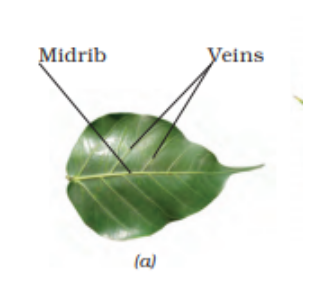
Leaf
b)
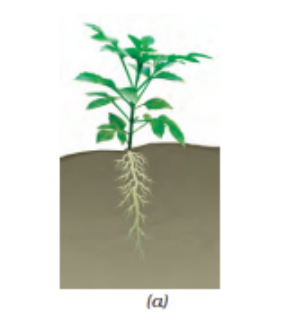
Tap root
c)
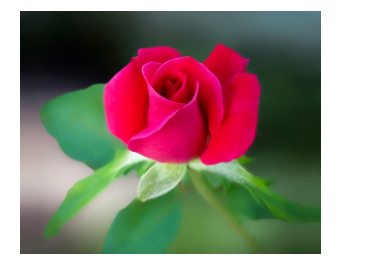
Flower(Rose)
3. Can you find a plant in your house or in your neighbourhood which has a long but weak stem? Write its name. In which category will you place it?
Yes, the lauki (gourd) plant needs support. It is a climber.
4. What is the function of a stem?
Following are the functions of a stem
- Stems hold the plant upright.
- Stems conduct water to the leaves.
- Stems conduct food from leaves to other parts of the plant.
5. Which of the following leaves have reticulate venation?
Wheat, maize, tulsi, grass, china rose, coriander (dhania) China rose, Tulsi, and coriander have reticulate venation.
6. If a plant has fibrous roots, what type of venation do its leaves have?
If a plant has a fibrous root, its leaves have parallel venation.
Read More - NCERT Solutions for Class 6 Social Science Chapter 1 Locating Places on the Earth
7. If a plant has leaves with reticulate venation, what kind of roots will it have?
If a plant has leaves with reticulate venation, it will have a tap root.
8. Is it possible for you to find out whether a plant has taproot or fibrous roots by looking at the impression of its leaf on a sheet of paper?
Yes, it is possible to find whether a plant has taproot or fibrous roots by looking at the impression of its leaf on a sheet of paper.
9. What are the parts of a flower?
Parts of a flower: a) Sepals b) Petals c) Stamens d) Pistil
10. From the following plants, which of them have flowers?
Grass, maize, wheat, chilli, tomato, tulsi, peepal, shisham, banyan, mango, jamun, guava, pomegranate, papaya, banana, lemon, sugarcane, potato, groundnut The plants which have flowers are grass, maize, wheat, chilli, tomato, tulsi, peepal, shisham, banyan (flowers lie inside its fruits), mango, jamun, guava, Pomegranate, papaya, banana, lemon, sugarcane, potato, groundnut
11. Name the part of a plant which produces food. Name the process.
Leaves produce food through a process called Photosynthesis.
12. In which part of a flower will you find the ovary?
The ovary is found in the lowermost and most swollen part of the pistil. 13. Name two plants in which one has joined sepals, and the other has separate sepals. Plants with joined sepals – Datura and cotton Plants with separate sepals – Rose and Lotus
The Official Science Answer Guide Explained
To get the getting to know plants class 6 questions and answers, you must understand how leaves work. The part of the leaf joined to the stem is called the petiole, and the flat green part is called the lamina. Leaves have a pattern of lines called veins.
These veins do more than just make patterns; they act like a skeleton to keep the leaf firm and like pipes to carry water. The thick line in the middle is the midrib. This complex network ensures every cell in the leaf's "kitchen" receives the ingredients needed to cook food for the entire plant.
-
Reticulate Venation: Lines that look like a net (found in plants with taproots like a bean plant).
-
Parallel Venation: Lines that run straight side-by-side (found in plants with fibrous roots like grass).
Think of it like a puzzle. The getting to know plants class 6 questions and answers show you that you can tell what kind of root a plant has just by looking at its leaf! If the leaf has straight lines, the roots will be like a bunch of thin hair. Using a good guide for your studies is the secret to doing well in class.
Class 6 Getting to Know Plants Question and Answer Examples
Let’s look at some simple getting to know plants class 6 questions and answers examples to help you understand.
-
Question 1: Can a plant with a weak stem stand up straight?
-
Answer: No, plants with weak stems either spread on the ground (creepers) or climb up with help (climbers).
-
Question 2: What is the main job of a leaf?
-
Answer: Leaves make food for the plant using sunlight, water, and air. They also let out extra water as vapor, which is called transpiration.
-
Question 3: What are the parts of a flower?
-
Answer: The main parts are sepals (green outer leaves), petals (colorful parts), stamens (male part), and pistil (middle female part).
Whether you are using a digital guide or your school book, the science stays the same. Noticing these tiny details is the best way to get better at Science.
Doing Your Best with NCERT Solutions
Working with getting to know plants class 6 questions and answers is the best way to do well in your school work. You will learn how to find names for plants in your own yard or school garden.
You can find the answers by looking closely at the plant parts:
-
Roots: They hold the plant in the soil and drink water.
-
Transpiration: This is how plants "sweat" out water.
-
Ovary: This is the bottom part of the pistil where seeds grow.
Common mistakes to avoid include thinking that the number of petals is always the same as the number of sepals. Remember, this can be different for every plant. Once you see how plants grow, your science lessons become much easier.
How CuriousJr Makes Online Learning Simple and Enjoyable
Every child learns best with proper care, patience, and the right support. CuriousJr makes online learning at home a happy and meaningful journey for both children and parents.
Parents trust CuriousJr’s online tuition classes because they help children stay attentive, confident, and excited about learning. We provide a warm and encouraging environment where students feel comfortable, stress-free, and confident to ask questions.
Our online classes are thoughtfully designed to build strong concept clarity while also encouraging curiosity and creativity. With interactive lessons, engaging activities, and regular practice, children stay involved and enjoy learning every day.
CuriousJr’s skilled and experienced teachers give personalized attention to each child, especially those who need extra guidance. This helps students understand difficult topics at their own pace and grow in confidence. Parents receive regular progress updates and detailed feedback, making it easy to track improvement and support learning at home.
Book a demo class today and experience how CuriousJr makes online learning effective, enjoyable, and worry-free for your child.
|
Related Articles |





NCERT Solutions for Class 6 Science Chapter 4 FAQs
What is the difference between a herb and a shrub?
What is transpiration?
How can we know the root type without pulling the plant out?
What part of the flower has the ovary?
Is the stem always above the ground?

Get Free Counselling Today
and Clear up all your Doubts
 Live & recorded classes available at easeDashboard for progress trackingLakhs of practice questions