
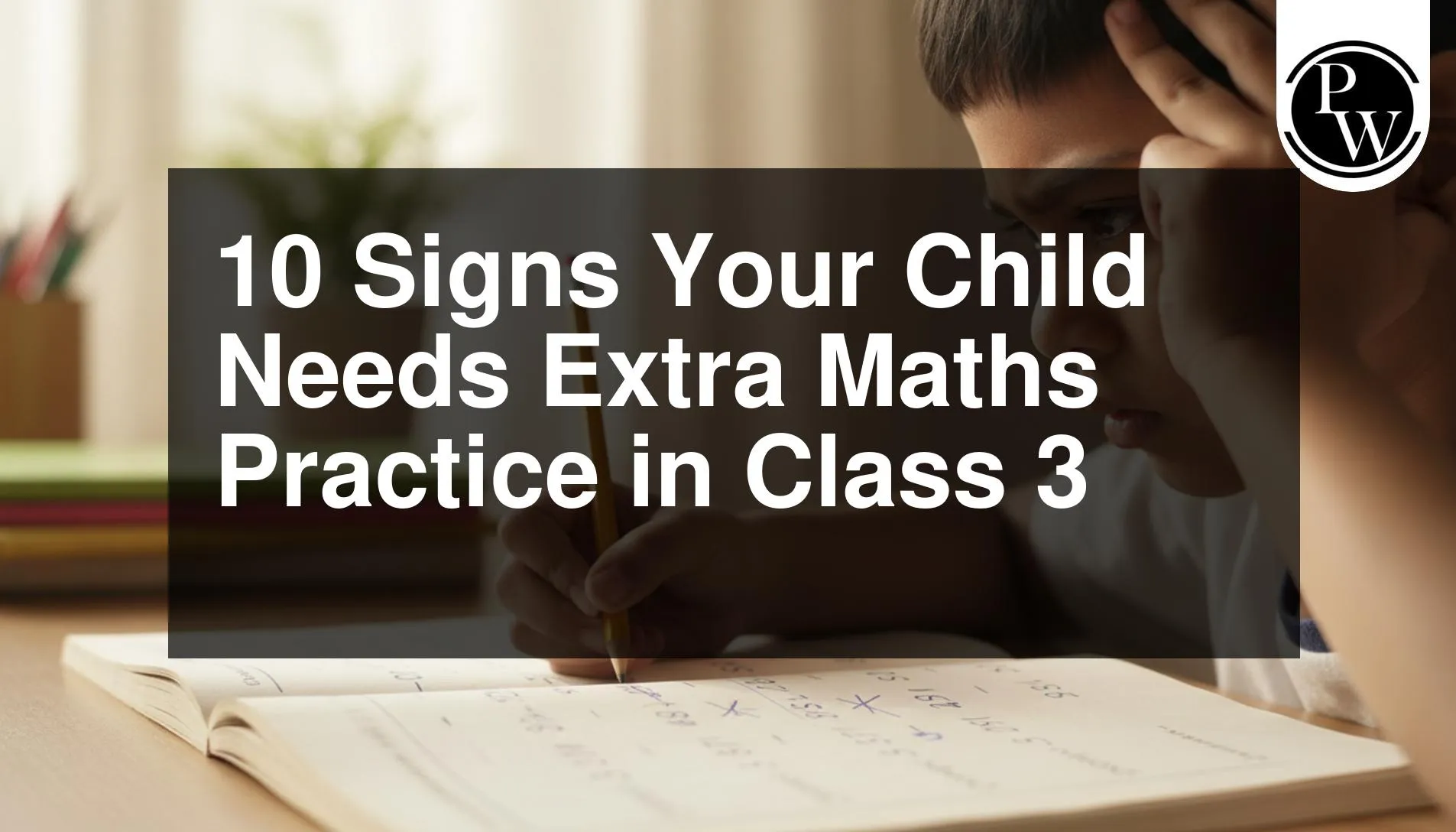
10 Signs Your Child Needs Extra Maths Practice in Class 3

Class 3 maths brings new challenges for children. Multiplication, division, fractions and bigger word problems become part of their learning, making strong number skills and regular practice increasingly important.
For parents, the challenge is knowing when a child needs more support. Slow calculations, frequent mistakes, difficulty with word problems or avoiding maths practice can point to areas that need attention. Recognising these signs early can help address Class 3 learning gaps before they grow.
Why Class 3 Is a Turning Point for Maths Learning
Class 3 introduces more challenging concepts, including multiplication, division, fractions, time, money, measurement and bigger word problems. Children need to understand numbers and apply concepts rather than simply remember steps.
Regular practice at this stage can help children build calculation speed, accuracy, number sense and logical thinking. These skills can also make more advanced maths easier to approach in higher classes.
10 Signs That Tells If Your Child Needs More Maths Support
Every child learns maths at a different pace, but recurring difficulties can show where extra practice may be helpful. These 10 signs can help parents understand whether their child needs more support with calculations, concepts, or applying maths skills.
-
Struggles With Multiplication and Division Basics
Your child may find it difficult to recall basic multiplication facts or may hesitate while solving division problems. Difficulty with these basic operations can indicate that more practice is needed.
-
Takes Too Long to Solve Simple Sums
If your child takes much longer to solve simple questions or regularly counts on their fingers for basic sums, they may need more practice with mental calculations and calculation speed.
-
Makes Frequent Mistakes in Basic Arithmetic
Repeated errors in simple addition or subtraction can show difficulty with fundamental arithmetic operations. Regular practice can help children work towards better speed and accuracy.
Read More - Stronger Problem Solving Skills Through Mental Maths (Class 3)
-
Finds Word Problems Confusing
Some children understand numbers but find it difficult to translate a word problem into the right mathematical operation. This can point to a gap in problem-solving skills.
-
Mixes Up Place Value (Tens, Hundreds, Thousands)
Understanding tens, hundreds and thousands is important in Class 3. Confusing numbers such as 23 and 32 can indicate difficulty with place value.
-
Shows Low Confidence During Maths Time
A child may avoid maths tasks, feel anxious or say, “I am not good at maths.” Such reactions can affect their willingness to attempt questions and learn.
-
Avoids or Resists Maths Practice
Frustration during homework, attempts to distract themselves or refusing to practise maths can indicate resistance to regular practice.
-
Depends on Parents for Simple Calculations
If your child frequently asks for help with easy sums instead of attempting them independently, they may need more practice to develop confidence in solving questions on their own.
-
Forgets Concepts Soon After Learning Them
Forgetting a concept soon after learning it may indicate that the child is relying on memorisation without enough conceptual understanding. More practice and clearer explanations can help.
-
Struggles to Apply Concepts to New Question Formats
A child may solve questions directly from a textbook but struggle when a similar concept appears in a different format. This can indicate difficulty applying existing knowledge to new questions.
What These Signs Mean for Your Child's Learning
These signs do not mean that a child cannot learn maths. They can show areas where additional practice, concept clarity and guidance may be useful. Consistent practice and interactive learning can help address Class 3 learning gaps, while personalised guidance can support confidence and accuracy.
How to Help Your Child Build Stronger Maths Skills
Start by identifying the areas where your child needs help instead of focusing only on mistakes. Regular practice, clear explanations and opportunities to solve questions can help strengthen maths skills.
Mental maths can also support faster calculations, multiplication, division, number skills and logical thinking. Short, regular practice can help children improve speed and accuracy over time.
Read More - How to Make Fractions Easy for Class 3 Students
How CuriousJr Mental Maths Supports Class 3 Learners
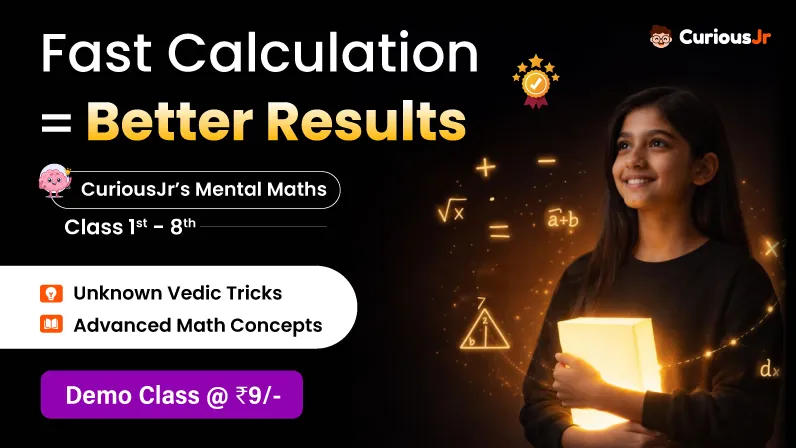
CuriousJr online mental maths classes for Class 3 combine school maths with calculation techniques and regular practice. The programme covers topics such as addition, subtraction, fractions, multiplication, division, geometry, patterns, time, money and measurement.
-
Live Interactive Classes for Concepts and Speed
Live classes cover school maths and fast calculation techniques, helping children practise concepts and calculation skills.
-
Practice and Engaging Quizzes
Practice material and quizzes give children opportunities to work with maths concepts through activities and regular practice.
-
Instant Doubt Resolution and Homework Support
Children receive doubt-solving and homework support, helping them get guidance when they face difficulties.
-
Dual-Teacher Model for Concept + Continuous Guidance
One teacher focuses on concept delivery, while another provides continuous academic support and personalised guidance.
-
Regular Progress Tracking and Parent-Teacher Meetings
Regular performance reviews and parent-teacher meetings help parents stay informed about their child's progress.
Explore CuriousJr Mental Maths for Class 3
Extra maths practice can help children improve their calculation speed, accuracy, multiplication, division and problem-solving skills. Regular practice, interactive activities and teacher guidance can also help them feel more confident while doing schoolwork and taking exams.
If you notice some of the signs mentioned above, give your child more opportunities to practise maths and clear their doubts. Explore CuriousJr Mental Maths for Class 3 to help your child practise regularly, strengthen maths skills, and build confidence.
10 Signs Your Child Needs Extra Maths Practice in Class 3 FAQs
What is mental maths for Class 3?
How does mental maths help Class 3 students?
Are online maths classes for Class 3 useful?
How much time should children practise mental maths daily?
When should I consider extra maths support for my child?







Get Free Counselling Today
and Clear up all your Doubts
 Live & recorded classes available at easeDashboard for progress trackingLakhs of practice questions

