
Class 6 Social Science: Teaching History and Civics in a Meaningful Way
 Nikita Aggarwal11 Jun, 2026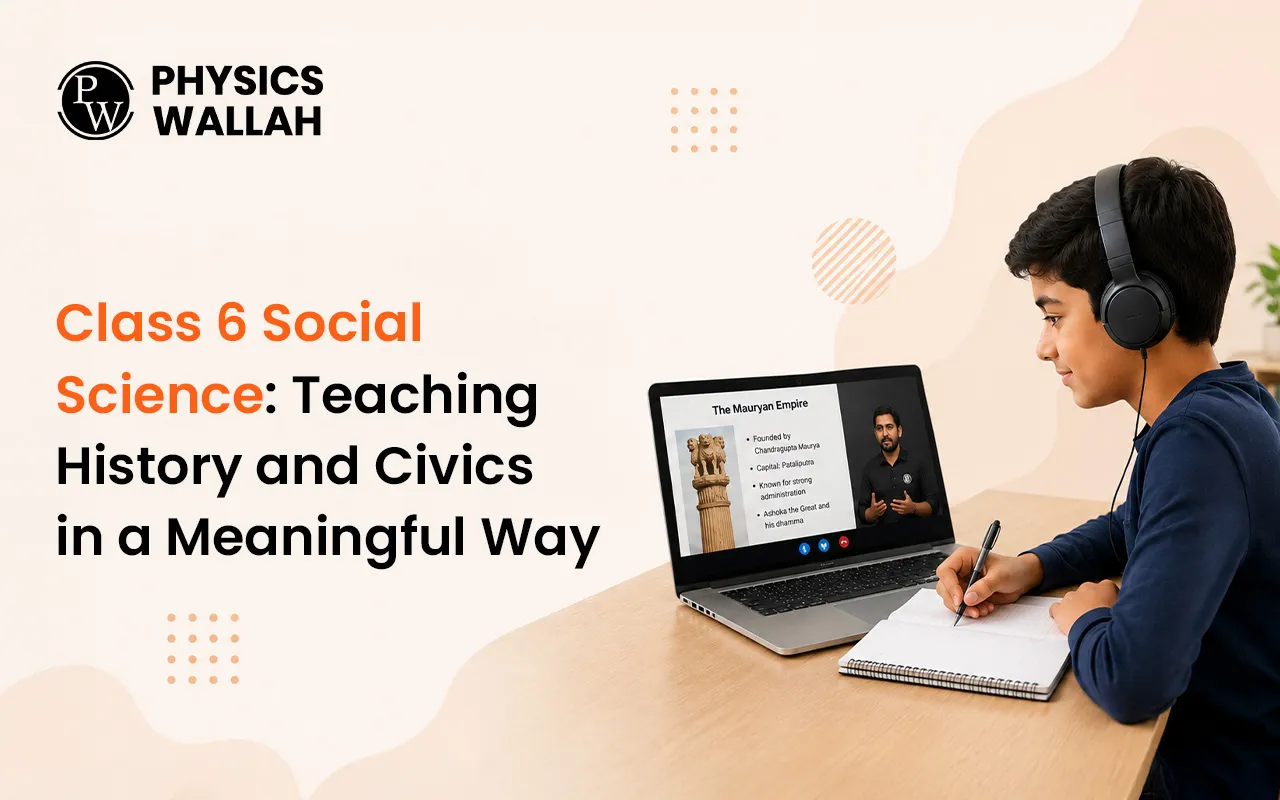
Class 6 Social Science History and Civics Syllabus Overview
To teach these subjects effectively, you must first understand the foundational topics laid out in the school curriculum. At this stage, the material is designed to introduce fundamental ideas rather than overwhelm students with deep academic analysis.
The syllabus focuses on broad themes that build a base for higher classes. Below is a structured breakdown of the essential Class 6 social studies topics that form the backbone of the year's learning.
Important Topics in Class 6 History
The history syllabus takes students back to the very beginnings of human communal life. It focuses on how human societies formed, shifted, and interacted over centuries.
-
Understanding Time and History: Learning how historians use timelines, dates, and sources like coins or inscriptions to piece together the stories of the past.
-
Early Human Life and Civilization: Exploring nomadic hunters, the discovery of agriculture, and the rise of the earliest planned cities like the Indus Valley Civilization.
-
Cultural Identity and Heritage of India: Examining ancient traditions, early literature, and the philosophical ideas that shaped early Indian society.
-
India Through the Eyes of Others: Analysing accounts written by ancient foreign travellers, traders, and pilgrims who visited the subcontinent.
-
Unity in Diversity: Studying how different regions, cultures, and traditions have blended together historically to create a shared identity.
Important Topics in Class 6 Civics
The study of civics shifts the focus from ancient times to modern day-to-day life. It introduces children to how communities manage themselves and how public systems run smoothly.
-
Understanding Diversity: Exploring the different cultures, languages, and religions that exist within a community and learning the value of mutual respect.
-
Government Structure: Introducing what a government is, why societies need rules, and the differences between democratic systems and monarchies.
-
Local Government and Administration: Breaking down how villages and towns govern themselves through bodies like the Panchayati Raj and Municipal Corporations.
-
Rural and Urban Livelihoods: Looking at the various ways people earn a living in different settings, from farming to working in modern urban offices.
Best Ways to Teach Class 6 Social Science History and Civics
Traditional rote learning often fails when applied to historical narratives and societal concepts. To build true understanding, teachers and parents need to move away from simple textbook reading and embrace active learning methods.
Here are the most effective strategies to break down complex Class 6 history concepts and civic ideas into manageable, engaging lessons.
1. Transform Timelines into Interactive Stories
Dates and eras can feel incredibly abstract to a twelve-year-old. Instead of asking students to memorise isolated years, present history as an unfolding drama with a clear cause-and-effect structure.
-
Create Visual Timelines: Use physical charts or digital tools where students can pin pictures, maps, and short summaries next to key historical dates.
-
Connect Past to Present: When discussing ancient trade routes, compare them to modern international trade and global shipping lanes to show continuity.
-
Role-Playing Activities: Let students take on the roles of historical figures or early travellers to debate historical decisions from that person's perspective.
Read More - How to Build Strong Note-Taking Habits in Class 6 for Better Exam Performance
2. Use Local Examples to Explain Local Government
Civic concepts like local administration can feel distant and bureaucratic. Bringing these topics down to a neighbourhood level helps students see civics for Class 6 as something that directly affects their daily lives.
-
Map Local Infrastructure: Ask students to identify who manages the streetlights, garbage collection, and public parks in their own locality.
-
Conduct Mock Elections: Organise a simple classroom election to demonstrate how voting works, how candidates campaign, and how a majority decision is reached.
-
Analyse Classroom Rules: Compare the rules of a classroom to the laws of a country to show why a structured system is necessary for large groups of people.
3. Implement the Chunking Method for Heavy Texts
Social science chapters are often dense with information. To prevent cognitive overload, split the chapters into smaller, thematic learning blocks.
-
Concept Cards: Create flashcards containing one primary definition or historical event on one side and three key supporting facts on the back.
-
Structured Questioning: Break long paragraphs down by asking three simple questions: Who was involved? What changed? Why does it matter today?
-
Visual Summaries: Encourage students to draw simple mind maps connecting major cities, rulers, or administrative wings rather than writing out long essays.
Read More - How to Help Your Class 6 Child Stay Organised With Multiple Subjects
Why Online Learning Helps in Class 6 Social Science History and Civics
As the school curriculum gets tougher, many families turn to external academic support to bridge the gap between classroom teaching and home study. Enrolling in specialized platforms offers distinct advantages for understanding complex topics.
Investing in a targeted Class 6 history tuition program or a broader social studies course provides students with the tailored attention they might miss in crowded school classrooms.
|
Learning Benefit |
Traditional School Classroom |
Structured Online Tuition |
|
Pacing |
Fixed schedule designed for the average speed of the whole class. |
Flexible progression tailored directly to the individual student's needs. |
|
Doubt Resolution |
Limited time for individual questions during a standard period. |
Instant clarification from dedicated mentors during or right after lessons. |
|
Learning Material |
Reliant mainly on heavy text-heavy print volumes. |
Interactive quizzes, animations, and bitesize visual summaries. |
|
Assessment |
Large terminal exams with delayed progress tracking. |
Regular micro-quizzes that give instant performance feedback. |
Using resources like Class 6 SST online classes gives students the freedom to revisit tough chapters on local government or early civilisations as many times as needed until the concept sticks.
How CuriousJr Helps Students Learn Class 6 Social Science History and Civics
CuriousJr class 6 online tuition, a specialised platform by Physics Wallah, focuses on making school learning easier, stress-free, and thoroughly enjoyable for middle school students. Their approach to Class 6 Social Science history and civics cuts through academic jargon to build strong foundational knowledge.
Features of the CuriousJr Learning Program
The curriculum at CuriousJr is systematically designed to match school boards while removing the pressure of traditional memorisation.
-
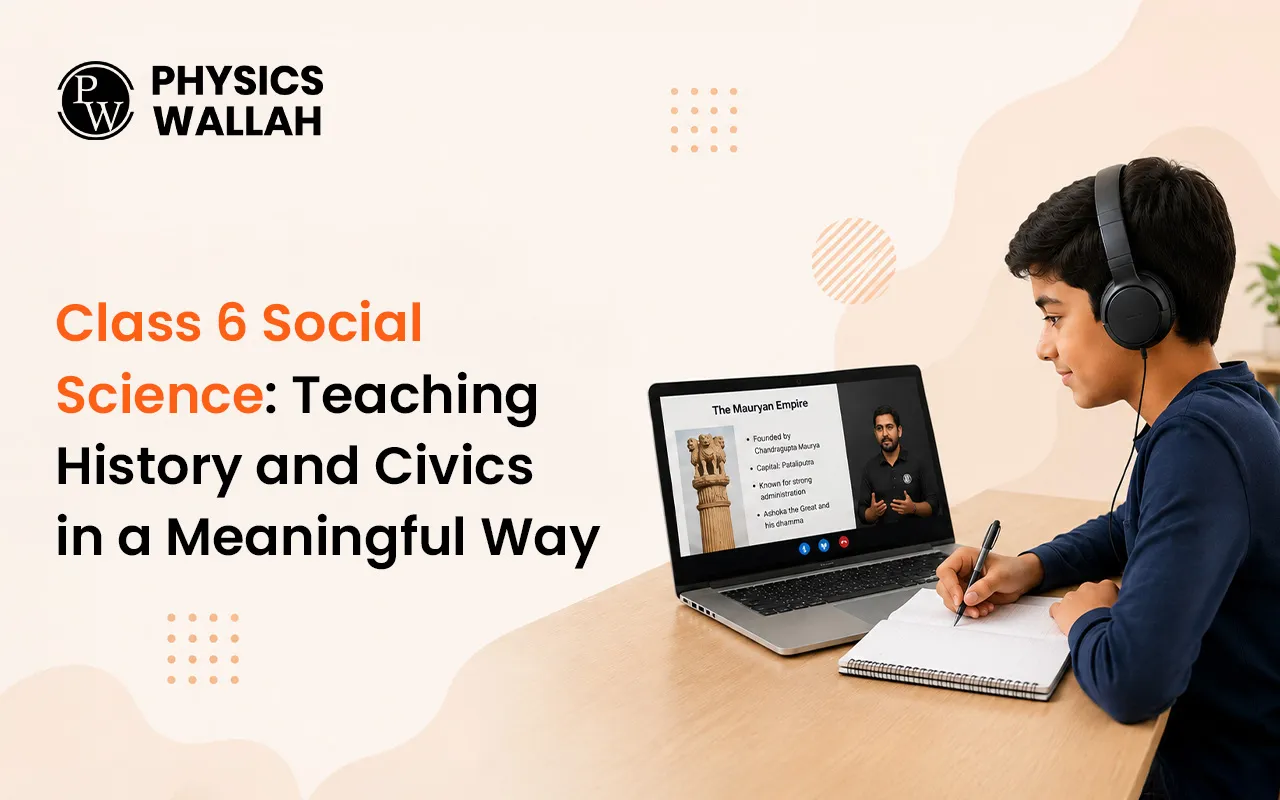
Interactive Live Sessions: Expert teachers explain ancient civilisations and modern civic systems using real-world analogies and engaging visual aids.
-
Bitesize Topic Breakdowns: Chapters are divided into small, manageable modules so that homework feels lighter and takes less time to complete.
-
Gamified Practice and Quizzes: Regular interactive games and quizzes help students revise key terms without feeling the stress of a formal test.
-
Dedicated Mentor Support: A patient, friendly online SST tutor Class 6 is always available to resolve specific doubts and guide students through tough assignments.
-
Comfortable Home Learning: Students can log in safely from home, saving travel energy and leaving more time for deep concept revision.
By focusing on deep understanding rather than quick memorisation, the platform helps children regain their academic confidence, turning social studies from an intimidating chore into a favourite subject.





Class 6 Social Science: Teaching History and Civics in a Meaningful Way FAQs
What are the main areas of study in Class 6 Social Science history and civics?
Why do students struggle with civics for Class 6?
How do Class 6 SST online classes help improve a student's grades?
w does CuriousJr make learning Class 6 history tuition topics stress-free?





Get Free Counselling Today
and Clear up all your Doubts
 Live & recorded classes available at easeDashboard for progress trackingLakhs of practice questions

