How Online Classes Help Shy Class 3 Students Ask Questions Without Hesitation
 Nikita Aggarwal10 Jun, 2026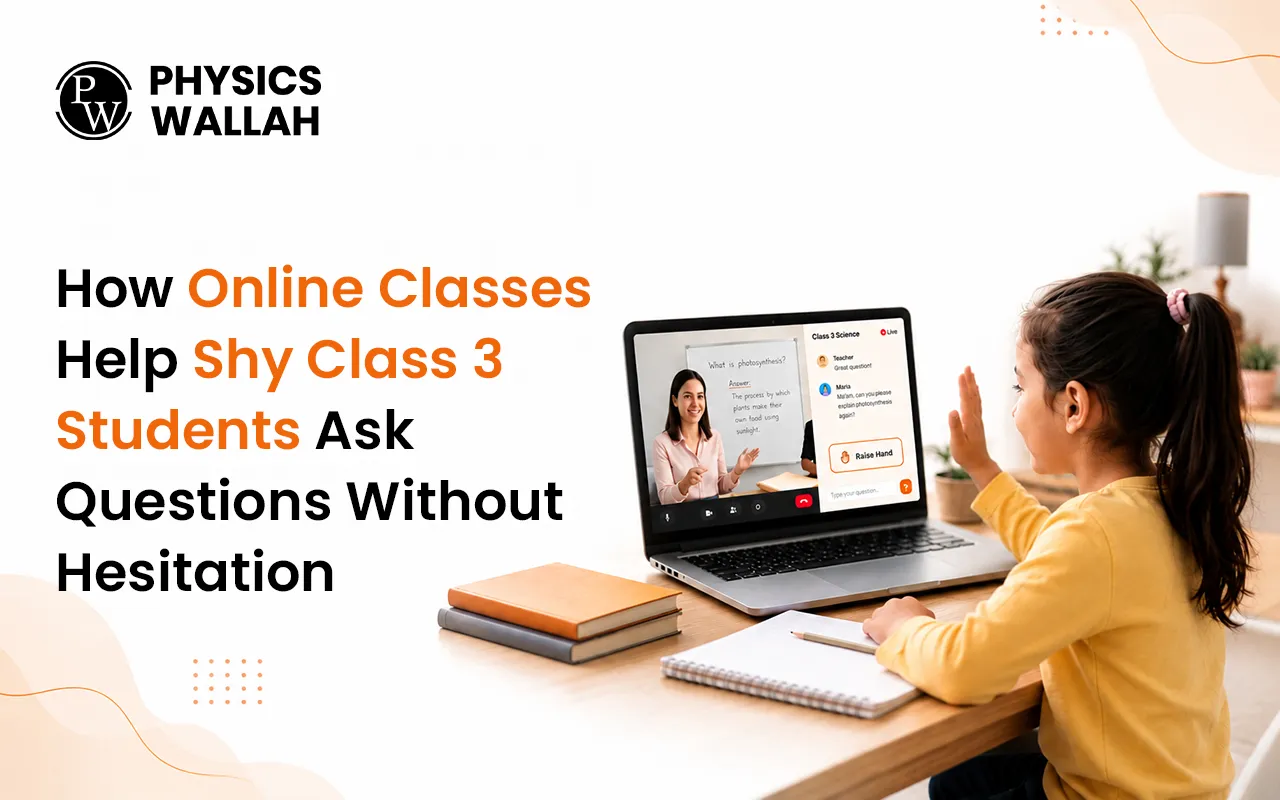
Importance of Online Classes for Shy Class 3 Students
Traditional school classrooms can be incredibly loud, fast, and competitive. For a quiet eight-year-old child, the pressure to instantly raise a hand and speak in front of thirty peers causes real worry. Many young students develop a fear of making mistakes in public, which stops them from asking for help. This is one reason why many parents explore Class 3 online tuition for quiet kids, as it provides a more comfortable environment where children can learn and participate without feeling overwhelmed.
-
Peer pressure: Children worry that their classmates might laugh if they give an incorrect answer or ask a simple question.
-
Teacher distraction: In large classrooms, teachers must manage many students at once, making it hard to notice a quiet student who is silently struggling.
-
Sensory overload: The sheer noise and high energy of a physical school building can cause an introverted child to retreat into their shell.
When these factors combine, a quiet child prefers to stay invisible. They return home with incomplete notes and unresolved questions about basic concepts like fractions or grammar parts of speech.
How Online Classes for Shy Class 3 Students Build Confidence
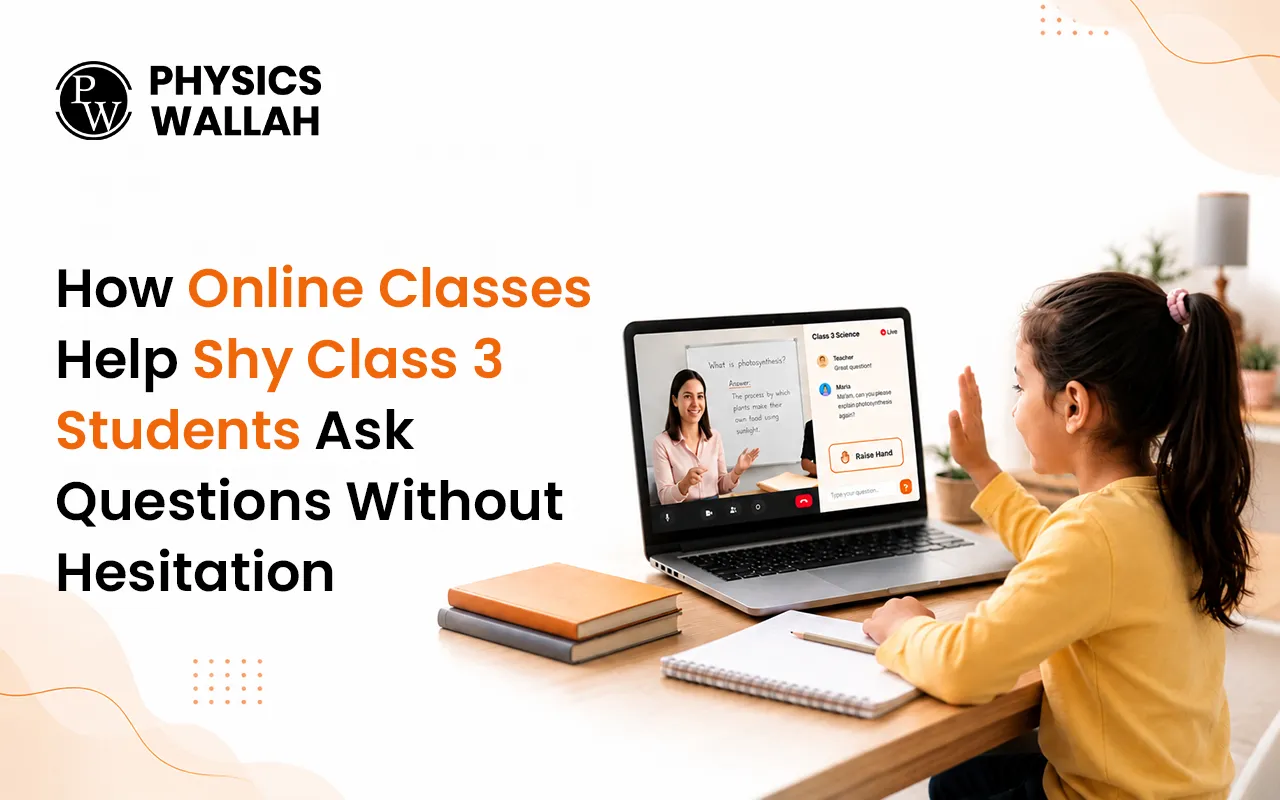
Digital learning environments change how a student interacts with the teacher. By removing the physical audience, online classes for shy Class 3 students create a low-pressure setting where speaking up feels like a private conversation rather than a public speech.
The Comfort of a Familiar Home Environment
Learning from a familiar bedroom or study desk gives young kids an instant sense of security. They are surrounded by their own things, and their parents are nearby. This physical safety reduces the body's natural stress response, making the brain more open to learning and communication.
Private Chat Features for Direct Communication
Most virtual learning platforms include text chat options. For a student who freezes up at the thought of speaking out loud, typing a question is a brilliant alternative.
-
They can send a direct, private message to the instructor.
-
No other classmates see the question, completely eliminating the fear of being teased.
-
The teacher can address the doubt naturally during the explanation without naming the student.
Visual Control and Boundaries
In a virtual setup, children do not have dozens of eyes staring at them from across the room. They only see the teacher's screen and a few small video frames. This limited visual field keeps their focus sharp and prevents the feeling of being watched, which is a major trigger for classroom anxiety.
Benefits of Online Classes for Shy Class 3 Students in Small Batches
Class size is the single most important factor when trying to encourage communication from a quiet child. Large batches naturally favour loud, outgoing students, while an online tuition small batch Class 3 setting balances the playing field for everyone.
|
Feature |
Large Physical Classroom (30+ Students) |
Small Batch Online Tuition (4-6 Students) |
|
Attention per child |
Very low, quiet kids get overlooked easily |
High, teacher monitors every child |
|
Wait time for doubts |
Long, often skipped due to limited period time |
Instant, integrated into live learning |
|
Peer interaction |
Can feel competitive and overwhelming |
Feels collaborative, friendly, and close-knit |
|
Speaking opportunities |
Limited to a few outspoken students |
Balanced, every child gets a turn to speak |
With fewer peers in the virtual room, the teacher can actively design lessons that give every student a chance to participate. Quiet kids realize that their turn is coming, giving them time to prepare their thoughts calmly without feeling put on the spot.
Read More - Top Study Habits Every Class 3 Student Should Develop Early
How Online Classes for Shy Class 3 Students Improve Doubt Solving
At eight years old, academic concepts become more complex. Students move from basic counting to division, and from simple words to advanced reading comprehensions and paragraph writing. If a child leaves a doubt unresolved, the next lesson becomes even harder to grasp.
Using dedicated features for Class 3 doubt solving online ensures that learning gaps do not grow wider over time.
-
Instant clarification: Students can raise a digital hand or use a chat box the exact moment they feel confused about a maths step or science fact.
-
Patient explanations: Virtual tutors use digital whiteboards, drawing tools, and visual animations to break down complex topics into small, child-friendly steps.
-
No rush learning: Unlike a physical school where the bell rings and the class must move on, online support lets kids revisit difficult areas until they feel completely sure.
This continuous cycle of asking questions and receiving patient, clear answers teaches the child that asking for help is a completely normal and positive part of education.
How Online Classes for Shy Class 3 Students Make Learning Interactive
Children learn best when they are doing, not just listening. Traditional lectures fail quiet kids because passivity allows them to disappear into the background. However, modern interactive online classes for kids class 3 use active tools to make learning fun and collaborative.
-
Live digital quizzes: Quick, gamified questions allow students to select answers on their screens, giving them a sense of achievement without public speaking.
-
Drag-and-drop activities: Moving items on a shared digital screen keeps small fingers active and attention focused directly on the lesson.
-
On-screen rewards: Earning digital badges, stars, or points boosts motivation and builds internal confidence.
These interactive tools turn learning into a game. A quiet child gets caught up in the fun, forgets their shyness, and begins to participate naturally alongside their classmates.
Read More - Why Class 3 is the Right Time to Start Structured Online Learning
Tips for Parents Choosing Online Classes for Shy Class 3 Students
While virtual platforms provide the perfect tools for quiet children, parental support remains a key element in making the transition successful. Parents can take simple steps at home to ensure their child feels completely ready to communicate online.
-
Set up a quiet study corner: Ensure the learning space is free from household noises, television sounds, or passing family members so the child can focus without distraction.
-
Test the technical tools together: Show your child how to use the microphone button, the digital hand raise feature, and the private text box before the class begins.
-
Praise effort over correctness: Celebrate when your child asks a question or shares an answer, regardless of whether the answer was right or wrong. Focus on the bravery of speaking up.
-
Avoid over-monitoring: Sit nearby for safety, but avoid hovering directly over the screen. Give your child the space to talk to their teacher independently, which helps them build genuine self-reliance.
By partnering with the right online platform and creating a supportive home environment, parents can help their quiet children transform from silent listeners into confident, active learners who are never afraid to ask "why?"
How CuriousJr Supports Online Classes for Shy Class 3 Students
The Class 3 online tuition classses at CuriousJr is carefully crafted to ensure that every student, regardless of their personality type, receives the personal care they need to succeed. The curriculum fully covers all core school subjects, including English Grammar, Mathematics, Science, and Social Studies, using methods that naturally lower stress and build confidence.
-
Step-by-step math foundation: Complex topics like place value, division, fractions, and geometry are explained using clear, interactive animations rather than dry numbers.
-
Language and writing skills: The curriculum breaks down parts of speech, nouns, paragraph writing, and story composition into fun, structured exercises that help quiet children express themselves clearly.
-
Patient teacher guidance: Instructors on the platform are trained to support children patiently. They understand how to gently encourage an introverted child to participate without forcing them or creating stressful situations.
-
Regular revision and home comfort: By learning from a secure home environment, students can practice test skills and homework tasks regularly, which gradually transfers into better performance and higher confidence in their regular physical schools.
Through this balanced mix of simple explanations, friendly teacher support, and interactive tools, quiet children stop viewing studies as a chore and begin to actively enjoy their daily learning journey.





How Online Classes Help Shy Class 3 Students Ask Questions Without Hesitation FAQs
Can online classes for shy students really replace physical interaction?
2. How does an introverted child online learning setup handle difficult maths topics?
3. Why is an online tuition small batch Class 3 format better than a large class?
4. What makes Class 3 doubt solving online less stressful for quiet kids?

Get Free Counselling Today
and Clear up all your Doubts
 Live & recorded classes available at easeDashboard for progress trackingLakhs of practice questions