Feminine and Masculine Words in English
 Nikita Aggarwal29 May, 2026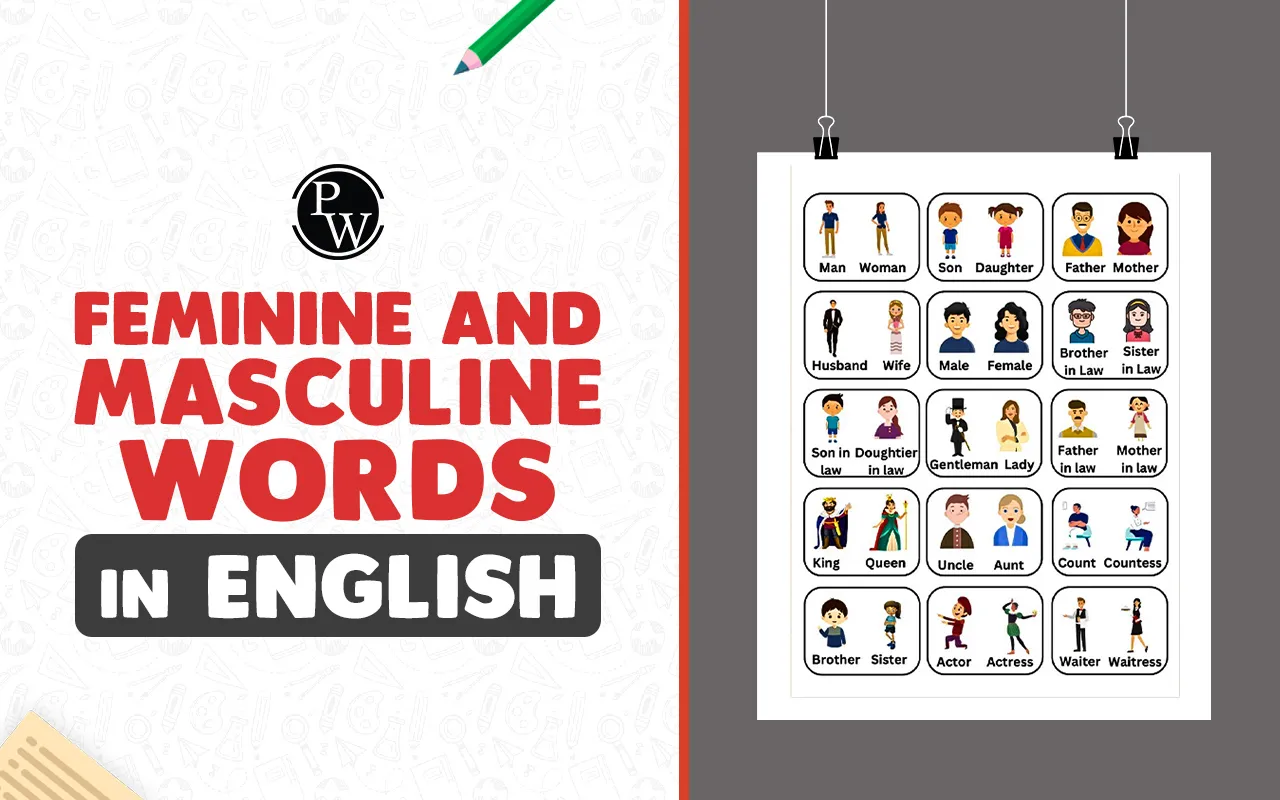
Feminine and Masculine Words
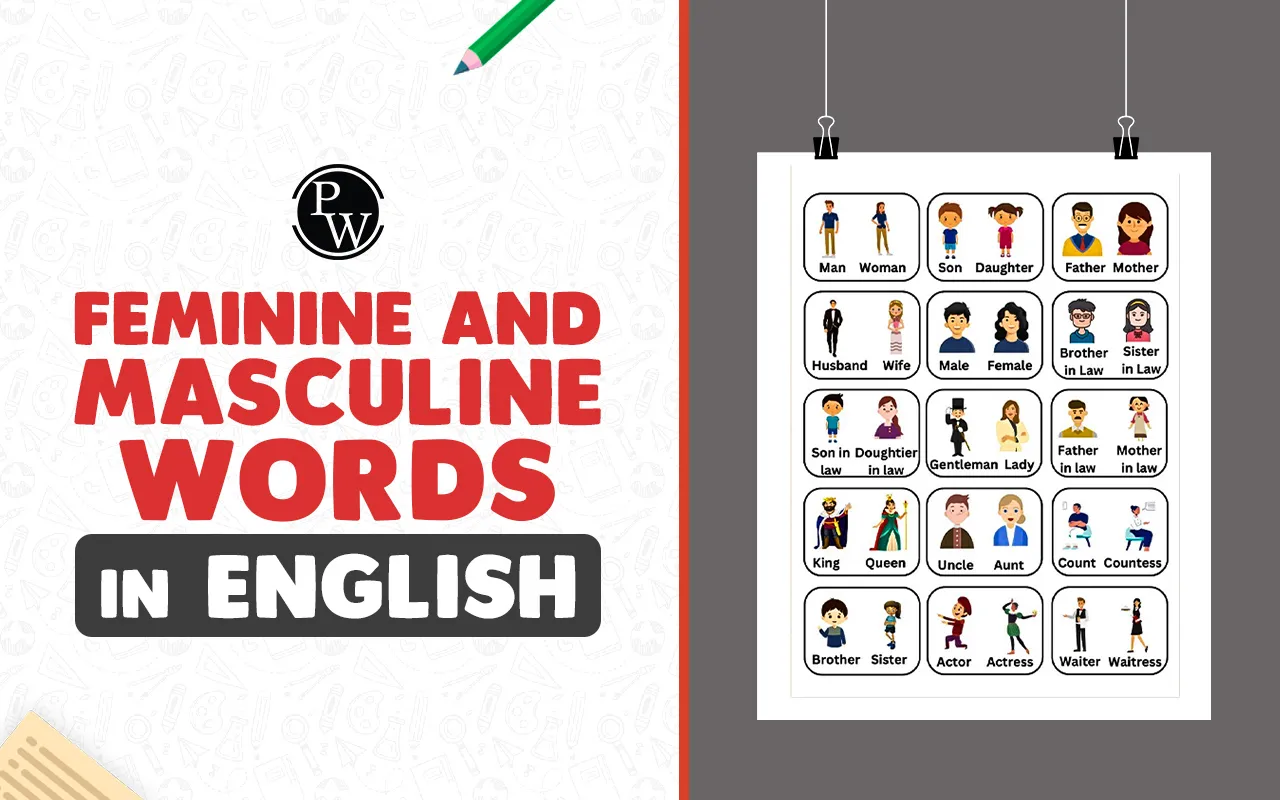
Feminine and masculine words are used to show the gender of people or animals. A masculine word tells us the person or animal is male. A feminine word tells us the person or animal is female. There are also neuter words, which are words for things that are not male or female like a book or chair. So in English, we group nouns and pronouns into:
-
Masculine gender – for boys, men, and male animals
-
Feminine gender – for girls, women, and female animals
-
Neuter gender – for things that have no gender
-
Gender-neutral – for when we don’t know the gender or don’t need to mention it
These English gendered words help make sentences more clear.
What are Masculine Words?
Masculine words are nouns and pronouns that refer to male people or animals.
Examples of masculine gender words:
-
Boy
-
Man
-
Father
-
Uncle
-
Brother
-
Son
-
King
-
Prince
-
Actor
-
Waiter
-
Rooster
-
Stallion
-
Bull
-
Lion
-
Tiger
All of these are masculine gender words because they talk about someone or something male.
Also read: Determiner Meaning and Definition
What are Feminine Words?
Feminine words are used to describe female people or animals.
Examples of feminine gender words:
-
Girl
-
Woman
-
Mother
-
Aunt
-
Sister
-
Daughter
-
Queen
-
Princess
-
Actress
-
Waitress
-
Hen
-
Mare
-
Cow
-
Lioness
-
Tigress
Each of these is part of the feminine gender list because they describe a female.
100 Examples of Masculine and Feminine Gender
To help you learn better, here’s a feminine and masculine word list. It shows both the masculine word and its feminine version.
|
100 Examples of Masculine and Feminine Gender |
|
|
Maculine |
Female |
|
Boy |
Girl |
|
Bachelor |
Spinster |
|
Businessman |
Businesswoman |
|
Bachelor |
Spinster |
|
Billy Goat |
Nanny Goat |
|
Bullock |
Heifer |
|
Boar (Pig) |
Sow |
|
Boar (Wild Pig) |
Sow |
|
Father |
Mother |
|
Godfather |
Godmother |
|
Gentleman |
Lady |
|
Bridegroom |
Bride |
|
Prince |
Princess |
|
Husband |
Wife |
|
Nephew |
Niece |
|
Actor |
Actress |
|
Waiter |
Waitress |
|
Host |
Hostess |
|
Hero |
Heroine |
|
Landlord |
Landlady |
|
God |
Goddess |
|
Son |
Daugher |
|
Salesman |
Saleswoman |
|
Sir |
Nun |
|
Monk |
Nun |
|
Master |
Mistress |
|
Wizard |
Witch |
|
Emperor |
Empress |
|
Duke |
Duchess |
|
Heir |
Heiress |
|
Steward |
Stewardess |
|
Gander |
Goose |
|
Rooster |
Hen |
|
Stalain |
Mare |
|
Dog |
Bitch |
|
Lion |
Lioness |
|
Tiger |
Tigress |
|
Fox |
Vixen |
|
Ram |
Ewe |
|
Drake |
Duck |
|
Peacock |
Peahen |
|
Male Elephant |
Female Elephant |
|
Male Horse |
Mare |
|
Male Deer |
Doe |
|
Male Pig |
Sow |
|
Male Sheep |
Ewe |
|
Male Rabbit |
Doe |
|
Male Cat |
Queen |
|
Male Bear |
Sow |
|
Male Chicken |
Hen |
|
Male Donkey |
Jenny |
|
Male Seal |
Female Seal |
That’s a complete set of 50 pairs, equal to 100 masculine and feminine gender words. Students can keep this as a reference for learning.
What is Neuter Gender?
Not all words belong to the feminine and masculine words group. Many everyday objects, like books or tables, are neither male nor female. These are called neuter words.
For example:
-
Book
-
Table
-
Bag
-
Tree
-
Phone
-
Car
-
Chair
We use the word “it” when talking about these things because they don’t have a gender.
Even though neuter words are not feminine and masculine words, they are still an important part of English grammar. Knowing the difference helps you speak and write more clearly.
Also read: 8 Parts of Speech - Definition with Examples
What are Gender-Neutral Words?
In the past, people often used words that showed gender, like “fireman” or “waitress.” These are examples of feminine and masculine words. But today, we try to use gender-neutral language more often, so that everyone feels included, no matter their gender.
Gender-neutral words don’t tell us if someone is male or female. They focus on the job or role, not the person’s gender. This is a more respectful and modern way of speaking and writing.
Here’s how some English gendered words have changed to become more neutral.
|
Gender- Neutral Words |
|
|
Old Gendered Words |
New Gendered Words |
|
Fireman |
Firefighter |
|
Policeman |
Police officer |
|
Chairman |
Chairperson |
|
Stewardess |
Flight attendant |
|
Salesman |
Salesperson |
|
Waier/Waieress |
Server |
|
Businessman |
Businessperson |
|
Mailman |
Mail carrier |
These new terms can be used for anyone, whether they are male, female, or non-binary.
How Do Other Languages Use Gender?
In some languages like French or Spanish, every noun has a gender, even things!
For example, in French:
-
“La table” = the table (feminine)
-
“Le livre” = the book (masculine)
That means their grammar has more feminine and masculine words, even for things.
In English, we use gendered words only when we talk about people or animals, not objects. This makes English grammar easier in some ways!
Also read: Types of Sentences with Examples
Pronouns and Gender
Pronouns are small words we use instead of repeating names. English pronouns also show gender. Here’s how:
-
He, him, his – masculine
-
She, her, hers – feminine
-
It, its – neuter
-
They, them, their – gender-neutral
Examples:
-
He is a doctor.
-
She is my sister.
-
It is raining.
-
Someone left their book.
Feminine and Masculine Words Quick Quiz
Let’s see how much you remember about feminine and masculine words. Try answering these questions on your own before checking the answers below!
-
What is the feminine of “prince”?
-
What is the masculine of “duchess”?
-
What’s the feminine word for “rooster”?
-
What is the masculine of “mother”?
-
What is a neutral word for “waitress”?
Answers:
-
Princess
-
Duke
-
Hen
-
Father
-
Server
Also read: English Grammar notice writing class 7th
Make English Grammar Easy and Fun for Your Child with CuriousJr
Is your child finding English grammar difficult? Weak grammar can lower confidence, affect exam marks, and make it difficult to express thoughts clearly. CuriousJr’s Online English Classes by Cambridge Program helps children learn grammar in a simple and enjoyable way, so they can write and speak confidently.
Your child will get:
-
Live sessions with teachers for regular practice and guidance
-
Lessons on sentence structure, tenses, and punctuation to strengthen grammar
-
Vocabulary and pronunciation exercises to speak clearly and correctly
-
Creative writing, speaking activities, and fun grammar games to keep learning engaging
-
Regular progress updates for parents to track improvement
By joining CuriousJr classes, your child gains confidence, improves writing and speaking, and develops strong grammar skills that help both school performance and everyday communication. Book a demo class today and see how CuriousJr can make grammar learning simple, fun, and effective for your child.




Feminine and Masculine Words FAQs
What are feminine and masculine words in English?
Are there any words that can be both masculine and feminine?
Are there animals with only one common name?
How can students practice feminine and masculine words at home?

Get Free Counselling Today
and Clear up all your Doubts
 Live & recorded classes available at easeDashboard for progress trackingLakhs of practice questions