Estimation of Numbers: Concepts and Easy Tips
 Shivam Singh27 Oct, 2025
Estimation of Numbers
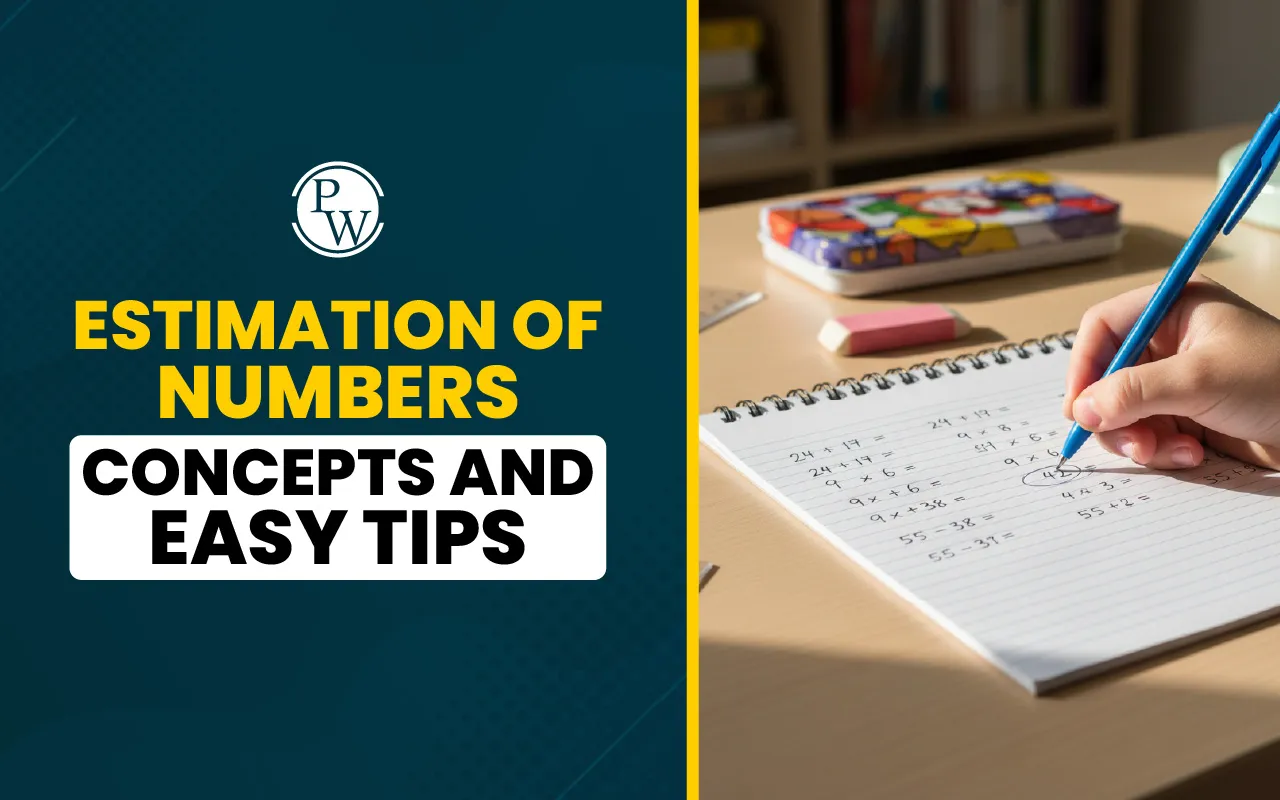
Estimation of numbers is an important math skill used to find a number that is close to the actual answer. This skill is useful when solving problems quickly or when an exact value is not required. For example, while shopping or planning, it's often easier to estimate the total than to calculate it exactly. Estimation is not random guessing; it is based on number sense and logical thinking.
Learning how to estimate helps in developing mental math, checking answers, and solving everyday problems more efficiently. Students can learn estimation numbers, examples of estimation in mathematics, learn tips and tricks for estimation and more below.
Read More: Construction in Maths
What is an Estimate?
An estimate is a value that is close to the correct answer but not exact. It is used to make solving problems faster and easier.
Estimation Meaning in Math
Estimation meaning in math is the process of determining an approximate value that is useful in making calculations, predictions or making decisions. Estimation can:
-
Make solving math problems easier
-
Assist in determining if a given answer is reasonable
-
Save time when full accuracy is not needed
For example, multiplying 49 × 21 can be estimated as 50 × 20 = 1000. This gives a quick idea of the answer without doing the full calculation.
Examples of Estimation in Mathematics
Estimation can be applied in addition, subtraction, multiplication, division, measurement, and even money calculations. These examples of estimation in mathematics show how estimation is used in different types of problems.
1. Rounding Numbers
-
Problem: Round 487 to the nearest hundred
-
Estimate: 500
-
Purpose: Makes calculations simpler
2. Addition and Subtraction
-
Problem: 198 + 347
-
Estimate: 200 + 350 = 550
-
Purpose: Helps perform quick mental math
3. Multiplication
-
Problem: 49 × 2
-
Estimate: 50 × 20 = 1000
-
Purpose: Gives a rough idea of the result
4. Division
-
Problem: 980 ÷ 48
-
Estimate: 1000 ÷ 50 = 20
-
Purpose: Useful for estimating in word problems or exams
5. Measurement
-
Problem: Estimating the length of a table
-
Estimate: About 2 meters
-
Purpose: Helpful when measuring tools are not available
6. Money
-
Problem: Estimating total cost of ₹99, ₹149, and ₹199
-
Estimate: ₹100 + ₹150 + ₹200 = ₹450
-
Purpose: Makes budgeting or shopping easier
Read More: Brackets in Maths
Estimation Tips and Tricks in Maths
There are tricks and tips for estimation that make math estimation less time-consuming, easier and more accurate. The following are some effective ways:
1. Round First, Then Solve: Round numbers to the nearest 10, 100, or 1000 before solving.
-
Example: 287 + 615 → 300 + 600 = 900
2. Use Easy Numbers: Use numbers that are simple to work with mentally.
-
Example: Replace 198 with 200
3. Front-End Estimation: Focus on the first digits of numbers and adjust slightly.
-
Example: 487 + 612 → Estimate as 400 + 600 = 1000
4. Clustering: When the numbers are similar, then estimate based on an average of the numbers.
-
Example: 48 + 52 + 50 → 3 × 50 = 150
5. Use Benchmark Numbers: Compare numbers to benchmarks such as 100, 500, or 1000 to make estimating easier.
-
Example: Estimate 342 as 350 or 300, depending on the situation
6. Estimate Before Solving: It is always important to estimate the answer before solving the entire problem. This is to test whether the final solution is sensible.
Read More: Successor and Predecessor in Maths
Estimation and Measurement
Measurement and estimation are closely related. In situations where no precise measurements are required, as well as where instruments are not at hand, estimation is frequently employed. It enables fast thinking and decision making.
Examples of Estimation and Measurement in Daily Life
-
Length: A classroom door is about 2 meters tall
-
Weight: A school bag might weigh around 4 kilograms
-
Time: A trip may take about 30 minutes
-
Volume: A water bottle may hold about 1 liter
These examples show how estimation is used when making reasonable guesses without measuring tools.
Also Read: Distance Formula in Maths
Help Your Child Build Confidence and Speed in Maths with CuriousJr
Many children face challenges with maths as school becomes more demanding. CuriousJr’s Online Mental Maths Classes are designed to help children become faster and more confident in solving problems through:
-
Step-by-step lessons matched to their learning level
-
Fun, easy topics that develop thinking and problem-solving skills
-
50+ smart tricks for quicker calculations
-
Visual and logic-based methods for better understanding
-
Interactive classes with games and rewards to keep them engaged
-
Live sessions with help for homework and doubts
-
Daily progress reports for parents
-
Support that makes school maths easier and helps improve exam results
Give your child the tools to succeed in maths. Book demo class today!