Class 6 Mental Maths with CuriousJr: How to Calculate With Negative Numbers Faster
 Mishika Gupta14 Sept, 2026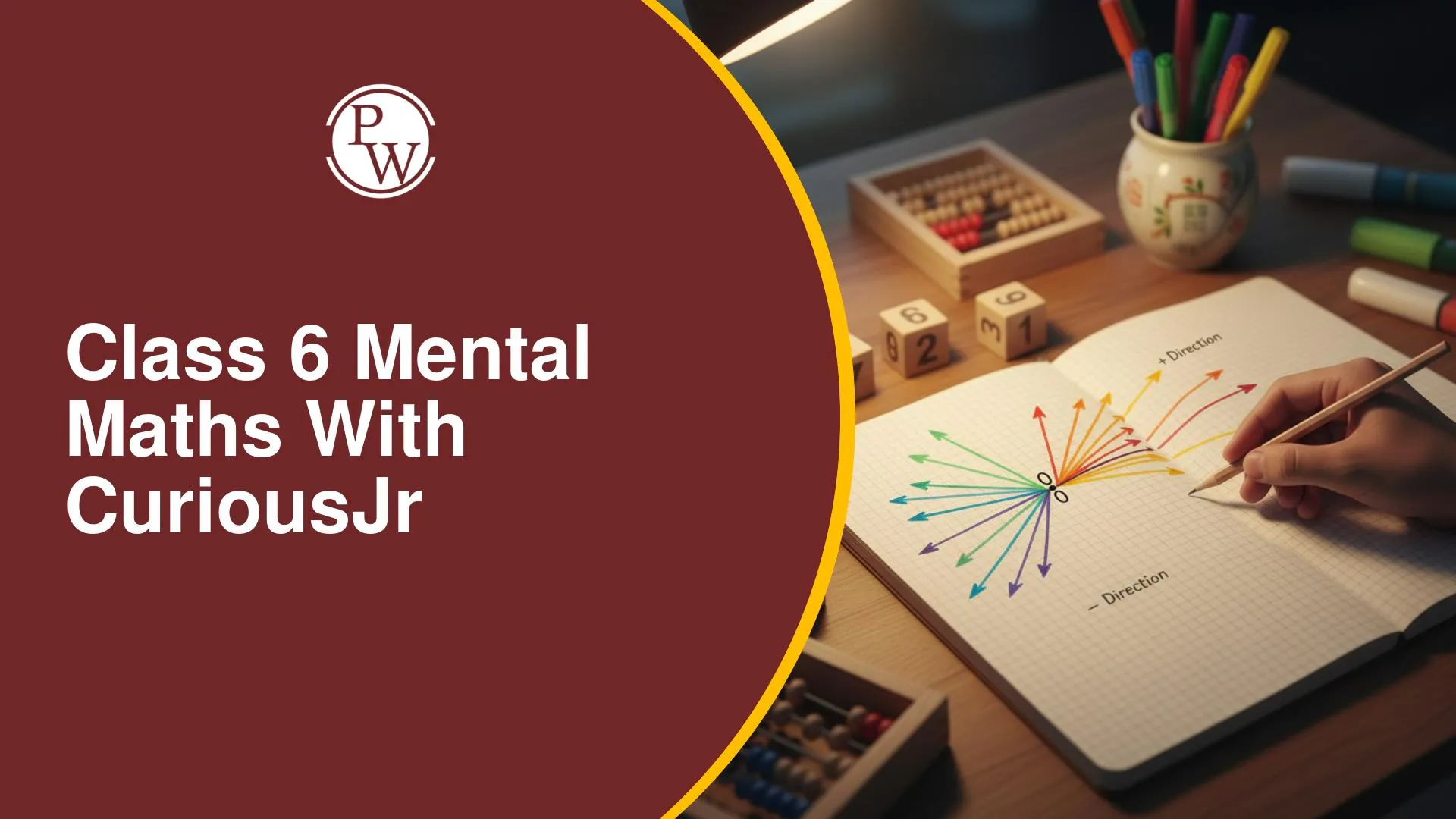
Negative numbers are an important part of Class 6 Maths, but they can initially feel confusing. Comparing values such as -3 and -8, deciding which number is greater, or solving calculations with positive and negative numbers can take extra time. Many children also make mistakes when signs change during addition, subtraction, multiplication or division.
Mental maths for Class 6 can make these calculations easier by helping children understand number relationships and use quick calculation methods. With regular practice, children can improve their speed, accuracy and confidence while working with negative numbers and other Class 6 Maths topics.
Why Is Mental Maths Helpful for Negative Numbers in Class 6?
Negative numbers become easier when children understand how numbers relate to each other instead of relying only on written steps. Mental maths tricks for Class 6 can help children recognise patterns and calculate more quickly.
1. Makes Comparing Negative Numbers Easier
Children learn that numbers closer to zero are greater than numbers farther from zero. For example, -3 is greater than -7 because -3 is closer to zero on the number line.
2. Improves Addition and Subtraction
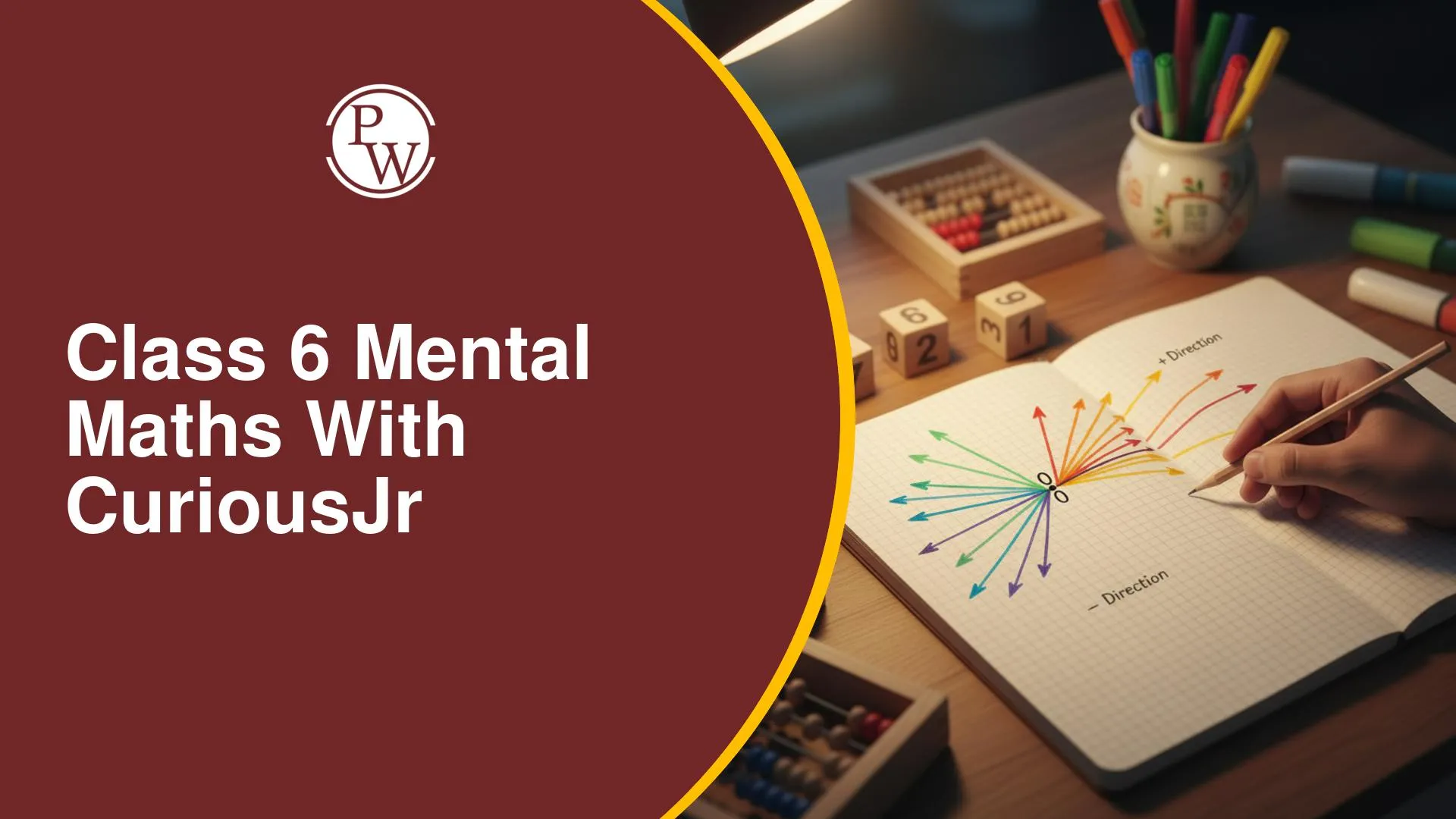
Mental calculation helps children work with positive and negative numbers by thinking about movement on a number line.
For example:
-5 + 8 = 3
Starting from -5 and moving 8 steps towards the positive side gives 3.
Read More - Speed Maths Test for Class 6 (Try Now)
3. Helps With Multiplication and Division
Understanding sign rules helps children quickly determine whether the answer will be positive or negative.
For example:
(-6) × (-2) = 12
Two negative numbers give a positive result.
4. Builds Number Sense
Regular mental calculation helps children recognise relationships between numbers instead of treating every question as a separate calculation.
5. Supports Faster Problem Solving
Once children become comfortable with signs and number relationships, they can spend less time on basic calculations and focus more on solving the complete question.
Signs Your Child Needs More Practice With Negative Numbers
Some children understand the concept but need more practice to calculate confidently. Your child may benefit from additional Class 6 Maths practice if they:
-
Take a long time to compare negative numbers.
-
Frequently confuse positive and negative signs.
-
Make mistakes while adding or subtracting integers.
-
Need written calculations for simple integer questions.
-
Feel unsure while solving word problems involving negative values.
Regular practice can help children become more comfortable with these calculations.
How Can Children Use Mental Math Tricks for Negative Numbers?
Simple strategies can make negative-number calculations easier to understand and solve mentally.
1. Use a Number Line
Visualising numbers on a number line helps children understand movement between positive and negative values.
For example:
-2 + 5 = 3
Move five places to the right from -2 to reach 3.
2. Think About Distance From Zero
When comparing negative numbers, consider how far each number is from zero.
For example:
-4 > -9
Although 9 is greater than 4, -4 is greater because it is closer to zero.
3. Break Numbers Into Easier Parts
Large calculations can be divided into smaller mental steps.
For example:
-18 + 25
Think of it as:
25 - 18 = 7
So, the answer is 7.
4. Remember the Sign Rules
For multiplication and division:
-
Positive × Positive = Positive
-
Negative × Negative = Positive
-
Positive × Negative = Negative
-
Negative × Positive = Negative
These patterns help children determine the sign of the answer quickly.
5. Connect Numbers With Everyday Situations
Negative numbers become easier to understand when children connect them with familiar examples.
-
Temperature: -5°C is colder than -2°C.
-
Money: A debt of ₹50 can be represented as -₹50.
-
Elevation: A location below sea level can have a negative elevation.
-
Scores: A negative score can represent a penalty or deduction.
Read More - Mental Maths Shortcuts for Perimeter and Area in Class 6
Why Is Regular Class 6 Maths Practice Important?
Mental calculation improves with repeated practice rather than memorising a fixed set of tricks. Short and regular practice sessions can help children recognise patterns and solve familiar calculations more quickly.
Regular practice can help children:
-
Improve calculation speed.
-
Reduce avoidable sign errors.
-
Strengthen number sense.
-
Recall basic operations more quickly.
-
Build confidence while solving Maths questions.
-
Become more comfortable with integers and other number-based topics.
Why Should Parents Choose CuriousJr for Class 6 Mental Maths?
CuriousJr combines mental calculation techniques with regular learning and practice to help children develop stronger Maths skills.
1. Fast-Calculation Techniques
Children learn practical methods that can help them perform common calculations more quickly.
2. Daily Live Classes
Regular live sessions give children opportunities to learn concepts, practise calculations and interact with teachers.
3. Recorded Lessons
Children can revisit previous lessons when they need additional practice or want to revise a calculation method.
4. Practice Material
Regular questions give children opportunities to apply mental maths techniques and strengthen calculation skills.
5. Teacher Support
Teachers can help children understand difficult concepts and identify calculation errors that may be affecting their performance.
6. Performance Reviews
Regular performance reviews can help identify areas where children need more practice and track their progress over time.
With online maths classes for Class 6, children can strengthen their understanding of integers, negative numbers and mental calculation while also developing skills that support other areas of Maths.
Mental maths can help Class 6 children handle negative numbers with greater speed and confidence. Understanding number relationships, practising sign rules and using simple calculation strategies can reduce common mistakes. Stronger number skills also create a useful foundation for algebra, problem-solving and more advanced Maths topics in higher classes.
Class 6 Mental Maths with CuriousJr FAQs
What are negative numbers in Class 6 Maths?
How can mental maths help with negative numbers?
What are some useful mental maths tricks for Class 6?





Get Free Counselling Today
and Clear up all your Doubts
 Live & recorded classes available at easeDashboard for progress trackingLakhs of practice questions