Earthquake - Causes, Types, Magnitude and Effects
 Shivam Singh7 Nov, 2025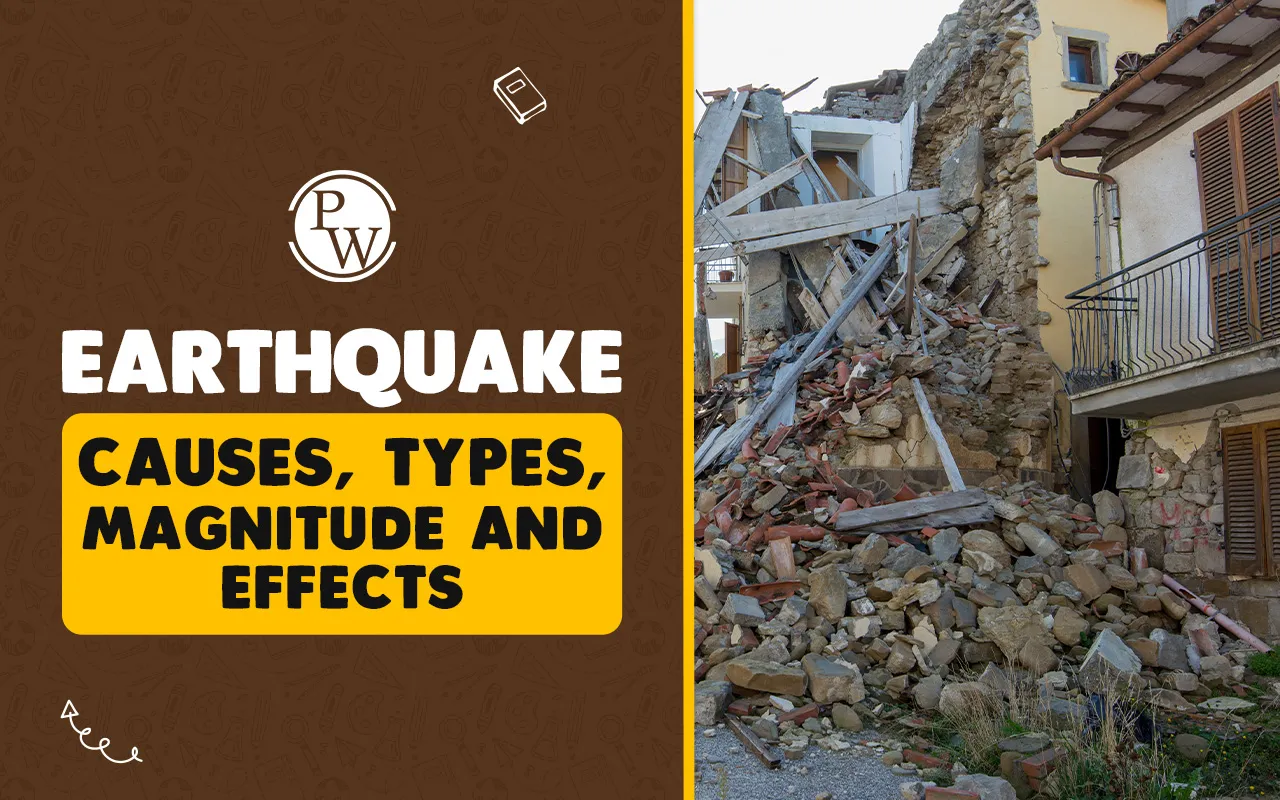
What is an Earthquake?
An earthquake is when the ground shakes suddenly because energy is released inside the Earth. This happens when rocks deep below the ground break apart. The energy moves in waves that make the land, buildings, and trees shake.
Small earthquakes happen often and are hardly felt, but big ones can cause damage. Earthquakes remind us that the Earth is always moving and changing, even when we cannot see it happening.
Read More: Layers of Atmosphere
What Causes Earthquakes?
Now that we know what an earthquake is, let’s learn what causes earthquakes.
-
Movement of tectonic plates: The Earth's outer layer is made of large pieces called tectonic plates. These plates are always moving. When they get stuck and suddenly slide, the energy released causes an earthquake.
-
Volcanic eruptions: Sometimes earthquakes happen near volcanoes. When hot magma moves underground, it can crack rocks and make the ground shake.
-
Human activities: People can also cause small earthquakes. This can happen during mining, building large dams, drilling, or testing explosives underground.
-
Collapse of underground caves: If the roof of a cave or tunnel underground falls in, it can create a small shake on the surface.
All these things cause the Earth to release energy, which makes the ground shake. This shaking is what we call an earthquake.
How Does an Earthquake Occur?
The outer part of the Earth is made of large pieces called tectonic plates. These plates are always moving slowly. Their movements can happen in different ways:
-
Plates can move away from each other
-
Plates can push into each other
-
Plates can slide past each other
Where the plates meet, their edges are rough and can become stuck. When this happens, the plates stop moving for a while, but pressure keeps building up.
After some time, the pressure becomes too strong. The plates suddenly break free and move quickly. This sudden movement causes the ground to shake. That shaking is what we call an earthquake.
The place where the plates slip is called a fault line, which is a crack in the Earth’s crust.
When the plates move, they release stored energy. This energy travels through the ground as seismic waves, which shake the land and everything on it.
Read more: What Is Global Warming?
Effects of Earthquake
When an earthquake happens, many changes can occur on the Earth’s surface. These are the main effects of an earthquake:
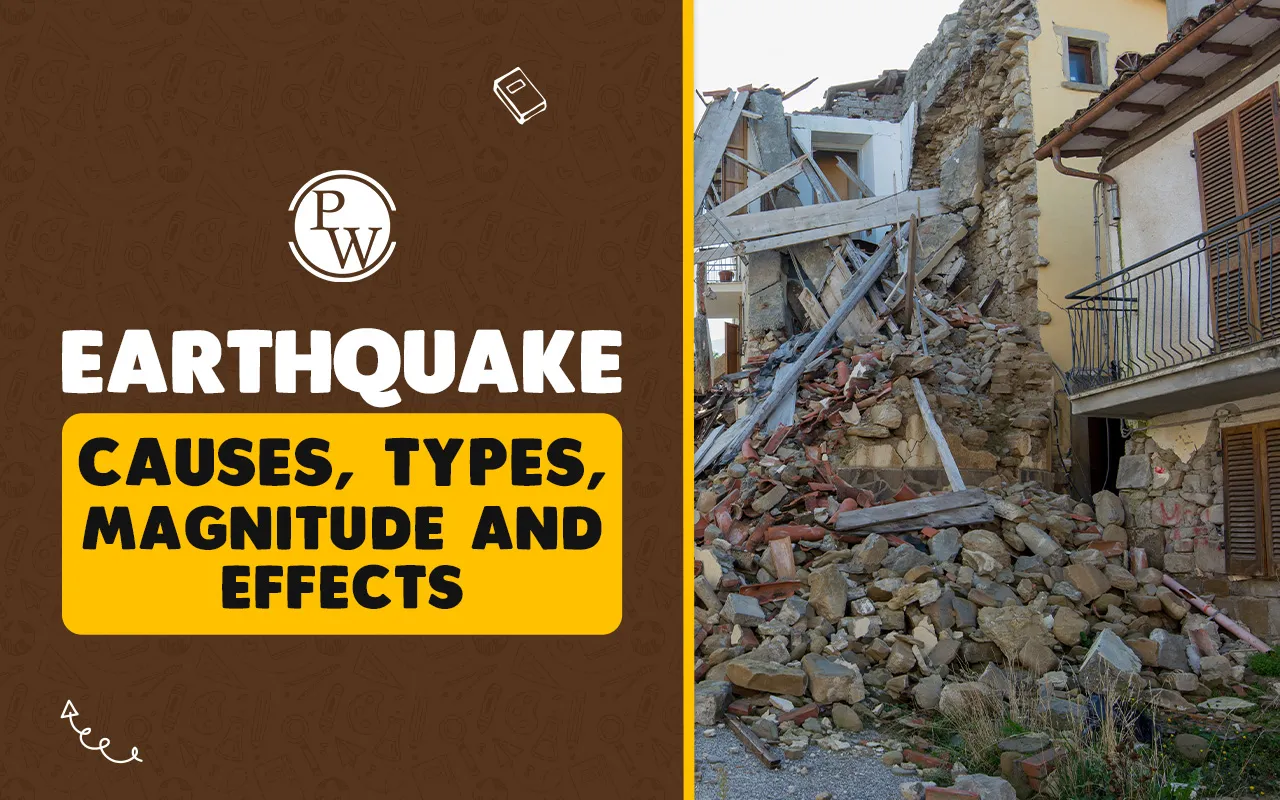
Ground Shaking: This is the most common effect. The stronger the earthquake, the stronger the shaking. Buildings and houses may crack, sway, or even fall down.
Surface Rupture or Ground Movement: The ground may split, rise, sink, or slide sideways. You can sometimes see cracks or uneven land along the fault line after a big earthquake.
Liquefaction: In areas with soft, wet soil, shaking can make the ground act like a liquid for a short time. This can cause buildings to sink or tilt.
Landslides and Rockfalls: In hilly or mountain areas, earthquakes can cause rocks or soil to slide down slopes, damaging roads, houses, and trees below.
Changes in Water Systems: After strong earthquakes, rivers can change their path, wells may dry up, or new springs can appear.
Damage to Buildings and Roads: Bridges, roads, and pipelines can break or bend. Buildings may collapse or become unsafe to live in.
Loss of Life and Injuries: Strong earthquakes can cause serious harm to people, animals, and property.
Secondary Effects: Earthquakes under the ocean can cause tsunamis, which are large sea waves that can travel long distances. On land, fires can start if gas pipes or power lines break.
Because of these effects, scientists and engineers design stronger buildings and bridges to help protect people during earthquakes.
Read more: Climate of India
Types of Earthquakes
There are different types of earthquakes, and they are grouped based on how they happen and where they happen. Learning about these types helps us understand why the ground shakes in different places.
1. Tectonic Earthquakes
These are the most common types of earthquakes. They happen when tectonic plates move under the Earth's surface. The plates may push against each other, move apart, or slide past each other. When they get stuck and then suddenly move, it causes the ground to shake.
Example: The earthquake in Nepal in 2015 happened because two tectonic plates were pushing against each other. Tectonic earthquakes can cause a lot of shaking and damage, especially in cities and towns.
2. Volcanic Earthquakes
These earthquakes happen near volcanoes. When magma (hot, melted rock) moves underground, it cracks the rocks around it. This movement can shake the ground and cause an earthquake.
Example: Before a volcano erupts in places like Hawaii or Iceland, many volcanic earthquakes are often felt. Volcanic earthquakes are usually smaller in size, but they often mean a volcano is about to erupt.
3. Collapse Earthquakes
These are small earthquakes caused when the roof of an underground cave or mine falls in. They usually happen close to the surface and in a small area.
Example: If part of a mine falls or caves in, people nearby might feel the ground shake a little. Collapse earthquakes don’t last long, but they can still scare people or damage nearby places.
4. Explosion Earthquakes
These earthquakes are caused by human actions. They happen when people explode bombs, dig deep underground, or test weapons. The force from the explosion makes the ground shake.
Example: Scientists have recorded earthquakes caused by underground tests in some countries. Even though these earthquakes are not natural, they still create real shaking, just like other types.
Each of these types of earthquakes is different. Some happen naturally, and others are caused by people. Some can shake the ground a lot, and others are barely felt, but all are important to study and understand.
Read More: Air and Atmosphere
Magnitude of Earthquake
The magnitude of an earthquake is a number that shows how big an earthquake is at its starting point. Scientists measure it by studying the energy released from the earthquake using special instruments called seismographs. These instruments record the waves that move through the ground during an earthquake.
Here are some important points about earthquake magnitude:
-
The magnitude of an earthquake stays the same no matter where it is measured, as long as the correct instruments are used.
-
The shaking and damage people feel in different places can vary. This is called intensity, and it depends on how far you are from the epicenter, what the ground is made of, and local conditions.
-
Scientists use several scales to measure magnitude. The Moment Magnitude Scale (Mw) is the most accurate and is used today for both small and large earthquakes.
-
The Richter Scale was used in the past to measure magnitude. Although it is not used much by scientists now, many people still mention it in everyday talk.
-
Each time the magnitude number increases by 1.0, the earthquake becomes about ten times greater in wave size and releases about thirty-two times more energy.
-
When studying earthquakes, scientists also look at how much energy was released, how big the fault area was, and how far the rocks moved during the event.
In short, the magnitude of an earthquake tells us how big it is, while intensity explains how much it is felt in different places.
Also read: Importance of Forest
Help Your Child Stay Ahead Through Curious Junior Online Classes
If your child finds it difficult to stay focused during study time, complete homework on time, or fully understand lessons taught in school, regular support at home can make a real difference. Curious Junior offers school tuition online classes for Grades 3 to 8 to help children strengthen their understanding and improve academic progress.
-
Subjects include English, Mathematics, Science, and Social Studies
-
Curriculum follows CBSE, ICSE, and major State Boards for smooth alignment
-
Live classes conducted by experienced and qualified teachers
-
Two-teacher model provides both subject instruction and personal guidance
-
Daily learning progress reports are shared with parents
Whether your child needs to catch up or stay ahead in school, Curious Junior offers consistent learning support from the comfort of home. Enroll today to help your child stay confident and on track with their studies.