Importance of Forest - Benefits and Uses
 Shivam Singh10 Oct, 2025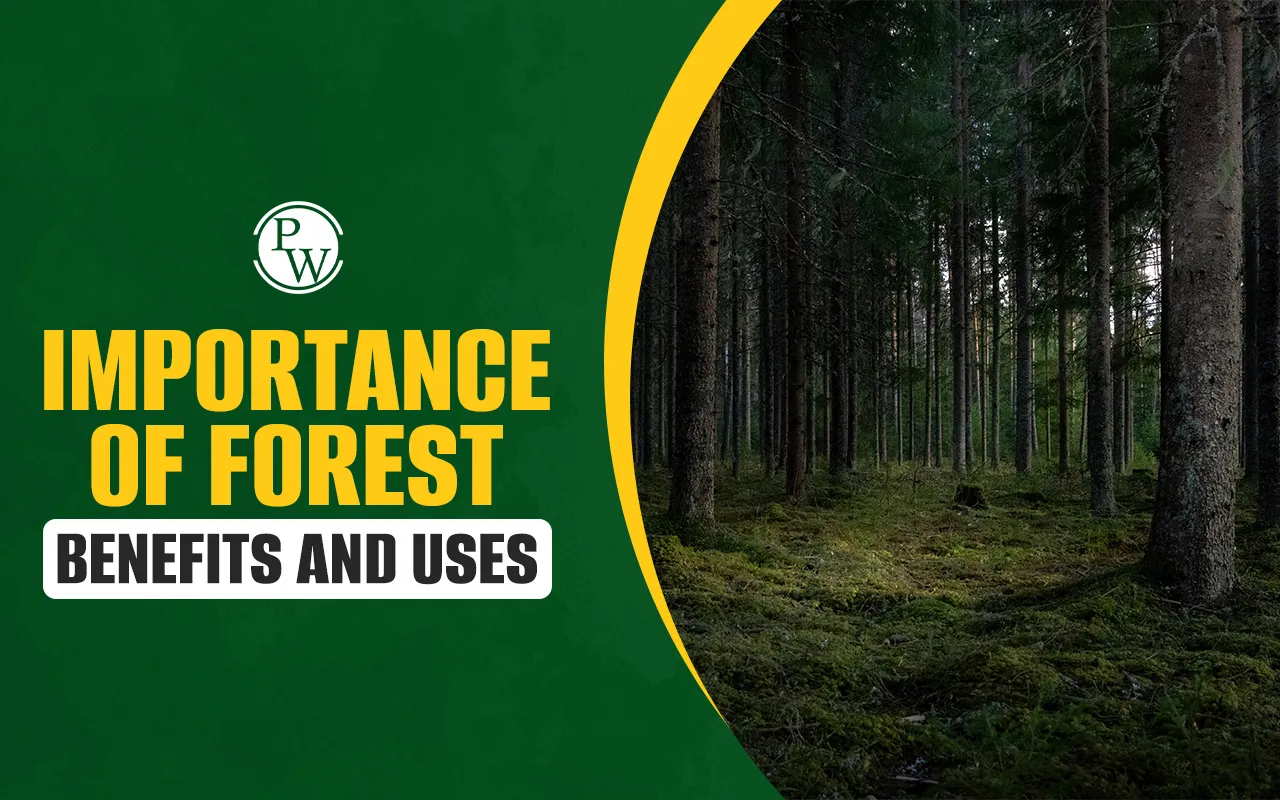
What is the Importance of Forests?
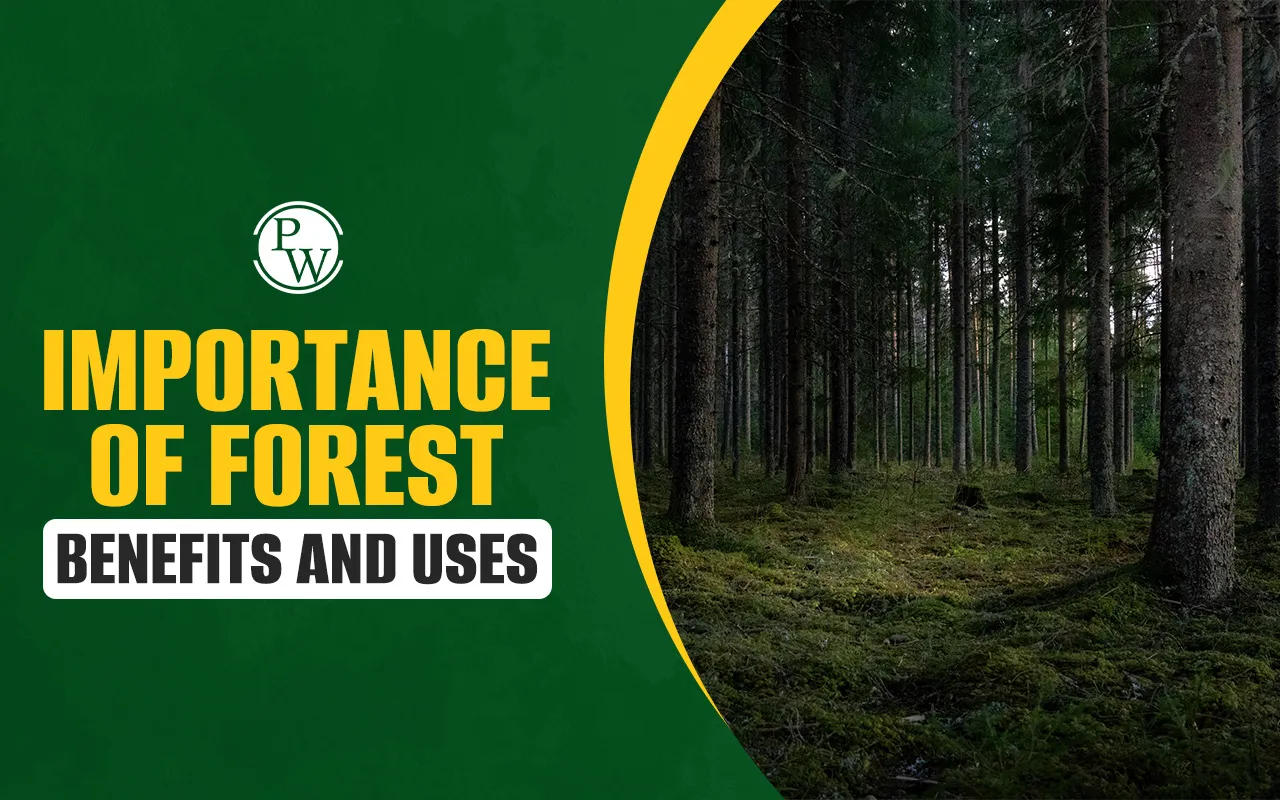
The importance of forests lies in the many services they provide. Forests are home to more than 80% of the world’s plant, animal, and fungi species. They play a big role in producing oxygen, storing carbon, preventing soil erosion, and keeping our water clean.
They also help in reducing the effects of climate change by absorbing carbon dioxide from the air. Without forests, life on Earth would be completely different and much more difficult.
Read More: Climate of India
5 Importance of Forests in Our Life
If you are looking for the 5 importance of forests in daily life, here are the key points every student should know:
-
Oxygen Production: Trees take in carbon dioxide and release oxygen, which is essential for human and animal life.
-
Climate Control: Forests help regulate the Earth’s temperature and bring rainfall by maintaining the water cycle and absorbing greenhouse gases.
-
Food and Medicine: Many fruits, nuts, herbs, and natural medicines that we use every day come directly from forest plants.
-
Shelter and Jobs: Forests provide homes for many communities and offer jobs to millions of people through farming, forestry, and eco-tourism.
-
Soil and Water Conservation: Tree roots hold the soil firmly in place, prevent erosion, and help keep rivers and groundwater clean and full.
Benefits of Forests
Let’s now understand the major benefits of forests.
Climate Control and Air Quality
Forests help regulate the Earth's temperature by absorbing large amounts of carbon dioxide, a gas that causes global warming. They store this carbon in trees, leaves, and soil, reducing the impact of climate change. In addition, trees clean the air by trapping dust, smoke, and harmful gases. Forests also act as natural air conditioners by providing shade and lowering the heat in cities and towns.
Water Protection and Soil Stability
Forests play an important role in the water cycle. They catch and store rainwater, release it slowly, and help recharge underground water supplies. Tree roots hold the soil firmly, preventing erosion and landslides. This is especially important in mountain and hillside areas. Forested areas also reduce flooding and improve water quality by filtering out pollutants before water reaches rivers and lakes.
Biodiversity and Ecosystem Services
Forests are some of the most biodiverse places on Earth. They are home to over 80% of land-based plant, animal, and fungi species. From tiny insects to large mammals, thousands of species depend on forest ecosystems to survive. In addition to offering shelter and food to wildlife, forests provide natural services like pollination, air purification, and seed spreading.
Human Health and Well-being
Spending time in forests has proven health benefits. It can reduce stress, improve mood, and even help people recover faster from illness. In cities, green spaces improve air quality and offer peaceful places to exercise and relax. Forests also contribute to mental health by offering quiet, natural environments that help people feel calm and connected to nature.
Economic and Daily Life Support
Forests are a major source of natural resources that people use every day. Wood, paper, fruits, nuts, herbs, and plant-based medicines all come from forests. They support industries such as construction, furniture making, healthcare, and tourism. Globally, forests provide work and income for millions of people, especially in rural areas. When forests are managed responsibly, they offer long-term economic benefits while protecting nature at the same time.
Urban Benefits and Property Value
In cities, trees improve the quality of life by reducing noise pollution, blocking harsh sunlight, and lowering temperatures. They add beauty to neighborhoods and parks and make spaces more enjoyable. Trees also increase the value of property. Homes and buildings surrounded by healthy trees tend to be more attractive and are often worth more in the housing market.
Energy Saving and Climate Comfort
Trees planted around homes and buildings help reduce energy costs. In summer, they provide shade, lowering the need for air conditioning. In winter, trees can act as windbreaks, helping to reduce heating needs. This not only saves money but also reduces the use of fossil fuels, which helps fight climate change.
Read More: Facts About the Earth
Uses of Forests
Forests are a valuable resource that support people’s daily needs in many different ways. Here are some of the main uses of forests:
-
Wood and Timber: Used for building houses, furniture, and tools.
-
Paper Production: Trees are the main source of paper for books, notebooks, and packaging.
-
Food and Fruits: Forests provide nuts, berries, honey, and edible plants.
-
Medicinal Plants: Many natural medicines come from herbs and trees found in forests.
-
Fuelwood and Charcoal: In many places, people use firewood from forests for cooking and heating.
-
Natural Oils and Resins: Products like rubber, essential oils, and natural gums are collected from forest trees.
-
Animal Grazing: Some forests are used for grazing cattle, goats, and sheep.
-
Cultural and Religious Use: Forests are used in traditional ceremonies and as sacred places in many cultures.
-
Tourism and Recreation: Forests attract visitors for hiking, camping, and learning about nature.
-
Education and Research: Scientists and students use forests to study plants, animals, and the environment.
Read More: What Is Global Warming?
Types of Forests
Forests are grouped into different types based on the climate, location, and types of trees they have. Here are the main types of forests:
-
Tropical Rainforests: Found in warm, humid areas near the equator. These forests receive heavy rainfall all year and are rich in plant, insect, bird, and animal species. Regions: South America, Africa, Asia, and Australia.
-
Temperate Forests: Found in places with four seasons. These forests may have trees that shed their leaves (deciduous), stay green all year (coniferous), or a mix of both. Regions: North America, Europe, and Asia.
-
Boreal Forests (Taiga): Located in cold northern regions. These forests mostly have evergreen trees like pine and spruce, with long winters and short summers. Regions: Canada, Russia, Scandinavia.
-
Coniferous Forests: Made up mainly of cone-bearing trees such as pine, fir, and spruce. These forests are cold and found in high altitudes or northern areas.
-
Deciduous Forests: Trees in these forests have broad leaves that fall off during autumn. They grow in places with warm summers and cold winters.
-
Mixed Forests: A combination of both coniferous and deciduous trees. These forests are often found in mountain regions and show a variety of plant life.
-
Mediterranean Forest: Also known as scrublands or maquis. These forests grow in dry, hot areas and have small trees, shrubs, wildflowers, and many birds. Regions: Around the Mediterranean Sea, California, parts of Australia.
Read More: Globe and Map
Why Should We Protect Forests?
Forests are under threat due to deforestation, pollution, and climate change. Every year, thousands of hectares are lost, affecting people, animals, and the planet. Protecting forests means protecting our future.
Simple steps students can take:
-
Use paper wisely and recycle it.
-
Plant trees in your school or community.
-
Learn and spread awareness about the importance of forests.
Also read: Types of Natural Disaster
Strengthen Your Child’s Academic Skills with CuriousJr Online Classes
Is your child struggling to keep up in school? At CuriousJr Online School Tuition, we help students overcome learning gaps and build academic skills in Maths, Science, English, and Social Science through engaging and flexible online classes.
Our teaching approach gives your child the support they need to succeed:
-
Interactive lessons that make learning enjoyable and easy to understand
-
Dual-teacher model to explain topics clearly and solve doubts effectively
-
24x7 doubt support so learning continues even after class
-
Practice worksheets and regular reviews to reinforce important concepts
-
Homework help to reduce daily pressure at home
-
Personalized guidance tailored to your child’s pace and level
Book a demo class today and give your child the support they need to succeed.