Comprehension - Definition & Meaning
 Shivam Singh19 Jan, 2026
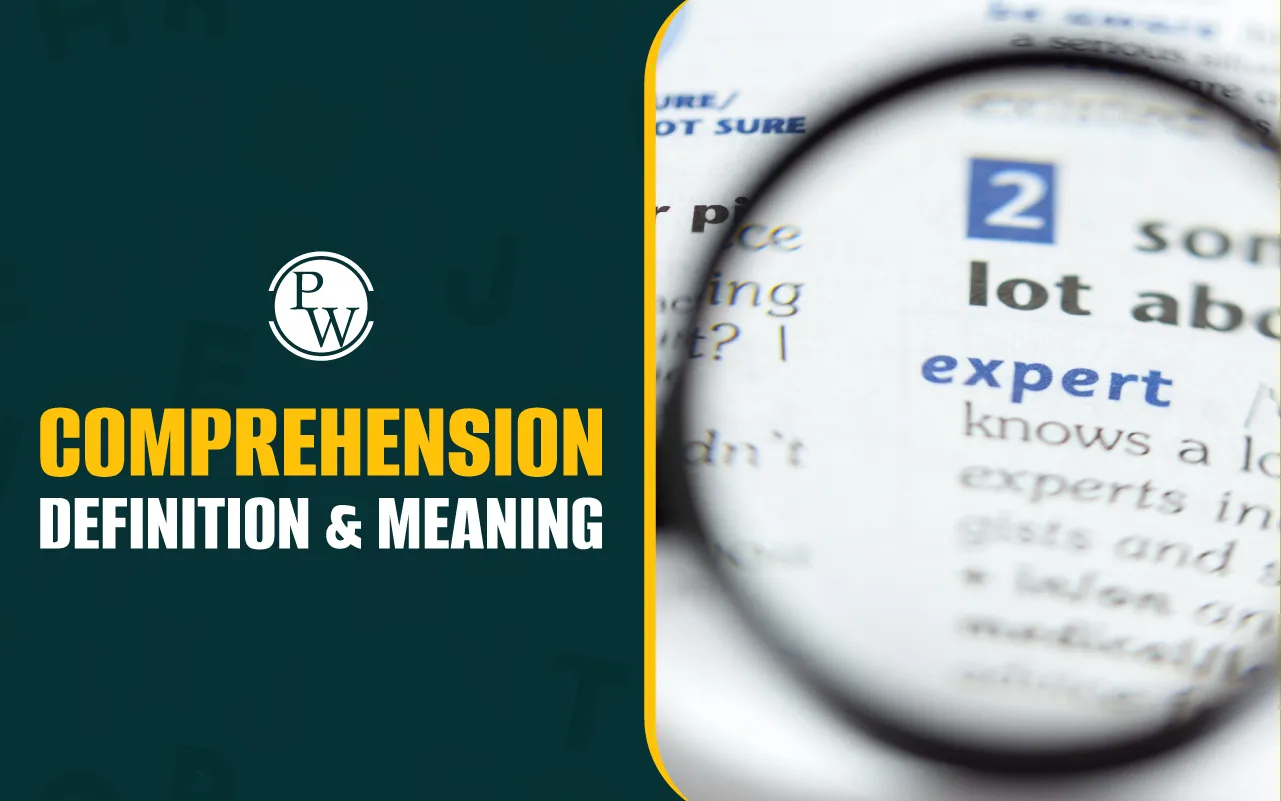
Comprehension in English means completely understanding what you read. If you read something and know what its meaning is, that is called comprehension. It is a skill where you read a passage and then answer questions based on it. As part of English grammar, questions on reading comprehension are given in school or competitive exams.
Comprehension questions aim to check how well you can read and think. It helps you learn to read carefully and find the right answers. Good comprehension skills also help in reading stories, lessons, and even newspapers. Keep reading to know the comprehension meaning along with its definition and examples.
Read More: Homonyms
Comprehension Meaning
Comprehension meaning in English, is understanding something fully in your mind. It is the ability to read or hear something and know what it means. The word Comprehension comes from a Latin word, comprehensionem, which means “to understand” or “to catch.”
So, when you learn about comprehension meaning, you are learning about “catching,” or “understanding,” or "grasping" ideas and making them part of your own knowledge. For example, if you read a story and can explain what happened in your own words, that means you have good comprehension.
Comprehension Definition
We can define comprehension as the ability to fully understand the meaning of something that we read, hear, or observe. The comprehension definition, as per different dictionaries, is:
-
Merriam-Webster dictionary defines comprehension as understanding something using your mind. It is the power to know what something means. For example, when you read a story and understand the moral, that is called comprehension.
-
As per Collins dictionary, the comprehension definition is the ability to understand the meaning of something. If something is beyond your comprehension, it means you cannot understand it.
-
The Oxford dictionary defines comprehension as the skill to understand spoken or written things. It is how well you can know the meaning of words and ideas.
Read More: Two Letter Words in English
What Are the 5 W’s of Comprehension in English?
The 5 W’s of Comprehension help us in understanding any passage or story better. These 5 W’s of Comprehension in English stand for What, Why, Who, Where, and When.
-
Who- helps us know the people or characters in the story.
-
What- tells us what is happening or what the story is about.
-
When- tells us about the time something is taking place.
-
Where- shows the place.
-
Why- helps us understand the reason something happened.
Using these 5 W’s while reading helps us think clearly and find answers easily. These questions are often asked in reading comprehension exercises in English to test how well a student has understood the passage. So, when children practice asking and answering these 5 W’s of Comprehension in English, they build strong reading and thinking skills.
5 Levels of Comprehension in English
When we read something, we try to understand what they mean. This is called comprehension. There are 5 different levels of comprehension in English. Each level helps us understand better. Let’s learn them one by one.
1. Literal Level: Basic Understanding
-
The literal level is the most basic level of comprehension.
-
At this stage, we can simply understand what is clearly written.
-
It includes remembering facts such as names, dates, places, or actions.
-
This level focuses on answering direct questions like Who, What, When, Where, and Why.
2. Inferential Level: Reading Between the Lines
-
At this level, we try to understand what is not clearly written by looking for small hints in the story and making guesses.
-
For example, if the story says a boy is crying in the rain, we can guess that he is sad, even if the story doesn't say it.
-
This level helps us think more and ask questions like, “Why did this happen?” or “What will happen next?”
Read More: Degree of Comparison
3. Evaluative Level: What Do We Feel About it?
-
At this level, we think about what we feel after reading. We ask ourselves if we agree or disagree with what happened in the story.
-
Evaluative Level allows us to think deeply so that we can connect the story to real life.
4. Integrative or Reflective: Finding Connection
-
At the Integrative level, we start to connect the story to our own lives.
-
Questions like, “Has something like this ever happened to me?” may come to our minds.
-
This level makes the story feel more real. It also helps us understand the story more clearly.
5. Creative: Imagination Level
-
At the creative level, we start using our imagination.
-
We start imagining a new ending, new characters or write a different version of the story.
-
This level helps us to be creative and think in different ways.
-
It also allows us to enjoy reading more and feel confident to share our own thoughts.
Read More: List of Tricky Words in English
What are Comprehension Words?
Comprehension words are those words that help in understanding the meaning of any passage or story. These are important words in a sentence or passage as they give clues about its meaning. Comprehension words also aid in answering questions like who, what, where, when, why, and how.
For example, in this sentence, "The hungry lion chased the deer through the forest," lion, chased, deer, and forest are comprehension words. Because they are helping us in imagining what is happening in the story.
Example of Comprehension
Comprehension in English is not only important during reading passages or answering questions in tests. We use it every day in different ways. Check an example of comprehension in different scenarios given below.
-
Reading Comprehension: While reading any story or passage, if you understand what the characters are doing or what message the author wants to give, that is comprehension. For example, knowing why a character is sad or happy in a story shows that you understood the plot.
-
Listening Comprehension: When you listen to your teacher’s instructions and follow them correctly, that shows good comprehension. You are not just hearing but also understanding.
-
Everyday Life Comprehension: If you read a sign that says “Wet Floor” and walk carefully, it means you understood the warning. That is comprehension in daily life.
-
Problem-solving Comprehension: When you try to solve a math problem, you first understand what its meaning is or what it's asking. That’s the first step of comprehension.
Also Read: Letter Writing
Improve Your Child’s Foundational English With CuriousJr
Many parents worry when their child finds it hard to read sentences properly or express their thoughts in English. At the start, it may feel common, but with time, this can affect their marks and confidence in school. That’s where CuriousJr's Online English Classes can really help.
This online English learning program is made to improve your child’s reading, writing, grammar, vocabulary, pronunciation, and speaking skills step-by-step. Every class is interactive, filled with fun activities, and guided by friendly, dedicated mentors. Here’s what your child gets in these online English classes:
-
Live sessions with certified English teachers
-
A dedicated teacher to clear doubts one-on-one
-
Engaging lessons using stories, games, and tasks
-
Clear pronunciation and fluency training
-
Curriculum based on the Cambridge English Scale and CEFR standards
Whether your child is shy to speak in English or needs help with grammar and vocabulary, this program offers the right support through online, comfortable classes. So, why wait? Book a demo class today and help your child gain confidence in English.