Collocation: How They Enhance Language Proficiency
 Nikita Aggarwal26 Sept, 2025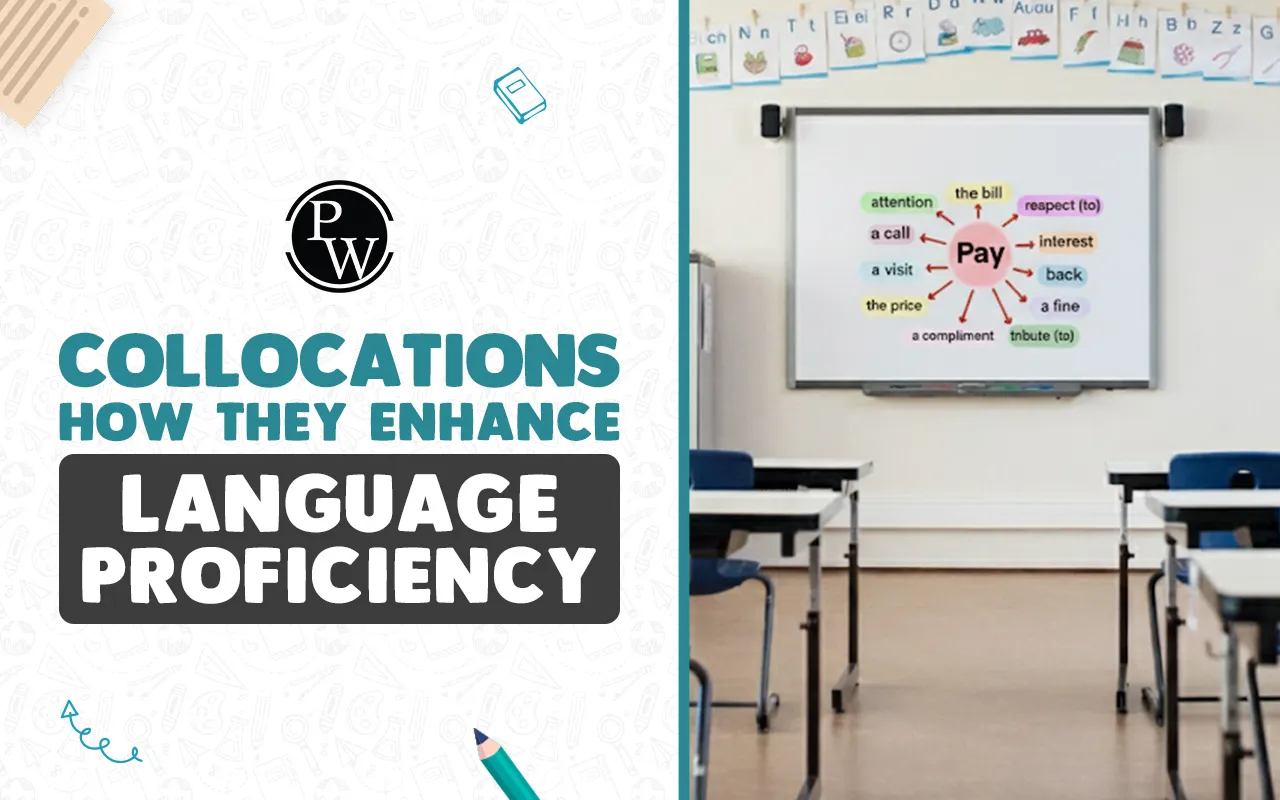
What is Collocation?
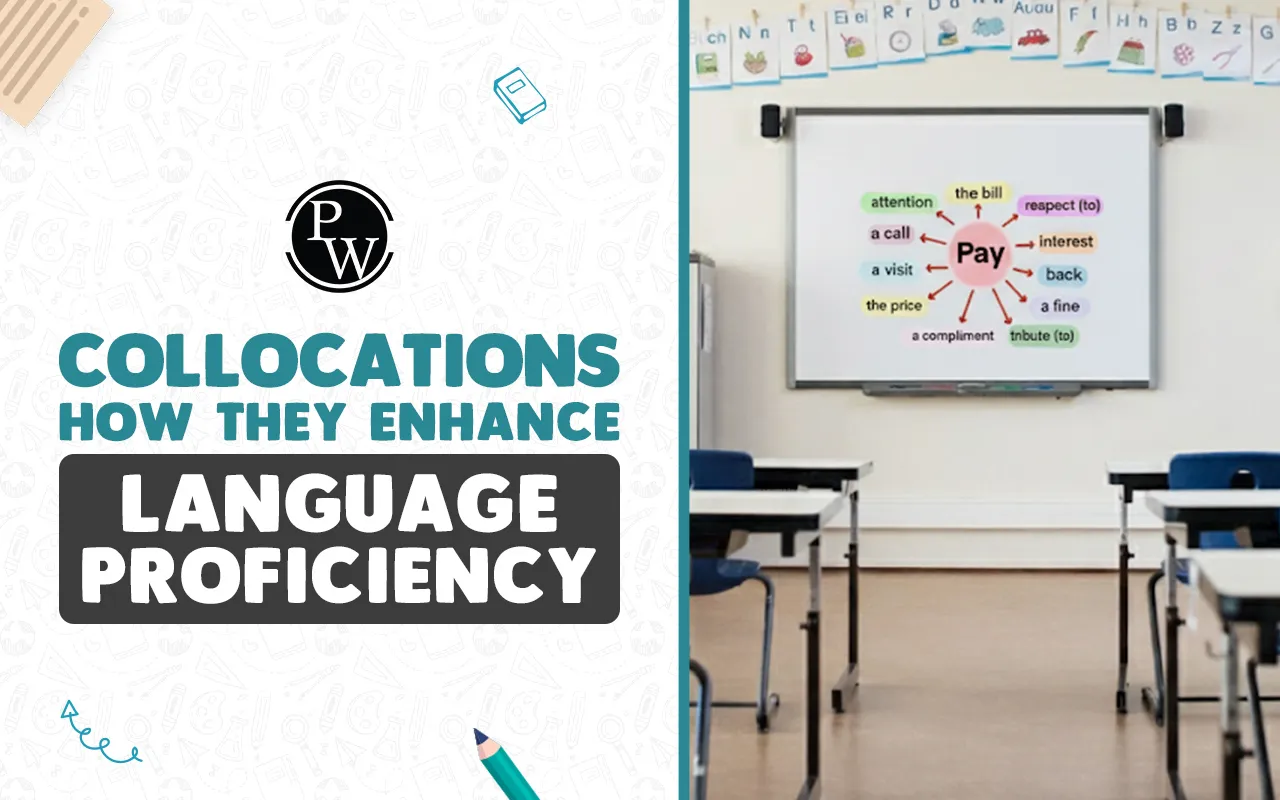
Collocation is a group of words that are commonly used together in English communication, particularly by people whose native language is English.
The term is derived from the words "co" (meaning "together") and "location" (meaning "place"). It implies that collocations are words that are placed together.
These combinations are found most appropriate to convey a meaning that enhances the fluency and clarity of expression. Examples of collocations are heavy rain, fast food, deep trouble, big surprises, etc.
Also read: Reported Speech Definition, Rules, and Examples
Definition of Collocation
Collocation is defined as the application of words collectively in small phrases to effectively communicate a sense in the colloquial way.
These groups of words may or may not follow any strict grammar rules, but they make a perfect fit because they are expected to be together.
For example, the phrases "breaking the silence," "running out of time," "coming prepared," etc. are some of the commonly used collocations to communicate a proper sense as a part of regular interactions.
How Does Collocation Enhance Language Proficiency?
Students can benefit in different ways by learning about collocations and how to use them in different contexts. Collocation is an important tool that helps enhance English language skills and proficiency in communication, as explained below:
-
Collocations help build a rich vocabulary with specific word pairings to express ideas.
-
Collocations provide students with an engaging and effective way to communicate with native English speakers.
-
Knowledge of collocations helps using the most appropriate words together to make the communication more straightforward and accurate.
-
Use of words in groups helps readers and listeners to understand and remember things more easily than single words.
Also read: Apostrophe Meaning and Definition
Collocation Examples
There are several different types of English collocation in use. These are made up of various combinations of a verb, noun, adjective, etc., as explained through the collocations examples given below:
Adverb + Adjective
-
The committee was completely satisfied with the outcome.
-
Are you fully aware of the terms and conditions of this employment?
-
He is terribly upset with the results of the exam.
Adjective + Noun
-
Once you get a job, you realise the value of hard-earned money.
-
We should be proud of our rich heritage.
-
It is a great achievement by the students.
Noun + Noun
-
Let’s welcome the chief guest with a round of applause.
-
It seems that playing chess is not your cup of tea.
-
She offered me a slice of cake.
Noun + Verb
-
A consistent cash flow is essential for any business to function.
-
Our plane took off as per schedule.
-
The bomb went off as soon as the driver started the engine.
Verb + Noun
-
Please keep in touch with me.
-
You must pay attention to what the teacher is talking about.
-
I will open an account in the nearest branch of the bank.
Verb + expression with preposition
-
She burst into tears as she heard the news.
-
We must hurry up because we are running out of time.
-
He went to great lengths to resolve the matter.
Adverb + Verb
-
I strongly feel that the crisis can be resolved by discussion.
-
We eagerly await your response in this regard.
-
I highly recommend this book for the competitive exams.
Read more: Noun Definition, Types, Rules, and Examples
Types of Collocations
Collocations can be classified into two main types based on their nature of use. These are as follows:
Strong Collocations
These are the groups of words where the link between them is quite fixed and expected. They almost always go together to convey the meaning as intended.
For example:
-
Firmly believe
-
Fulfil a wish
-
Do a favour
-
Close a deal
-
Deeply regret
-
Catch a bus
Weak Collocations
These are the grouping of words where there are no such fixed combinations. A word can be flexibly used with many other words to form suitable collocations in different contexts.
For example:
-
Big can be used with house, surprise, decision, etc.
-
Have can be used with Breakfast, chat, relationship, etc
-
Very can be used with interesting, cold, generous, etc.
-
Heavy can be used with snowfall, drinker, traffic, etc.
Also read: Preposition of Time
Tips to Use Collocations Effectively
Learning the concept of collocation and using it appropriately can enhance the language skills of your child. After understanding the definition of collocations along with collocation examples, students must follow the tips as given below to effectively learn and apply them in sentences to make the communication better and more impactful:
-
Read stories, listen to conversations, and try to recognize collocation words when you see or hear them.
-
Treat collocations as single blocks rather than treating them as individual words.
-
When you learn a new word, note down the words that collocate with it.
-
Practice using collocations in writing and conversations after learning them.
Help Your Child Master English with CuriousJr
Many parents feel concerned when their child struggles with English grammar, vocabulary, or speaking confidently. Without the right support, children may find it difficult to write correct sentences or express themselves clearly.
CuriousJr's Online English Classes make learning engaging and easy to follow. Children attend live sessions where teachers guide them through grammar, sentence building, vocabulary, and pronunciation. They also enjoy:
-
Interactive practice exercises during class
-
Games, writing tasks, and speaking activities
-
Regular progress updates for parents
Good English skills help children read, write, and speak with confidence. Book a demo class today and give your child a solid foundation in English with CuriousJr.