Why Kids Struggle with Multiplication in Class 7
 Nivedita Dar14 May, 2026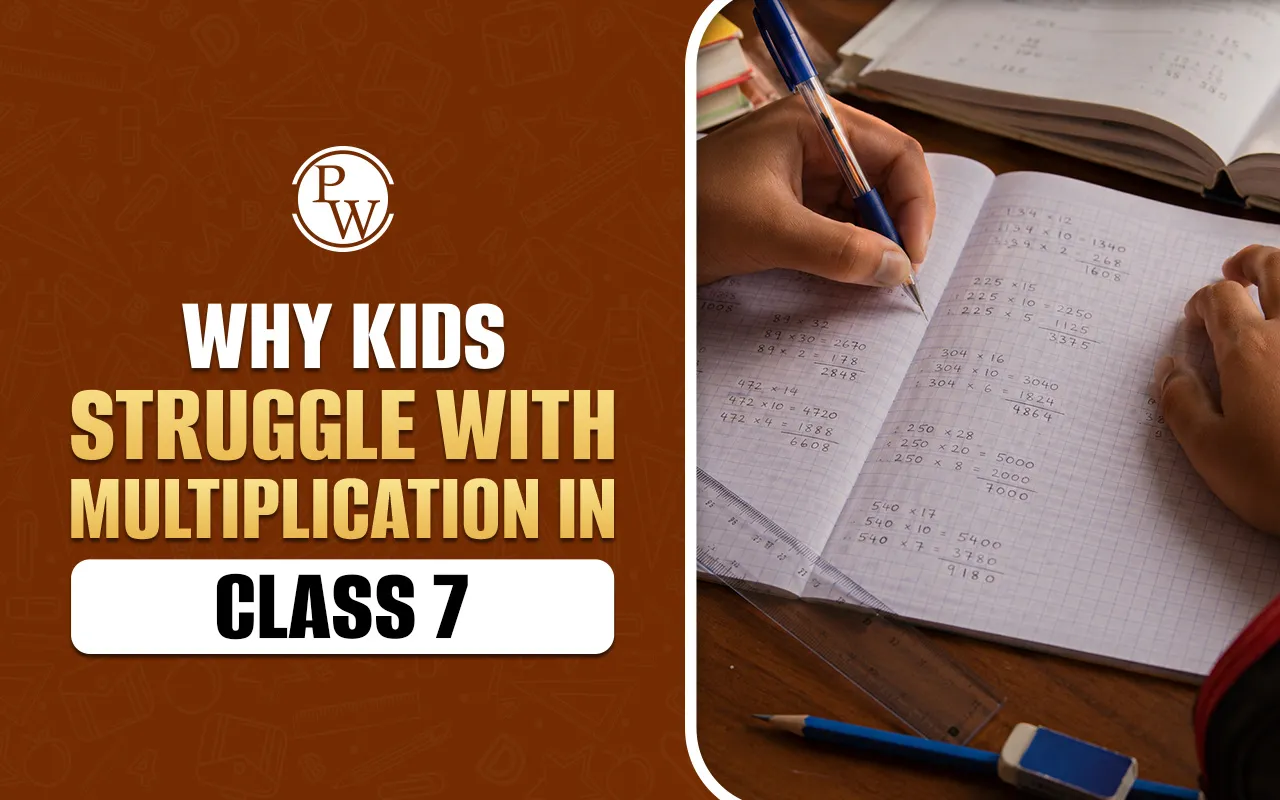
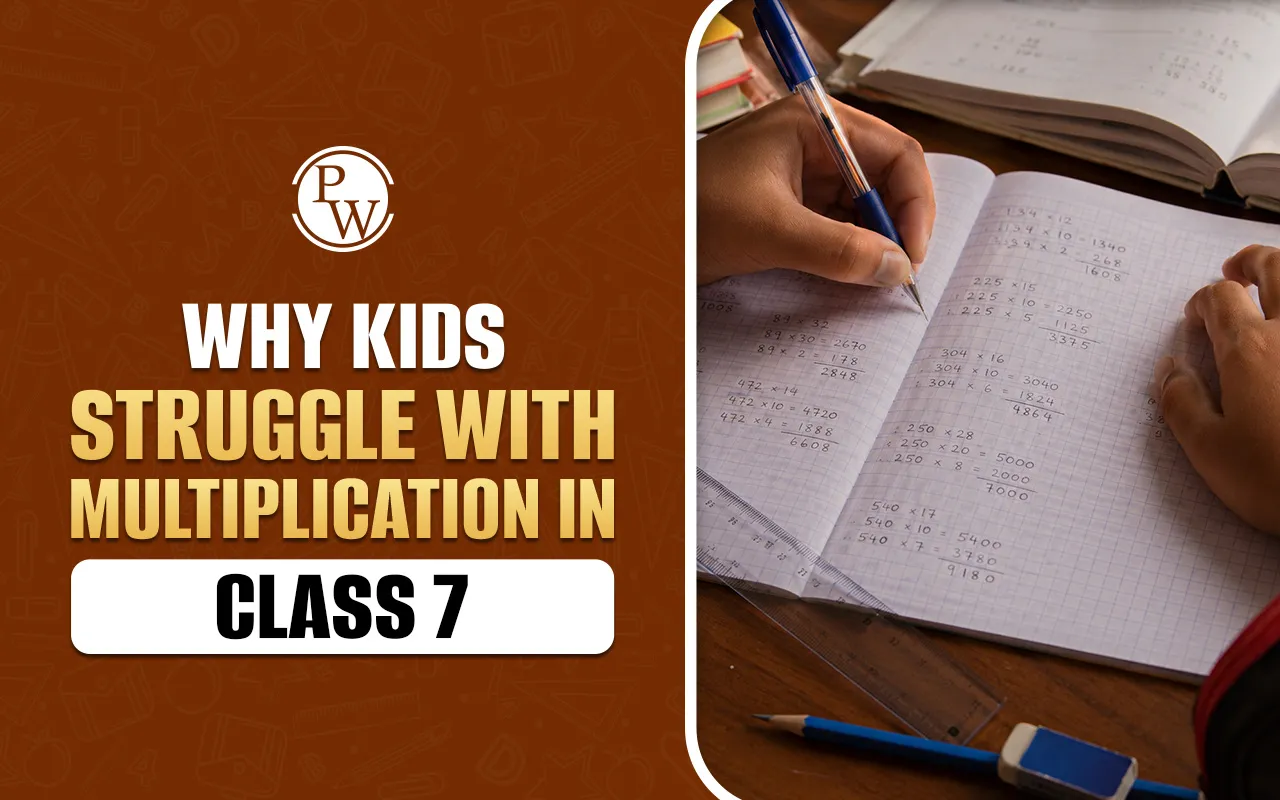
In Class 7, multiplication shifts from simple tables to multi-digit challenges and decimal points. This is often where multiplication problems class 7 students face become most visible. The jump in complexity can feel overwhelming. Whether it is forgetting to carry a number or getting lost in long rows of addition, these small errors pile up. Understanding why these hurdles exist is the first step toward clearing them. By identifying common maths mistakes class 7 learners encounter and adopting multiplication tricks, you can turn a stressful chore into a quick mental exercise.
Why Multiplication Problems Class 7 Feel Difficult
At this level, maths is no longer just about memorisation. It involves logic and spatial awareness. Students are often introduced to larger integers, fractions, and decimals, all requiring solid multiplication skills.
Common Multiplication Mistakes Class 7 Students Make
-
The "Carry Over" Confusion: In long multiplication, students often forget to add the number they carried over, or they add it to the wrong column.
-
Placeholder Omissions: Forgetting to put a '0' when moving to the tens or hundreds place is a leading cause of incorrect results.
-
Decimal Displacement: Not knowing where to put the decimal point after finishing the calculation often leads to answers being ten or a hundred times off.
Multiplication Tricks for Class 7
Learning multiplication tricks does more than just help you finish exams early; it builds "number sense." Here are some of the most effective methods to simplify your work.
Easy Trick to Multiply by 5
To multiply any even number by 5, simply halve the number and add a zero at the end.
-
Example: 24 x 5
-
Half of 24 is 12. Add a zero: 120.
Multiplying by 11 Trick
For a two-digit number, add the two digits together and put the sum in the middle.
-
Example: 35 x 11
-
3 + 5 = 8. Place 8 between 3 and 5: 385.
Multiply by 9 Using 10
If you need to multiply by 9, multiply by 10 first and then subtract the original number.
-
Example: 45 x 9
-
(45 x 10) - 45 = 450 - 45 = 405.
Read More - 10 Second Addition Tricks for Class 4
Doubling and Halving Multiplication Method
If one number is even, halve it and double the other number. This often creates a much simpler problem.
-
Example: 14 x 15
-
Halve 14 to get 7; double 15 to get 30.
-
7 x 30 = 210.
Squaring Numbers Ending in 5
Take the first digit, multiply it by the next consecutive number, and write "25" at the end.
-
Example: 65 x 65
-
6 x 7 = 42. Add 25: 4225.
Near 100 Multiplication Trick
For numbers close to 100, look at how far they are from 100.
-
Example: 97 x 96
-
97 is (-3) from 100. 96 is (-4) from 100.
-
Subtract 4 from 97 (or 3 from 96) to get 93.
-
Multiply the differences (3 x 4) to get 12.
-
Result: 9312.
Vedic Maths Multiplication Method
Vedic maths multiplication is an ancient system that uses "sutras" to solve sums mentally. It encourages looking at numbers as distances from a base (like 10 or 100). This reduces the need for heavy scratching on paper and helps avoid multiplication problems class 7 students usually have with long digits.
Breaking Numbers Apart Method
Instead of doing 18 x 7, do (10 x 7) + (8 x 7).
-
70 + 56 = 126.
-
This mental breakdown prevents the "carrying" errors common in vertical multiplication.
Read More - Speed Maths Test for Class 6 (Try Now)
How to Avoid Maths Mistakes Class 7 Students Make
Errors are rarely random. Most math mistakes that class 7 students fall into predictable patterns.
|
Common Mistake |
Why it Happens |
How to Fix It |
|
Incorrect Carrying |
Poor handwriting or lack of space. |
Use grid paper to keep columns straight. |
|
Zero Placeholder |
Rushing through the steps. |
Draw a "ghost zero" before starting the second row. |
|
Table Slip-ups |
Weak recall of basics. |
Spend 5 minutes daily on mental maths drills. |
|
Sign Errors |
Ignoring negative integers. |
Remember: Like signs give plus (+), unlike signs give minus (-). |
Improve Multiplication Skills with CuriousJr
To truly move past common arithmetic hurdles, students need consistent practice, smart techniques, and an engaging learning environment. CuriousJr offers specially designed mental maths classes for Class 7 students that make maths fast, fun, and fearless through interactive learning, Vedic maths shortcuts, and advanced problem-solving activities.
CuriousJr Online Mental Maths Class helps students strengthen multiplication problems class 7 concepts along with algebra, percentages, integers, ratio and proportion, exponents, profit and loss, and other advanced arithmetic topics. Through live interactive classes, expert mentor guidance, and step-by-step explanations, students learn how to solve calculations faster without depending heavily on calculators or lengthy rough work.
CuriousJr also concentrates on the development of logical reasoning, analytical thinking, attention and mental speed through puzzles, Sudoku, coding-decoding, patterns and MAT based games. Students learn sophisticated Vedic math skills for multiplication, quick calculation tricks, and mental maths strategies which help them to improve speed and accuracy in exams and competitive tests.
The programme includes daily quizzes, revision sessions, assignment help, doubt clearing support and regular monitoring of your progress to ensure ongoing growth. CuriousJr helps children overcome the fear of huge computations and gain long term confidence in multiplication and higher mathematical skills through flexible online learning, CBSE & ICSE matched ideas, personalized attention and gamified practice methods.