Volcano for Kids: Fun Facts, Activities & Easy Guide
 Shivam Singh20 Jan, 2026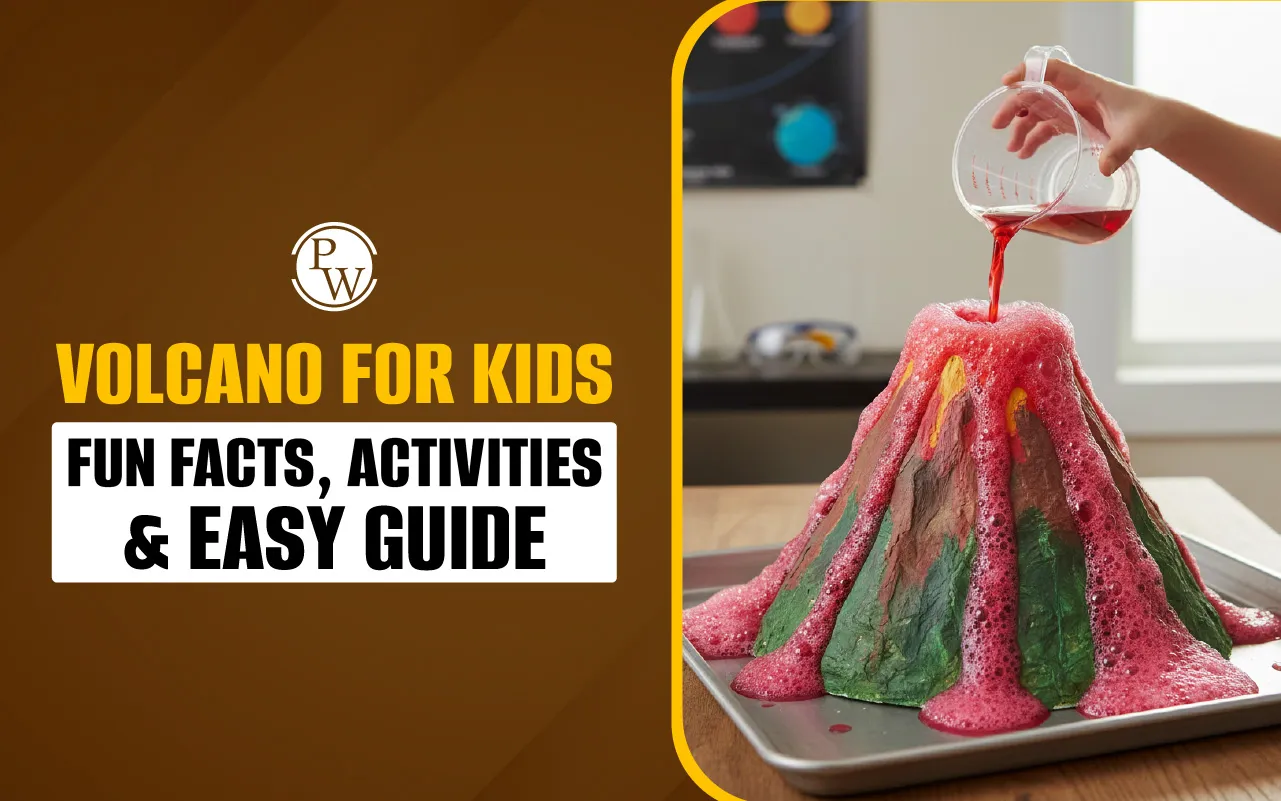
What is a Volcano?
Volcano is a mountain-like opening on the surface of the Earth from where hot lava, ash, and gases come out. Deep inside the Earth, there is very hot, melted rock called magma. When this magma comes out through cracks in the Earth’s crust, it reaches the surface and flows out. Once it comes out, we call it lava. A volcano generally looks like a mountain made of fire and smoke on the Earth’s surface.
Sometimes, when the pressure inside the Earth becomes very strong, it causes an eruption. During this time, the volcano throws out smoke, ash, and lava into the air, which is known as a volcanic eruption. So, the answer to the commonly asked question, "What is a volcano?', is that it is nature’s way of releasing heat and pressure from inside the Earth. While volcanoes are dangerous, they are also one of the most amazing wonders of nature. So, keep reading to know fun facts about volcanoes.
Read More: Earthquake
How is a Volcano Formed?
How is a volcano formed? is one question that comes to the minds of children when they learn about volcanoes. Here's how it forms:
-
When hot, melted rock from inside the Earth comes up through cracks in the ground, a volcano is formed.
-
The Earth’s surface is made up of big pieces of rock called tectonic plates. These plates slowly move; sometimes they push together, and sometimes they move apart.
-
When the plates move, they make spaces or cracks. Through these cracks, the hot melted rock, called magma, rises and comes out.
-
After many eruptions, the lava cools down and forms a mountain. This is how a volcano is formed. Most volcanoes are found where these tectonic plates meet.
Terms Related to Volcanoes for Kids
Here are some easy terms related to volcanoes that will help you understand them better:
-
Vent: It is like a tunnel or path inside the volcano through which hot magma and gases come out from deep inside the Earth.
-
Crater: It is a bowl-shaped hole at the top of the volcano from where lava and smoke come out when an eruption takes place.
-
Magma Chamber: This is a large underground space filled with hot, melted rock called magma, just below the volcano.
-
Active Volcano: A volcano that erupts generally or shows signs that it might erupt anytime soon.
-
Dormant Volcano: A volcano that has not erupted for many years but can erupt again in the future.
-
Extinct Volcano: A volcano that has not erupted for thousands of years and is not expected to erupt again.
-
Volcanologists: They are the scientists who study volcanoes to understand how and why they erupt.
Read more: What Is Global Warming?
Types of Volcano
There are four main types of volcanoes found on Earth. Each one looks different and erupts in its own way. Let's learn more about different types of volcanoes one by one:
-
Cinder Cone Volcano:
-
A cinder cone volcano is made when small pieces of lava and ash come out from one vent and fall around it.
-
It forms a cone-shaped hill.
-
These volcanoes are not very tall and generally have a single short eruption.
-
Composite Volcano:
-
Also called a stratovolcano.
-
A composite volcano looks like a tall mountain with steep sides.
-
It is made of layers of ash, rocks, and hardened lava.
-
These volcanoes erupt with great force and are found in many parts of the world.
-
Shield Volcano:
-
This type of volcano has a wide, gentle slope that looks like a warrior’s shield.
-
It is made when thin, hot lava flows slowly in all directions from the vent.
-
Shield volcanoes are some of the largest volcanoes on Earth.
-
Lava Dome:
-
A lava dome is made when thick lava slowly comes out of a vent but does not flow far.
-
It gathers around the vent and makes a rounded shape like a small hill.
-
Over time, its outer surface cools, hardens, and breaks into small pieces.
Read More: Climate of India
What Causes Volcanoes?
A volcano is made because of movements inside the Earth. But what causes volcanoes to erupt? Let’s understand it.
-
Volcanoes happen mostly when big pieces of the Earth’s crust, called tectonic plates, move.
-
Sometimes one plate slides under another.
-
When this happens, the rocks under the surface melt because of heat and pressure.
-
This melted rock is called magma.
-
The magma is lighter than the solid rocks around it, so it rises.
-
When the magma reaches the surface, it comes out as lava, ash, and gases.
-
This is what causes volcanoes to erupt. Over time, repeated eruptions can make the volcano bigger and taller.
Read more: Air and Atmosphere
Fun Facts About Volcanoes for Kids
Volcanoes may seem scary, but they are full of interesting facts. Here are some fun facts about volcanoes that make learning about them really exciting for kids:
-
A volcano is a hole in the Earth where hot magma, ash, and gases come out. It mostly looks like a mountain.
-
The word “volcano” comes from Vulcan, the Roman god of fire.
-
Many volcanoes are found where tectonic plates meet. These plates are like big pieces of a puzzle that make up the Earth’s surface.
-
Volcanoes can also form over very hot spots inside the Earth called mantle plumes.
-
About 350 million people live near active volcanoes. This means many people are in areas where eruptions can happen.
-
Volcanoes can be active, dormant, or extinct.
-
Volcanoes also come in different shapes. Composite volcanoes are tall and cone-shaped. Shield volcanoes are wide with gentle slopes.
-
Hot rock inside a volcano is called magma. When it comes out, it is called lava.
-
Volcanoes are not only on land. Some are under the ocean or ice, too.
-
Lava can be very hot, around 1,250°C.
-
The world’s largest active volcano is Mauna Loa in Hawaii. It is over 4,100 metres tall and last erupted in 2022.
-
Volcanoes are not just on Earth. Other planets have them too! Mars has the largest one, called Olympus Mons.
-
In A.D. 79, Mount Vesuvius in Italy erupted and buried the town of Pompeii. The ash helped preserve the town and the people’s remains.
-
Around 1,900 volcanoes on Earth are still active. Most are found in the Pacific Ocean’s “Ring of Fire”.
-
The loudest sound from a volcano was Krakatau in 1883. Its eruption had energy equal to 15,000 nuclear bombs.
-
Volcanoes make soil rich and good for farming. Lava and ash turn into fertile land over time.
-
Even animals like Maleo birds use volcanoes. They bury their eggs in warm soil near volcanoes so they can hatch safely.
Read More: Layers of Atmosphere
Characteristics of Volcanoes
The characteristics of volcanoes explain their shape, size, and the way they erupt. Every volcano is unique, but all release heat and pressure from deep inside the Earth. Here are some key characteristics of volcanoes:
-
Most volcanoes look like cone-shaped hills or mountains. Some volcanoes form long ranges of smaller hills.
-
The hot, melted rock that comes out of a volcano is called lava, while it is called magma when it is still inside the Earth.
-
Volcanoes can erupt in different places. Many eruptions take place where tectonic plates push together or pull apart. These places are called boundaries.
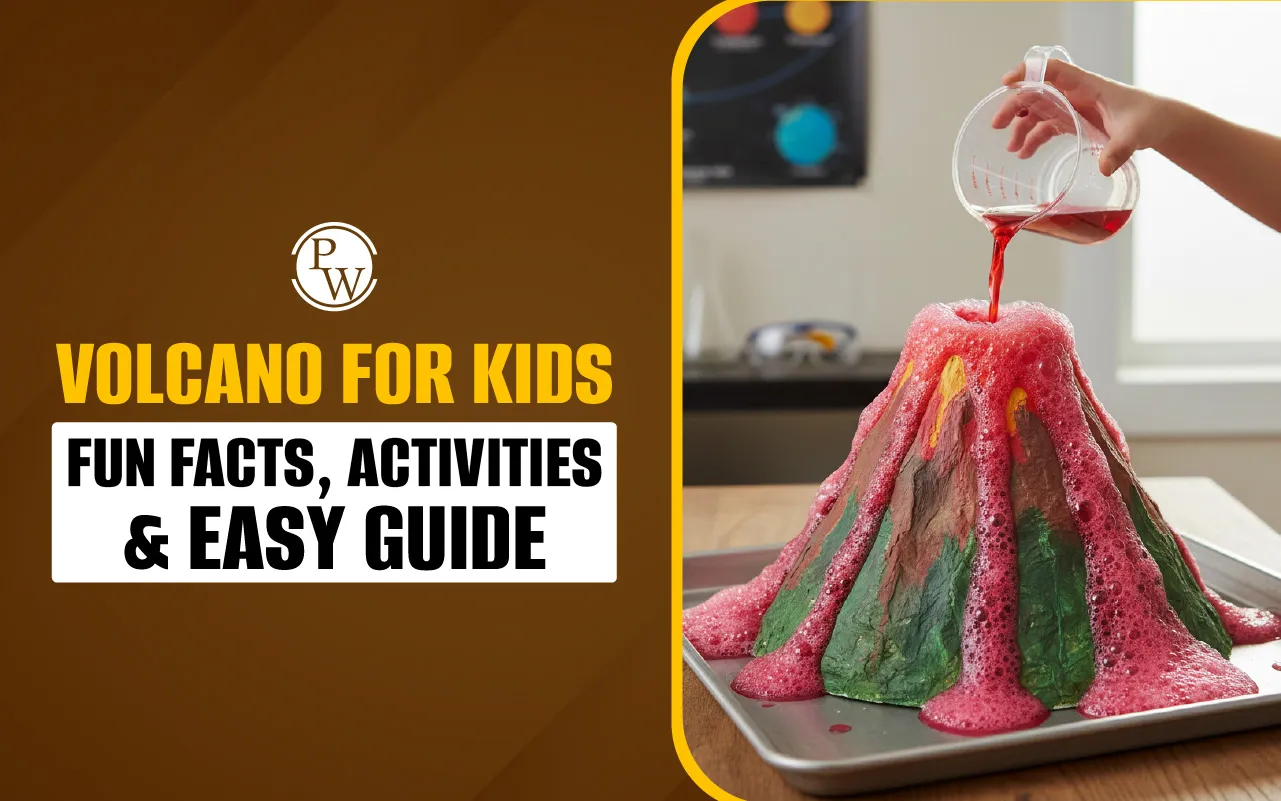
Fun Activity for Kids: Create Your Own Volcano at Home
In school, kids are often asked to make a volcano for their projects. Here is an easy step-by-step method for kids to make a volcano at home:
Things You Will Need:
-
100 ml warm water
-
400 ml white vinegar
-
Red food colouring
-
A big empty soda bottle
-
10 ml liquid soap
-
Half a cup of baking soda mixed with a little water
Steps:
-
Step 1: Mix the soap, warm water, and vinegar in a separate cup.
-
Step 2: Add a few drops of red food colouring into the empty soda bottle.
-
Step 3: Pour the soap and vinegar mixture into the bottle.
-
Step 4: Quickly add the baking soda mixture into the bottle and step back.
That’s it, now watch your mini volcano erupt. The reaction between the vinegar and baking soda makes it bubble and foam like real lava.
Also read: Heat and Temperature
Turn Tricky Science Into Simple & Fun Learning For Your Child with CuriousJr
If your child finds science lessons hard to understand, struggles with homework, or loses focus while studying, extra help at home can make a big difference.
CuriousJr offers online tuition classes for kids that help strengthen their understanding and improve learning.
-
These online tuition classes follow CBSE, ICSE, and major state board curricula, so your child stays connected with school studies.
-
Live classes are taught by dedicated, friendly teachers, and the two-teacher model makes sure your child gets personalised support.
-
You will also get daily progress reports to see how your child is improving.
Whether your child needs help to catch up or wants to learn more, CuriousJr’s online science classes make learning simple and fun. Enroll today and make learning science fun for your child.
Volcano for Kids FAQs
What is a volcano?
What causes volcanoes?
What are the different types of volcanoes?
What do terms like crater and vent mean?