
Quick Addition Skills Using Number Splitting Techniques (Class 3)
 Nikita Aggarwal30 May, 2026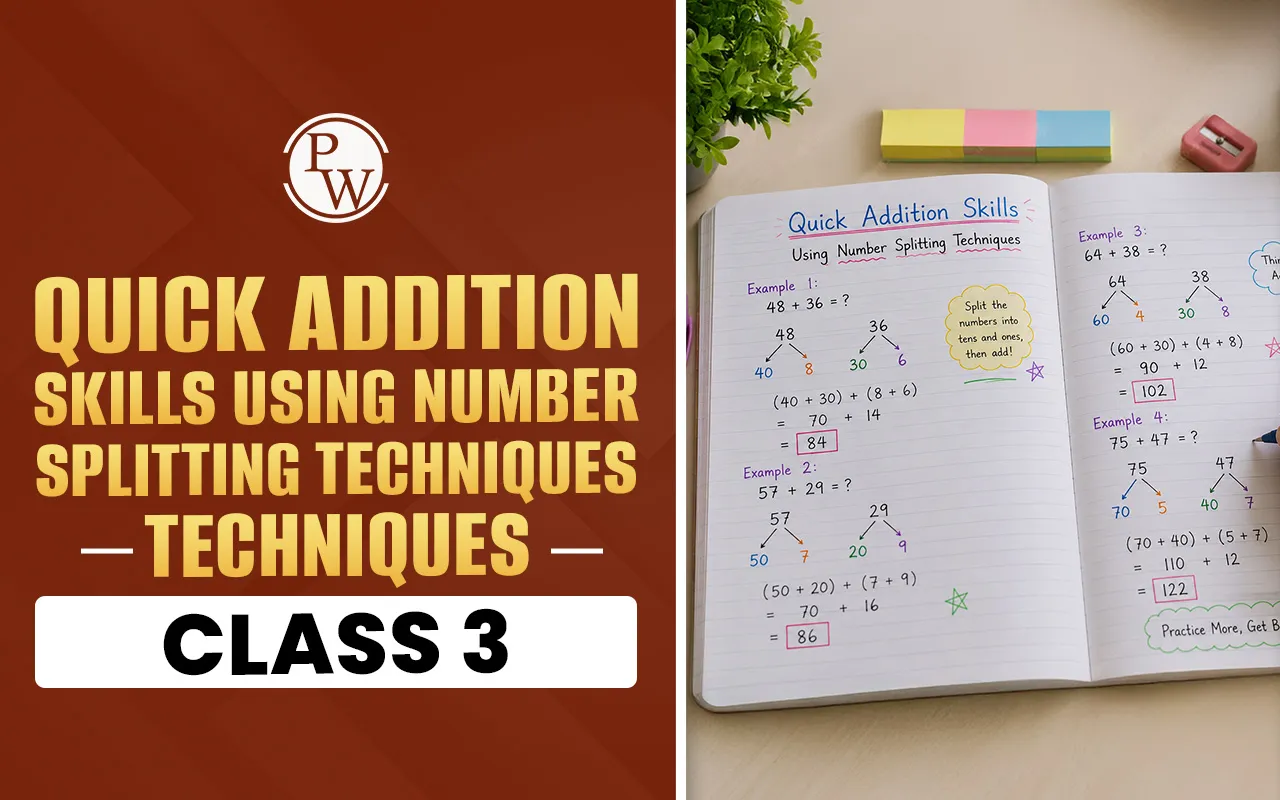
What is Addition Using Number Splitting?
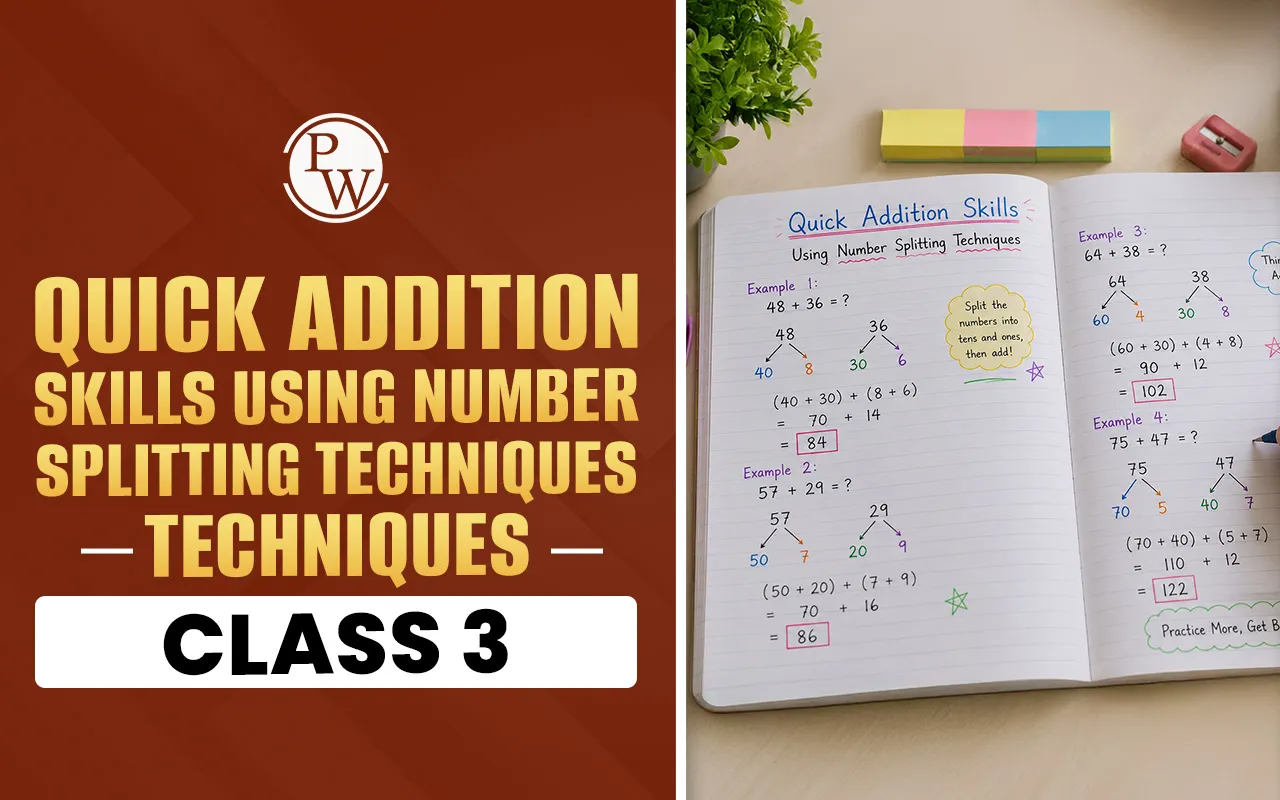
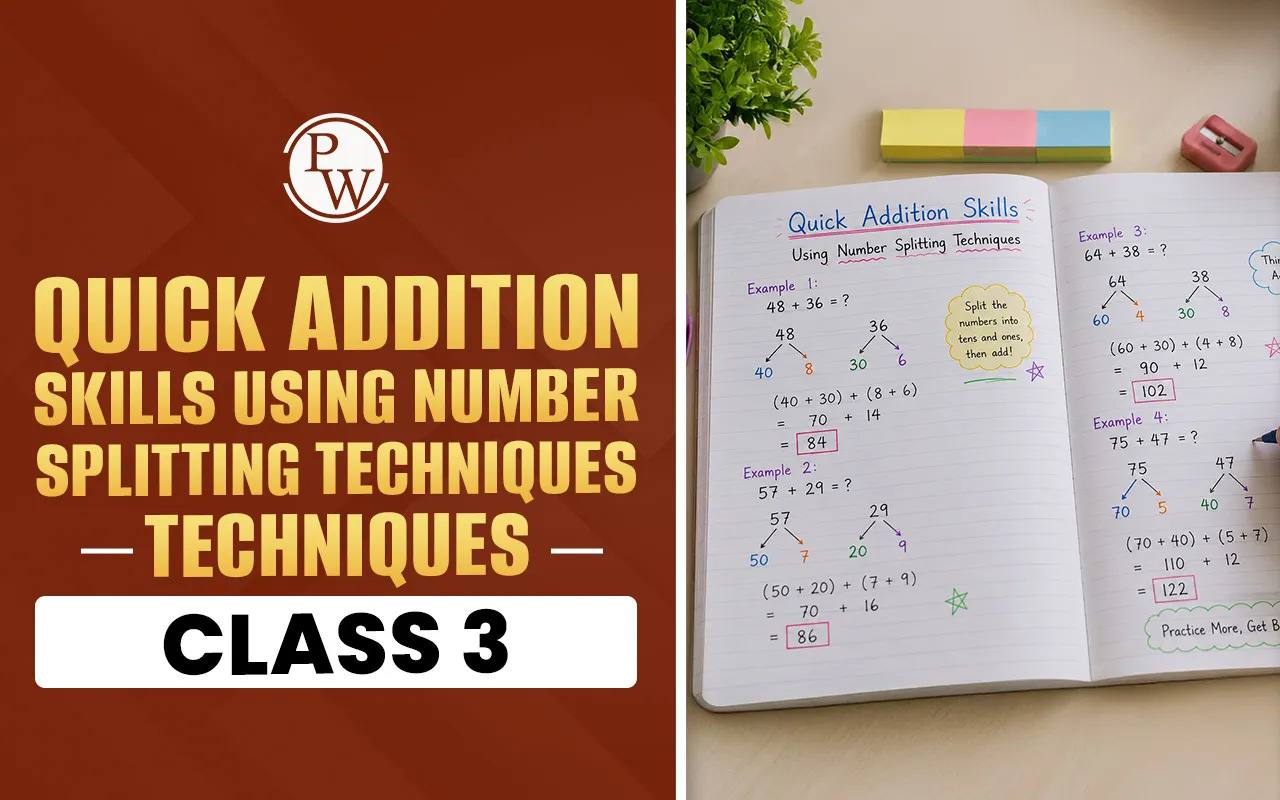
The process of addition using number splitting involves deconstructing numbers based on their place value. Instead of looking at a number like 45 as a single block, you see it as 40 and 5. This is often called the "partitioning" method.
By separating the tens from the ones, you can add the larger chunks first and then tag on the smaller units. This is one of the most effective fast addition tricks because it mirrors how our brains naturally group objects. It removes the stress of "carrying over" digits, which is where most calculation errors happen for younger learners.
Why Use Number Splitting Addition for Class 3?
Using number splitting for Addition is a foundational step in developing a strong "number sense." Students who rely only on pen and paper often struggle when they don't have a notebook handy.
Here are the primary benefits of this method:
-
Speed: It is much faster than drawing columns for every small sum.
-
Accuracy: Breaking numbers down reduces the chance of making silly mistakes.
-
Mental Strength: It builds the "muscles" needed for mental maths addition.
-
Flexibility: You can split numbers in different ways depending on what is easiest for you.
When students practice these easy calculation methods, they stop fearing big numbers. They realise that 78 is just a 70 and an 8, which makes adding it to another number much less intimidating.
How to Perform Addition Using Number Splitting
To master this method, you need to follow a logical sequence. Let’s look at how to add 34 and 25 using this technique.
Step 1: Expand the numbers
First, break both numbers into their tens and ones components.
-
34 becomes 30 + 4
-
25 becomes 20 + 5
Step 2: Group the tens
Add the "big" parts together first. This is usually the easiest part of the sum.
-
30 + 20 = 50
Step 3: Group the ones
Now, add the smaller units that were left over.
-
4 + 5 = 9
Step 4: Combine the totals
Finally, put the two results back together to get your final answer.
-
50 + 9 = 59
This logical flow ensures that you are always working with "friendly" numbers that end in zero, which are much easier for the brain to process quickly.
Read More - Compliments to 10, 20, 100 Vedic Maths Tricks for Class 3
Examples of Addition Using Number Splitting
Seeing the method in action helps clarify the steps. Below are some common scenarios where using this method makes the work simple.
|
Problem |
Splitting the Tens |
Splitting the Ones |
Final Calculation |
|
42 + 13 |
40 + 10 = 50 |
2 + 3 = 5 |
50 + 5 = 55 |
|
56 + 21 |
50 + 20 = 70 |
6 + 1 = 7 |
70 + 7 = 77 |
|
64 + 35 |
60 + 30 = 90 |
4 + 5 = 9 |
90 + 9 = 99 |
In each of these cases, the student avoids the need for a vertical layout. By keeping the tens and ones separate in their mind, they can solve the problem while walking, talking, or playing.
Tips For Mental Maths Addition In Class 3
To get better at mental maths class 3 level, students should practice identifying place values instantly. When you see the number 82, your brain should immediately think "80 and 2."
Consider these helpful strategies:
-
Start from the Left: Unlike column addition where you start from the right (ones), splitting works best when you start from the left (tens).
-
Use Visual Cues: Imagine the numbers as stacks of ten blocks and single blocks.
-
Practice with Money: Adding 20p and 50p is a great real-world way to practice tens.
Mastering class 3 arithmetic skills requires consistency. You don't need to do hundreds of problems; just five minutes of daily practice can make these techniques permanent.
When to split only one number
Sometimes, you don't need to split both numbers. If one number is very small, you can keep the larger number whole and just split the second one. This is a slightly more advanced version.
For example, to solve 47 + 22:
-
Keep 47 as it is.
-
Split 22 into 20 and 2.
-
Add the tens first: 47 + 20 = 67.
-
Add the ones last: 67 + 2 = 69.
This variation is often quicker once a student is comfortable with adding multiples of ten to any given number. It reduces the number of steps your brain has to track at once.
Read More - Adding 9, 8, 11 Vedic Maths Tricks for Class 3
Common Mistakes In Number Splitting Addition
Even with a simple method, errors can happen. Most mistakes in addition using number splitting occur when students forget to add the final two pieces together or if they miscalculate the "tens" jump.
Watch out for these pitfalls:
-
Forgetting the Ones: Some students add the tens and feel they are finished, forgetting the smaller units.
-
Mixing Place Values: Ensure you never add a "ten" to a "one" by mistake (e.g., thinking 30 + 4 is 70).
-
Overcomplicating: If the numbers are very small (like 12 + 11), don't feel forced to use splitting if you already know the answer is 23.
By staying mindful of these common errors, you can ensure your arithmetic remains sharp and accurate.
Learn Addition Using Number Splitting for Class 3 with CuriousJr
The journey to becoming a maths whiz doesn't stop with just one technique. While learning addition using number splitting provides a great boost to your speed, interactive learning can make these concepts stick even better. Engaging with digital tools and logic-based games helps students apply these arithmetic methods in dynamic environments. Programs like CuriousJr are specifically designed to take these classroom concepts and turn them into interactive experiences, ensuring that your logic and problem-solving abilities grow alongside your calculation speed.
Mental maths for Class 3 by CuriousJr is carefully made to support children's early maths learning in a simple, fun, and easy-to-understand way. This helps young learners practice regularly, improve calculation speed, and build confidence in maths from an early age. What makes CuriousJr's Mental Maths Class 3 course special is:
-
Live, interactive classes where children get personal attention and can ask questions freely.
-
Regular practice sessions to help children become faster and more accurate with calculations.
-
Homework support and simple doubt-solving to help children complete school work confidently.
-
Fun activities and playful learning methods that make mental maths enjoyable.
-
Daily progress tracking and Parent-Teacher Meetings to keep parents updated about their child’s growth.
-
Covers mental maths for Class 3 CBSE, ICSE, and other state boards to support what children are learning in school.
-
Flexible learning with schedules that can fit into the child’s daily routine.







Quick Addition Skills Using Number Splitting Techniques (Class 3) FAQs
How does number splitting make addition easier?
Can I use this method for numbers larger than 100?
Is number splitting faster than the carry-over method?
What is the most important part of number splitting?





Get Free Counselling Today
and Clear up all your Doubts
 Live & recorded classes available at easeDashboard for progress trackingLakhs of practice questions

